Seller Guide · by Aidan Sowa · October 6, 2026
How to Prepare South Tampa Tree and Site Records Before Selling
Separate tree condition, authorized work and site limits before comparing sale terms.
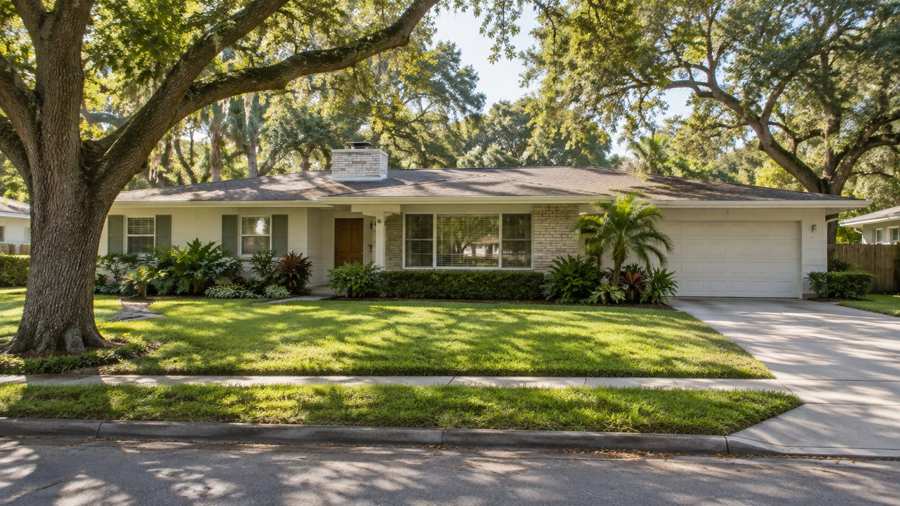
A South Tampa tree-lined property can be appealing without giving its owner an unrestricted right to remove a large tree. Before selling, separate the actual tree condition, applicable jurisdiction, authorized work and future site plans. A buyer's pool sketch, a contractor's informal opinion and a past pruning invoice answer different questions. None should be turned into a promise that the next owner can clear the lot or build around every retained tree.
Prepare a dated record file instead of cutting trees to make the property appear easier to develop. Tampa's current information distinguishes protected-tree review, construction-related site plans and a narrow state unacceptable-risk exemption. The state provision is not permission to remove any inconvenient tree after obtaining a letter. This guide organizes the questions and records for the responsible professionals; it does not classify a particular tree, grant permission, replace a site assessment or predict a sale-price premium.
Identify the Property and Responsible Jurisdiction
Begin with the exact parcel, ownership boundaries and the government responsible for the tree review. The South Tampa neighborhood name does not itself establish jurisdiction or authority over a particular tree. Separate private-lot trees from public right-of-way or adjoining-property trees. Gather parcel and survey references before relying on City or County procedures, and ask the responsible office to confirm unclear situations.
The City of Tampa Tree Information page separately discusses trees in the "public Right of Way" and City alleyways. An owner should not treat those trees as ordinary private landscape items. Keep the tree's apparent location and any available boundary evidence in the file, and obtain qualified confirmation rather than cutting across a disputed line.
Hillsborough County's Apply for a Tree Removal Permit page describes its process for "unincorporated Hillsborough County". That distinction matters even when an address has a Tampa mailing label. Do not substitute County grand-oak criteria or an application process for City review solely because both places regulate significant trees.
Parcel file: Identify the address, parcel reference, survey date, relevant easements and the office that supplied guidance. A survey may help identify locations and boundaries but is not a tree-risk assessment or removal permit. If the tree is close to a boundary, utility corridor or public area, preserve that question for review instead of advertising an unrestricted removal right.
Document the Trees Without Inventing a Classification
Keep a tree inventory or survey tied to the actual site, with species, location and measured characteristics where available. Size and appearance alone do not settle every protected or grand-tree classification. Use the applicable City definitions and qualified review rather than an online nickname. Label preliminary observations as preliminary, and do not describe all large oaks as legally interchangeable across jurisdictions.
Tampa's Definitions, Links and Guide to Measuring DBH defines the measurement height as "four and one-half" feet above existing grade. Its grand-tree definition combines size, species, condition and other criteria, rather than simply calling every mature oak a grand tree. Keep the measurement method and the qualified evaluator's findings with the identified tree.
The City Arborist/Contractor Information page describes tree removal review at "5” or greater" in diameter at breast height with exceptions for specified invasive or unprotected species. The overview uses slightly different boundary wording, so this guide does not make a lay measurement at the threshold a definitive classification. Ask Natural Resources about the actual species, measurements and applicable rules.
Inventory discipline: Use a consistent tree identifier across photographs, survey marks, assessment reports and plans. Record the assessment date and who prepared it. If the buyer proposes an addition or demolition, do not equate a preliminary tree list with an approved development layout; the design must still address the relevant retained trees and site constraints.
Separate Condition Assessment From a Removal Decision
Gather dated condition and risk evidence before describing a tree as safe, hazardous or removable. An invoice for maintenance does not certify future performance, and a photograph cannot replace an onsite assessment. The evaluator's scope, findings and recommendations matter. Distinguish observed condition, proposed care and the legal route for any removal; do not use a generic safety concern as automatic authorization.
The Lewkowicz Group's mature-tree buyer article advises evaluating "the condition of significant trees" and discussing major trees with a qualified arborist. Its practical buyer questions are useful for organizing records, but they do not establish that a particular South Tampa tree is unhealthy or that a visual symptom proves a legal removal exemption.
Condition packet: Keep the report, tree identifier, date, evaluator qualifications, assessment scope, findings and recommendations. Include relevant work history and updated findings after a material event. Preserve any recommendation to retain, prune, monitor or further assess the tree without rewriting it as an unconditional removal recommendation or a guarantee that the tree poses no future risk.
The same Lewkowicz article asks buyers to consider previous tree maintenance and major work. A seller can answer with invoices and reports rather than a claim that routine pruning makes any storm harmless. If there is a separate concern about a sidewalk, driveway or building, obtain evidence for that component instead of assuming a nearby root caused the movement.
Read the State Unacceptable-Risk Exemption Narrowly
Florida's exemption has specific requirements for property type, documentation, evaluator and risk. It does not cover every vacant lot, attached home or future redevelopment plan. Keep the signed onsite assessment and the facts supporting the claimed exemption. Ask the appropriate professionals about applicability before work, and do not treat an ordinary contractor quote or tree inconvenience as a qualifying risk determination.
Florida Statutes section 163.045 defines residential property using "a single-family, detached building" actively used for single-family residential purposes within its conforming or legally recognized nonconforming framework. Its documentation definition specifies an onsite assessment under the named risk-assessment procedures by an ISA-certified arborist or Florida licensed landscape architect, signed by that professional.
The statute's unacceptable-risk test includes removal being "the only means of practically mitigating its risk below moderate" under those procedures. A generic letter that a tree is dangerous does not necessarily establish those elements. Nor does the statute permit a seller to assume a vacant redevelopment parcel qualifies just because the intended future use is residential.
Tampa's Tree Removal Statutory Exemption interpretation says the owner must possess documentation "at the time of removal" and explains how the City verifies the claimed exemption. Keep this framework separate from the City's local hazardous-grand-tree permit process. The statute also preserves its stated mangrove-authority exception; this guide does not expand a tree exemption to every environmental restriction.
Match Authorized Work to the Actual Permit or Site Plan
Check which tree and work scope the authorization covers and whether the project followed the applicable plan. A permit application is not an issued permission, and approval for one tree does not cover another. Distinguish a standalone tree request from construction-related review. Preserve conditions, revisions and any required follow-up records rather than assuming a building approval authorizes every later site change.
Tampa's Arborist/Contractor Information page says tree removal for a future construction project is evaluated under the "Building Permit (BLD)" with the removal marked on the site plan. It also describes a building-plan revision for additional removal after issuance. That is a routing explanation, not permission to add removals to a plan after work without review.
Work ledger: List the permit or project reference, affected tree, plan version, authorized activity, conditions, dates and available completion evidence. Connect contractor invoices to that scope. If the records show only an application or an unapproved drawing, keep that status clear instead of using the word approved in the sale materials.
The City Tree Information page notes review of pruning permits but contains older program references alongside a newer statement that its self-certified private-arborist pilot concluded. Do not promise a historical pilot shortcut or that a private report automatically releases a permit. Ask the City for the current route and keep its response with the actual application documents.
Keep Grand-Tree and Variance Review Questions Separate
A local grand-tree permit or variance request has its own basis, documentation and review steps. Do not import a state exemption into every local application, or assume a requested variance has been granted. Keep the actual findings, plans, notices and decision together. Avoid promising an outcome or generic notice deadline when the responsible office still needs to determine the applicable path.
Tampa's current Reasonable Use Tree Removal exhibit asks for "Reasonable Reconfiguration" evidence in its variance-review materials. That describes an application question, not a guarantee that a preferred house footprint or pool layout establishes entitlement to remove a tree. Preserve alternative layout evidence and any actual decision rather than marketing a speculative replacement plan as approved.
Local process file: Keep required exhibits, official correspondence, notice or compliance evidence when applicable, and the final decision with its conditions. The City's Good Neighbor compliance packet concerns a hazardous grand-tree process, not every pruning job or every qualifying state exemption. Its workflow language is not a safe basis for inventing one universal sequence for all removals; confirm the actual application's next step with the office.
WTSP's report about a South Tampa request to remove grand oaks says the request was "denied" in that particular proceeding. It is an example that an application can be contested, not a prediction for another parcel or a universal prohibition. The owner should preserve case-specific records without adopting a headline as the rule for every mature tree.
Distinguish Tree Review From Other Site and Construction Limits
An approved tree activity does not establish the entire site's redevelopment rights. Zoning, setbacks, flood-related requirements, utilities, access, drainage and other permits need their own review. Keep a proposed buyer use separate from the existing authorized plan. A tree survey can inform design without proving that a pool, addition or replacement home fits every applicable constraint or financial assumption.
Shane Vanderson's South Tampa lot guide identifies "Tree Survey Requirements" as a practical research topic and separately discusses zoning, setbacks, flood zones and utilities. Its broad development checklist is not a finding that a tree survey is mandatory for every sale or that a site has a particular soil, flood or utility problem.
Site comparison: Label each drawing existing, conceptual, submitted or approved, and identify its date and scope. Ask the responsible professionals to reconcile the retained-tree layout with the actual project rather than treating a realtor's sketch as permitting evidence. Where an approved plan has conditions, preserve the conditions alongside the drawing so a buyer does not see only the attractive part.
The City definitions include the tree's root system within significant tree terminology. Do not assume protecting a trunk means any nearby excavation is permitted. A seller can provide existing reports and plan conditions, while qualified reviewers determine the specific work limits. No tree designation, removal permission or site drawing substitutes for a structural, drainage or title review when those questions are present.
Prepare a Dated Record Table and Accurate Sale Description
Organize the records so the buyer and transaction professionals can see what is known, approved and unresolved. Use qualified descriptions rather than a blanket claim that all trees are safe, unprotected or removable. A missing online record does not prove no prior work or requirement existed. Preserve conflicts and explain the inquiry needed instead of choosing the version that makes the lot sound easier to develop.
The National Association of Realtors' Preparing to Sell Your Home guide says a pre-sale inspection "is not required" in its general preparation discussion. That is not an exemption from applicable tree permissions, a substitute for a risk assessment or an answer to Florida disclosure duties. Choose useful professional review based on the actual condition and transaction rather than order every assessment automatically.
Sale wording: Describe the records actually available and avoid promising unverified clearing, pruning, buildability or future storm performance. Use the closing attorney and transaction professionals for accurate statements about known work and unresolved issues. An as-is offer does not convert an application into approval or decide a tree's classification.
| Record | What it supports | What remains separate |
|---|---|---|
| Parcel and boundary references | Location and jurisdiction questions | Tree risk or removal permission |
| Inventory and qualified measurements | Identified trees and evaluation scope | Automatic protected status |
| Signed condition or risk assessment | Dated findings within stated scope | Every exemption requirement |
| Issued permission and current plans | Authorized activity and conditions | Unlisted future removals |
| Invoices and completion records | Documented work history | Future storm performance |
| Offer and site-review questions | Actual transaction assumptions | Guaranteed redevelopment rights |
Compare Offers Without Promising a Cleared Lot
Use the same unresolved tree and site questions across offers. A higher price or faster date may depend on a removal or development assumption that has not been confirmed. Ask for written terms about review, timing and remaining work. Compare actual net proceeds and responsibilities rather than spending money on speculative clearing to satisfy an informal buyer suggestion.
The National Association of Realtors' Real Estate Sales Contract Contingencies guide defines a contingency as "a condition that needs to be met" before purchase completion. Its general discussion does not prescribe Florida contract deadlines or make tree-review cancellation rights automatic. Have counsel review the actual agreement, especially if a buyer depends on a particular site change.
Offer questions: Confirm purchaser identity, deposit, funding evidence, closing timing and what happens if a requested tree removal is denied or the proposed layout changes. Identify who is responsible for investigations, applications and any work. Do not promise that the seller will obtain a permit, qualify for an exemption or clear the lot unless the actual arrangement and lawful route have been established.
A complete record file can support a clearer decision without guaranteeing a sale premium or an easier redevelopment outcome. If a buyer wants an unverified tree removal, keep that request separate from permission to perform it. Compare listing and direct-sale proposals with the same information rather than assume a cash buyer's plans override City rules, state requirements or the property boundaries.
Frequently Asked Questions
South Tampa sellers should identify the actual parcel, tree records and authorized work rather than promise blanket removal rights. State unacceptable-risk treatment has specific property and signed-assessment requirements. Local grand-tree review, construction plans and other site limits remain separate. These answers organize evidence without classifying a tree or deciding a particular transaction's legal outcome.
Does a Tampa mailing address select the City tree process?
The actual parcel jurisdiction and tree location need confirmation. Unincorporated County procedures should not be substituted for City rules solely because the mailing label says Tampa.
Is every large oak automatically a City grand tree?
Applicable definitions involve more than a visual impression of size. Keep qualified measurements, species and condition findings with the actual tree record.
Does any arborist letter create the state removal exemption?
The statute specifies documentation, evaluator qualifications, property type and an unacceptable-risk test. A generic letter or contractor estimate does not necessarily establish those requirements.
Does a vacant redevelopment lot automatically qualify?
The statutory residential-property definition includes an actively used single-family detached building. Ask qualified professionals about the actual facts rather than applying it to intended future use.
Does a building permit cover every later removal?
Authorized site-plan scope and any required revision matter. A request to remove an additional tree is not itself permission to do the work.
Does old pruning prove a tree is safe for future storms?
An invoice supports its documented work rather than future performance. Keep dated professional findings and update them when a material change warrants assessment.
Does one denied grand-oak request predict another case?
The reported decision concerns its particular property and proceeding. Actual classifications, records and applicable review determine another application.
Does tree approval establish a replacement house can be built?
Other site and construction limits need separate review. Preserve the actual plan status and conditions without presenting a conceptual drawing as buildable approval.
Will Maison Off-Market obtain tree permissions for my property?
Its stated purchase process does not establish a tree-review or approval guarantee. Examine the written proposal and allocation of remaining questions with the transaction professionals.
How Maison Off-Market Reviews a South Tampa Sale Option
Maison Off-Market describes reviewing the property and land before proposing price and timing. A South Tampa owner can compare its written option using tree assessments, work permissions and site records. The company does not grant removal approval or certify an exemption. Confirm how the proposal treats retained trees, remaining reviews and speculative development assumptions before relying on its closing terms.
Maison Off-Market's homepage describes closing with "your attorney or title company", flexible dates, no commissions and no seller closing costs. Confirm those terms in the actual proposal, including purchaser identity, deposit and net proceeds. Its stated preference for no seller repair work does not create a clearing right or eliminate applicable tree and site review.
Decision evidence: The actual property proposal and written terms, not a verified South Tampa grand-tree removal outcome or an approval case study. Compare the company's option with a listing plan using the same remaining questions. A direct sale is an option to evaluate, not a guarantee that a buyer can remove trees, obtain a variance or build a particular replacement home.
Compare your options before committing. Request a written private offer for your property, with no obligation, then weigh it against your listing plan.
Sources
- City of Tampa, Checked October 6, 2026. Tree Information: Pruning, Removal and Program Context. https://www.tampa.gov/construction-services/tree-information.
- City of Tampa, Checked October 6, 2026. Arborist and Contractor Information: Construction Site Review. https://www.tampa.gov/construction-services/tree-information/arborist-contractor-information.
- City of Tampa, Checked October 6, 2026. Tree Removal Statutory Exemption Interpretation. https://www.tampa.gov/construction-services/tree-information/interpretation-tree-removal-statutory-exemption.
- City of Tampa, Checked October 6, 2026. Definitions, Links and Guide to Measuring DBH. https://www.tampa.gov/sites/default/files/document/2026/definitions-links-and-guide-to-measuring-dbh_ada.pdf.
- Florida Legislature, Checked October 6, 2026. Florida Statutes Section 163.045. https://www.leg.state.fl.us/statutes/index.cfm?App_mode=Display_Statute&URL=0100-0199%2F0163%2FSections%2F0163.045.html.
- Hillsborough County, Checked October 6, 2026. Apply for a Tree Removal Permit, Unincorporated County. https://hcfl.gov/businesses/permits-and-records/natural-resources/apply-for-a-tree-removal-permit.
- City of Tampa, Checked October 6, 2026. Reasonable Use Tree Removal Exhibit. https://www.tampa.gov/sites/default/files/document/2026/vrb_tree_removal_exhibit_a-1_and_diagram_ada.pdf.
- City of Tampa, Checked October 6, 2026. Good Neighbor Public Notice Compliance Packet. https://www.tampa.gov/sites/default/files/document/2026/compliance-packet-for-goodneighbors-publicnotice_rev_031425_ada2.pdf.
- WTSP, Checked October 6, 2026. Tampa Board Denies Grand Oak Removal Request at Former Kojaks. https://www.wtsp.com/article/tech/science/environment/tampa-review-board-denies-request-to-chop-oak-trees/67-5edbb3b4-17fd-461c-8404-ea91532c1409.
- The Lewkowicz Group, Checked October 6, 2026. Purchasing a Home With Mature Trees in the South Tampa Area. https://thelewkowiczgroup.com/blog/what-should-buyers-know-about-purchasing-a-home-with-mature-trees-in-33606.
- Shane Vanderson, Checked October 6, 2026. What to Know Before Purchasing a Lot in South Tampa. https://shanevanderson.com/blog/What-to-Know-Before-Purchasing-a-Lot-in-South-Tampa--A-Comprehensive-Guide.
- National Association of Realtors, Checked October 6, 2026. Preparing to Sell Your Home. https://www.nar.realtor/the-facts/consumer-guide-preparing-to-sell-your-home.
- National Association of Realtors, Checked October 6, 2026. Real Estate Sales Contract Contingencies. https://www.nar.realtor/the-facts/consumer-guide-real-estate-contract-contingencies.
- Maison Off-Market, Checked October 6, 2026. Homepage: Direct-Purchase Process and Stated Terms. https://bulkscaler.com.
Related research
Seller Guide · 2026-10-08
How to Prepare Bloomfield Hills Tree and Woodland Sale Records
Separate tree approvals, replacement duties and wetland limits before selling wooded property.

Seller Guide · 2026-10-07
How to Prepare Georgetown Historic Exterior Sale Records
Separate historic design approval, building permits and actual exterior work before selling.
Seller Guide · 2026-10-07
How to Prepare Tenafly Tree Permit Sale Records
Connect tree removal approvals, mitigation planting and accepted inspections before promising landscape changes.