Seller Guide · by Aidan Sowa · 2026-10-08
How to Prepare Bloomfield Hills Tree and Woodland Sale Records
Separate tree approvals, replacement duties and wetland limits before selling wooded property.
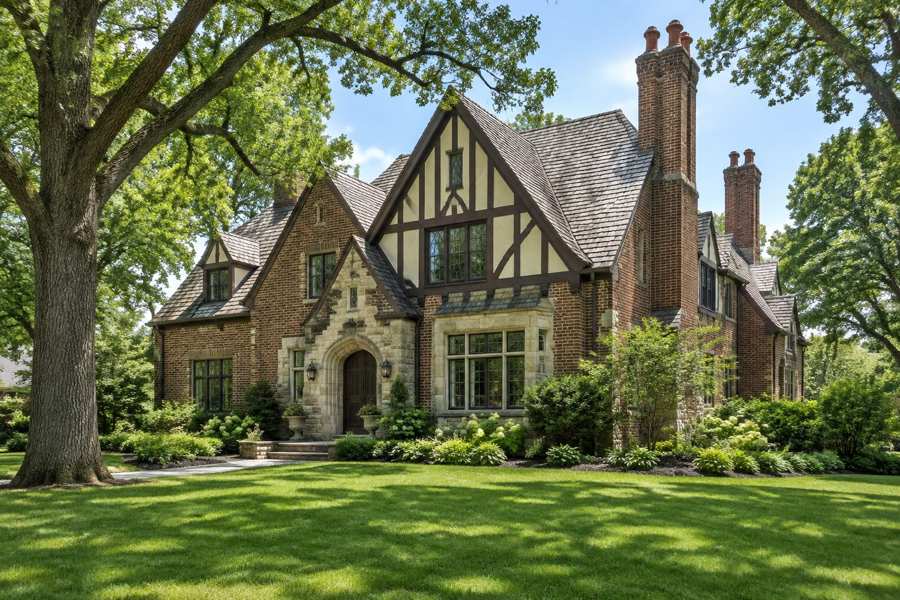
A Bloomfield Hills seller should separate the trees visible today from the approvals and replacement duties attached to earlier work. The City of Bloomfield Hills Code of Ordinances defines a regulated tree as six inches diameter at breast height or greater, unless it is a removable tree. Bloomfield Township's tree-preservation guidance instead describes protected trees as eight inches diameter at breast height or greater, with separate landmark and project-scope rules. Those are different municipal frameworks, not interchangeable thresholds for a Bloomfield Hills mailing address.
This guide explains how to establish jurisdiction, recover tree removal and replacement records, document claimed exemptions, separate woodland work from wetland permission, and prepare an accurate buyer handoff. It does not identify any private tree, survey a parcel, determine a wetland boundary, calculate an owner's required replacements or clear a property for redevelopment. The earlier septic and water guide addresses a different sale file; this one focuses on trees, woodland and related land constraints.
What Tree and Woodland Records Establish
Tree and woodland records connect a particular removal, preservation or replacement decision to the correct parcel and reviewing office. They can show the original inventory, approved scope, claimed exemption, work performed and remaining duties. They do not certify every tree as safe or every wooded area as buildable. Start with evidence of what happened, then separate that history from any buyer's proposed future project.
Three separate questions: What existed before work, what the office allowed, and what was actually done. A contractor invoice may answer the last question without proving the second. A permit can identify allowed removal without showing replacement trees were planted or remained healthy. A current photograph shows a visible condition, not the old tree's measured size, species, health or exemption category. Keep each piece in the role it can support.
The City's current Chapter 22 says a permit is required for removal of regulated trees, "unless exempt under section 22-22." Its definitions also treat land clearing as more than felling a trunk: clearing linked to utilities, streets and grading matters. A sale file should therefore include the approved site or landscape plan when the work was part of a house project, not just a receipt labeled tree service.
For example, suppose an owner removed trees while adding a driveway and later planted landscaping. The question is not simply whether the yard now looks complete. Compare the numbered trees and driveway zone on the accepted plan, permit conditions, replacement schedule, actual planting evidence and any office response. Do not label ordinary shrubs or unrelated landscaping as satisfying the tree permit without support. The buyer can then evaluate the proposed use against the actual evidence rather than a general promise of a cleared lot.
Confirm City or Township Jurisdiction First
Establish the parcel's governing municipality before applying a tree threshold, exemption or replacement rule. A Bloomfield Hills mailing address is not a substitute for the responsible office's confirmation. Match the parcel identifier and legal description to the original municipal file and current assessor information. If the records disagree, resolve that identity gap before describing old removal as compliant or a new project as permitted.
Identity file: Preserve the parcel identifier, legal description, property address, municipality, original permit number, plan date and reviewing body. Ask the City or Township office for the actual parcel's records. If a parcel was split or combined, retain the predecessor identifiers and approval history rather than assuming the present address produces a complete search. No private record search was performed for this general guide.
Bloomfield Township's Tree Preservation page says its ordinance generally applies where "new construction or redevelopment is planned" or to clear-cutting. It says routine maintenance at a developed property has a different scope, while clear-cutting is still restricted. The City's Chapter 22 has its own permit and exemption structure for individual parcels and subdivisions. Do not import the Township's developed-lot wording into a City property or treat the City's removal allowances as Township permission.
The City's Permits and Forms page lists separate tree, minor grading, natural-feature setback and site-plan applications. The City Building page provides its inspection-request route. These sources help identify the responsible process, not prove that any owner submitted an application or passed an inspection. Keep the tree file tied to the municipality that issued it; a different land-use or building record may be relevant without replacing it.
Recover the Inventory and Approved Removal Scope
Recover the original tree inventory, numbered plan, application, issued permit and any revised approval. Compare the trees marked for removal, preservation and replacement with the work evidence. Record species and measured diameter from professional documents rather than guessing from stumps or photographs. Preserve the plan version the office accepted; a draft or later contractor sketch does not establish the approved scope.
City inventory: Chapter 22 defines diameter at breast height as a measurement taken four and one-half feet above ground. It identifies landmark trees using both a species table and a general twenty-four-inch threshold. Some listed species reach landmark status below twenty-four inches; the table lists oak at sixteen inches. The City's removable-tree list also matters. Neither a large-looking trunk nor one general size cutoff fully resolves the category.
The City's March 2021 Tree Permit Application says a tree site plan should include "tree inventory, tree removals and tree replacements." It is a published form, not proof of a particular project's completeness or today's final fee. The City's hosted sample tree survey likewise illustrates numbered records and replacement calculations. That sample is an example, not an approval for another parcel, and its sizing labels should not override the current ordinance.
Bloomfield Township's Tree Preservation and Protection Permit Application Instructions require a scaled survey and distinguish preserved, removed and transplanted trees. They explain that a tree whose drip line extends into a development area belongs in the survey even when its trunk stands outside that area. For Township work, compare grading and construction limits with the tree protection record. A contractor's claim that no trunks were touched does not establish that protected roots or canopy areas were outside the activity.
Document Exemptions Without Inventing Approval
If removal was treated as exempt, preserve the exact exemption, its factual basis and any office confirmation. An exemption is not the same document as an issued permit. Keep dated photographs, professional findings, prior removal history and receipts together. Do not assume that a hazardous, diseased or inconvenient tree qualified just because it was removed or because the owner remembers a verbal conversation.
The City's Chapter 22 expressly asks the owner to "retain reasonable proof" of the alleged condition of damaged, dead, dying or diseased trees, giving photographs, estimates and receipts as examples. Its disease provision calls for confirmation by a licensed arborist before removal of a tree with a terminal disease. The code also separates routine pruning, removable species, emergencies and individual-parcel allowances. Retain the relevant category instead of combining them into one blanket exception.
Removal history matters: For qualifying individual City parcels not being divided into three or more lots or units, Chapter 22 allows up to two regulated trees within a two-year period on parcels smaller than one and one-half acres, and up to three on parcels at least that size. This is not an annual allowance or permission to ignore earlier removals. Confirm parcel area, history, subdivision status and other applicable conditions before using that provision to explain old work.
Bloomfield Township's guidance separately discusses dead, diseased or damaged trees on property not subject to site-plan review or building-permit approval. For property under development, it uses professional health and condition scoring to determine protection and replacement. Keep that different project context visible. If old photographs, an arborist report or the removal date cannot be recovered, describe the exemption basis as unverified instead of creating a retrospective conclusion from the current landscape.
Track Replacement Duties and Their Accepted Outcome
Create a replacement matrix that follows each approved removal through the required planting, timing, location and evidence of acceptance. Preserve invoices and photographs without treating them as an office signoff. Include remaining maintenance, security or financial obligations. A property can look fully landscaped while an earlier tree condition remains unresolved, so make the permit's written terms the starting point.
City ratios: Chapter 22 ordinarily requires replacement diameter totaling at least fifty percent of each covered non-landmark regulated tree removed beyond exemptions. A non-exempt landmark tree has a full-diameter replacement rule and different minimum replacement size. The code also contains building-pad and driveway-zone exceptions and a large-stock credit. Those details mean a seller should not calculate the actual property's obligation from a headline percentage alone.
The current City ordinance sets ordinary replacement minimums at three inches for deciduous trees and eight feet in height for coniferous trees, while the hosted sample survey reverses those ordinary labels. Use current Chapter 22 for the rule and ask the office about the actual approved plan. The sample remains useful for showing the structure of an inventory, but copying its labels into a buyer promise would carry the conflict forward.
The City code says replacement generally occurs within one year from permit issuance, with different terms for parcels greater than ten acres, and replacement stock must be guaranteed for two years from planting. It also describes possible charges, a property lien and withholding final project approval when replacement obligations remain unsatisfied. These are ordinance consequences, not findings against this house. Request the actual planting acknowledgment, inspection outcome, bond or security release and any outstanding notice.
Bloomfield Township's Tree Preservation page describes its own fifty-percent protected-tree and full-diameter landmark replacement framework. Its requirements should be read with the issued Township plan and conditions, not mixed with the City's minimum sizes or deadlines. For either municipality, identify who installed the trees, when they were planted, which numbered requirement they satisfy and what remains uncertain. A paid planting invoice is helpful work evidence, but it does not independently settle municipal acceptance.
Separate Woodland Work From Wetland Permission
Separate tree review from wetland, grading and natural-feature constraints. A tree exemption does not necessarily authorize soil disturbance, drainage, fill or a new driveway. Keep wetland delineations, applicable local and state permits and their conditions alongside the tree file. Use maps to identify questions, not to certify a parcel boundary or promise that all land outside a shaded area is available for development.
Bloomfield Township's Wetlands page notes that wetlands can be "mature forests" and may have no visible standing water. It says its inventory maps show potential areas and that site-specific delineations remain necessary for applicants. Its local permit discussion still uses the former MDEQ agency name; the current state authority is Michigan's Department of Environment, Great Lakes, and Energy, or EGLE. Preserve the local process without mistaking an older agency label for a different requirement.
EGLE's Wetlands Map Viewer says it supplies "potential and approximate location" information, not specific jurisdictional boundaries. EGLE's Wetlands FAQ explains that vegetation, hydric soils and hydrology are important to field identification. A wetland professional's report should identify its date, method and scope. A seller should not turn a map screenshot, a dry summer visit or a mowing history into a finding that no wetland exists.
State scope: EGLE's State and Federal Wetland Regulations page lists connected wetlands, wetlands within five hundred feet of inland water, larger isolated wetlands and certain smaller essential wetlands among the regulation categories. It lists fill, removal of soil, development and drainage as activities needing review in regulated wetlands. The Michigan Legislature's section 324.30305 contains specific exceptions, but no general sale or tree-removal assumption establishes one for a proposed project.
For example, removing a tree by hand and leaving roots in place is not the same activity as pulling stumps, grading a path and diverting runoff. Township guidance describes limited hand-removal conditions in wetlands or natural-feature setbacks. Ask the responsible local office and EGLE about the actual complete work scope. Retain both authorities' records when needed; a tree permit or one state letter does not stand in for every applicable local land-use condition.
Compare Records, Costs and Limits
Compare each record by what it proves, how its cost is documented and what remains outside its scope. Use actual professional proposals and official fee confirmation for a current property. A published form, example plan or general permit category does not provide a complete sale-preparation budget. The cheapest missing paper is not necessarily the question most likely to affect the buyer's proposed use.
Cost evidence: The City's March 2021 Tree Permit Application lists an application fee and a plan-review deposit with a possible later balance. Treat those as dated form amounts, not a final current quote. Ask the office about today's fee and required work. The Township tree instructions similarly point to fees established by resolution. Survey, arborist, planting, restoration and legal costs need their own property-specific written estimates.
EGLE's Permit Categories page lists general, minor-project and individual permit routes, with published application fees and additional conditions. It explicitly cautions that categories "do not define projects that necessarily will be issued." A seller cannot choose a cheap category and advertise it as approval. The project's actual scope and qualifying criteria determine the path, and state application costs do not include every local fee, consultant expense or mitigation obligation.
Keep the cost comparison distinct from completion. Spending money on a survey can identify an issue rather than clear it. Paying a fee may begin review. Planting the required stock may still leave survival or reporting conditions. Compare written scope, accepted outcome and remaining duties, not just receipts or totals.
| Record | Cost evidence | Best use | Limit |
|---|---|---|---|
| Inventory and plan | Professional scope and estimate | Identifies numbered trees and work | Not permission by itself |
| Removal permit | Current office fees and terms | Shows accepted removal scope | Not proof of planting completion |
| Exemption evidence | Report and dated work records | Supports the claimed exception | Not an invented permit |
| Replacement file | Planting and maintenance costs | Tracks required stock and outcome | Receipt is not office acceptance |
| Wetland review | Actual local and state process | Defines separate land constraints | Map is not a field boundary |
Choose an Accurate Buyer Handoff
Give the buyer an indexed, dated file that separates original conditions, allowed work, completed work and remaining questions. Include the correct jurisdiction and avoid promising a future building envelope from general rules. Match known facts to the sale disclosure and written purchase terms with the transaction professional. The same accurate land file should accompany a conventional listing or direct-purchase discussion.
Ready file: Parcel and municipality, original survey and inventory, accepted plans and revisions, permit or documented exemption, arborist findings, removal evidence, replacement matrix, planting and maintenance records, accepted outcome, wetland delineation and relevant local or state conditions. Identify the dates and source of every conclusion. Retain notices and unresolved conditions rather than removing them from the packet because the current yard is attractive.
The Michigan Legislature's seller disclosure form in section 565.957 says to "Report known conditions affecting the property" and mark unknown facts as unknown. It asks about easements, zoning violations, drainage and grading problems, municipal assessments and other matters. It also says the statement is not a substitute for buyer inspections. The complete Seller Disclosure Act has applicability, exception and timing provisions; ask the transaction professional how they apply instead of assuming an as-is sale eliminates them.
Unresolved file: Missing inventory, no preserved exemption evidence, uncertain removal count, unconfirmed replacements, unknown security release or a proposed project intersecting a possible wetland. Name the source needed for each answer. Say that planting receipts exist but municipal acceptance has not been verified when that is the actual evidence. Compare sale routes only after preserving those limits; an offer is not a municipal or environmental clearance.
Frequently Asked Questions
These answers address common tree and woodland sale questions without making a finding about a private parcel. Confirm city or township jurisdiction first, then use the original plan, permit, exemption evidence and actual work records. Where a current rule, replacement outcome or wetland boundary remains uncertain, identify the missing source rather than treating an attractive landscape or a completed sale as proof of compliance.
Does a Bloomfield Hills mailing address determine the tree rules?
No, establish the parcel's governing municipality and responsible office from the actual property records. City and Township thresholds and project-scope rules are different.
Is every tree over twenty-four inches the only landmark concern?
No, the City's definition includes a species table with some lower diameter thresholds as well as its general twenty-four-inch rule. Have the professional inventory identify species, size and category instead of relying on one cutoff.
Can a tree-service receipt prove the removal was exempt?
A receipt can support the work date and described activity, but it does not independently prove the exemption's conditions. Preserve the relevant photographs, professional findings, removal history and any office confirmation.
Do City tree allowances reset every year?
The City's individual-parcel provision uses a two-year period and distinguishes parcel sizes and subdivision context. Check earlier removals and all applicable conditions before applying that allowance.
Do replacement invoices close the permit?
They show paid work, not necessarily the accepted municipal outcome or completion of maintenance duties. Obtain the actual office record and preserve unresolved conditions.
Should I use the sample survey for replacement sizes?
Use current Chapter 22 and the actual approved plan for rules because the hosted sample reverses ordinary coniferous and deciduous sizing labels. The sample is useful as a record-format example, not controlling permission.
Does a dry wooded area rule out wetlands?
No, Township and EGLE guidance explain that wetlands can be forested and lack visible standing water. Obtain appropriate field evidence when a boundary or proposed activity matters.
Does a tree permit allow stump removal and grading?
Not necessarily, because soil disturbance, drainage and development can raise separate wetland and land-use questions. Ask the responsible local and state offices about the complete proposed scope.
Does a direct sale erase replacement or disclosure duties?
A direct-purchase offer does not issue municipal clearance or settle environmental conditions. Preserve known facts and compare actual written terms with the transaction professional.
How Maison Off-Market Handles the Wooded Property Sale Discussion
Maison Off-Market offers a direct-purchase route to compare after tree and woodland records are organized. Its process assesses the home and land and may lead to an offer if the property fits. That assessment is not a tree permit, replacement signoff or wetland determination. Keep known work, remaining conditions and unanswered land-use questions visible alongside the actual written purchase terms.
Maison Off-Market's live hosted process says "We assess the home and the land" and "If it fits" before describing an offer. Those are purchase-process statements, not findings that a wooded parcel can be cleared, divided or built on. Present the original tree and land records so a proposed purchase can be evaluated on accurate evidence.
Compare written terms: The hosted site describes no showings, commissions, closing costs or seller repair work, while retaining applicable-law and written-terms conditions for inspections and disclosures. A direct sale does not release a tree-replacement duty or decide an EGLE permit question. Compare the actual offer without treating purchase convenience as municipal acceptance.
Compare your options before committing. Request a written private offer for your property, with no obligation, then weigh it against your listing plan.
Sources
- City of Bloomfield Hills via Municode, Checked October 2026. Current Chapter Twenty Two Vegetation. https://library.municode.com/mi/bloomfield_hills/codes/code_of_ordinances?nodeId=PTIICICO_CH22VE_ARTIITRWOPR_DIV2PRPR_S22-31VA.
- City of Bloomfield Hills, Checked October 2026. Permits and Forms. https://www.bloomfieldhills.gov/211/Permits-Forms.
- City of Bloomfield Hills, Checked October 2026. Building and Inspection Route. https://www.bloomfieldhills.gov/156/Building.
- City of Bloomfield Hills, March 2021 form; checked October 2026. Tree Permit Application. https://www.bloomfieldhillsmi.net/DocumentCenter/View/1093/Tree-Permit-Application-PDF.
- City of Bloomfield Hills, Checked October 2026. Hosted Sample Tree Removal and Replacement Survey. https://www.bloomfieldhills.gov/DocumentCenter/View/1171/Sample-Tree-Removal-and-Replacement-Survey.
- Bloomfield Township, Checked October 2026. Tree Preservation. https://www.bloomfieldtwp.org/pbo/planning-zoning/tree-preservation/.
- Bloomfield Township, Checked October 2026. Tree Preservation Permit Application Instructions. https://bloomfieldtwp.org/media/pd3l3rdn/merged-complete-tree-preservation-packet.pdf.
- Bloomfield Township, Checked October 2026. Wetlands. https://www.bloomfieldtwp.org/eesd/environmental-services/wetlands/.
- Michigan EGLE, Checked October 2026. State and Federal Wetland Regulations. https://www.michigan.gov/egle/about/organization/water-resources/wetlands/state-and-federal-wetland-regulations.
- Michigan EGLE, Checked October 2026. Wetlands FAQ. https://www.michigan.gov/egle/faqs/water-resources-protection/wetlands.
- Michigan EGLE, Checked October 2026. Wetlands Map Viewer. https://www.michigan.gov/egle/maps-data/wetlands-map-viewer.
- Michigan Legislature, Checked October 2026. Wetland Exceptions Section Three Hundred Three Five. https://legislature.mi.gov/Laws/MCL?objectName=mcl-324-30305.
- Michigan EGLE, Checked October 2026. Permit Categories. https://www.michigan.gov/egle/about/organization/water-resources/wetlands/permit-categories.
- Michigan Legislature, Checked October 2026. Seller Disclosure Form. https://www.legislature.mi.gov/Laws/MCL?objectName=mcl-565-957.
- Michigan Legislature, Checked October 2026. Seller Disclosure Act. https://www.legislature.mi.gov/documents/mcl/pdf/mcl-Act-92-of-1993.pdf.
- Maison Off-Market, Checked October 2026. Current Hosted Purchase Process. https://files.instinct.com/zp8jmzhzb6oc-luxury-off-market-buyer-website.
Related research

Seller Guide · 2026-10-07
How to Prepare Georgetown Historic Exterior Sale Records
Separate historic design approval, building permits and actual exterior work before selling.
Seller Guide · 2026-10-07
How to Prepare Tenafly Tree Permit Sale Records
Connect tree removal approvals, mitigation planting and accepted inspections before promising landscape changes.

Seller Guide · 2026-10-07
How to Prepare Santa Barbara Wildfire Sale Records
Separate defensible space documentation, home hardening disclosure and local fire requirements before selling.