Seller Guide · by Aidan Sowa · October 6, 2026
How to Prepare Pinecrest West Tree and Landscape Records Before Selling
Match tree work, permits and replacement records to the actual parcel before comparing sale terms.
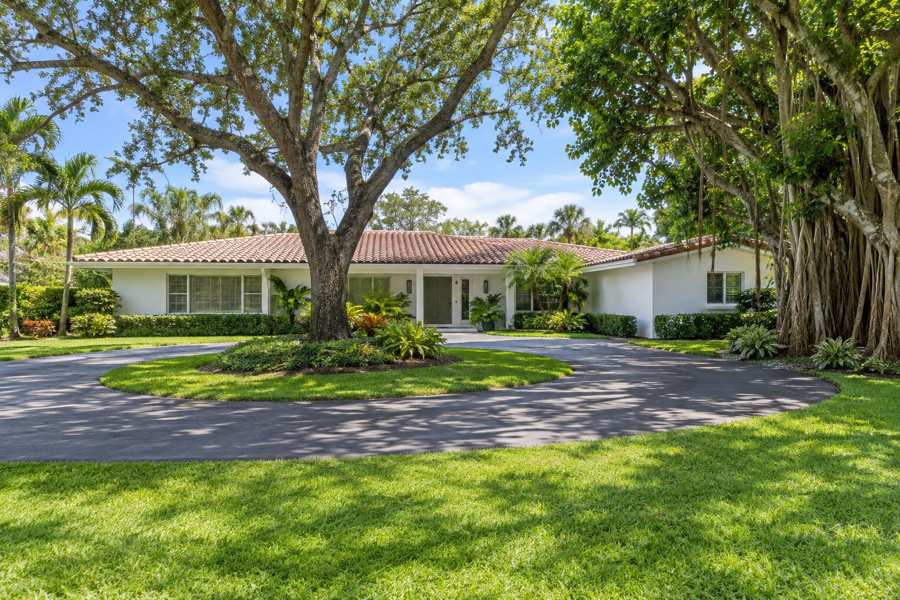
A Pinecrest West seller may remember a removed tree, a landscaper invoice and new palms installed before listing. Those details do not establish which tree rule applied, whether replacement was accepted or whether a remaining tree needs professional attention. Build a parcel-specific record file before describing the landscape as permitted, complete or safe.
The Village of Pinecrest's Trees page reports that its community-forestry recognition includes planting over 10,000 street trees since 1997. That is a Village-wide statement, not a count for Pinecrest West or a condition report for your yard. It shows why tree history deserves its own place in a sale file rather than disappearing inside general lawn-maintenance receipts.
This guide covers jurisdiction, removal and risk-assessment evidence, mitigation, contractor records and permit closeout. Pinecrest West is used as the neighborhood label from the research dataset, not as proof that every address is inside the Village. County requirements and Village procedures are kept separate, and no private tree, permit or sale contract has been inspected here.
What a Tree and Landscape Handoff Needs to Show
A useful handoff connects the parcel, each affected tree and the work actually performed. Separate species identification, condition assessment, permission to remove or relocate, replacement obligations and final acceptance. These are different records. A paid invoice can document a service without proving that the authority approved it or that every tree remaining on the property is safe.
Miami-Dade County's Property Search Help calls the folio a "parcel identifier" and explains that the complete thirteen-digit number retrieves the exact property. Start with that identity rather than a marketing neighborhood or postal city. Save the address, folio and owner information beside the survey and permit numbers so that similar street names do not produce a false match.
Tree index: Give each affected tree a consistent identifier tied to a survey or site sketch. Record the species as established by the appropriate professional, approximate work date, contractor, reason for work and related document. Do not present a homeowner guess about a species or trunk measurement as a certified finding. Preserve the report that explains how the identification was made.
Keep removal, relocation and pruning in separate rows. A relocation may have a new location and survival duties; pruning leaves a tree in place; removal may create replacement requirements unless an applicable exemption controls. A before-and-after photograph helps the reader follow the chronology, but it is not a substitute for approval, an onsite assessment or an inspection result.
Use three folders: authority and approvals, work and replacement evidence, and unresolved questions. That simple separation prevents an attractive new landscape from masking unfinished permit steps. If a seller does not have a document, mark it missing and identify the office or professional that could supply it. Do not fill the gap with an unsupported statement that the work was routine.
How to Confirm the County or Village Review Path
Confirm the actual parcel jurisdiction and the kind of tree protection involved before choosing an office. Pinecrest has its own tree ordinance, but county authority can still matter for specified protected resources and county land. A neighborhood name, mailing address or contractor's usual service area does not settle the applicable review path or establish an exemption.
Miami-Dade County's Tree Removal or Relocation Permits page lists Pinecrest among municipalities with their own recognized tree ordinances. It says separate county authorization is not generally required there except for the cases it identifies. Those include county-designated Natural Forest Communities, specimen-tree covenants in favor of the County and trees on county-owned land or county rights-of-way.
The same County page states that prior authorization is required for the listed work and removal or relocation in unincorporated areas. It also distinguishes mangroves and trees within wetlands. Do not take a municipal rule and apply it to an unincorporated parcel, or assume a Village location eliminates every county or resource-specific question. Obtain the parcel-specific pathway before work or a sale representation.
Boundary check: Pair the folio with the survey, actual municipal location and any recorded protection documents. Ask the relevant authority which review applies to the identified trees and location. Preserve its response with the exact question and supporting site material. An answer about one tree near a driveway should not silently become approval for every tree on the lot.
The Village's Tree Removal Permit Required page says removal or relocation needs a permit unless specifically exempted. It is a general entry point, not a ruling on a particular Pinecrest West address. When the Village and County pages appear to point in different directions, the next step is jurisdiction and protection clarification, not choosing the wording that seems easiest for the sale.
Why a Hazardous Tree Claim Needs Its Own Evidence
A hazard claim is not the same as the documented statutory exception. Florida law defines the qualifying property and assessment, and requires a particular unacceptable-risk finding. Recover the signed onsite documentation and its scope before relying on that pathway. A storm photograph, removal invoice or generic letter saying a tree was dangerous does not independently establish every required element.
Florida Statutes section 163.045 defines "Documentation" as an onsite assessment using the stated tree-risk-assessment procedures, performed and signed by an ISA-certified arborist or Florida-licensed landscape architect. It defines residential property as a single-family detached building on a lot actively used for single-family residential purposes, with a conforming or legally recognized nonconforming use. Do not extend that definition automatically to every property type.
The statute bars local notice, application, approval, permit, fee or mitigation requirements when the owner possesses the qualifying documentation that the tree poses an unacceptable risk. It defines that risk through removal being the only practical means to reduce it below moderate under the specified procedures. It also bars required replanting for work performed in accordance with that section and preserves the specifically delegated mangrove-protection exception.
The Village's Protection and Preservation of Pinecrest Trees guidance describes signed onsite assessment documentation for hazardous trees in residential districts. Its shorter Tree Removal Permit Required page uses more general language about a letter and danger. For this guide, the statute's actual definitions control the explanation; the shorter page is not used to turn any arborist letter into a blanket exception.
Assessment check: Keep the signed report, assessor identity and credentials, tree identification, assessment date and stated procedure together. Ask a qualified professional or counsel whether the evidence fits the actual work and statutory conditions. Do not manufacture a retrospective assessment or recast an ordinary removal receipt as one. Missing proof remains a gap, even if the tree is already gone.
How to Recover Permits and Verify Final Acceptance
Recover the application, issued approval, approved plan, conditions and final result as separate items. Search by the actual address and permit number, then ask the authority about unclear status. Work completion, payment and an inspection request are not the same as final acceptance. A general portal search also does not prove that no historical tree or landscape record exists.
The Village's Scheduling Inspections page explains that most eTRAKiT searches are available without login, while actions and some review information require an account. Use public searches as a lead and obtain the underlying documents needed for the handoff. Do not promise that every comment, old permit or attachment is publicly visible, and do not describe a no-hit search as a full clearance.
The Village's Tree Removal and Relocation Permit Application states, "A FINAL INSPECTION IS REQUIRED." Its owner acknowledgement also says the owner will request a final inspection once removal or replacement, if applicable, is completed. Preserve the actual accepted result rather than stopping at the application form, permit issuance or contractor's final invoice.
Miami-Dade County's Tree Removal or Relocation Permits page describes a separate County closeout process: after requirements are complete, submit a final inspection request; a field inspection checks satisfaction of permit requirements; satisfactory completion leads to closure. That is the County process, not a claim that Village permits use identical forms or timing. Confirm which office owns the specific record.
Status questions: Is the permit issued, expired, awaiting replacement, awaiting inspection or closed? Which trees and conditions does the result cover? The County page describes a one-year permit validity period, but that number must not be imported into a Village permit. Read the actual issue date and applicable conditions, and obtain current instructions before promising a closing timetable.
How to Document Replacement and Landscape Conditions
Match replacement work to the approved obligation, not merely to the number of new plants visible today. Keep required species, dimensions, location, canopy credit and survival or inspection conditions attached to the permit. Where an exemption lawfully removes mitigation duties, preserve its supporting evidence instead. An attractive planting receipt alone cannot establish that every condition has been satisfied.
The Village's Tree Removal Permit Required page distinguishes invasive-tree handling from hazardous-tree documentation. It says the Village does not charge a fee for listed invasive removals but requires species confirmation by a Village arborist, and replacement or mitigation may be required. A no-fee pathway is therefore not interchangeable with a no-replacement outcome. Preserve the actual determination and permit conditions.
Miami-Dade County's Planting Mitigation Guidelines show how qualifying tree categories and minimum sizes can carry different canopy credits. The posted sheet is marked revised December 2011. Use it to understand the record structure alongside the current permit and authority's instructions, not as a new universal replacement calculation for Village parcels. The document is not proof that a particular planting was accepted.
The Village's All Permits page includes a Landscape checklist covering tree surveys, site plans, landscape and irrigation plans, vegetation surveys and a landscape-compliance certificate. Those are listed application materials, not a new demand that every home sale obtain every listed item. For work that went through that pathway, recover the approved documents and completion evidence so the installed landscape can be compared with the accepted plan.
Replacement register: List each required planting, its approved location, installer, installation date, size/species evidence and final result. Identify outstanding survival or maintenance conditions rather than assuming a completed planting ends the file. If plans changed, obtain the approved revision. Do not alter an old plan yourself to make it match the current yard, and do not count unapproved substitutions as accepted mitigation.
How to Separate Routine Pruning From Safety and Compliance
Keep ordinary maintenance, regulated tree work and safety assessment distinct. A registered landscaper and a pruning invoice answer different questions from a professional risk report or permit closeout. Check the location and type of work before assuming no permit is needed, and use trained professionals for hazardous trees or electrical hazards. Sale preparation should never become a do-it-yourself tree-risk certification.
The Village's Landscaper Registration page says companies performing landscaping work in the Village must register before business and before seeking a tree or pruning/relocation permit, with annual renewal. It distinguishes residential trimming from commercial-property permit requirements while retaining landscape rules. Registration establishes a company's administrative status, not proof that a specific pruning job met every applicable standard.
The Village's Protection and Preservation of Pinecrest Trees guidance also identifies pruning near Pinecrest Parkway and commercial districts separately from residential areas. It says no more than one-fourth of living canopy may be removed within a year. Treat that as the Village's stated limit, not a target for removing exactly that much or a substitute for species-specific professional advice and applicable approvals.
UF/IFAS's Tree Risk Assessment guidance says trained evaluation matters for decay, cavities, root issues, leans and weak branch structure. Its Preparing Trees for Hurricanes page recommends professional evaluation about every two years and professional pruning for trees larger than about fifteen feet. Those are general maintenance recommendations, not a legal sale inspection schedule or a guarantee that a previously assessed tree remains safe.
UF/IFAS's Assessing Hurricane-Damaged Trees and Deciding What to Do explains that not every damaged tree requires removal, and some work needs advanced training. Its safety advice distinguishes qualified line-clearance work near electrical utilities. The Village's Trees page likewise discusses utility responsibility near power lines. Report suspected electrical hazards through the utility; do not send a general landscaper or buyer to test clearance or remove branches themselves.
How to Compare the Meaning of Each Landscape Record
Compare records by the question each can answer. A survey helps locate trees, an assessment addresses risk within its scope, a permit authorizes stated work and a final result addresses listed conditions. None proves every other fact. Organize the handoff so a buyer can see both the evidence and its limits without interpreting a folder of invoices as complete approval.
The County's permit page and the Village's application both separate permission from closeout. That distinction is important when a landscape looks finished but the file still shows a pending result. Ask for the actual status and conditions rather than treating permit issuance as completion. A request confirmation means an inspection was requested, not that the work passed.
A contractor invoice can identify dates, labor, species or planting quantities if those details are stated. It does not automatically establish the tree's former condition, the correct jurisdiction, a statutory exception or the authority's acceptance. Tie it to the specific tree identifiers and approved scope. Where the invoice is vague, seek an explanatory record rather than making its wording stronger yourself.
Evidence limits: A photograph can help show visible change but cannot establish root condition or hidden decay. A general property record can help establish parcel identity but is not a tree survey. UF/IFAS's risk guidance supports professional evaluation where concerns exist; no image or public map in this article is an assessment of a particular tree.
| Record | What it supports | What it does not establish |
|---|---|---|
| Folio and parcel record | Identity lead for the actual property | Tree location or permit acceptance |
| Tree survey or site plan | Identified locations within its scope | Current tree safety |
| Signed onsite risk assessment | Stated findings and documented procedure | Automatic exemption for every property or tree |
| Issued removal or relocation permit | Authorized work and stated conditions | Completed replacement or final acceptance |
| Contractor invoice | Specified service and date | Regulatory approval or risk certification |
| Planting evidence | Recorded installation details | Accepted mitigation without required review |
| Final result and status confirmation | Stated authority outcome for listed work | Future tree performance or unrelated approvals |
How to Choose the Next Step Before Comparing Offers
Choose the next step from the unresolved question: identity, jurisdiction, assessment, permission, replacement or closeout. Use the office or professional responsible for that question and preserve its answer. Then compare sale routes using the same known records and remaining work. Neither an attractive landscape nor a direct buyer's willingness to proceed removes public requirements or establishes a tree's condition.
The Village's Report Illegal Tree Cutting page provides a route to request an inspection or report a suspected violation. That route is not a private seller clearance and does not replace a statutory assessment. If a record suggests unapproved removal or improper pruning, ask the responsible authority and qualified adviser about the actual circumstances rather than declaring a violation or exemption from incomplete information.
Gap list: Write down the missing document, why it matters, who can answer and the next action. For an unidentified parcel, recover the folio and survey. For an uncertain hazard exception, recover the signed onsite assessment and advice about its fit. For unaccepted replacement, recover the permit conditions and authority result. Each gap needs its own answer, not a general statement that landscaping is finished.
Maison Off-Market's public process describes reviewing a property and making an offer if it fits. A seller can compare that proposal with a listing, but this guide does not establish a Pinecrest West acceptance, price or timetable. Give each route the same relevant documents, then compare actual responsibility for unfinished work, timing and written terms with professional advice.
Keep the handoff current through the transaction. A new storm, further pruning, a revised permit or a newly received inspection result can change what the file says. Preserve the earlier records and add dated updates rather than deleting inconvenient history. The goal is a clear chronology and honest limits, not a declaration that every landscape issue has disappeared.
Frequently Asked Questions
These answers address common questions about tree removal, pruning, replacement and sale records. They do not inspect a Pinecrest West parcel or determine whether an exemption applies. Use the actual jurisdiction, signed assessment, issued conditions and final results to answer property-specific questions, and keep general guidance separate from professional findings about a particular tree.
Does the Pinecrest West name prove Village tree rules apply?
No, a neighborhood label does not establish the actual municipal boundary or protected-resource jurisdiction. Confirm the folio, location and relevant authority before applying a rule.
Does a dangerous-tree invoice establish the Florida exception?
No, the statute describes qualifying residential use and signed onsite assessment documentation with a particular risk finding. Recover that evidence and obtain advice about its fit to the actual work.
Does an invasive tree always mean no replacement?
No, the Village guidance separates no-fee handling from possible replacement or mitigation requirements. Preserve the actual species confirmation and conditions instead of assuming the outcome.
Is an issued tree permit the same as a closed permit?
No, issuance authorizes stated work while closeout addresses completion of applicable conditions. Obtain the actual final result and current status.
Does a landscaper registration prove the pruning was proper?
No, registration and work compliance are different records. Keep the stated scope, applicable rules and relevant professional or authority findings together.
Can I use the County mitigation sheet for every Village parcel?
No, the posted County sheet is a dated guideline and does not establish every Village obligation. Use the actual permit, applicable authority and current instructions.
Does every hurricane-damaged tree need removal?
No, UF/IFAS explains that some damaged trees can be restored and that risk depends on the tree and targets. Use a qualified assessment rather than a general storm photograph.
Does a no-hit portal search prove there is no tree history?
No, a general search does not establish that every historical record is absent. Seek the underlying documents and clarification from the office responsible for the record.
Does selling directly remove tree or landscape requirements?
No, a sale route does not itself create approval or certify tree safety. Compare actual written terms while preserving known obligations and unresolved questions.
How Maison Off-Market Fits a Landscape Record Handoff
Maison Off-Market offers a direct-purchase route to compare with a listing once tree and landscape records are organized. Its public process includes property review and an offer if the home fits. This is not an arborist assessment, tree permit service, landscape-compliance certificate or guaranteed acceptance of a Pinecrest West property.
Maison Off-Market's public site describes buying luxury homes and estates directly from owners without showings, commissions, closing costs or seller repair work. Those are public service claims, not a private offer or a waiver of tree protections, assessment requirements or permit conditions. No tree condition, property price or acceptance is certified here.
Compare actual terms: Share the relevant assessments, approvals, replacement records, final results and identified gaps with each sale route. Ask who handles any remaining steps and how that affects the written proposal. Choose based on actual terms and professional advice, not the assumption that off-market means a missing landscape record no longer matters.
Compare your options before committing. Request a written private offer for your property, with no obligation, then weigh it against your listing plan.
Sources
- Miami-Dade County, Current public guidance. Property Search Help. https://www.miamidade.gov/pa/property-search-help.asp.
- Village of Pinecrest, Current public guidance. Trees. https://www.pinecrest-fl.gov/Government/Code-Compliance/Trees.
- Miami-Dade County, Current public page. Tree Removal or Relocation Permits. https://www.miamidade.gov/global/permit.page?Mduid_permit=per175995275739630.
- Village of Pinecrest, Current public guidance. Tree Removal Permit Required. https://www.pinecrest-fl.gov/Resident/Tree-Preservation-Protection/Tree-Removal-Permit-Requirements.
- Florida Legislature, Current statutory text. Section 163.045: Tree pruning, trimming or removal on residential property. https://www.leg.state.fl.us/statutes/index.cfm?App_mode=Display_Statute&URL=0100-0199%2F0163%2FSections%2F0163.045.html.
- Village of Pinecrest, Current public guidance. Protection and Preservation of Pinecrest Trees. https://www.pinecrest-fl.gov/Government/Communications-Division/News/Protection-Preservation-of-Pinecrest-Trees.
- Village of Pinecrest, Current public guidance. Scheduling Inspections. https://www.pinecrest-fl.gov/Government/Building/Scheduling-Inspections.
- Village of Pinecrest, Posted application. Tree Removal and Relocation Permit Application. https://www.pinecrest-fl.gov/files/sharedassets/village/v/1/government/building-and-planning/documents/code/tree-removal-permit-application.pdf.
- Miami-Dade County, Revised December 2011. Planting Mitigation Guidelines. https://www.miamidade.gov/permits/library/guidelines/tree-mitigation.pdf.
- Village of Pinecrest, Current public checklist. All Permits: Landscape. https://www.pinecrest-fl.gov/Government/Building/Apply-for-a-Permit/All-Permits.
- Village of Pinecrest, Current public guidance. Landscaper Registration. https://www.pinecrest-fl.gov/Government/Code-Compliance/Landscaper-Registration.
- UF/IFAS, Public educational guidance. Tree Risk Assessment. https://gardeningsolutions.ifas.ufl.edu/plants/trees-and-shrubs/trees/tree-risk-assessment/.
- UF/IFAS, Public educational guidance. Preparing Trees for Hurricanes. https://gardeningsolutions.ifas.ufl.edu/plants/trees-and-shrubs/trees/preparing-trees-for-hurricanes/.
- UF/IFAS, Public educational guidance. Assessing Hurricane-Damaged Trees and Deciding What to Do. https://ask.ifas.ufl.edu/publication/FR172.
- Village of Pinecrest, Current public guidance. Report Illegal Tree Cutting. https://www.pinecrest-fl.gov/Resident/Tree-Preservation-Protection/Report-Illegal-Tree-Cutting.
- Maison Off-Market, Current public site. Direct property purchase process. https://bulkscaler.com.
Related research
Seller Guide · 2026-10-08
How to Prepare Bloomfield Hills Tree and Woodland Sale Records
Separate tree approvals, replacement duties and wetland limits before selling wooded property.

Seller Guide · 2026-10-07
How to Prepare Georgetown Historic Exterior Sale Records
Separate historic design approval, building permits and actual exterior work before selling.
Seller Guide · 2026-10-07
How to Prepare Tenafly Tree Permit Sale Records
Connect tree removal approvals, mitigation planting and accepted inspections before promising landscape changes.