Seller Guide · by Aidan Sowa · October 6, 2026
How to Prepare Lincoln Park Coach House and Legal Unit Records Before Selling
Separate existing legal units, ADU eligibility and completed work before describing sale potential.
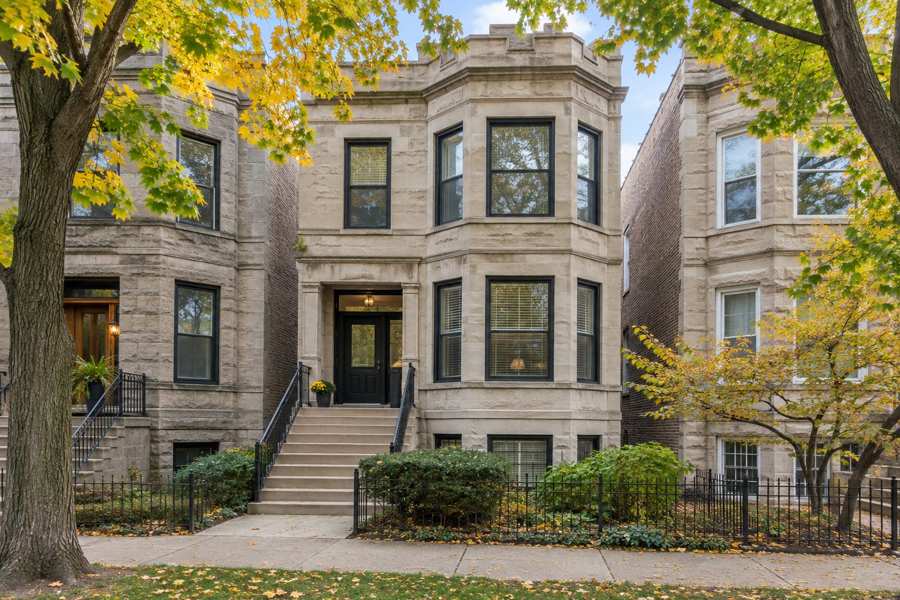
A rear building, basement kitchen or separate entrance can start a useful conversation about a Lincoln Park property's space. It cannot finish the legal-unit question. Before a seller describes a coach house as rentable, an interior apartment as established or an additional unit as possible, the record should distinguish what exists, what Chicago recognizes and what work has actually been approved and completed.
Chicago's official April 2026 ADU launch announcement confirms an expanded program, but the City's eligibility and requirements pages still make the address, zoning and applicable limits important. This guide turns recurring questions about coach houses and conversion units into a seller document workflow. It does not certify a property, calculate its development capacity or suggest that the expansion legalized every existing extra apartment.
Start With the Existing Legal Unit Count
A seller file should identify the legal existing units before adding a proposed coach house or basement conversion to the discussion. Keep the physical layout, recorded City determination and future project separate. A kitchen, old lease or listing description may be relevant history, but it is not the final legal decision. Record unresolved differences rather than advertising the highest number found in the paperwork.
Chicago's Residential Unit Verification page explains that the Office of the Zoning Administrator reviews historical information to establish a legally existing residential unit count. That is the appropriate authority for the determination. A seller summary should identify the evidence and any existing determination, not declare a legal count from photographs, utility meters or an owner's understanding of how the building has always been used.
Identity record: Put the property address, known address range, Property Index Number and building layout on the first sheet. Describe the principal building, rear structure and interior spaces without labeling an uncertain space a legal unit. The City's Certificate of Zoning Compliance page asks for the number and floor location of units, which makes a consistent address and layout record useful before the sale process begins.
The City defines a dwelling unit in its zoning-compliance guidance as independent living quarters for a single household and addresses additional cooking facilities. Do not use that definition as a do-it-yourself ruling about an accessory kitchen. If the number of occupied spaces differs from the certified count, present the difference to the appropriate professional and the City rather than quietly choosing the number most favorable to price.
Two columns: List the current physical use and the documented legal status separately. Add the source and date for each. A property's rent history may explain why a buyer asks about a space, but it does not replace the zoning record. Likewise, a future conversion proposal does not increase the count of completed legal units simply because the City now allows more ADU projects.
Recover the Historical Evidence in the City Review Sequence
Chicago provides a sequence for verifying residential units using historical permits, Water Annual Examination Books and additional evidence when necessary. Follow that sequence and preserve the complete documents. An online result is often a lead to the original record, not the final determination. If records conflict or are missing, request clarification rather than treating the oldest story or newest webpage as conclusive.
The Residential Unit Verification page starts with historical building permits. It says a relevant permit must be examined and approved by the Zoning Administrator, contain a zoning approval stamp and clearly note the number of existing residential units. A permit for a different task may not answer the question. Keep the approved plans or handwritten application when those are needed to understand the recorded scope.
The same City page states, "Electrical, sign and express permits do not prove an existing residential unit count." This is a useful warning against treating any permit found at an address as legal-unit evidence. A long permit list can show work occurred while leaving the central unit question unanswered. Identify the permit category and relevant zoning content before using it in the seller explanation.
Chicago's guidance next considers Water Annual Examination Books and describes how conflicting, later approved permits may supersede a water record. It then allows additional material for a Zoning Administrator determination, including prior certificates, maps, census information, utility records and photographs. Those materials are evidence for the City's review, not independent seller-issued certificates of legality.
Retrieval log: Record what was searched, what was found and what original material remains unavailable. The City guidance explains that a Freedom of Information Act request for permit applications or approved plans should specifically identify those records. Avoid an undocumented no permits statement based on one search. Keep conflicting documents together so the reviewer can see the actual history instead of a selectively favorable packet.
Check the Actual ADU Eligibility Instead of the Neighborhood Label
The expanded ADU program permits more projects, but eligibility still depends on the actual address, zoning and applicable area requirements. A Lincoln Park name or broad citywide headline cannot answer a parcel question. Use the current City eligibility resources and record the result with its date. Treat possible development as a separate question from the legal status of the existing building.
Chicago's April 2026 launch announcement confirms that the expansion took effect and describes broader access across multi-unit residential and certain business and commercial districts, along with eligible single-family areas. That announcement is context. The City's current Eligibility and Requirements pages are the working references for the address, rather than older pilot-area maps or a broker's shorthand description of citywide access.
The Eligibility page says owners in residential single-family districts can establish an ADU only within an "ADU-Allowed RS Area", with additional limits possible. The Requirements page identifies potential annual block caps, owner-occupancy conditions and administrative adjustments in relevant areas. Do not assume those conditions apply everywhere, or that none apply because the property lies near another approved project.
Dated eligibility evidence: Save the actual resource used, the address searched, zoning information and any City response obtained. A general screenshot about the program is not an address determination. If the resource and known zoning record differ, seek clarification before attaching an income or construction claim to the listing. This guide has not searched a private parcel or established any Lincoln Park owner's eligibility.
Chicago's Requirements page distinguishes conversion units within the principal building from a detached coach house. It also connects conversion capacity to existing legal units and principal-building age. Those dependencies are why the historical count comes first. Do not calculate an entitlement from physical bedrooms or assume a detached structure and an interior conversion can both be added without applying the actual current rules.
Keep Pre-Certification Separate From Design and Permits
ADU pre-certification confirms a program review stage, not finished construction or permission to occupy a new unit. The City process then moves through professional design, a building permit, construction and inspections. Preserve each stage as its own record. A seller can describe an application or approval accurately without turning it into a promise that a buyer can immediately build, rent or occupy the space.
Chicago's ADU Process page places eligibility and requirements before the Department of Housing pre-certification application. It then describes staff review and the approval letter, followed by design with a licensed architect or structural engineer. The approval letter belongs in the record, but its existence does not prove that the building department has issued a permit or that the approved project has been constructed.
The Process page labels the next step "Apply for a plan-based building permit" and calls for design plans and the pre-certification approval letter. Keep application, correction and approved-plan versions distinct. A concept drawing or architect's feasibility discussion is not the same as the reviewed plans. If a proposed buyer project differs from the seller's project, obtain advice before claiming the earlier approval covers it.
Chicago's How to Apply page asks for the existing legal unit count, building age, intended ADU type and number, ownership and occupancy information, and applicable documents. This supports a careful application record. Do not reconstruct those inputs from sale copy alone. If earlier submissions contain information that no longer matches the property, preserve the original and obtain a documented explanation of the change.
No application filed by this guide: The City's application page says submission automatically notifies the alderperson's office and includes applicant and property information. Researching the process is not submitting it. A seller considering a project should review the application and its consequences with the appropriate adviser. This guide has made no application, representation to the City or commitment on an owner's behalf.
Trace the Approved Work Through Inspection and Occupancy Evidence
A permit record describes authorized work, while inspections and applicable occupancy records describe later steps. Keep those stages connected to the same project and address. A permit number alone does not establish completed construction or lawful occupancy. When a certificate is absent, determine whether it was required and what other records apply rather than announcing either a violation or a clean bill of health.
Chicago's Search Building Department Records page provides address searches for permits, inspection activity, enforcement cases and alleged violations held in the electronic system. The associated record search is a starting point. Match the address range and work description before applying a result to the coach house or interior conversion. A permit elsewhere on the property may concern a roof, porch or unrelated improvement.
The City's Building Permits dataset says it covers permits issued from 2006 onward. That scope is important when the question involves an older rear building or historic conversion. An empty dataset result does not establish that no permit ever existed. Use the City's historical-record instructions and relevant retrieval requests rather than treating a limited online archive as the complete legal history.
Chicago's Certificates of Occupancy page lists required categories, including construction or substantial alteration of four or more dwelling or sleeping units and changes of occupancy. It also explains that certificates may be requested for other projects under its process. Do not require the same certificate from every small residential project without checking the actual work and governing requirements.
Closeout evidence: Retain approved plans, issued permits, required inspection results and applicable certificate or City response. The ADU Process page summarizes occupancy steps, while the detailed occupancy page sets out further categories and procedures. If the summary seems incomplete for the project, ask the building department or qualified design professional which requirements apply. Keep an unresolved closeout question visible instead of substituting a completion photograph.
| Record | What to check | What it does not establish alone |
|---|---|---|
| Historical unit evidence | Address, zoning stamp and City review | Seller-certified legality |
| Zoning compliance certificate | Legal count and applicable transfer scope | All construction is code-compliant |
| ADU eligibility resource | Actual address and current limitations | An existing apartment was legalized |
| Pre-certification letter | Project details and staff approval | A building permit was issued |
| Approved plans and permit | Scope, address and status | All work passed inspection |
| Inspection and occupancy record | Required results and applicable completion evidence | Future rental terms are unrestricted |
| Covenant or compliance record | Continuing obligations and latest status | Every future owner use is allowed |
Separate Zoning Compliance Certification From Building Compliance
The City sale-related zoning compliance certificate addresses the legal residential unit count for covered property transfers. It is not a building-code inspection or a universal certificate for every property type. Determine whether the transfer falls within its scope and preserve the current certificate or unresolved review. Do not use a favorable count determination to imply that every construction or occupancy issue has been settled.
The City's Certificate of Zoning Compliance page says the requirement applies when residential property with five or fewer dwelling units is transferred or sold, with an exception for condominium and cooperative transfers. The published Municipal Code section 3-33-045 provides the formal framework. Confirm the actual transaction category with the closing professional rather than requiring or waiving the document based solely on a neighborhood guide.
The City explains that the certificate certifies the number of residential dwelling units legal under the Chicago Zoning Ordinance. It describes an initial records decision and a property inspection when the count cannot be certified from the ordinance and records. This is not the same purpose as a certificate of occupancy or a final construction inspection, even when the same property and floor layout appear in all three files.
Consistent sale description: Align the reviewed count, floor locations and actual unresolved facts across the seller packet and proposed sale description. If the certificate and existing use differ, obtain advice about what should be corrected or explained. Do not call a property a completed multi-unit conversion merely because an application is in process, or hide an uncertainty behind an accessory-space label.
The City page provides application mechanics, but some instructions are explicitly dated. Confirm current procedures before applying or paying, rather than relying on a guide to reproduce every operational detail. This guide neither files for certification nor guarantees the review time. The practical seller task is to recover the right evidence early enough for the actual transfer review, with unresolved questions clearly recorded.
Preserve Continuing ADU Conditions Before Promising Rental Use
An ADU project can carry continuing requirements that matter after construction and during a sale. Keep covenants, affordability documents and applicable use limits with the project file. An added unit is not automatically unrestricted rental income. Describe what is documented and ask the appropriate adviser to review unresolved obligations before relying on a rental scenario to compare offers or explain the property to a buyer.
Chicago's Requirements page states that short-term leases or vacation rentals are not permitted in conversion units and addresses coach houses constructed after 2021. Those statements should prevent an unsupported vacation-rental pitch. They do not authorize this guide to decide the legality of every older coach house rental. The specific property, establishment history and applicable rules still need review.
The ADU Process page says annual affordability affidavits must be submitted when affordability requirements apply. The How to Apply page identifies covenant and affidavit documentation when required. Preserve those records and the basis for the obligation instead of describing all ADUs as affordable units or all ADUs as unrestricted. The correct question is what applies to this project and what evidence shows the current status.
Existing coach house: Chicago's Requirements page says a legally established coach house may not need ADU pre-certification for certain repair, remodeling or addition work. That is a conditional statement about pre-certification, not a waiver of every building permit or other approval. Establish the legal history and intended work before using it to promise a simpler project route.
Give the buyer and sale advisers the relevant documented conditions and known gaps. Do not publish personal identification or residency documents merely because they supported an application. A public description can explain that the file contains a covenant or owner-occupancy basis while the actual sensitive documents remain within the permitted transaction review. Keep privacy distinct from withholding a material restriction.
Compare Sale Proposals Using Established Facts and Separate Potential
A useful offer comparison separates established legal use of the property from a possible future project. Provide the same relevant record chain and unresolved questions to each permitted sale review. Ask how missing approvals, unfinished work or continuing conditions affect the written terms. Neither a high projected rent nor a quiet purchase process proves that an additional unit can be built or lawfully occupied.
Chicago's Eligibility, Requirements and ADU Process pages together show why development potential has several stages. An address may be eligible while a project still needs design, permit review, construction and inspection. A seller can identify that possibility without presenting it as completed rentable area. Keep the future scenario labeled as a scenario and record which approvals have actually been obtained.
Evidence before price assumptions: Organize the legal-count determination, project approvals, work status and use restrictions before asking buyers to value the space. If a rear structure lacks a complete history, show that gap. Do not turn a buyer's optimistic statement into the seller's legal assurance. The City and qualified professionals, not an offer amount, determine the relevant regulatory questions.
Ask each buyer route which missing records or work affect the proposal and who will handle them. Review financing conditions, review periods, responsibilities and timing with the transaction advisers. This guide does not prescribe a contract clause, estimate rent or promise that a buyer will accept an uncertain unit. Written terms should reflect the actual record rather than assumptions copied from a prior listing.
Once a new determination or approval arrives, update the dated packet and alert the appropriate transaction professional. Keep the earlier version so the change is understandable. An organized record reduces avoidable confusion, but it is not an entitlement opinion or disclosure checklist for every circumstance. The sale remains grounded in what the property file establishes and what is still unresolved.
Frequently Asked Questions
These answers address recurring coach house, conversion and legal-unit questions using the City record workflow. They do not certify a Lincoln Park property or settle a proposed development. Establish the actual address, project history, legal count and continuing conditions, then use qualified advice for the particular sale, application or occupancy question rather than treating the neighborhood name as approval.
Did the ADU expansion legalize every existing basement apartment?
No, broader eligibility does not certify an existing unit. Establish the legal count and applicable project record separately.
Does a separate entrance prove a legal rental unit?
No, layout alone does not establish the City determination. Gather the historical evidence and any zoning decision for the property.
Can an electrical permit prove the unit count?
The City says electrical, sign and express permits do not prove an existing residential unit count. Follow the Residential Unit Verification sequence for appropriate evidence.
Is every Lincoln Park address eligible for a new ADU?
Do not assume that from the neighborhood label. Check the actual address, zoning and applicable area conditions using current City resources.
Is pre-certification the same as a building permit?
No, the City process places design and building permit review after pre-certification. Preserve the letter and permit as separate stages.
Does every coach house need the same occupancy certificate?
No, occupancy requirements depend on the project and applicable categories. Check the detailed City guidance with the appropriate professional.
Is the zoning compliance certificate a building-code guarantee?
No, the certificate concerns the legal residential unit count within its transfer scope. Permit, inspection and occupancy evidence answer different questions.
Can I advertise an ADU as vacation-rental income?
The City Requirements page imposes short-term rental limits for the stated ADU categories. Obtain property-specific advice rather than promising unrestricted rental use.
Can a direct purchase skip the legal-unit question?
A different sale route does not establish a legal count or remove known restrictions. Compare reviewed written terms using the same truthful records and unresolved facts.
How Maison Off-Market Fits a Legal Unit Record Handoff
Maison Off-Market offers a direct-purchase route to compare with a listing once the property record is organized. Its public process includes assessing the home and land and making an offer if it fits. This is not a zoning determination, building permit or certification of rental use, and it does not guarantee a purchase of a Lincoln Park property with an uncertain unit history.
Maison Off-Market's public site describes buying luxury homes and estates directly from owners without showings, commissions, closing costs or seller repair work. Those are public service claims, not a private proposal or a finding that an additional unit is legal. The guide does not expand the business's stated process into a promise about coach house feasibility or future income.
Compare actual terms: Share the relevant legal-count evidence, approved work, continuing conditions and known gaps during the permitted review. Ask how unresolved records affect the written proposal and who handles remaining work. Review price, timing and responsibilities with the appropriate advisers rather than treating fewer sale steps as a substitute for an accurate property description.
Compare your options before committing. Request a written private offer for your property, with no obligation, then weigh it against your listing plan.
Sources
- City of Chicago, Checked October 2026. Residential Unit Verification. https://www.chicago.gov/city/en/depts/dcd/supp_info/legal-unit-count.html.
- City of Chicago, Checked October 2026. Certificate of Zoning Compliance. https://www.chicago.gov/city/en/depts/dcd/supp_info/certificate_of_zoningcompliance.html.
- City of Chicago, April 1, 2026. ADU Expansion Launch Announcement. https://www.chicago.gov/city/en/depts/doh/provdrs/housing_resources/news/2026/april/mayor-brandon-johnson--ald--bennett-lawson-celebrate-launch-of-a.html.
- City of Chicago, Checked October 2026. ADU Eligibility. https://www.chicago.gov/city/en/sites/additional-dwelling-units-ordinance/home/eligibility.html.
- City of Chicago, Checked October 2026. ADU Requirements. https://www.chicago.gov/city/en/sites/additional-dwelling-units-ordinance/home/requirements.html.
- City of Chicago, Checked October 2026. ADU Process. https://www.chicago.gov/city/en/sites/additional-dwelling-units-ordinance/home/adu-process.html.
- City of Chicago, Checked October 2026. How to Apply for an ADU. https://www.chicago.gov/city/en/sites/additional-dwelling-units-ordinance/home/apply-here.html.
- City of Chicago, Checked October 2026. Search Building Department Records. https://www.chicago.gov/city/en/depts/bldgs/provdrs/inspect/svcs/building_violationsonline.html.
- City of Chicago, Checked October 2026. Building Permits Dataset. https://www.chicago.gov/city/en/dataset/building_permits.html.
- City of Chicago, Checked October 2026. Certificates of Occupancy. https://www.chicago.gov/city/en/depts/bldgs/supp_info/certificate-of-occupancy.html.
- American Legal Publishing, Checked October 2026. Chicago Municipal Code Section 3-33-045. https://codelibrary.amlegal.com/codes/chicago/latest/chicago_il/0-0-0-2606594.
- Maison Off-Market, Checked October 2026. Direct Purchase Process. https://bulkscaler.com.
Related research
Seller Guide · 2026-10-08
How to Prepare Bloomfield Hills Tree and Woodland Sale Records
Separate tree approvals, replacement duties and wetland limits before selling wooded property.

Seller Guide · 2026-10-07
How to Prepare Georgetown Historic Exterior Sale Records
Separate historic design approval, building permits and actual exterior work before selling.
Seller Guide · 2026-10-07
How to Prepare Tenafly Tree Permit Sale Records
Connect tree removal approvals, mitigation planting and accepted inspections before promising landscape changes.