Seller Guide · by Aidan Sowa · October 6, 2026
How to Prepare Carson City Well and Septic Records Before Selling
Separate system performance, permitted use and water rights before comparing sale terms.
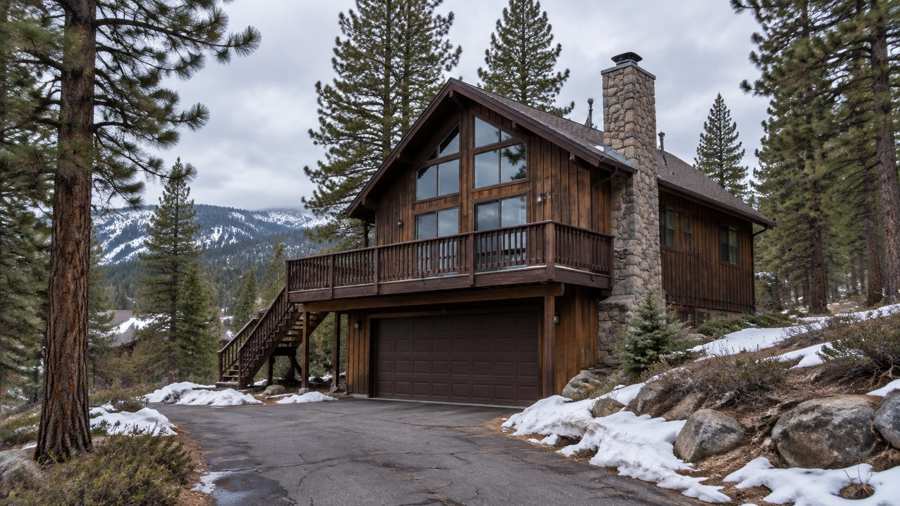
A Carson City home with a private well and septic system needs a sale file that answers different questions separately. A well log describes construction history; a current test describes sampled performance. A septic pumping receipt describes service, not approved capacity. Water-right documentation concerns lawful use and ownership, not whether a pump works today. Mixing these records can make an otherwise useful listing promise too much.
Carson City Health and Human Services describes septic design through test-trench and percolation work, construction review, and review of additions that might affect the existing system. Its well guidance also separates the local Building Department permit from a licensed driller's state intent-to-drill and well-log filings. This is more precise than advertising a rural property as simply having permitted utilities.
This guide uses those official instructions, Nevada water law and disclosure materials, plus substantive local acreage articles. It prepares a seller for questions about current condition, intended use and closing obligations. It does not diagnose a system, confirm a particular irrigation right, approve an accessory dwelling or establish a mandatory sewer-connection trigger for an unidentified parcel.
Identify the Parcel and Each Water and Wastewater System
Start with the actual parcel, municipality and utility arrangement rather than the Carson City mailing label. Nearby rural property can fall under other county authorities. Record whether the dwelling uses city water, a private or shared well, sewer or septic, and identify separate irrigation infrastructure. The sale file should describe the installed arrangement without implying every advertised future use has been approved.
Property map: Assemble the parcel identifier, deed, available survey and a simple system-location plan. Mark the well, tank, disposal field, access route and relevant structures using existing professional records where available. A seller's sketch is an orientation aid, not a surveyed boundary or an approved as-built. Label uncertain locations instead of presenting a guessed line as exact.
Paul Dunham's substantive rural-buying guide emphasizes that regional acreage questions extend beyond wells and tanks to easements, access, utilities and intended use. Its jurisdiction warning is especially useful for sellers: an article about rural property near Carson City does not establish the governing health office for every address. Confirm the actual parcel before selecting forms or describing approval requirements.
System inventory: List the well equipment, treatment equipment and wastewater components separately. Identify any shared-service agreement, outbuilding connection or abandoned installation known to the owner. Do not assume a second kitchen, detached guest room or irrigated pasture has the same approval as the principal residence. Link the physical layout to actual records and flag additions that need review.
Match the Well Log to Local Permit and Service Records
Collect the well log, drilling documentation, local permit and equipment history as separate records. Carson City's guidance requires a state-licensed driller and identifies both local Building Department permitting and state filings. These documents establish the construction and review trail. They do not by themselves prove today's water quality, sustained production or permission to use the property for a different purpose.
Record match: Search the Nevada well-log system using the property information and compare the returned location and construction details with the installed well. Preserve the actual report and the basis for identifying it. A nearby dot on a map is a lead, not proof that a particular log belongs to the well serving this dwelling. Resolve an uncertain match with the driller or appropriate office.
Compile receipts for pump replacement, pressure-tank work, wiring, repairs and treatment service. Identify dates, equipment and who performed the work. Keep original recommendations alongside the paid invoice; a replacement invoice does not show that every recommendation was completed. This history helps an inspector choose the scope and lets the buyer distinguish a recently replaced pump from an entirely new well.
Missing file: Describe an unsuccessful records search as missing documentation rather than an unpermitted-system conclusion. Ask the relevant office what archived files or alternate identifiers could help. Conversely, do not call a well approved solely because the seller has always used it. The guide's purpose is to reduce unsupported claims, not convert either an empty search or long use into a legal determination.
Separate Current Water Quality From Production and Equipment
Water quality, well production and equipment condition answer different questions. Prepare recent professional reports with the sampling date, test scope and identified well, then keep pump and treatment records beside them. A historical well log or clear-looking water is not a current drinking-water finding. A satisfactory sample also does not prove that the well can meet every proposed household or outdoor demand.
Heidi McFadden's well-and-septic article usefully separates production testing, laboratory analysis and pump or pressure-tank condition. Use that distinction to build the seller's evidence package rather than adopt a universal inspection procedure. Ask the chosen qualified professional what sampling, flow assessment and equipment review fit the installation, transaction and buyer's planned demand. A commercial article's preferred test is not automatically a municipal requirement.
Report limits: Record when the sample was taken, where it was collected and whether treatment was in use. Keep the laboratory results and the professional's explanation, including any follow-up recommendation. A result from one tap on one day has a defined scope. Do not turn it into a promise that every contaminant is absent or that treatment will never need service.
Explain known interruptions, low pressure, seasonal performance changes or equipment problems factually. Pair any repair claim with supporting work records and relevant follow-up. If a buyer needs updated testing, agree on access, responsibility and timing in the transaction. The seller's older report is useful background, but it should not be represented as the buyer's own inspection or an unlimited water-supply warranty.
Distinguish Domestic Use From Separate Water Rights
Nevada distinguishes domestic use from water uses that require an appropriative right. Current NRS 534.013 includes a single-family dwelling and an accessory dwelling unit when an applicable local ordinance provides for it, subject to the statutory withdrawal limit. Do not assume acreage creates irrigation rights or that every guest unit needs a new well. Verify the actual use, local approval and state records together.
Correct the shortcut: McFadden's article provides useful water-right questions, but its categorical statement about one dwelling per domestic well is narrower than the current statutory definition. The guide follows the statute rather than repeating that shortcut. An accessory dwelling is not automatically approved: the local ordinance, development permissions, wastewater capacity and actual domestic-water conditions still require review for the parcel.
The domestic exemption is not unlimited irrigation permission. NRS 534.180 generally sets the exempt withdrawal boundary at two acre-feet per year. Its accessory-dwelling provision requires local approval, a meter measuring total withdrawal, and total use within that limit, with reporting and monitoring duties. Keep a buyer's pasture, business activity or lot split distinct from the existing household use; a functioning pump does not approve a new purpose.
Claimed rights: If the sale includes an irrigation or other water right, gather the actual permit, certificate or claim identifiers and associated records. Ask a qualified water-right specialist to reconcile authorized use, location, status and title. A deed phrase or attractive green field does not prove the currently available quantity or that the buyer may relocate the use. State records and transaction documents must answer the actual claim.
Build the Septic Design, Construction and Repair File
A septic sale file should separate approved design, installed construction, later repairs and current condition. Carson City describes a test-trench and percolation process before design review, then investigation of construction against the plan. It also reviews property build-outs for impacts on existing septic. Gather the applicable records before treating a bedroom count, addition or pumping history as proof of sufficient approved capacity.
Design trail: Request the available test-trench information, percolation results, design, permit, inspection findings and as-built records. The City's guidance describes testing at two-foot and four-foot depths for the initial design calculations. That does not mean every resale automatically requires a new trench. Ask Environmental Health and the Building Department what the existing file establishes and what a proposed change would require.
Collect permits and closeout records for replacements, repairs or abandonment. A contractor's proposal, payment receipt and completed inspection serve different roles. Retain unresolved comments or conditions instead of leaving only the cleanest invoice in the folder. If a repair has been performed but its permit status is unclear, describe the actual evidence and obtain clarification rather than advertise a fully approved replacement.
Changes around the field: Review additions, garages, paving, landscaping or detached structures against the available plan. Carson City's guidance specifically recognizes build-outs as a potential impact on existing septic. Do not infer that a long-standing improvement was reviewed or that its placement leaves room for every future expansion. Provide the records and let the qualified office and professionals assess the actual layout.
Keep Pumping History Separate From Disposal-Field Condition
Pumping history is valuable maintenance evidence, but it is not a complete system inspection or proof of disposal-field capacity. Organize service dates, reported findings, repairs and current professional assessments separately. Sellers should disclose known failures and avoid presenting a clean tank receipt as a guarantee. The buyer's inspection scope should fit the installation and contract rather than a generic online checklist.
Maintenance ledger: Note the service provider, date, work performed and any recorded warning. Preserve notes about damaged components, unusual levels, access limitations or recommended follow-up. If the seller has observed backups, odors, wet areas or other problems, report those observations without attempting a diagnosis. Do not discard the warning because a subsequent visit produced a routine paid receipt.
McFadden's article emphasizes the importance of the disposal field rather than looking only at a tank. Dunham likewise separates location, type, pumping and regulatory records. These are useful questions, not proof of a single mandatory testing method. Ask a qualified inspector what is safe and informative for the actual system, and keep the report's limitations visible when sharing the result.
Evidence table: Use a short worksheet to show what each record proves and where another check remains. This keeps a missing approval, aging equipment or unresolved condition from being buried inside a large folder. It also helps compare offers fairly: a buyer requesting updated field review is not necessarily asking the seller to replace a system, and a buyer waiving one inspection is not issuing a government approval.
| Record | What it establishes | What remains separate |
|---|---|---|
| Well log | Reported construction history | Current quality and sustained production |
| Laboratory and flow reports | Dated findings within the test scope | Other contaminants and future demand |
| Septic design and closeout | Documented review and installation trail | Current condition and later changes |
| Pumping receipts | Service history and recorded findings | Whole-system and disposal-field review |
| Water-right instruments | Claimed right and associated identifiers | Current status, title and authorized use |
Verify Utility Connection and Future-Use Questions for the Parcel
An operating system does not establish that the seller can replace it anywhere or that a buyer may expand it. Verify parcel-specific utility availability, replacement permissions and intended-use questions with the appropriate offices. A local article's discussion of conversion areas is a reason to ask, not proof that this sale triggers sewer connection. Keep written agency responses separate from estimates and listing language.
Targeted inquiry: Supply the actual parcel and installed arrangement when asking about a replacement field, an added dwelling or possible public-service connection. Ask what existing records, local conditions and proposed work govern the answer. Keep the response with its date and scope. A statement about a neighboring lot or general regional policy should not be inserted into this property's marketing as a binding determination.
If connection or permitted replacement work may be needed, separate feasibility from pricing. A contractor's number can help plan only after its scope is clear, including the work assumed and approvals excluded. The guide does not supply a local connection-cost range because no parcel, utility determination or bid was reviewed. Nor does it promise that a functioning system makes future replacement permissible.
Buyer plans: Document the difference between the present household use and proposed expanded accommodation, irrigation or subdivision. Those plans may involve several authorities and separate design constraints. A direct purchaser's willingness to buy does not approve the plans, and an agent's hopeful description is not a land-use determination. Put unresolved feasibility into the offer review rather than imply it has already been solved.
Complete Disclosure and Water-Right Conveyance Work Separately
Nevada disclosure and any water-right ownership update are different closing tasks. Subject to the statutory exceptions, NRS 113.130 requires the seller's completed disclosure to be served at least ten days before conveyance. Newly discovered or worsened defects require timely written notice. Where a separate water right is conveyed, NDWR's ownership process requires its own title documentation; a home inspection does not replace either task.
Seller disclosure: The Real Estate Division's form asks about water quality or supply and adverse property conditions. The seller supplies their knowledge; the form is not a system warranty and the agent must not complete it on the seller's behalf. Work with the transaction professionals on the applicable exception and deadline rather than assuming an as-is or direct sale removes the requirement.
NRS 113.140 distinguishes unknown defects from known conditions and preserves the buyer's duty to exercise reasonable care. This should not be used to bury a known well interruption, septic failure or notice from the office. If a new defect is discovered or an identified one becomes worse after the form is served, the current statute calls for written information as soon as practicable and no later than conveyance.
Separate right, separate title: NDWR explains that water rights are real property conveyed by deed and recorded in the appropriate county. An acquiring owner must submit a Report of Conveyance, Abstract of Title, complete chain of title and applicable fees. Have the title and water-right professionals confirm what is actually included, responsible parties and required filings. Do not claim the land deed alone finishes the Division's record update.
Compare Sale Routes With the Same Condition and Approval Evidence
Compare listing, scoped preparation and a direct proposal using the same records. Separate known condition, missing evidence, proposed work and approval questions before estimating net proceeds or timing. An as-is offer can allocate repair responsibility without eliminating disclosure or authorizing future use. The strongest sale plan is a clear written agreement, not a claim that a private buyer removes every well or septic issue.
NAR's preparation guide supports choosing useful repairs and records before spending, while its contingency guide explains how contract conditions govern inspections and outcomes. Apply that approach to the actual system: retrieve the file, identify the open question and obtain a relevant scope before ordering broad replacement work. No cited source establishes that a seller will recover every testing or repair dollar in the sale price.
Offer worksheet: Compare price, buyer identity, deposit, financing, inspection conditions, any system or utility work, water-right documents, possession and closing date. Include actual preparation and carrying costs instead of inventing a standard local allowance. A short proposed closing can still depend on records, lender review or agreed corrections. Verify the written conditions before calling the timetable certain.
NAR's pricing guide also supports distinguishing the property's condition and market evidence from an asking-price aspiration. This guide's postal-area housing chart provides building-age context only; it does not count well-equipped parcels, prove septic failure rates or price irrigation rights. Keep system evidence and actual offer terms at the center of the decision, with the unresolved items visible to every sale route.
Frequently Asked Questions
Carson City sellers should separate parcel jurisdiction, well construction, current water performance, septic approval and water-right title. An operating system is not permission for every buyer use. These answers draw on official instructions and current Nevada law, while leaving property-specific diagnosis, accessory-dwelling approvals, connection requirements and contract decisions to the records and qualified professionals handling the transaction.
Does a Carson City mailing address determine the health authority?
Nearby acreage can fall under another county or utility arrangement. Confirm the actual parcel and governing office before applying local forms.
Does a well log prove current drinking-water quality?
A log records drilling and construction information within its scope. Current water quality needs appropriate dated sampling and interpretation.
Does a replaced pump establish unlimited production?
Equipment replacement and well production are separate facts. Match current testing to the actual installation and intended demand.
Must every accessory dwelling have another domestic well?
Current Nevada law includes an accessory dwelling unit when an applicable local ordinance provides for it. The parcel still needs review of lawful use, water conditions and wastewater capacity.
Does acreage automatically include irrigation rights?
Land area and a working domestic well do not establish a separate irrigation entitlement. Verify any claimed right through its instruments, state status and title records.
Does a pumping receipt prove the septic field is sound?
A receipt documents service and any stated findings. It is not a complete disposal-field inspection or approval for an expanded use.
Does selling automatically require sewer connection?
This guide does not establish a blanket sale-triggered connection rule. Ask the relevant offices about the actual parcel and proposed work.
Can an as-is buyer waive the seller disclosure requirement?
For transactions covered by NRS 113.130, the statute does not allow waiver of its requirements. Have the professionals check the applicable exception and deadlines.
Does recording the house deed finish a separate water-right update?
NDWR describes additional ownership documents and a Report of Conveyance process. Confirm the conveyed right and required title submission with the transaction professionals.
How Maison Off-Market Reviews a Carson City Sale Option
Maison Off-Market describes a direct-purchase process that reviews the property before proposing price and timing. A Carson City seller can compare its written option using well, septic, disclosure and any separate water-right records. The company does not certify water quality, approve an accessory dwelling or determine irrigation entitlement. Confirm how its actual proposal handles unresolved system findings and required documentation before relying on closing terms.
The stated process describes flexible closing dates, no commissions and no seller closing costs, working with the owner's attorney or title company. Confirm actual purchaser identity, deposit, net proceeds and conditions. A preference for no seller repair work does not remove required disclosure, title work or government approvals.
Decision evidence: The written proposal and transaction terms, not a verified Carson City well or septic case study. Compare listing and scoped preparation using the same facts. A private purchase is a sale option, not a water-right certification or a promise that every future improvement will be permitted.
Compare your options before committing. Request a written private offer for your property, with no obligation, then weigh it against your listing plan.
Sources
- Carson City Health and Human Services, Checked October 6, 2026. Septic and Well Guidance. https://www.gethealthycarsoncity.org/divisions/environmental-health/programs-inspections/septic-well.
- Nevada Legislature, Checked October 6, 2026. Underground Water and Wells, Chapter 534. https://www.leg.state.nv.us/nrs/nrs-534.html.
- Nevada Legislature, Checked October 6, 2026. Domestic Well and Accessory Dwelling Statutory Excerpts. https://www.leg.state.nv.us/App/InterimCommittee/REL/Document/8269.
- Nevada Legislature, Checked October 6, 2026. Sales of Real Property, Chapter 113. https://www.leg.state.nv.us/nrs/nrs-113.html.
- Nevada Real Estate Division, Checked October 6, 2026. Seller Real Property Disclosure Form. https://red.nv.gov/uploadedFiles/rednvgov/content/Forms/547.pdf.
- Nevada Division of Water Resources, Checked October 6, 2026. Water Rights. https://water.nv.gov/index.php/water-rights.
- Nevada Division of Water Resources, Checked October 6, 2026. Water-Right Ownership Updates. https://water.nv.gov/programs/ownership.
- Nevada Division of Water Resources, Checked October 6, 2026. Well Log Search. https://tools.water.nv.gov/WellLogQuery.aspx.
- Heidi McFadden, Checked October 6, 2026. Well and Septic Due Diligence for Carson City Acreage Buyers. https://thenevadalife.com/blog/well-and-septic-due-diligence-for-carson-city-acreage-buyers.
- Paul Dunham, Checked October 6, 2026. Buying Rural near Carson City: Wells, Septic and Acreage Basics. https://www.northernnevadahousesearch.com/blog/buying-rural-near-carson-city-wells-septic-and-acreage-basics/.
- NAR, Checked October 6, 2026. Preparing to Sell Your Home. https://www.nar.realtor/the-facts/consumer-guide-preparing-to-sell-your-home.
- NAR, Checked October 6, 2026. Real Estate Contract Contingencies. https://www.nar.realtor/the-facts/consumer-guide-real-estate-contract-contingencies.
- National Association of REALTORS, Checked October 6, 2026. Consumer Guide: What Goes Into Pricing Your Home. https://www.nar.realtor/the-facts/consumer-guide-what-goes-into-pricing-your-home.
Related research

Seller Guide · 2026-10-08
How to Prepare Bloomfield Hills Tree and Woodland Sale Records
Separate tree approvals, replacement duties and wetland limits before selling wooded property.

Seller Guide · 2026-10-07
How to Prepare Georgetown Historic Exterior Sale Records
Separate historic design approval, building permits and actual exterior work before selling.
Seller Guide · 2026-10-07
How to Prepare Tenafly Tree Permit Sale Records
Connect tree removal approvals, mitigation planting and accepted inspections before promising landscape changes.