Seller Decision · by Aidan Sowa · October 6, 2026
What Should a Palma Ceia Seller Show a Buyer Who Asks About Flooding? Reading the Disclosure, the Maps and the Repair Record
An address-specific record helps separate what happened to a house from the risks shown on a map.
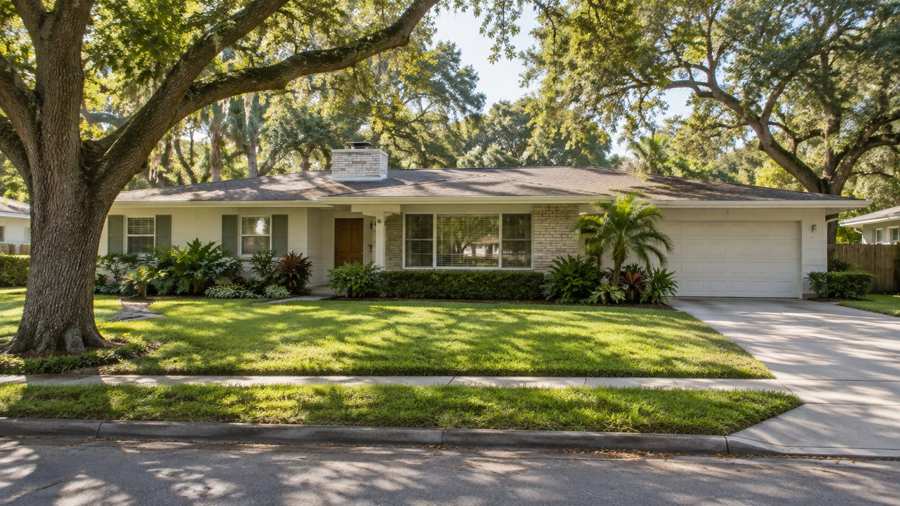
What should I show a buyer who asks whether my Palma Ceia house has flooded? A seller can have a freshly painted house, a folder of repair invoices and a flood map open on the screen, yet still struggle to answer clearly. The documents describe different things. One concerns the property's history, another concerns work performed, and the map describes risk under a particular mapping system. None should quietly stand in for the others.
The question comes from real homeowner and buyer discussions in the wider Tampa Bay area. In a Florida discussion after Hurricane Helene, a person browsing house listings wondered why attractive listing photos said nothing about suspected flooding. In a separate St. Petersburg discussion, a resident questioned claims attached to homes in streets they remembered flooding. Those accounts are unverified anecdotes and are not evidence that a Palma Ceia house flooded. They show why buyers may ask for more than polished pictures.
For a Palma Ceia owner, the useful response is an address-specific record, a carefully completed disclosure and a clear boundary between known history and future risk. Florida's published flood-disclosure statute, Hillsborough County's mapping guidance and Tampa's own emergency information provide the foundation. They do not certify any individual house as flood-free, establish an insurance quote or decide a buyer's willingness to proceed. This brief explains how to organize the evidence before comparing a public listing with a direct purchase.
Key Findings
- Florida Statutes section 689.302 says a residential seller must provide a completed flood disclosure at or before execution of the sales contract. Its published form asks about known flood damage during ownership, flood-related insurance claims and assistance received. A seller should use the current form and qualified advice for the actual transaction.
- A FEMA flood zone and a hurricane evacuation zone answer different questions. Hillsborough County explains that evacuation zones concern possible hurricane evacuation orders, while flood zones concern flooding risk, insurance and building requirements. A favorable answer on one map does not settle the other question.
- The Realtor.com page for the postal area includes a Palma Ceia neighborhood table showing a $1,399,999 median listing price and 29 homes for sale. Those are advertised market observations, not a valuation of an individual house or a measured discount for flood history.
- The ACS postal area contains 11,330 housing units, with 6,387 built before 1980, about 56.4%. Its median build year is 1973. Construction age does not identify which houses have flooded, been repaired or qualify for a particular insurance policy.
- A direct purchase changes the marketing route, not the need to answer property questions truthfully. Compare written terms and expected net proceeds without assuming that privacy makes disclosure or due diligence unnecessary.
Which question is the buyer actually asking?
A buyer saying is this house in a flood zone may mean several things. They may be asking whether it ever took water, whether a lender will require flood insurance, whether a future storm could reach it, or whether they would need to leave during an evacuation. Answering only the easiest interpretation can create confusion. Begin by separating the questions and explaining which document answers each one. That is more useful than repeating a broad reassurance about the neighborhood.
Property history is about events known to the seller. A map is about a modeled hazard or a planning designation. Insurance is about the coverage available on the actual property under the insurer's terms. A repair record is about work performed after damage or during ordinary maintenance. These can be related, but they are not interchangeable. A low-risk map designation does not prove the house never flooded, and a repaired house is not automatically free of future risk.
Palma Ceia is the place named in the user's neighborhood sheet, but that name does not give every parcel the same elevation, drainage pattern or building characteristics. Avoid answering for the whole neighborhood when the buyer is evaluating one address. The county provides a property flood-zone viewer, and Tampa provides natural-hazard and evacuation information. Use the correct parcel and check the map legend and effective information rather than rely on the color of a screenshot with no context.
Ask the buyer to identify the information they still need, while keeping your own disclosures accurate regardless of the buyer's wording. If they need an insurance quote, they should ask an insurance professional using the actual address and relevant records. If they need an assessment of past repairs, a qualified inspector or contractor can review the work. A seller should not turn a general map explanation into a promise about a future policy or the condition of concealed materials.
This approach can make a difficult conversation more concrete. Instead of debating whether the area is safe, the parties can identify a missing document, a particular coverage question or a physical condition needing review. It also helps the seller compare offers. A proposal with an unresolved insurance condition is different from one whose buyer has already investigated that question, even if the headline prices are similar.
What does Florida's published disclosure require?
The Florida Senate's published text of section 689.302 says the seller must complete and provide the flood disclosure at or before the sales contract is executed. The form states that homeowners insurance does not cover damage resulting from floods and encourages the buyer to discuss separate flood coverage with an insurance agent. This is the statute's warning, not an insurance analysis of your property. Obtain current professional guidance when preparing the actual documents.
The published form asks whether the seller has knowledge of flooding that damaged the property during the seller's ownership. It also asks whether the seller filed a flood-related insurance claim, including a National Flood Insurance Program claim, and whether the seller received flood-damage assistance, including FEMA assistance. Those are separate questions. A claim record does not replace the answer about known damage, and the absence of a claim should not be described as proof that flooding never happened.
The statute's definition includes overflow of inland or tidal waters, unusual and rapid accumulation of runoff or surface water from an established water source, and sustained periods of standing water resulting from rainfall. That last category is a reason not to reduce the conversation to coastal storm surge alone. A seller unsure whether a particular event falls within the required disclosure should describe the facts to a qualified adviser rather than invent a narrow definition that is convenient for the sale.
Florida Realtors' article Florida Expands Flood Disclosures explains that the October 2025 amendment added known flood damage during the seller's ownership, even without an insurance claim, and broadened the assistance question beyond federal assistance. Its legal commentary distinguishes the statutory form from other disclosure duties. Use that explanation alongside the actual statute, not instead of it. This article does not determine an inherited property's duties or resolve a disputed event. Ask the transaction professional to apply the current law to the facts.
Florida Realtors' companion article on updated forms describes the revised sales flood disclosure and the separate new lease form. That distinction matters if a seller's records include past rental paperwork: one completed lease document should not be treated as the purchaser's required sale disclosure. A private buyer is still a purchaser. Do not infer an exception from avoiding public marketing or from a buyer's renovation plan. Confirm the appropriate current sales documents rather than reuse an older form because it is already signed.
Why are flood maps and evacuation maps not substitutes?
Hillsborough County calls flood zones and evacuation zones two different designations for two different purposes. Its evacuation guidance describes areas officials may order evacuated during a hurricane. Its flood-zone guidance describes risk throughout the year, including heavy or sustained rainfall, and connects that designation with insurance and building requirements. Every property is in a flood zone under that mapping terminology; saying not in a flood zone is therefore an imprecise shorthand.
The county explains that a home can be outside an evacuation zone yet still be in a high-risk flood zone near a pond or stream. It also explains that a home can be in a lower-risk flood zone and still be in an early evacuation zone because of storm-surge projections or high winds. These examples show why one favorable designation is not a complete safety statement. They are illustrations from the county, not a finding about a particular Palma Ceia parcel.
Its flood-zone page directs users to the FEMA effective flood-zone viewer. It distinguishes high-risk Special Flood Hazard Areas from moderate and minimal hazard areas and notes that federally backed mortgages on homes in high-risk areas require flood insurance. Insurance requirements can depend on the actual financing and property circumstances. An owner should direct a buyer to the lender and insurance professional rather than estimate their obligations from a neighborhood label or an old policy premium.
The county also distinguishes its locally modeled floodplains from FEMA mapping. Its page says federal insurance requirements are based on the FEMA Flood Insurance Rate Map, not the county floodplains, and that the county watershed models do not include coastal storm surge as an input. A seller collecting documents should label which map is being used. Two maps can differ because they model different things, not because one necessarily invalidates the other. A Sunset Park infrastructure brief discusses a neighboring area, not a substitute for this property record.
Tampa's Find Your Evacuation Zone page points owners toward an interactive natural-hazards map and the county's hurricane evacuation assessment tool. That is the right starting point for address-level checking, not permission to announce a zone without looking up the address. Keep evacuation information available for emergency planning separately from the property sale file. For an active storm, follow current official orders rather than a saved document assembled for marketing.
What can an older-house record tell a buyer?
The ACS 2020-2024 survey estimates 11,330 housing units in the postal area that includes Palma Ceia. Of those, 6,387 were built before 1980, about 56.4%, and the median build year is 1973. The largest single decade group is the 1950s, with 2,359 units. This is a broad housing-stock description covering more than the named neighborhood. It does not reveal which units have an older roof, a repaired wall or an unresolved moisture problem.
Age should guide record gathering, not become a condition verdict. An older house can have replacement systems and careful maintenance. A more recent house can have a defect. Collect available invoices, permits, inspection reports and warranties, noting the dates and the scope described. If the papers say flooring was replaced, do not retell that as certification that every affected material was inspected. The words on the record matter more than the seller's hopeful summary.
Tampa's published account of post-Helene and Milton substantial-damage letters describes an assessment and determination process before certain remodeling or improvements. The December 2024 notice is historical context, not a current deadline or a finding about this house. If you received correspondence, preserve the letter and the determination or permit records rather than summarize everything as repaired. Ask the city about the actual file. Flood-event history, an insurance claim, a substantial-damage determination and completed work are separate records.
Missing records are not the same as proof of bad work, but they are a gap a buyer may need to investigate. Identify that gap plainly. A seller who bought after previous repairs may possess only part of the property's history. The disclosure form has a particular wording about the seller's ownership; broader contract or legal questions should go to the appropriate professional. This brief does not tell an owner to speculate about what an earlier owner knew.
The file should be useful rather than theatrical. A dated index of the documents, a short description of each and copies of the available records can be easier to review than a large bundle of unlabeled photographs. Do not alter images to hide the condition being discussed. Keep original versions when possible. The objective is a buyer who understands what is known, what was done and which questions still need independent investigation.
Does the local price picture settle the flood-history discount?
Realtor.com's postal-area market page is dated June 2026. Within its neighborhood comparison table, Palma Ceia has a median listing price of $1,399,999, a listing price per square foot of $469 and 29 homes for sale. Its neighborhood time-on-market table reports 55 days. These are published observations from the broader page. They are not a flood-history comparison, and the page does not identify which of those properties flooded or carried particular insurance costs.
The same page's postal-wide summary reports a $1,750,000 median listing price and a $1,200,000 median sold price, with 289 active listings and 63 median days on market. The broader summary should not be presented as the Palma Ceia result. The different levels are useful chiefly as a warning against mixing geographies. A neighborhood asking median, a postal-area sold median and a price on one repaired house do not answer the same question. The earlier Palma Ceia price brief addresses a separate question about interpreting broad values.
The Census median owner value for the postal area is $851,400, with a survey margin of error of $33,908. It reflects the 2020-2024 survey period, not current asking prices or only recently sold houses. The occupied-unit count is 10,746, of which 8,610 are owner-occupied, about 80.1%. Neither value nor tenure mix determines the discount a particular buyer would seek for uncertainty about the property. That negotiation needs house-level evidence.
To investigate a possible price effect, compare recent closed sales with similar site, size, layout and documented condition, then ask what is actually known about their water history. If that history is not available, acknowledge the limitation. Do not label every low sale a flood discount or every high sale proof that history does not matter. Differences in location, rebuilding potential, finishes and timing can also affect price.
A buyer may price documented repairs differently from unresolved damage or an unanswered insurance question. The blog sources do not quantify that difference for Palma Ceia, so no discount percentage is supplied here. The seller can improve the conversation by giving each prospective buyer the same factual record and comparing offers after the relevant questions are investigated. A higher initial bid with open-ended conditions can leave more uncertainty than its price suggests.
How does the evidence change a public or private sale?
For a public listing, accurate preparation can help the seller avoid inconsistent answers from the listing description, disclosure and repair file. Discuss the information with the professional handling the sale before marketing begins. Attractive photographs can describe the present appearance, but they do not replace the property-history documents. An owner should not expect a buyer to infer an undisclosed fact from a picture or a general neighborhood discussion.
For a direct purchase, send the relevant documents through the agreed transaction process and ask the buyer to state any remaining conditions in writing. Identify whether the offer can change after inspection or other review, which costs each side pays and how the closing date is set. An offer described as cash or as-is still needs a readable contract. Compare the actual buyer's terms rather than assume the label guarantees certainty.
Maison Off-Market's stated benefits are privacy without showings, flexible closing dates, no commission costs, no closing costs and avoiding inspections or repairs. Those are reasons an owner may prefer its route. They are not a promise that a direct offer will beat every public listing or an exemption from answering property questions. Compare written net proceeds and timing against a realistic listing plan, allowing for the preparation and uncertainty each option involves.
The strongest seller position is not a claim that no buyer should worry. It is a clear distinction between the known property history, documented work, current map designations and questions for independent professionals. That record can support either route. It lets the owner negotiate from facts without making promises about future weather, insurance availability or a buyer's intended construction project.
Methodology and limitations
Sources were read on October 6, 2026. Florida's published statute and an industry transaction form support the disclosure discussion; county and city pages support map distinctions. Market figures come from Realtor.com's June 2026 postal-area page and its Palma Ceia comparison tables. Census figures are ACS 2020-2024 postal-area estimates. The maps were not used to classify a particular address. Florida Realtors articles dated September 2025 explain the expanded form; the cited Tampa storm-letter article is a dated historical account, not current program guidance or evidence that a particular property received a letter.
Reddit discussions supply the question type only. Their accounts are unverified, are not a local flood survey and do not establish damage to any Palma Ceia house. No property-specific insurance estimate, engineering finding, legal opinion or price discount is supplied. The image is generated and reused, not an actual property photograph.
Conclusion
A Palma Ceia seller answering a flood question needs more than one reassuring sentence. Prepare the required disclosure with current advice, organize the known history and repair papers, and label the flood and evacuation information correctly. Leave unresolved questions visible rather than use one document as a substitute for another.
Then compare sale routes on written terms, net proceeds and realistic timing. A public listing and a private purchase can both benefit from a clear property record. Neither makes uncertainty disappear simply because the house looks ready or the buyer says the process will be easy.
Frequently Asked Questions
Is being outside an evacuation zone proof that a house cannot flood?
No. Hillsborough County explains that evacuation and flood zones measure different conditions. Use the property's effective flood information and current evacuation guidance for their separate purposes.
Does no flood-insurance claim mean there was no flooding?
Not necessarily. The published disclosure asks about known damage, claims and assistance as separate matters. Do not substitute an answer to one for the others.
Does this article identify my Palma Ceia home's flood zone?
No. No individual address was checked. Look up the actual parcel using the official tools and seek professional help if the information is unclear.
Do the local medians show what flood history costs a seller?
No. The cited market page does not separate sales by verified flood history, repair quality or insurance terms. A property-level comparison is needed.
Does a private sale remove flood-disclosure questions?
Do not assume that it does. The cited statute addresses residential sales, and this brief establishes no blanket private-sale exception. Ask the professional handling your transaction to confirm the current requirements.
Compare your options before committing. Request a written private offer for your property, with no obligation, then weigh it against your listing plan.
Sources
- Florida Senate, 2025 statute; checked October 6, 2026. Disclosure of flood risks to prospective purchaser. https://www.flsenate.gov/Laws/Statutes/2025/0689.302.
- Hillsborough County, Checked October 6, 2026. Evacuation Zones vs. Flood Zones. https://hcfl.gov/residents/public-safety/flooding/evacuation-zones-vs-flood-zones.
- Hillsborough County, Checked October 6, 2026. Find My Flood Zone. https://hcfl.gov/residents/public-safety/flooding/find-my-flood-zone.
- City of Tampa, Checked October 6, 2026. Find Your Evacuation Zone. https://www.tampa.gov/emergency-management/info/find-your-evacuation-zone.
- Realtor.com, June 2026; checked October 6, 2026. Tampa postal-area market data, including Palma Ceia comparison tables. https://www.realtor.com/local/market/florida/zipcode-33629.
- Florida Realtors, September 2025 form; checked October 6, 2026. Flood Disclosure form. https://www.floridarealtors.org/sites/default/files/2025-09/Flood%20Disclosure_FD-2%20FINAL.pdf.
- U.S. Census Bureau via Census Reporter, ACS 2020-2024; checked October 6, 2026. Housing counts, values, tenure and construction periods for the postal area. https://api.censusreporter.org/1.0/data/show/latest?table_ids=B25077,B25035,B19013,B25064,B01003,B25034,B25003&geo_ids=86000US33629.
- Florida Realtors, September 30, 2025; checked October 6, 2026. Florida Expands Flood Disclosures: amended seller knowledge and assistance questions. https://www.floridarealtors.org/news-media/news-articles/2025/09/florida-expands-flood-disclosures.
- Florida Realtors, September 30, 2025; checked October 6, 2026. New, updated forms: revised sales and separate lease flood disclosures. https://www.floridarealtors.org/news-media/news-articles/2025/09/florida-realtors-releases-new-updated-forms.
- City of Tampa, Posted December 9, 2024; historical context; checked October 6, 2026. Substantial-damage assessment letters after Helene and Milton: historical record context. https://www.tampa.gov/news/2025-05/city-tampa-begin-mailing-substantial-damage-assessment-letters-160866.
Related research

Seller Guide · October 6, 2026
How to Prepare Point Pleasant Beach Rental Records Before Selling
Separate rental approval, income history and booked stays before comparing sale terms.
Seller Guide · October 6, 2026
How to Prepare Rumson Flood and Waterfront Records Before Selling
Separate flood disclosure, elevation, repairs and waterfront rights before comparing sale terms.
Seller Guide · October 6, 2026
How to Prepare Sarasota Condo Inspection and Reserve Records Before Selling
Separate building condition, reserve funding and resale documents before comparing sale terms.