Trend Analysis · by Aidan Sowa · October 5, 2026
Who Is Buying Truckee Homes When Many Have No Full-Time Resident? Reading the Occupancy Count, the Closed Sales and the Listing Build
Reading the Occupancy Count, the Closed Sales and the Listing Build for Truckee, CA, with each source dated and its limits noted, for owners weighing a listing against a direct sale.
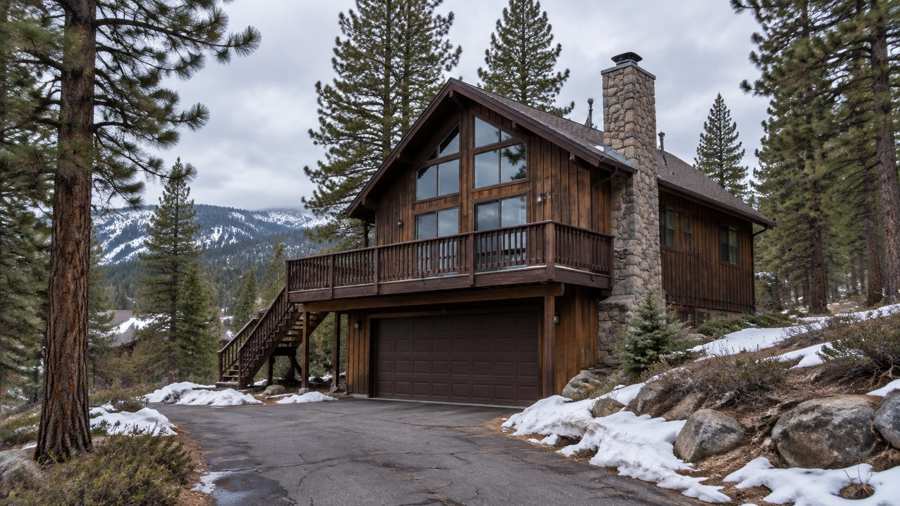
A Truckee owner who is deciding whether to sell may want to know who the buyers are, because in a mountain resort town the answer differs from a city. The Census counts 18,794 housing units in the postal area around Truckee and finds a usual resident in only 7,929 of them. The other 10,865 units, 57.8% of the stock, are second homes, vacation rentals, homes for sale or rent, or empty for another reason (U.S. Census Bureau, 2020-2024). That share changes how the market behaves, what the public price figures can tell a seller, and why timing matters.
This report sets that occupancy figure beside the other public facts that can be checked: the age of the housing, the Census owner estimate of value, Zillow's home value index, the pace of closed sales reported by a local brokerage for August 2026, and the Realtor.com listing series for the Truckee-Grass Valley metropolitan area. It then asks what a private direct sale avoids for an owner who does not live in the house year-round.
Two limits apply from the start. The metropolitan series cover a larger area than the town and its immediate surroundings, and some of the series that exist for other markets have not been published for this one. The report states what is available and does not fill the gaps with estimates.
Key Findings
- Only 7,929 of the 18,794 housing units in the study area are occupied by a usual resident, which leaves 10,865 (57.8%) that are second homes, rentals, for sale or otherwise vacant.
- The median year built is 1989, and 30.8% of homes (5,795 units) date from before 1980, .
- The Census median owner-estimated value is $991,400, plus or minus $55,979 (5.6%), and Zillow's home value index was $1,032,042 on August 31, 2026, up 2.0% in a year (Zillow, Truckee home values).
- A local brokerage counted 118 closed sales in Truckee and North Lake Tahoe in August 2026, 5% more than July but 9% fewer than August 2025.
- Active listings in the Truckee-Grass Valley metropolitan area rose from 322 in February to 530 in June 2026, an increase of 64.6% (Realtor.com, active listings).
How old is the housing around Truckee?
The Census survey counts 18,794 housing units in the postal area that contains Truckee and the mountain communities around it. The median year built is 1989. The reason is clear in the decade counts. The 1970s hold 3,997 units (21.3%), the 1980s hold 3,865 (20.6%) and the 1990s hold 3,717 (19.8%). Those three decades together account for 11,579 units, 61.6% of the entire stock.
The older and newer ends are both thin. Only 431 units, 2.3%, were built before 1950, and 333 more came in the 1950s. The 1960s add 1,034. In total, 5,795 units (30.8%) predate 1980. At the other end, 2,986 units date from the 2000s, 1,981 from the 2010s and 450 from 2020 onward, so 5,417 units, 28.8%, are less than twenty-six years old.
For a seller, this means that the typical Truckee home was built in the decade of the first large wave of resort development, and is now thirty to fifty years old. Roofs, decks, heating systems and exterior wood are all approaching the end of their service lives together. That is the kind of age profile in which a buyer's inspection is likely to produce a long repair list, and where an owner who does not want to manage repairs from a distance has a reason to prefer a sale without them.
| Decade built | Housing units | Share of area |
|---|---|---|
| Before 1950 | 431 | 2.3% |
| 1950s | 333 | 1.8% |
| 1960s | 1,034 | 5.5% |
| 1970s | 3,997 | 21.3% |
| 1980s | 3,865 | 20.6% |
| 1990s | 3,717 | 19.8% |
| 2000s | 2,986 | 15.9% |
| 2010 or later | 2,431 | 12.9% |
Source: U.S. Census Bureau, American Community Survey 2020-2024 five-year estimates, table B25034, the postal-code area covering Truckee.
Why are almost six in ten homes not lived in full time?
Of the 18,794 units, 7,929 are occupied by a usual resident. Of those, 6,019 (75.9%) are owner-occupied and 1,910 are rented. The remaining 10,865 units, 57.8% of the total, have no usual resident. The Census counts them as vacant, which in its definition includes homes held for occasional or seasonal use, homes held for rent or for sale, and homes that are empty for other reasons. The tables used here do not separate those groups.
The figure is an unusually high one, and the setting explains much of it. Truckee sits at the northern end of Lake Tahoe, near ski areas and a long summer season. Many of the homes there are owned by people whose main home is in the Bay Area, Sacramento or elsewhere, and some are rented to visitors for part of the year. The survey cannot say what share is which, and this report does not guess.
For a seller, the implication is about the other side of the table. A large part of the buyer pool is also buying a second home, and a second-home buyer has no school year or job deadline. That can make timelines flexible, but it can also make demand more sensitive to the stock market, to interest rates and to travel patterns. The full-time resident, who makes up the other 42.2% of units, often has the opposite constraints: a move date set by work, school or a new home purchase.
The occupancy share also affects what the other Census statistics mean. The household income of $131,702 and the rent of $1,987 describe the residents of the 7,929 occupied homes. They do not describe the owners of the 10,865 homes that nobody lives in full time, and those owners set much of the top of the market.
Source: U.S. Census Bureau, American Community Survey 2020-2024 five-year estimates, tables B25034, B25003, B19013 and B25064.
What do the Census and Zillow say a Truckee home is worth?
The Census survey asks owners to estimate their home's value, and the median answer in the study area is $991,400. The margin of error is $55,979, about 5.6% of the estimate, a wider band than in the large suburban areas covered elsewhere in this series, because the sample of owner-occupied homes is smaller and the values vary more. Owners answer from memory and from what they have seen on their street, and the figure covers only the 6,019 owner-occupied homes, not the second homes.
Zillow's home value index, which models every home it can match, put the average Truckee home value at $1,032,042 on August 31, 2026, up 2.0% over twelve months. The Census median and the Zillow average are different statistics, an owner-estimated median against a modeled mean, and a gap of $40,642 (4.1%) between them is within the range that different definitions produce. Zillow also reported that homes go to pending in around 27 days. Pending time is the interval from listing to an accepted offer on homes that sold, so it is shorter than the days-on-market figures published for other markets in this series, and it cannot be compared directly to them.
A 2.0% rise over a year on a $1 million home is about $20,000 of paper value, spread over a year in which the owner paid property tax, insurance, snow removal and upkeep. Neither source can say what a particular house will sell for, since a ski-in cabin and a valley townhouse can sit in the same area and differ by a factor of three.
Source: U.S. Census Bureau, American Community Survey 2020-2024 five-year estimates, table B25077; Zillow Home Value Index for Truckee, CA, updated August 31, 2026.
Is the summer sales pace a sign of strength or of scarcity?
A local brokerage's August 2026 market update reported 118 closed sales across Truckee and North Lake Tahoe, up about 5% from July's 112 sales (a Truckee brokerage, August 2026). The same update says August activity was 9% below the same month a year earlier, and that median pricing is substantially higher than last summer despite fewer transactions. Its reading is that limited inventory is exerting upward pressure on values.
That is one interpretation, and the numbers do not prove it. Fewer closings at higher prices is also what a market produces when buyers and sellers disagree about price and only the strongest sales close. The brokerage notes the distinction itself: fewer transactions do not necessarily mean weaker demand when fewer homes are available. The source is a brokerage newsletter, which has an interest in a strong market, and the figures were not independently re-pulled from the local multiple listing service.
For an owner, the safe reading is narrow. Sales ran at 118 in the best month of the summer, a pace the brokerage calls resilient, and they are down year over year. If a seller waits for the fall, the pace will likely slow with the season. The report makes no forecast of prices.
What do the metro listing counts add, and what do they leave out?
Realtor.com publishes a few listing series for the Truckee-Grass Valley metropolitan area, which covers Nevada County in California and so reaches well beyond the town. Active listings rose from 322 in February 2026 to 348 in March, 407 in April, 490 in May and 530 in June. The count grew by 208 listings, or 64.6%, in four months, and June is the last month reported.
New listings were steadier. The area added 214 in March, 242 in April, 244 in May, 202 in June and 214 in July (Realtor.com, new listings). The monthly inflow ranged between 202 and 244 and did not rise during the four months in which the active count climbed. When new listings are flat and the active count is growing, homes are staying on the market longer, whether because buyers are slower or because asking prices are high.
Several series that exist for other markets are not available for this one in the open data used here: days on market, median listing price and price reductions. The report therefore cannot say how long Truckee listings wait or how many have cut their price. Anyone quoting such a figure for the town should be asked for its source. The Zillow pending time and the brokerage sales count are the nearest public readings, and each has the limits described above.
Source: Realtor.com via FRED, Housing Inventory: Active Listing Count and New Listing Count, Truckee-Grass Valley, CA (CBSA).
What should a seller ask a buyer who is also buying a second home?
A seller in a market where 57.8% of homes have no full-time resident will meet buyers whose reasons differ from a local's. Some want a base for winter weekends, some want a summer place, and some want a house to rent to visitors for part of the year. Each of these buyers will inspect the house for a different set of problems. A weekend buyer cares about heating and snow access, a rental buyer about parking and the number of beds, and a full-time buyer about commute and schools. A public listing has to speak to all of them at once, and a seller cannot know which one will show up.
Three questions help an owner sort offers whichever route they choose. The first is whether the buyer needs financing, since a loan adds an appraisal and an underwriting timeline that can slip past a seller's date. The second is whether the offer depends on an inspection, because a house built in the 1970s or 1980s, as most of the area's homes were, is likely to produce findings. The third is how firm the closing date is, which matters most to an owner who lives elsewhere and travels to Truckee to sign and clear out the house.
None of these questions is specific to a private buyer. They are the same ones a careful owner would put to any offer, and they are worth asking before a house is listed so that the answers shape the choice of route. An owner who has the answers can compare a public offer and a private one on terms and not on the headline price alone.
One more point concerns the numbers above. The Census, Zillow and the brokerage each describe a different slice of the Truckee market, and none describes a seller's own house. A figure close to $1 million for the typical home says little about a small cabin on a steep lot or a large house with lake access. The only reliable price for a particular property is an actual offer, which is why owners often ask for more than one before they decide.
What do income and rent say about the people who do live there?
The 7,929 occupied homes tell their own story. Median household income in the area is $131,702, and median gross rent is $1,987 a month. A renter paying the median spends $23,844 a year on rent, which is 18.1% of the median household income, a share that is not high by the usual rules of thumb. The 1,910 renter households are 24.1% of the occupied homes, and they compete with visitors for the same stock, since a house rented by the week is not available to a family renting by the year.
The owner side is larger. The 6,019 owner-occupied homes make up 75.9% of the occupied stock, and these are the households that tend to stay for years, to know their neighbors and to notice when a house on their street goes on the market. For them the privacy question is not abstract. A public listing in a small mountain community is visible to everyone who drives past the sign, and a seller who would rather not have a for-sale notice at the end of the driveway has a reason to look at other routes.
These residents are also a source of demand, as local buyers who want a larger house or a first home. Their numbers are small next to the pool of second-home buyers, but they set a floor under values in a way that visitors do not. The Census data cannot say how the two groups split the demand for any one price range, and the report does not guess. Readers comparing markets can also read the Santa Rosa brief and the Santa Rosa brief.
What does a second-home owner avoid with a private sale?
The owner of a house that is lived in for part of the year faces some extra costs in a public sale. A listing means arranging showings and staging from a distance, keeping the house presentable through a winter in which snow load and frozen pipes are real risks, and handling a buyer's inspection requests on a house that has aged thirty or forty years. A direct private sale to a buyer such as Maison Off-Market changes each of those, and the differences are the five benefits that owners most often cite.
The first is privacy: no showings, and no neighbors talking about you selling. The second is flexible closing dates, which suit an owner who needs to close around a season or a move. The third is no commission, and the fourth is no closing costs. The fifth is avoiding inspections and repairs, so the roof, the deck and the heating system are bought as they stand.
The size of the first cost can be seen without assuming a rate. Each 1% of the Census median of $991,400 is $9,914, and each 1% of Zillow's $1,032,042 is $10,320. A commission at any ordinary rate is several times those figures. The calculation uses public prices as a yardstick. It is not a quote or an offer, and actual terms depend on the property.
The tradeoff is real. A public listing in a strong summer, when the brokerage reports 118 closed sales in a month, could reach a higher price from a competing buyer, and a private sale offers a single buyer's terms. An owner who prefers certainty and a quiet exit to the chance of a higher number will weigh that differently from an owner who can wait for a peak.
Methodology and limitations
Housing age, occupancy, tenure, income, rent and owner-estimated value come from the American Community Survey 2020-2024 five-year estimates, tabulated for the postal-code area that holds Truckee. The area approximates a postal delivery area and includes surrounding mountain communities, so the figures describe the area, not the town alone. Units not occupied by a usual resident are the total units minus the occupied units, and the tables used here do not separate seasonal homes from other vacancy. Percentages are calculated from published counts and rounded to one decimal place. Margins of error are those published by the Census Bureau at the 90% confidence level.
Active and new listing counts are Realtor.com series published through the Federal Reserve Bank of St. Louis and cover the Truckee-Grass Valley metropolitan area, which is larger than the town. The active-listing series ends in June 2026 and the new-listing series in July 2026. Days on market, median listing price and price-reduction series for this area were not available in the open data used and are not reported.
The Zillow figures were read from Zillow's public page for Truckee, updated August 31, 2026. The August 2026 sales count and the commentary on inventory are quoted from a Truckee brokerage's market update, which is marketing content by a firm that earns fees from sales and was not independently verified. The report makes no forecast and does not estimate what any particular house would sell for.
Conclusion
For an owner in Truckee, the data support narrow conclusions. More than half of the homes in the area have no full-time resident, most of the stock was built between 1970 and 1999, values are close to $1 million by both Census and Zillow measures, and summer sales ran at a good pace but below the level of a year earlier while the listing count climbed through June.
They do not support a price for any one house, and they do not support a forecast. The choice between a public listing and a private sale comes down to how much an owner values a possible higher price against privacy, a flexible closing date, no commission, no closing costs and no inspections or repairs.
Frequently Asked Questions
Why does the Census show so many homes without a usual resident?
The Census counts 10,865 of 18,794 units as vacant in its sense, which includes homes held for seasonal or occasional use, for rent or for sale. The tables used here do not split those groups.
Is Zillow's $1,032,042 the price my house would sell for?
No. It is an average of modeled values across the area. A cabin, a townhouse and a lakeside lot can differ widely within it.
Why are there no days-on-market or price-cut figures for Truckee?
Realtor.com's series for those measures were not available for the Truckee-Grass Valley area in the open data used. The report does not estimate them.
Do the metro listing counts describe the town?
Only partly. The Truckee-Grass Valley area covers a whole county, so the counts show the direction of the wider market, not the town alone.
Does a private sale always beat a public listing?
No. A public listing in a strong season can produce competing bids and sometimes a higher price. A private sale offers privacy, a flexible closing date, no commission, no closing costs and no inspections or repairs, in exchange for a single offer.
Compare your options before committing. Request a written private offer for your property, with no obligation, then weigh it against your listing plan.
Sources
- U.S. Census Bureau, 2026. American Community Survey 2020-2024 five-year estimates, the Truckee area (via Census Reporter). https://censusreporter.org/profiles/86000US96161-96161/.
- Zillow, 2026. Truckee, CA Housing Market: 2026 Home Prices & Trends. https://www.zillow.com/home-values/48047/truckee-ca/.
- Realtor.com, 2026. Housing Inventory: Active Listing Count in Truckee-Grass Valley, CA (CBSA). https://fred.stlouisfed.org/series/ACTLISCOU46020.
- Truckee brokerage (Timber & Tide Realty), 2026. August 2026 Truckee-North Lake Tahoe Real Estate Market Update. https://timberandtiderealtyco.com/blog/august-2026-truckeenorth-lake-tahoe-real-estate-market-update.
- Realtor.com, 2026. Housing Inventory: New Listing Count in Truckee-Grass Valley, CA (CBSA). https://fred.stlouisfed.org/series/NEWLISCOU46020.
Related research
Seller Guide · October 6, 2026
How to Prepare Point Pleasant Beach Rental Records Before Selling
Separate rental approval, income history and booked stays before comparing sale terms.
Seller Guide · October 6, 2026
How to Prepare Rumson Flood and Waterfront Records Before Selling
Separate flood disclosure, elevation, repairs and waterfront rights before comparing sale terms.
Seller Guide · October 6, 2026
How to Prepare Sarasota Condo Inspection and Reserve Records Before Selling
Separate building condition, reserve funding and resale documents before comparing sale terms.