Trend Analysis · by Aidan Sowa · October 5, 2026
Does a Platt Park Bungalow Still Sell in Days? Reading the Brick, the Metro Clock and the Price-Cut Count
Reading the Brick, the Metro Clock and the Price-Cut Count for Platt Park, CO, with each source dated and its limits noted, for owners weighing a listing against a direct sale.
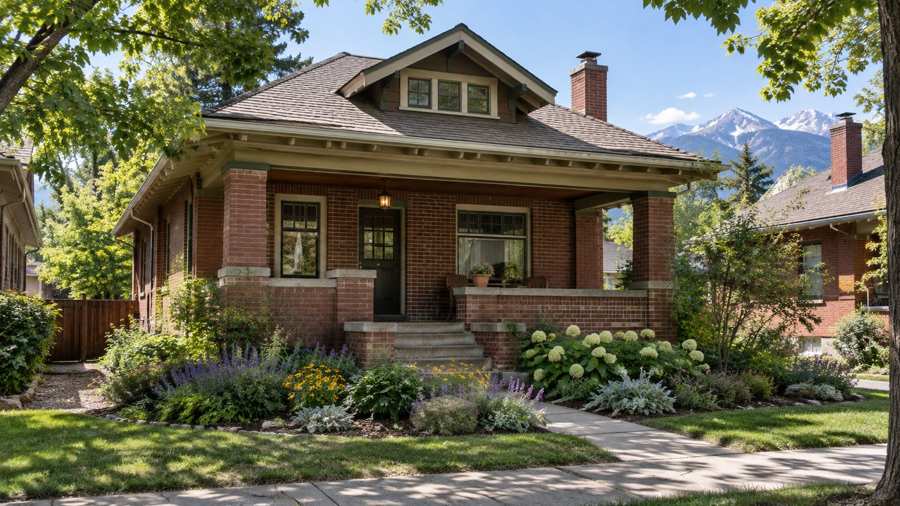
Local guides to Platt Park say that a well-kept brick bungalow there can go under contract in days. That was true enough to be written down in the spring of 2026, and an owner thinking of selling this autumn may reasonably ask whether it still holds. The public data cannot answer for one house, but it can show what has changed around it: how much of the housing is of the character type that the guides describe, how owners value their homes, and how far the Denver metropolitan clock has moved since May.
This report uses the Census count of housing units in the postal area that holds the Platt Park neighborhood, the Census owner estimate of value, two local articles written in 2026 about what drives value in Platt Park, and the Realtor.com series for the Denver metropolitan area: days on market, active listings, new listings, median listing price, price per square foot and price reductions.
The Denver series describe a region of several counties, not one neighborhood, and the local articles are brokerage and neighborhood marketing. The report keeps those limits in view and does not turn them into a forecast.
Key Findings
- Of the 18,856 housing units in the study area, 12,830 (68.0%) were built before 1980, and 6,419 (34.0%) before 1950 (U.S. Census Bureau, 2020-2024).
- Owners estimate their median home at $910,200, with a margin of error of only $18,989 (2.1%), a tight figure for a large sample of 9,938 owner households.
- A neighborhood guide published in April 2026 put Platt Park medians at $700,000 to $850,000 by size and condition, and said move-in-ready homes averaged under ten days on the market (South Denver Guide, April 2026).
- The Denver metropolitan median days on market rose from 43 in May 2026 to 58 in September, an increase of 34.9% (Realtor.com, days on market).
- Price-reduced listings in the metro area rose from 5,528 in May to 6,848 in September, a 23.9% increase (Realtor.com, price reductions).
How much of the housing is the character type?
The Census counts 18,856 housing units in the postal area, with a median year built of 1959. The oldest group is the largest: 4,676 units were built in 1939 or earlier and another 1,743 in the 1940s, giving 6,419 units built before 1950 (34.0%). The 1950s add 3,520 (18.7%) and the 1960s 1,804 (9.6%). Add the 1970s at 1,087 and the pre-1980 total is 12,830 units, 68.0%.
That is the stock the neighborhood guides describe. A Platt Park real estate site writing in June 2026 ties value there to character, and names bungalows and Arts and Crafts homes as the center of it, adding that an addition has to feel intentional, not bolted on (a Denver brokerage, June 2026). The Census does not count bungalows as a category, so the pre-1950 total is a proxy and not a count of them.
There is also a substantial group of newer homes. The 2000s account for 2,058 units, the 2010s for 2,313 and 2020 onward for 264, a total of 4,635 units (24.6%) less than twenty-six years old. Between the two ends the middle is thin: the 1980s have only 766 units and the 1990s only 625. The area is therefore two markets in one postal code, a large older stock and a recent wave of apartments and infill, with little in between.
For a seller, the age profile means the comparison that matters is between like and like. A 1920s brick bungalow is compared with other bungalows, and a 2015 townhome with other townhomes. An average across all 18,856 units is useful only as background.
| Decade built | Housing units | Share of area |
|---|---|---|
| Before 1950 | 6,419 | 34.0% |
| 1950s | 3,520 | 18.7% |
| 1960s | 1,804 | 9.6% |
| 1970s | 1,087 | 5.8% |
| 1980s | 766 | 4.1% |
| 1990s | 625 | 3.3% |
| 2000s | 2,058 | 10.9% |
| 2010 or later | 2,577 | 13.7% |
Source: U.S. Census Bureau, American Community Survey 2020-2024 five-year estimates, table B25034, the postal-code area covering Platt Park.
What do owners say their homes are worth, and who owns them?
The survey asks owners what their home would sell for, and the median answer is $910,200. The margin of error is $18,989, 2.1% of the estimate, which is narrow because the sample is large: of 17,713 occupied homes, 9,938 (56.1%) are owner-occupied and 7,775 are rented. Only 1,143 units, 6.1% of the total, have no usual resident, so the area is lived in year-round, in contrast to resort markets.
The median household income is $127,270 and the median rent is $1,996 a month. A renter paying the median spends $23,952 a year, or 18.8% of the median household income. The area has a big renting population, close to the university and to the apartments built since 2000, and a large owning population in the older houses.
The Census value of $910,200 is higher than the $700,000 to $850,000 range the neighborhood guide gave for Platt Park medians. The two do not conflict. The Census figure covers a postal area that includes parts of neighboring districts beyond Platt Park, and it is an owner estimate, not a sale price. The guide's range is a brokerage's reading of recent sales by size and condition. Neither is a price for a particular house.
Source: U.S. Census Bureau, American Community Survey 2020-2024 five-year estimates, tables B25077, B25003, B19013 and B25064.
Do character homes still go under contract in days?
The South Denver Guide's April 2026 market report said that well-maintained craftsman homes often draw multiple offers within days, and that move-in-ready homes averaged under ten days on the market. It gave median prices of $700,000 to $850,000 depending on size and condition. Those are statements by a local guide with an interest in the neighborhood's reputation, and they describe the spring, the strongest season of the year.
The condition qualifier matters. The same report ties the fast sales to homes that are well maintained and ready to move into, which means homes that have had work done. A house that needs a roof, a kitchen or electrical work is not described, and it is the type of house an owner who wants to avoid repairs is most likely to be selling. For such a house, the figure of under ten days is not a promise.
The brokerage article from June 2026 makes a related point about additions. It says that value in Platt Park follows character, and that an addition needs to feel intentional. That is useful to an owner because it says what a buyer pays for, which is the original house at its best. It also implies that a house altered clumsily over the decades may be worth less than its size suggests, a point no statistic can settle without seeing the property.
The neighborhood evidence is from the spring and from sources that promote the area. The question of what has happened since needs the metropolitan data, which is the next step.
Source: South Denver Guide, Platt Park Real Estate Market Report 2026 (April 12, 2026); Denver brokerage article on what drives home value in Platt Park (June 18, 2026).
How far has the Denver clock moved since spring?
The metropolitan median for days on market was 43 in May 2026, 48 in June, 51 in July, 57 in August and 58 in September. It rose in each month, a total of 15 days or 34.9%. The path is steady, and it is a measure for the typical home in the whole metropolitan area, not for the best-kept bungalows in one neighborhood. A bungalow in good order may well have sold faster than the median in any of those months, and a worn one slower.
What the number shows is the direction of the market. A typical home waited more than two weeks longer in September than in May, and a seller who relies on a spring story about days to contract is relying on conditions that have changed. The seasonal pattern may explain part of it, since the market usually slows in the autumn, and the series here does not remove the season.
A longer wait costs an owner money in ways that the sale price does not show: the mortgage, taxes, insurance and utilities paid while the house is listed, and the effort of keeping it ready for a showing. For a household that has already bought its next home, that carrying cost can be heavy.
Source: Realtor.com via FRED, Housing Inventory: Median Days on Market, Denver-Aurora-Lakewood, CO (CBSA).
Is the supply of homes growing, and are prices giving way?
Active listings in the metropolitan area rose from 9,144 in March 2026 to 10,399 in April, 11,465 in May, 12,572 in June and 12,813 in July, an increase of 3,669 or 40.1% in four months (Realtor.com, active listings). Over the same months new listings came in at 5,426, 5,664, 5,876, 5,392 and 4,596. Inflow peaked in May and fell by 21.8% from that peak by July, so the later growth in the stock came from homes that were not selling and not from a rush of new sellers.
Asking prices moved only a little. The median listing price was $589,000 in May and June, $579,798 in July, $574,900 in August and $569,900 in September, a decline of 3.2% from May (Realtor.com, median listing price). The median listing price per square foot went from $290 in May to $286 in June, $284 in July, $280 in August and $279 in September, a fall of 3.8% (Realtor.com, price per square foot). These are asking prices for the metropolitan area and sit well below the Census owner estimate for the neighborhood, so they describe a different, wider set of homes.
The count of listings with a price reduction rose from 5,528 in May to 6,492 in June, 6,562 in July, 6,544 in August and 6,848 in September, up 23.9% over May. The reduction count and the active count are from different months, so this report does not divide one by the other. What the two series show together is a market in which more homes are on offer, a growing number have cut their price and asking prices have eased by a few percent.
That is a modest softening, not a break. It also fits with a metropolitan median that waits longer. The report does not predict whether the trend continues.
Source: Realtor.com via FRED, Housing Inventory: Active Listing Count, New Listing Count, Median Listing Price, Median Listing Price per Square Feet and Price Reduced Count, Denver-Aurora-Lakewood, CO (CBSA).
What does a seller risk by relying on a spring story?
A spring story can mislead in three ways. First, it describes a season, and a house listed in October is competing with a longer list of homes than one listed in April. Second, it describes the best-kept houses, and an owner's house may not be among them. Third, it describes the neighborhood's reputation, which brokerages and guides have a reason to emphasize.
None of this means a Platt Park house will sit. The Census data show an area where owners are secure in their estimates, where almost every unit is lived in and where the character homes at the center of the market are a large share of the stock. The metropolitan data show a slowdown of modest size. Both can be true, and the right reading for one house depends on its condition, its finish and its price.
A practical check is to ask for the days to contract on the last few sales of similar homes on the same street, from an agent's records or the public record, rather than relying on an average. A seller can compare those numbers with the metropolitan figure of 58 days to see whether the house is likely to beat the market or follow it.
Owners also tend to underweight the hours spent. A listing means cleaning, staging, photographs, open houses and the daily interruption of showings, which are tolerable for a few days and wearing for a few weeks. If the house goes under contract in days, the effort is brief. If it does not, it is the owner's time that carries the cost.
What should an owner prepare before asking for offers?
An owner of an older house can reduce uncertainty before choosing a route by gathering four things. The first is a list of the work done in the last twenty years, with dates and receipts where they exist, since a buyer of a character home pays for evidence that the house has been looked after. The second is the age of the roof, the furnace and the electrical panel, which are the items a buyer's inspector will mention first. The third is the property tax bill, which shows the assessed value and the annual cost. The fourth is a clear idea of the date by which the owner needs to close.
With those in hand, the owner can read any offer more quickly. A buyer who will take the house as it stands needs less from the list, because the buyer is pricing the work. A buyer who will inspect needs all of it. The difference is one of the five benefits, avoiding inspections and repairs, and the list shows what that benefit is worth on a particular house.
The owner should also ask what each buyer would do with the house. Some buy to live in it, some to renovate and sell, and some to rent it. That affects how a buyer values the character features, which are worth most to someone who will live with them. The brokerage article quoted above says that additions need to feel intentional, and a buyer who plans one will think hard about the lot and the existing floor plan before making an offer.
Finally, the owner can ask for the offer terms in writing, with the closing date, any conditions and the amount that will reach the owner after costs. The numbers in this report are context. Only an offer on the owner's own house can say what that house is worth to a buyer. Readers comparing markets can also read the Edwards brief and the University brief.
What does a private sale avoid for a character home?
A character home is the type of house for which public sale is least predictable. Buyers pay for the original features, and the same features come with deferred work: old wiring, an aging roof, windows that need restoring, a basement that has been wet. An inspection will find some of it, and the repair requests that follow are one of the main sources of friction in a public sale. A direct private sale to a buyer such as Maison Off-Market removes that friction, and the differences are the five benefits that owners most often value.
The first is privacy: no showings, and no neighbors talking about you selling, which counts on a street where houses are close together and an open house is noticed by everyone. The second is a flexible closing date, which gives the owner time to find a new home. The third is no commission, the fourth is no closing costs, and the fifth is avoiding inspections and repairs, so the house is bought as it stands.
The first cost can be sized without assuming a rate. Each 1% of the Census median of $910,200 is $9,102. Each 1% of $850,000, the top of the guide's neighborhood range, is $8,500. A commission at any ordinary rate is a multiple of these amounts. This is arithmetic on public prices, not a quote or an offer.
The tradeoff remains. In a week where a bungalow draws several offers, a public listing might produce a higher price than a single private offer. An owner who is sure of that outcome should list. An owner who values certainty, a quiet exit and no repairs, and who sees the metropolitan clock moving the wrong way, has a case for asking for a private offer first.
Methodology and limitations
Housing age, occupancy, tenure, income, rent and owner-estimated value come from the American Community Survey 2020-2024 five-year estimates, tabulated for the postal-code area that holds the Platt Park neighborhood. The area approximates a postal delivery area and includes parts of neighboring districts, so the figures describe the area, not the named neighborhoods alone. Housing built before 1950 is a proxy for character homes, not a count of bungalows. Percentages are calculated from published counts and rounded to one decimal place. Margins of error are those published by the Census Bureau at the 90% confidence level.
Days on market, active listings, new listings, median listing price, price per square foot and price-reduced listings are Realtor.com series published through the Federal Reserve Bank of St. Louis and cover the Denver-Aurora-Lakewood metropolitan area. Their latest months differ: days on market, listing price, price per square foot and price reductions run through September 2026, while active and new listings end in July 2026. Listing prices are asking prices, not sale prices.
The neighborhood medians and days-on-market statements are quoted from a local guide's April 2026 report, and the value commentary from a local brokerage's June 2026 article. Both are marketing content by parties with an interest in the neighborhood and were not independently verified. The report makes no forecast and does not estimate what any particular house would sell for.
Conclusion
For an owner in Platt Park, the data support narrow conclusions. About two thirds of the housing is older than 1980, owners estimate their homes at about $910,200, nearly all units are lived in, and the Denver metropolitan market has slowed since May: homes wait longer, more of them have cut their price and asking prices have eased by a few percent.
Owners who want a firmer answer can gather the work history of the house, the ages of its roof and furnace and the date by which they need to close, and then ask for written terms from more than one buyer. That turns a general market story into numbers for one property, which is the only kind of number that decides a sale. The wider data are a guide to timing and to risk, and an owner should treat them as that.
They do not support a price for any one house, and they do not confirm that a bungalow will sell within days this autumn. The choice between a public listing and a private sale comes down to how much an owner values a possible higher price against privacy, a flexible closing date, no commission, no closing costs and no inspections or repairs.
Frequently Asked Questions
Does the pre-1950 count equal the number of bungalows?
No. It counts all homes built before 1950, which includes bungalows but also other types. It is a proxy.
Why is the Census value higher than the neighborhood guide's median?
The Census figure is an owner estimate for a postal area that is wider than Platt Park. The guide's range comes from a brokerage's reading of recent sales by size and condition.
Do the Denver listing series describe Platt Park?
Not directly. They cover the Denver metropolitan area, so they show the direction of the wider market.
Why do the listing series end in different months?
Realtor.com publishes them on different schedules. Active and new listings stopped in July 2026 in the data used, while the others run to September.
Does a private sale always beat a public listing?
No. A public listing can attract competing bids and sometimes a higher price. A private sale offers privacy, a flexible closing date, no commission, no closing costs and no inspections or repairs, in exchange for a single offer.
Compare your options before committing. Request a written private offer for your property, with no obligation, then weigh it against your listing plan.
Sources
- U.S. Census Bureau, 2026. American Community Survey 2020-2024 five-year estimates, the Platt Park area (via Census Reporter). https://censusreporter.org/profiles/86000US80210-80210/.
- South Denver Guide, 2026. Platt Park Real Estate Market Report 2026. https://www.southdenverguide.com/platt-park-real-estate-market-report-2026/.
- Realtor.com, 2026. Housing Inventory: Median Days on Market in Denver-Aurora-Lakewood, CO (CBSA). https://fred.stlouisfed.org/series/MEDDAYONMAR19740.
- Realtor.com, 2026. Housing Inventory: Price Reduced Count in Denver-Aurora-Lakewood, CO (CBSA). https://fred.stlouisfed.org/series/PRIREDCOU19740.
- Denver brokerage (Chriss Bond), 2026. What Drives Home Value in Platt Park. https://chrissbond.com/blog/what-drives-home-value-in-platt-park.
- Realtor.com, 2026. Housing Inventory: Active Listing Count in Denver-Aurora-Lakewood, CO (CBSA). https://fred.stlouisfed.org/series/ACTLISCOU19740.
- Realtor.com, 2026. Housing Inventory: Median Listing Price in Denver-Aurora-Lakewood, CO (CBSA). https://fred.stlouisfed.org/series/MEDLISPRI19740.
- Realtor.com, 2026. Housing Inventory: Median Listing Price per Square Feet in Denver-Aurora-Lakewood, CO (CBSA). https://fred.stlouisfed.org/series/MEDLISPRIPERSQUFEE19740.
Related research

Seller Guide · October 6, 2026
How to Prepare Point Pleasant Beach Rental Records Before Selling
Separate rental approval, income history and booked stays before comparing sale terms.
Seller Guide · October 6, 2026
How to Prepare Rumson Flood and Waterfront Records Before Selling
Separate flood disclosure, elevation, repairs and waterfront rights before comparing sale terms.
Seller Guide · October 6, 2026
How to Prepare Sarasota Condo Inspection and Reserve Records Before Selling
Separate building condition, reserve funding and resale documents before comparing sale terms.