Seller Decision · by Aidan Sowa · October 6, 2026
What Can a Truckee Seller Tell Buyers About Renting After the Sale? Reading the Jurisdiction, the Registration and the Plan
A property's rental history and a buyer's permission to rent it after closing are different facts.
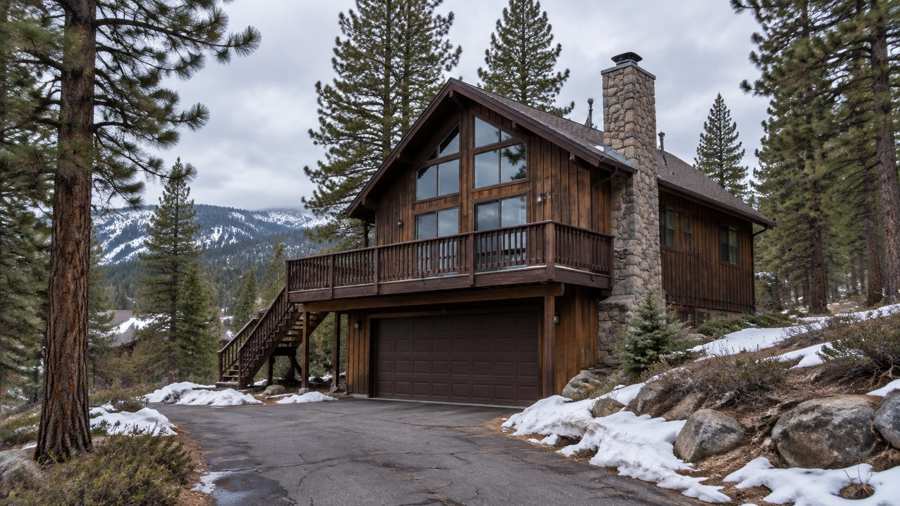
A buyer wants to rent my Truckee house when they are away. What can I actually promise after the sale? An owner may have a history of rental bookings, an existing registration and a well-equipped second home. Those facts do not automatically give the next owner the same permission to operate. Before using rental potential to support an offer, separate the property's past activity from the rules that apply to the buyer after ownership changes.
This fresh seller-facing question is shaped by real discussions about second-home plans. A Truckee buyer discussion describes a plan to use a home during ski season and rent it during other months. A separate Truckee second-home discussion reflects local concerns about buyers' assumptions. Neither is a finding about a particular sale, and forum comments are not the source for the legal rules. They explain why a seller should answer rental questions with specific records rather than a broad vacation-home promise.
The Town of Truckee publishes its registration, waitlist and ownership-change rules. Placer County publishes a separate rental program for its jurisdiction. This brief uses those official sources to explain the boundaries of a seller's claim, alongside postal-area housing context. It does not check an individual parcel, guarantee a place on a waitlist or predict rental income. The useful sale preparation is to establish who regulates the address, what the current documents say and which parts of the buyer's plan remain unconfirmed.
Key Findings
- The Town's published ordinance says a short-term rental registration certificate expires when property ownership changes. A new owner may apply after 365 days, subject to eligibility, the cap and waitlist. The current prohibited-property page likewise states the waiting period before a new owner may apply for the waitlist. That is not a promise of approval when the year ends.
- Truckee's waitlist process separates sign-up, application review and registration when a certificate becomes available. It asks for the property address, parcel number, recent transfer date and recorded deed. A timestamp or completed application should not be described as an operating certificate.
- The Town distinguishes whole-unit short-term rentals from hosted rentals and longer stays. Its program page describes short-term rentals as thirty nights or less and longer rentals as thirty-one nights or more. Do not assume the registration route for one category applies to a different use.
- The program page discusses September 2026 consideration of permit-optimization options. The staff report presents proposals, including future provisional permits. This article does not present those proposals as enacted rights or predict their effect on a buyer. Confirm current requirements when reviewing the actual transaction.
- The postal-area survey counts 10,290 seasonal, recreational or occasional-use homes out of 18,794 housing units, about 54.8%. Seasonal use includes more than rentals. The count cannot establish the number of licensed rentals, a buyer's eligibility or the income a house might earn.
Which authority actually regulates the property's rental use?
Start with the address and assessor parcel number rather than the word Truckee in a listing. The postal area is not the same thing as the Town's jurisdiction. The broader area includes properties handled under different programs. Ask the responsible agency to confirm which rules apply to the actual parcel before describing its rental path to buyers. A neighbor's experience can be useful context, but cannot establish the authority for another address.
The Town's official Short Term Rentals page describes its own program, including registration and operating standards. Placer County's program separately identifies procedures and inspections for properties in its program, including Truckee homes in Placer County and Northstar categories. Those pages should not be blended into a single set of rules for every home marketed near Truckee. The seller needs the correct address-specific route, not whichever program appears to offer the easiest outcome.
The property's documents can help identify the history. Collect the existing certificate if any, prior agency correspondence and the relevant deed or parcel information. Check whether the records refer to the entire house or a different approved use. This brief does not confirm the validity of an individual certificate. A copy in the seller's folder may require a status check, and its terms may not answer what happens after the sale. Keep the agency name and record date beside each document so a buyer can see exactly what it establishes.
Ask about other applicable restrictions too. A government registration does not necessarily settle a private covenant or association rule. This article has not reviewed an association's governing documents for a property. Have the relevant advisers explain any separate limit on the buyer's intended use. A seller should not advertise a complete right to rent based on a single permit while leaving another applicable restriction unexamined.
State the geographic limit when sharing general guidance. If the house is confirmed within Town jurisdiction, use the Town's applicable rules. If it is in a county program, use that agency's current requirements. If the boundary remains unclear, say it remains unclear and obtain the answer before making a rental claim. A polished listing should not hide the fact that the seller has not yet established who regulates the address.
Does the seller's registration survive a change of ownership?
For Town-regulated short-term rentals, the published ordinance says the certificate expires upon a change of ownership whether or not the buyer or another person has informed the Town. It says a new owner may apply after 365 days from the purchase or other transfer, unless otherwise prohibited and subject to the cap and waitlist. Those words describe a different position from simply taking over the seller's certificate at closing.
The current page on properties prohibited from joining the waitlist states a 365-day waiting period after a home sale before the new owner may apply. It also identifies property-type and condition limits. This brief does not determine whether a particular ownership change, unit or exception applies. The seller should provide the actual documents and ask the Town to explain the buyer's situation instead of infer eligibility from a previous owner's operation.
Do not turn the waiting period into a guaranteed start date. The ability to apply after a specified interval is not the same as immediate issuance of a registration. Other eligibility conditions and the cap still matter. A buyer's financial model may depend on starting rentals sooner than the official process supports. That difference should be discussed before the offer is accepted, not discovered when the buyer attempts to advertise after closing.
The Town's program also describes hosted rentals as a distinct category involving one permitted bedroom in a dwelling that the homeowner occupies as a primary residence. The ordinance contains separate hosted-rental provisions. This brief does not recommend using that category as a substitute for a whole-house rental plan. A buyer intending to visit occasionally and rent the entire home should not assume the hosted description authorizes that use.
The Town's Fire Inspections page adds a separate ownership-change limit: inspections reside with the owner, not the land, and a new owner who becomes able to register must proceed with a new inspection. It describes annual self-certification and periodic physical inspections. Do not describe the seller's passed inspection as a transferable clearance. Past registration, past safety records and the buyer's future approvals are different evidence. Confirm the requirements for the new owner's actual circumstances before promising a ready-to-operate purchase.
What does being on the waitlist actually mean?
Truckee's published process has three parts: sign-up, a waitlist application and registration when the applicant can register. The page says a sign-up position is timestamped while staff determine whether the property is viable for formal application. Later application requirements include owner information, the address and parcel number, permitted bedrooms, transfer date and a recorded grant deed. This is a review process, not a certificate created merely by submitting a name.
The page explains that the applicant is notified when a registration becomes available and then must complete the registration step. It also describes additional operating information and safety acknowledgments. This brief does not quote a processing duration or fee as a promise for a buyer. The seller's useful answer is which stage has been reached and which stage has not, supported by current agency correspondence for the actual application.
Avoid using another owner's waitlist position as evidence of a buyer's path. A house, an applicant and a certificate are related but distinct pieces of the program. Ask the Town how the actual transfer affects any existing position or records. This article does not establish a transferable place in line. A buyer should not pay for assumed access to a registration without confirming the relevant rules and the specific status.
The published ordinance describes a cap of 1,255 short-term rental certificates, with specified administration provisions. That cap is a program limit, not the number of certificates currently available to a particular buyer. This brief has not counted live openings or verified a specific waitlist position. Use the Town's current status information for those questions and do not estimate a wait from a neighbor's experience or an old article.
There can be a legitimate buyer who wants the house even without immediate rental permission. Another buyer may depend heavily on a particular rental start date. Those are different offers to evaluate. Make the unresolved operating assumption visible so the parties can decide how it affects their terms. A seller should not resolve uncertainty by calling the process straightforward if the buyer has not yet confirmed what it needs to do.
How does the second-home housing context affect the question?
The ACS 2020-2024 estimates 18,794 housing units in the postal area that includes Truckee. Of those, 7,929 are occupied and 10,865 are vacant under the survey's categories. The largest vacant category is seasonal, recreational or occasional use, with 10,290 units. That category is about 54.8% of all housing units. It provides context for second-home discussions, but does not identify how frequently any house is visited or rented.
There are 575 other vacant units after separating the seasonal-use category. The chart compares occupied, seasonal-use and other vacant units. It should not be retold as a count of empty investment properties or available vacation rentals. Census occupancy is a survey measure, not a registration database. A home used privately on weekends can appear in the seasonal category without being operated as a licensed short-term rental.
Among occupied units, 6,019 are owner-occupied and 1,910 are rented, making owner occupation about 75.9% of occupied units. The postal-area median construction year is 1989. These figures do not determine the buyer's intended use or a property's eligibility. A seller still needs actual records for the house and the responsible program. Community statistics cannot replace a certificate status check or review of the buyer's plan.
The earlier Truckee housing brief examines occupancy and market context. This new question is different: what survives the sale and what the next owner must confirm. A broad second-home market can produce buyer interest, but it cannot create operating permission. Keep the market discussion and regulatory claim separate so the buyer can evaluate the house without mistaking regional context for an individual entitlement.
The separate Truckee discussion is also a reminder that second-home plans occur in a community with full-time residents. This brief does not adopt forum accusations or make a judgment about an individual buyer. The practical seller lesson is to describe the property's use accurately and consider the actual operating requirements. A buyer seeking rental income must evaluate its plan on more than the area's appeal for skiing and recreation.
What can you say about bookings and rental income?
Past rental records can show past activity when accurate and appropriately shared. They do not guarantee future bookings, pricing or expenses. Separate gross receipts from costs and identify the period covered. This article supplies no income projection or property-specific operating statement. A seller should not add a guessed rental yield to the asking-price story simply because the house is furnished or near recreational destinations.
Ask how existing bookings, management arrangements and platform listings would be handled if the house is sold. The answer depends on their actual terms and the applicable registration rules. This brief has not reviewed a booking agreement or management contract. Do not promise to transfer a calendar or guest relationship without checking whether that can be done and how it interacts with the ownership change and the buyer's authority to operate.
Truckee Fire Protection District explains that its STR inspection covers both interior fire safety and exterior defensible space. Its guidance warns that an association may impose additional defensible-space requirements that the district's inspection does not evaluate. A seller should therefore avoid saying a district inspection proves compliance with every private restriction. Keep the report and its scope with the operating records. This brief assesses no property condition, association document or inspection result and supplies no guaranteed inspection cost or appointment date.
The Town's fire self-certification form lists safety checks, including address visibility, alarms, fire extinguishers and defensible space. A checked form is a statement about its specified items, not permission to carry the seller's rental business across a sale. The Aqualane Shores contents brief addresses a different preparation choice: included belongings. Furniture, equipment and a past checklist do not establish the buyer's rental eligibility. Keep contents, safety and registration separate in the proposal.
For a buyer evaluating longer stays, the Town program page describes thirty-one nights or more as outside its short-term rental rules, while advertising thirty nights or less is treated as short-term rental activity. That distinction does not establish all rights or duties associated with a longer tenancy. Ask qualified advisers to review the intended arrangement. This brief does not recommend longer stays as a way to avoid other applicable rental obligations.
How should rental uncertainty affect the offer comparison?
Read the buyer's proposal for any condition tied to rental eligibility, registration review or future use. A high offer can be less certain if its economics depend on an unconfirmed operating plan. Ask whether the buyer has verified the correct jurisdiction and what happens if the expected permission is unavailable. The sale professional should explain the actual contract, rather than let a general statement about rental potential stand in for a condition that is never written down.
For a public listing, present the known history and the ownership-change limits accurately. Exposure may attract buyers with different intended uses, including personal occupancy, second-home use or rental plans. Do not assume all those buyers value the same feature in the same way. Compare price with conditions, proof of funding and realistic timing. A listing description should not promise an inherited certificate when the Town's published rule says otherwise.
For a direct purchase, identify the buyer and review its intended conditions in writing. A cash label does not establish that it has accepted every regulatory uncertainty or waived all review. Ask which property-use assumptions support the proposal and how they affect performance. A seller should not rely on a buyer's general claim to understand local rentals in place of the actual terms and the responsible agency's requirements.
Maison Off-Market's stated seller route offers privacy without showings, flexible closing dates, no commission costs, no closing costs and avoiding inspections or repairs. Those features may fit an owner seeking a simpler exit from a second home. They do not establish a buyer's rental eligibility or guarantee the highest price. Compare the actual direct proposal with a realistic listing plan and confirm that the property-use uncertainty is understood rather than hidden.
The strongest rental claim is bounded by the records. Describe what has been approved and operated in the past, say what changes with ownership, and identify what the buyer still must confirm. Then choose an offer the parties can perform on the written terms. A recreational location and a successful old booking history can be relevant to interest, but neither should be presented as permission the buyer will automatically receive after closing.
Methodology and limitations
Sources were read on October 6, 2026. Town program, waitlist and ordinance materials support the stated Truckee rules; Placer County provides separate jurisdiction context. The September 22 staff report describes optimization proposals, not an enacted entitlement. Rules and status should be confirmed for the actual address and transaction. No parcel, certificate, application or private restriction was checked. The Town fire page, district inspection guidance and self-certification form are used for their safety and ownership distinctions; no inspection result, current fee or availability was verified for a particular property.
Community discussions supply unverified question context only. Census estimates cover the postal area, not the Town boundary or a permit inventory. No current opening count, approval date, income forecast, rental-contract transfer or property valuation is supplied. The generated image is illustrative and is not proof of a permitted use.
Conclusion
Before a Truckee seller answers a buyer's rental question, identify the agency responsible for the address and gather the actual registration records. For Town-regulated short-term rentals, keep the published ownership-change and waitlist limits beside the description of prior operation. Do not let a rental history become a promise of automatic continuation.
Then compare the buyer's written conditions with its intended use. A buyer can make its own choice about a house, but that choice should rest on the actual rules and status rather than an optimistic rental assumption. Clear limits support a more dependable transaction for the seller and the buyer.
Frequently Asked Questions
Can a Town of Truckee buyer simply take over the seller's short-term rental certificate?
The published ordinance says it expires when ownership changes. The new owner's route is subject to the stated waiting period, eligibility, cap and waitlist. Confirm the actual transaction with the Town.
Does the waiting period guarantee a permit afterward?
No guarantee is established. Eligibility to apply and issuance of a certificate are different steps, and the program's other requirements still matter.
Is every house with a Truckee postal address governed by the Town's program?
Do not assume so. Establish the property's jurisdiction using its actual address and parcel information, then use the responsible agency's current rules.
Does seasonal-use Census housing mean licensed rentals?
No. The category includes seasonal, recreational or occasional use and is not a registration count.
Are the September optimization options guaranteed for buyers?
This brief treats the staff report as proposals and does not claim an enacted right. Check the current official requirements before relying on a future program change.
Compare your options before committing. Request a written private offer for your property, with no obligation, then weigh it against your listing plan.
Sources
- Town of Truckee, Checked October 6, 2026. Short Term Rentals: use categories and current program context. https://www.townoftruckee.gov/355/Short-Term-Rentals-STR.
- Town of Truckee, Checked October 6, 2026. Prohibited from joining waitlist: ownership waiting period and eligibility. https://www.townoftruckee.com/359/Prohibited-from-Joining-the-Waitlist.
- Town of Truckee, Checked October 6, 2026. Three-part waitlist application process. https://www.townoftruckee.gov/360/Three-Part-Waitlist-Application-Process.
- Town of Truckee, Checked October 6, 2026. Published ordinance, chapter 5.02: ownership change and registration categories. https://www.townoftruckee.gov/DocumentCenter/View/1099/Short-Term-Rental-Ordinance-PDF.
- Town of Truckee, September 22, 2026; checked October 6, 2026. Staff report on permit optimization: proposals, not promised rights. https://mccmeetingspublic.blob.core.usgovcloudapi.net/truckeeca-meet-365001dc14804044b4edd416938af109/ITEM-Attachment-003-2192f83f7173496394fed7f721a55558.pdf.
- Placer County, Checked October 6, 2026. Short-term rental program: separate county jurisdiction context. https://www.placer.ca.gov/str.
- U.S. Census Bureau via Census Reporter, ACS 2020-2024; checked October 6, 2026. Postal-area housing counts, tenure and vacancy categories. https://api.censusreporter.org/1.0/data/show/latest?table_ids=B25034,B25035,B25077,B25003,B25004&geo_ids=86000US96161.
- Town of Truckee, Checked October 6, 2026. Fire Inspections: nontransferable inspection, annual certification and ongoing safety. https://www.townoftruckee.gov/371/Fire-Inspections.
- Truckee Fire Protection District, Checked October 6, 2026. STR inspection information: interior, defensible space and separate HOA limits. https://www.truckeefire.org/short-term-rental.
- Town of Truckee, Checked October 6, 2026. Fire self-certification form: documented safety checks, not transferable rental authority. https://www.townoftruckee.gov/DocumentCenter/View/1059/Fire-Self-Certification-Form-PDF.
Related research

Seller Guide · October 6, 2026
How to Prepare Point Pleasant Beach Rental Records Before Selling
Separate rental approval, income history and booked stays before comparing sale terms.
Seller Guide · October 6, 2026
How to Prepare Rumson Flood and Waterfront Records Before Selling
Separate flood disclosure, elevation, repairs and waterfront rights before comparing sale terms.

Seller Guide · October 6, 2026
How to Prepare Sarasota Condo Inspection and Reserve Records Before Selling
Separate building condition, reserve funding and resale documents before comparing sale terms.