Seller Guide · by Aidan Sowa · October 6, 2026
The Bend Seller Guide to Wildfire Readiness and Insurance Records
Separate documented mitigation, current code and actual coverage before comparing sale options.
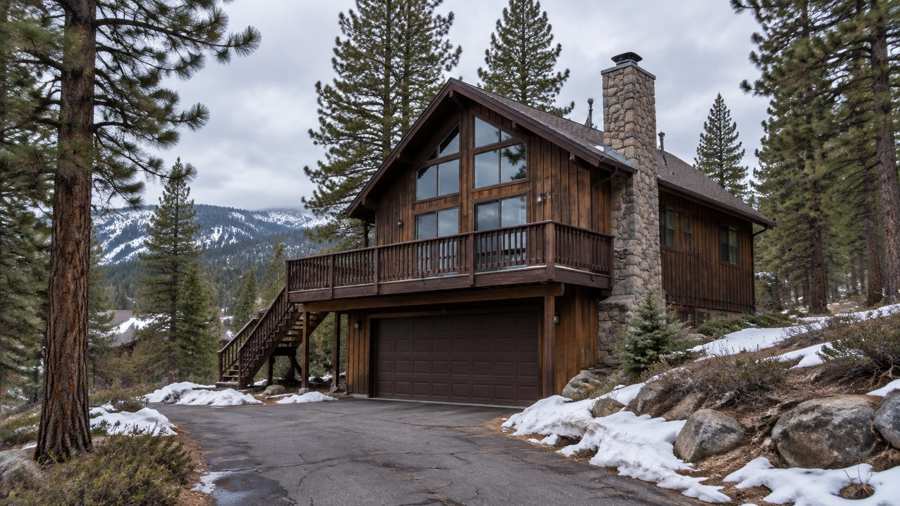
A defensible-space photograph, an older hazard-map label and a current insurance declarations page answer different questions. Before listing a Bend home, connect the actual assessment, completed work, construction records and coverage information. Do not turn a tidy yard into a fireproof claim or treat the seller's existing policy as a promise that the buyer can obtain the same coverage.
Bend's adopted wildfire construction requirements took effect for qualifying new permit applications in May two thousand twenty-six, after Oregon repealed its statewide hazard-map system. Existing-property mitigation, local enforcement and insurer decisions still need separate review. This guide prepares a dated evidence file and a fair comparison of sale options. It does not rate a property's fire exposure, certify construction, approve physical work or determine the policy a buyer should purchase.
Start With the Property Jurisdiction and a Dated File
Identify whether the parcel is inside Bend or governed by another jurisdiction before using a city rule or local inspection process. Assemble the actual assessments, work history, permits, insurance notices and dates. A Bend mailing address, an old statewide map or a neighborhood description does not settle code applicability. Keep the source and purpose of each record visible so buyers can distinguish risk education, legal requirements and private underwriting.
Bend's Wildfire Preparedness page separates city fire-rescue and code-enforcement roles from Deschutes County processes outside city limits. Use that distinction to route questions about a particular parcel. A regional real estate article can explain context but cannot establish which authority governs this property.
Date the evidence: Put the address, assessment date, scope, contractor and work date beside each item. A report before a roof project or landscape change may no longer describe the current property. Keep the earlier version for history and obtain appropriate clarification rather than editing it into an apparent current inspection.
Bendzeit's buyer guide describes exposure as property-specific, with vegetation, construction, access and surrounding land among relevant considerations. That supports a connected file rather than a neighborhood-wide safe or unsafe label. It does not quantify risk for this home or guarantee that an urban parcel has no ember exposure.
Separate the Repealed State Map From Current Local Construction Rules
Oregon's statewide hazard-map repeal did not remove every local construction or property-maintenance question. Bend adopted R327 requirements for qualifying new residential permit applications submitted from May fifteen, two thousand twenty-six. The city says they do not apply to additions or renovations of existing buildings. Confirm the actual permit, structure type and authority interpretation rather than telling every resale seller to retrofit under a new-construction rule.
Ballard Spahr's July two thousand twenty-five analysis explains the repeal of the state hazard-map system and its associated mandates. The enrolled Senate Bill eighty-three text documents that change. Use the legal article for context, and the actual later city adoption for the local construction distinction; do not merge them into a statement that either every old mandate remains or every wildfire rule disappeared.
Current city evidence: Bend's April announcement and Ordinance NS-two-five-five-two record document the adoption and effective date. The announcement describes newly constructed dwellings and accessory structures, and distinguishes buildings governed by the Oregon Structural Specialty Code. Obtain the actual project records before labeling a particular home as compliant.
The Source's earlier local report describes a proposal moving toward a vote and separate defensible-space discussion. It is useful history, not proof that every proposal became law. Ryan Realty's later building-code article draws attention to the new-versus-resale distinction, but its wider claims about every home or particular materials still require the applicable plans and current authority review.
Keep Assessments Separate From Certification and Enforcement
Ask what kind of assessment was performed, by whom, and what it concludes. Bend offers wildfire-risk home assessments, while the state describes its defensible-space visit as education-focused. Neither should be relabeled an insurance approval or blanket code certificate. Keep any separate compliance notice, construction approval or recognized program designation with its own scope and current status, rather than collapsing several different reviews into a single passed label.
Bend's preparedness page describes free assessments and directs owners toward property-specific guidance. The State Fire Marshal page likewise presents an education-focused visit with practical recommendations. Review the actual result and unresolved recommendations, not just proof that someone visited.
Separate the tracks: A city enforcement notice, an educational assessment and a private insurer inspection may ask different questions. If a notice requires correction, obtain the actual conditions, deadlines and follow-up outcome. A photograph of recent cleanup does not establish that the notice was closed or the insurer accepted the work.
The state's February two thousand twenty-six Senate Bill eighty-five report discusses work toward connecting verified mitigation and insurance outcomes. It is a report on ongoing coordination and recommendations, not a discount schedule assigned to this house. Do not market a contemplated pilot or certification process as an already-earned benefit.
| Evidence | What it supports | What it does not prove |
|---|---|---|
| Educational assessment | Dated recommendations | Code or insurer approval |
| Work invoice and photos | Documented completed scope | A fireproof property |
| Plans and permit record | Actual reviewed project | Every structure compliant |
| Compliance response | What authority accepted | Permanent exemption |
| Seller policy documents | Seller coverage terms | Buyer availability |
| Buyer insurance review | Actual proposed coverage | Any other buyer policy |
Document the Immediate Zone and Ongoing Maintenance
Use the city and state guidance to discuss the immediate area around the structure with an appropriate assessor. Photograph dated conditions and preserve completed-work evidence. Record what changed and what remains, including later debris or seasonal maintenance. Do not move from recommended zones to unapproved tree removal, alterations across a boundary or a promise that clearing material eliminates wildfire risk.
Bend's Own Your Zone guidance highlights the first 0 to 5 feet, an intermediate 5 to 30 feet and an extended 30 to 100 feet. The State Fire Marshal page describes similar zones, with an extended area reaching 100 feet or more. These are practical preparation frameworks, not proof that the seller owns or can alter every surrounding foot.
Why the close zone matters: The city page attributes 90% of homes burning in wildfire to ember ignition. Treat that as the city's educational statistic about ignition mechanisms, not a measured probability that this house will burn or a predicted reduction from one project. The file should show the actual conditions addressed.
Photographs can document debris removal or changed ground cover, but identify their date and location. Ask about permissions, protected resources, association restrictions and appropriate professional work before physical changes. A spring cleanup photograph does not demonstrate that gutters, decks or surrounding vegetation remained maintained all season.
Verify Roof, Vent, Deck and Other Improvement Claims
Gather actual product records, invoices, permits and completion evidence before advertising a home-hardening feature. Identify what part of the building was changed and whether other vulnerable components remain. A roof color, metal appearance or contractor estimate cannot establish a complete assembly rating or certified installation. Ask the qualified professional and applicable authority about materials, design and approval instead of turning a blog recommendation into a construction specification.
Bend's adoption announcement describes ignition-resistant or noncombustible exterior components, including roofing, gutters, windows, vents and siding. Use those categories to organize the file. They do not establish the rating of this roof, the compatibility of a proposed vent or the required work for a particular existing building.
Match the claim to the record: Team Wieche's local guide highlights roof type, vents, access and defensible space as matters buyers investigate. Describe the documented improvement accurately without promising that a particular feature produces insurance acceptance or a fixed resale premium. A recently installed roof can still require careful review of its actual specifications.
Where work is proposed rather than completed, keep the quotation in a separate folder. Where work is completed, retain any required inspections and distinguish installation date from approval date. An invoice alone may not establish every required approval; missing records should prompt inquiry, not an invented pass or a blanket allegation that the work was unauthorized.
Treat Insurance as an Address and Buyer Specific Review
Give buyers room to obtain actual insurance advice and a usable coverage proposal for their own purchase. The seller's current insurer, premium or renewal does not guarantee an equivalent buyer policy. Review proposed limits, deductibles, exclusions, eligibility and timing with a licensed insurance professional. Oregon's repealed state map is not the same as an insurer's private model, and a mitigation record is not automatic underwriting approval.
KTVZ's March two thousand twenty-five report describes local insurance professionals distinguishing carrier models from the then-disputed state map. Preserve that report's date: its pending-legislation discussion predates the repeal and cannot establish current law. Its useful point is that the actual carrier review remains separate from an old public-map label.
No generic premium promise: Ryan Realty's insurance guide recommends early quotes for the specific property. Its savings and last-resort-plan claims are not used here as guaranteed outcomes or current plan limits. Ask the carrier or licensed professional about the actual available coverage and alternatives rather than assigning a blog's premium expectation to the sale.
Oregon's Division of Financial Regulation advises reviewing limits, exclusions and deductibles and locating those details in policy documents. That supports checking the actual terms. Do not share the seller's unrelated financial or claim details publicly; provide relevant property information through the agent and advisers with appropriate attention to privacy and accuracy.
Keep Claims, Smoke History and Completed Repairs Accurate
Organize any relevant loss, claim, repair and inspection records without making unsupported medical or condition claims. Separate actual property damage from regional smoke days, and completed remediation from a proposal or payment. Ask advisers how known history should be disclosed. An insurance claim settlement, filter upgrade or fresh interior photograph is not proof that every damage issue was resolved or that indoor air is guaranteed safe.
Team Wieche's guide distinguishes smoke season from direct property exposure and notes that filtration features can matter to buyers. Use that distinction to describe the actual system and service history. Do not label a home smoke-free or suitable for a specific health condition from a listing feature alone.
Repair evidence: The state insurance guidance recommends keeping photographs, inventories and receipts and discussing coverage with the insurer after a loss. For the sale file, preserve relevant professional findings, repair scope and follow-up evidence. Insurance reimbursement is a payment outcome, not necessarily a complete technical assessment of restoration.
Oregon REALTORS' seller advisory separates professional roles and emphasizes understanding property issues and disclosure responsibilities. Give the actual history to the agent and appropriate legal and technical advisers. A later repair should not erase an earlier documented issue, and the lack of a paid claim should not be presented as proof that no loss or defect occurred.
Distinguish Community Recognition From Parcel Protection
Confirm the actual status and scope of any community wildfire program before using it in a listing. Community coordination may support mitigation, but it does not certify every house, ensure an open evacuation route or guarantee coverage. Keep the parcel's own work and recommendations visible. For access and preparedness questions, use current official advice and avoid promising a response time, fire-suppression outcome or route that will remain safe in a real emergency.
Bend's Own Your Zone page explains the collaborative Firewise USA framework and city support. Its community-count statement is not evidence that the seller's neighborhood currently holds recognition or that this parcel completed every recommended action. Ask the actual program or association about the relevant status and conditions.
Access is not a guarantee: Bend's preparedness page recommends multiple possible ways out and explains that the available route depends on the emergency. Describe documented access features accurately, but do not market a normal driveway or road network as guaranteed evacuation capacity. Follow current emergency instructions when conditions change.
The Source's reporting connects home-level and neighborhood-level preparation rather than treating them as substitutes. That supports asking about shared maintenance and association responsibilities. Work on someone else's land, a public strip or shared access may require separate consent and approvals; a wildfire-preparation goal does not create that authority.
Compare Sale Timing, Improvement Scope and Written Terms
Use actual estimates, professional findings and buyer conditions to compare listing, selected improvements, negotiation and a documented-condition sale. Mitigation spending does not establish a fixed price increase or a guaranteed insurance discount. Keep code, technical, disclosure and lender questions separate. The best offer is not necessarily the highest headline price if its conditions depend on unsupported certification, future coverage or work the seller cannot complete on time.
NAR's preparation guide supports considering property issues before listing, while its pricing guide identifies condition and comparable sales among price factors. Apply those ideas to the documented home, not a regional wildfire label or national project-return assumption. Obtain actual estimates and discuss realistic timing before committing to a scope.
Compare equivalent terms: NAR's contingencies guide explains that investigation conditions belong in the actual agreement. A credit does not complete physical work, satisfy a notice or establish insurer acceptance. Review the actual responsibilities and deadlines with the agent, attorney and lender as applicable before promising a result.
The Bend housing brief provides separate sale-time context. It does not estimate a wildfire project, predict coverage or determine compliance. Compare written options against the same known facts and unresolved questions rather than using the market median as a guaranteed closing schedule.
| Route | Evidence to compare | Key limit |
|---|---|---|
| Assessment and planning | Actual recommendations | Not insurer acceptance |
| Complete selected work | Scope and approvals | No guaranteed price return |
| Seek further insurance review | Actual terms and timing | Buyer specific |
| Negotiate conditions | Reviewed contract terms | Not completed mitigation |
| Sell documented condition | Accurate file and advice | No permission to misstate |
| Change the sale timeline | Estimates and carrying costs | No assured completion date |
Frequently Asked Questions
A connected, dated file is more useful than a single safe-home label. Keep the assessment, materials, completed work, authority responses and actual insurance terms together, while preserving their different purposes. Neither an older map nor the seller's policy settles the buyer's questions. These answers separate the main tracks without rating a parcel, approving construction or recommending a policy.
Did Oregon repeal every local wildfire rule?
No, the statewide hazard-map repeal and local requirements are different. Check the actual jurisdiction and current rule.
Does the new Bend code require every resale home to be rebuilt?
The city describes qualifying new construction and excludes additions or renovations of existing buildings from this adoption. Ask the authority about the actual project.
Does a wildfire assessment certify insurance availability?
No, an educational assessment and underwriting are separate. Obtain the actual carrier review.
Can I call a cleaned yard fireproof?
No, mitigation does not eliminate every risk. Describe the documented work and date accurately.
Does a metal-looking roof prove the whole home is compliant?
No, appearance does not establish materials or assembly ratings. Use the actual records and applicable review.
Can the buyer assume my current insurance premium?
No, a seller policy is not a buyer coverage promise. The buyer should obtain actual insurance advice and terms.
Does a contemplated certification program guarantee a discount?
No, program development is not an earned property benefit. Ask the insurer about the actual result.
Does Firewise recognition protect every parcel or route?
No, community participation is not a guarantee for each home. Keep property and access questions separate.
Does mitigation spending guarantee a higher sale price?
No, a project cost does not establish a return. Compare actual condition, local sales and written terms.
How Maison Off-Market Reviews a Bend Proposal
Maison Off-Market describes a direct-purchase process that reviews the property before offering price and timing. For a Bend owner, that is another written option to compare once wildfire, work-history and insurance questions are organized. It does not certify resilience, choose a buyer policy or waive local requirements. Ask how the actual proposal handles known findings, further investigation and any remaining work.
The company's stated purchase process describes flexible closing dates, no commissions and no seller closing costs, working with the owner's attorney or title company. Confirm the actual purchaser, deposit, net amount and conditions. A business description does not establish insurance acceptance or a property-specific closing guarantee.
Decision evidence: The actual written proposal and transaction conditions. No verified Bend wildfire-savings case study, insurance premium reduction, certification or promised completion date is supplied here. Compare the offer with the documented listing route and professional advice without suggesting that a direct purchase removes disclosure, code or technical questions.
Compare your options before committing. Request a written private offer for your property, with no obligation, then weigh it against your listing plan.
Sources
- City of Bend, Checked October 6, 2026. Adopted Residential Wildfire Mitigation Building Code. https://bendoregon.gov/news/city-of-bend-adopts-residential-wildfire-mitigation-building-code-effective-may-15/.
- Bend Code, Checked October 6, 2026. Ordinance NS-two-five-five-two. https://bend.municipal.codes/enactments/OrdNS-2552.
- Oregon Legislature, Checked October 6, 2026. Enrolled Senate Bill Eighty-Three. https://olis.oregonlegislature.gov/liz/2025r1/Downloads/MeasureDocument/SB83/Enrolled.
- Ballard Spahr, Checked October 6, 2026. Oregon Repeals Statewide Wildfire Hazard Map and Mitigation Requirements. https://www.ballardspahr.com/insights/alerts-and-articles/2025/07/oregon-repeals-statewide-wildfire-hazard-map-and-mitigation-requirements.
- City of Bend, Checked October 6, 2026. Wildfire Preparedness. https://bendoregon.gov/departments/public-safety/fire-rescue/community-resources-programs/wildfire-preparedness-and-evacuation-guide/.
- City of Bend, Checked October 6, 2026. Own Your Zone. https://bendoregon.gov/departments/public-safety/fire-rescue/community-resources-programs/own-your-zone/.
- Oregon State Fire Marshal, Checked October 6, 2026. Defensible Space. https://www.oregon.gov/osfm/wildfire/Pages/defensiblespace.aspx.
- Oregon Division of Financial Regulation, Checked October 6, 2026. Wildfire and Insurance. https://dfr.oregon.gov/insure/home/storm/pages/wildfires.aspx.
- Oregon Division of Financial Regulation, Checked October 6, 2026. Senate Bill Eighty-Five Report, February Two Thousand Twenty-Six. https://dfr.oregon.gov/business/reg/reports-data/Documents/SB85-report-2025.pdf.
- The Source, Checked October 6, 2026. City Council Moves Home Hardening Code to a Vote. https://www.bendsource.com/news/localnews/city-council-moves-home-hardening-ordinance-for-a-vote-discuss-defensible-space-code/.
- Ryan Realty, Checked October 6, 2026. Wildfire Codes and Defensible Space in Bend. https://ryan-realty.com/blog/deschutes-county-wildfire-building-codes.
- Ryan Realty, Checked October 6, 2026. Homeowners Insurance in Central Oregon. https://ryan-realty.com/blog/insurance-guide-central-oregon-homeowners.
- Team Wieche, Checked October 6, 2026. Wildfire, Smoke and Home Insurance in Bend. https://teamwieche.com/guides/wildfire-smoke-insurance-bend-oregon.
- Bendzeit, Checked October 6, 2026. Bend Wildfire Risk and Home Insurance Guide. https://bendzeit.com/home-buying/bend-wildfire-risk-insurance/.
- KTVZ, Checked October 6, 2026. Fireproofing Your Property: What Buyers and Sellers Need to Know. https://ktvz.com/news/bend/2025/03/26/fireproofing-your-property-what-buyers-and-sellers-need-to-know-before-wildfire-season-arrives/.
- Oregon REALTORS, Checked October 6, 2026. Seller Advisory, two thousand twenty-six. https://oregonrealtors.org/wp-content/uploads/Oregon-Property-Seller-Advisory-2026.pdf.
- NAR, Checked October 6, 2026. Preparing to Sell Your Home. https://www.nar.realtor/the-facts/consumer-guide-preparing-to-sell-your-home.
- NAR, Checked October 6, 2026. Real Estate Contract Contingencies. https://www.nar.realtor/the-facts/consumer-guide-real-estate-contract-contingencies.
- National Association of REALTORS, Checked October 6, 2026. Consumer Guide: What Goes Into Pricing Your Home. https://www.nar.realtor/the-facts/consumer-guide-what-goes-into-pricing-your-home.
Related research

Seller Guide · October 6, 2026
How to Prepare Point Pleasant Beach Rental Records Before Selling
Separate rental approval, income history and booked stays before comparing sale terms.

Seller Guide · October 6, 2026
How to Prepare Rumson Flood and Waterfront Records Before Selling
Separate flood disclosure, elevation, repairs and waterfront rights before comparing sale terms.

Seller Guide · October 6, 2026
How to Prepare Sarasota Condo Inspection and Reserve Records Before Selling
Separate building condition, reserve funding and resale documents before comparing sale terms.