Market Brief · by Aidan Sowa · October 5, 2026
Is the House or the Lot the Asset in Pinecrest? Reading the Teardown Math and the Median
Reading the Teardown Math and the Median for Pinecrest, FL, with each source dated and its limits noted, for owners weighing a listing against a direct sale.
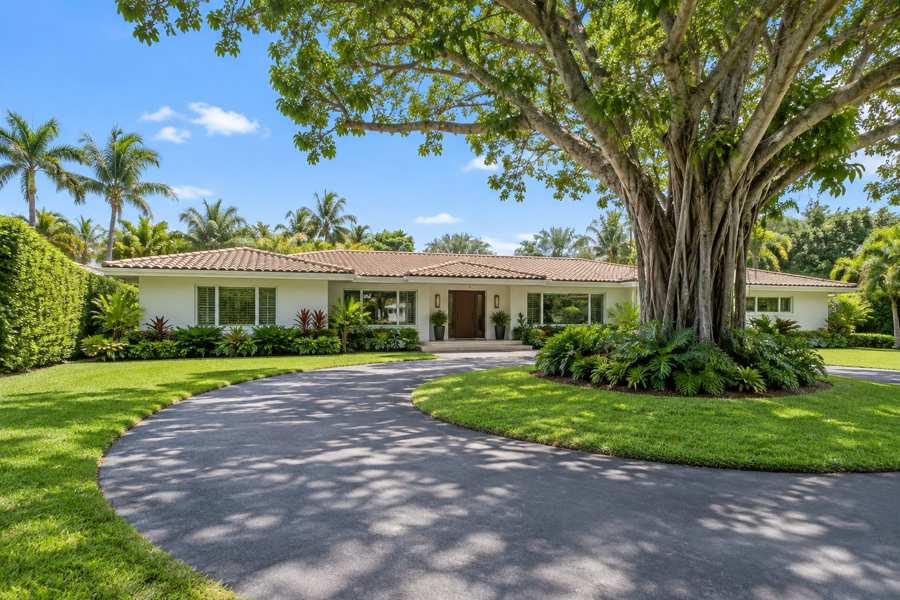
Ask a buyer in Pinecrest what they are shopping for and the answer is often a lot. The village is known for large residential parcels, mature trees and a low-density feel that is hard to find in Miami-Dade County, and a house built in the 1960s on one of those parcels may be worth more to a custom builder than to a family that would live in it. That is the question an older-home owner in Pinecrest hears in 2026: is my asset the house, or the land under it?
The public record gives part of an answer. In the postal area that includes Pinecrest, 8,316 of 13,169 homes, or 63.1%, were built before 1980, and the median year built is 1973. A brokerage data page puts the median house sale at $2,900,000 in September 2026 on 15 sales and $2,725,000 over twelve months on 203 sales. A local teardown guide cites a median asking price near $5 million for current listings, which it says is driven by new estates.
This brief sets those figures next to the Census profile and the Miami metropolitan listing series. It does not price any house, and it does not say whether to renovate, rebuild or sell. The sources describing teardown economics are brokerage commentary, and this brief labels them so. What the numbers can do is show how wide the distance is between the median sale and the median ask, and what that distance means for an owner who would prefer not to rebuild.
Key Findings
- A brokerage data page reported a median Pinecrest house sale of $2,900,000 in September 2026 on 15 sales, a trailing 12-month median of $2,725,000 on 203 sales, 108 houses for sale, 28 under contract and 6.4 months of supply (PBP Real Estate, October 2026).
- A Realtor.com median listing price near $5 million in June 2026 was cited by a local team as being driven by the number of new and recently completed estates, not by a typical home (Riley Smith Group, August 2026).
- In the Census postal area, 8,316 of 13,169 housing units (63.1%) were built before 1980, and 5,545 (42.1%) were built in the 1950s or 1960s (U.S. Census Bureau, 2020-2024).
- The Miami-Fort Lauderdale-West Palm Beach median days on market rose from 74 in March 2026 to 85 in July (Realtor.com, days on market).
- Listings with a price reduction in the metropolitan area numbered 10,942 in March and 8,810 in July (Realtor.com, price reduced listings).
Which Pinecrest figure should an owner believe, $2.9 million or $5 million?
Both, and neither is a price for your house. The $2.9 million figure is a median of closed sales. It says that in September 2026, of 15 houses that sold, half sold for less than $2,900,000 and half for more. The PBP page also gives a twelve-month median of $2,725,000 across 203 sales, up 1.6% on the prior twelve months. A median based on 15 sales moves a lot from month to month, which is why the twelve-month figure is the steadier guide.
The $5 million figure is a median of asking prices. It comes from Realtor.com as cited by Riley Smith Group, which says plainly that the median does not mean every Pinecrest home is worth nearly $5 million. Active inventory is shaped by the large luxury properties on offer, and many new-construction listings are marketed well above $5 million. Asking prices of new estates are one thing, and the sale price of a 1960s ranch on a good lot is another.
The distance between the two is useful in its own right. A median ask near $5 million and a median sale near $2.7 to $2.9 million says that a large share of the listings that are priced highest are not the ones that close in a typical month. A newly built estate can sit while sellers wait for a buyer who matches the finish level, while an older house on a good lot can sell to a builder or a family that wants the parcel.
For an owner, the practical reading is to ignore the median ask as a benchmark for an older house and to treat the median sale as a ceiling for a typical sale, not a floor. The house that sits at the 25th percentile of sales is selling for far less than $2.7 million, and the PBP page does not publish that percentile. An honest valuation needs comparable sales on comparable lots, and neither median provides it.
Source: PBP Real Estate, October 4, 2026; Riley Smith Group, August 24, 2026. Brokerage content, not independently verified.
How is a teardown different from a renovation?
The Riley Smith guide puts the choice bluntly. Renovation often sounds like the reasonable compromise between living with a dated home and demolishing it, and sometimes it is. A large renovation, though, can grow to include larger openings, higher ceilings, new windows, revised plumbing, updated electrical systems, roof changes, insulation, air conditioning, waterproofing and redesigned outdoor areas. At that point the guide says the buyer is rebuilding substantial portions of the house while leaving enough structure in place to continue calling it a renovation.
The same guide says tearing down can make more sense when the floor plan, ceiling heights, orientation, foundation, structural system and placement on the lot all conflict with what the buyer wants. It also warns that a house with one new wing and a confused original wing may tick every box on a checklist and still fail to deliver the finished experience that buyers expect at the price. Those are the opinions of a brokerage team and not data, but they describe how a buyer in this market thinks.
The guide offers no dollar figures for any of this, and neither does this brief. What it does say is that buyers should investigate insurance before purchasing, consult the Village of Pinecrest and qualified professionals before assigning a redevelopment premium, and calculate the full cost of renovation or redevelopment before deciding that an older house is a bargain. A buyer who does that arithmetic and then offers on a house is pricing in a list of costs that the seller does not see.
That is the seller's side of the teardown question. Whatever the buyer's plan is, the price offered for an older house is the price of the lot, less the cost of removing the house or rebuilding it, less the risk that permits, insurance or contractors change the schedule. The seller can do none of that arithmetic from the outside, and the number that results may be lower than the seller expects. It may also be higher than a family buyer who would live in the house as it stands would pay.
Source: Riley Smith Group, August 24, 2026. Brokerage commentary; no cost figures are given in the guide and none are assumed here.
What does the age of the housing stock say about repair lists?
Of the 13,169 homes in the postal area, 3,454 were built in the 1960s (26.2%), 2,642 in the 1970s (20.1%) and 2,091 in the 1950s (15.9%). Together those three decades hold 8,187 homes, or 62.2% of the total. Add the 129 from before 1950 and the pre-1980 count is 8,316, or 63.1%. Only 1,203 homes (9.1%) were built since 2010, which includes the 258 homes built since 2020.
A stock this old produces predictable inspection findings. Houses of the 1950s and 1960s may still carry original or partly updated electrical panels, galvanized or older copper plumbing, flat or low-slope roof sections, older windows without impact protection and air handlers at or past the end of their life. Concrete block construction, common in South Florida, is durable, and many of these houses have been updated over the years. The age still shows up on the credit request, because an inspector has a long list to work through.
The listing-side consequence is that the buyer who inspects will do the repair math that a teardown buyer skips. A family buyer who plans to live in the house sees the roof, the panel and the windows as costs. A builder who plans to demolish sees none of them. That split of buyer types is part of why the market for older houses on large lots has a second route in addition to the traditional one.
For a seller, a private purchase by a buyer who buys as is does not depend on the inspection list. The offer is made on the house as it stands, the closing date can be set to suit the seller, and the seller pays no commission and no closing costs. Those are the claims of this site's model, and a seller should compare the net proceeds of a private offer to the net proceeds of a public listing after repairs and credits.
| Indicator | Value | Note |
|---|---|---|
| Population | 33,628 | Whole postal area |
| Housing units | 13,169 | All units |
| Owner-occupied homes | 8,923 | 73.7% of occupied |
| Renter-occupied homes | 3,190 | 26.3% of occupied |
| No usual resident | 1,056 | 8.0% of all units |
| Median household income | $137,076 | Estimate |
| Median gross rent | $1,951 | Monthly |
| Owner-estimated median value | $1,120,100 | Margin of error $60,881 |
| Median year built | 1973 | Estimate |
Source: U.S. Census Bureau, American Community Survey 2020-2024 five-year estimates, tables B25034, B25003, B25002, B19013, B25064 and B25077.
Do the local sources agree on what Pinecrest homes sell for?
Not closely, and that is worth knowing before an owner leans on any one of them. A Realtor.com-based figure cited in a teardown guide has the median asking price near $5 million. A brokerage data page built from MLS records has a median sale of $2,725,000 over twelve months and $2,900,000 in September. A third brokerage article, using Redfin and Zillow figures for May 2026, gave a Pinecrest median of $2,011,296, down 12.2% from a year earlier, with sales about 7% below list and about 41 days to go pending (Pol Realty, 2026).
Those three medians span a range of more than $2.9 million, and none of them is a mistake. They come from different sources, cover different months and treat condominiums, new construction and older houses differently. A median that includes new estates sits high. A median that includes condominiums and smaller houses sits low. Which one is closest to the owner's house depends on the owner's house.
The 7% discount from list in the third source and the 41-day clock are also not the same as the 98 days to go under contract in the PBP page. One may be counting days to pending and the other days to a contract that is later recorded, and the pages do not explain the difference. A seller should treat both as signs of speed, not as a promise that a house will sell in either time.
What the three sources do agree on, in direction, is that the market is not a runaway. One has sales rising 14.2% in count, one has the median price falling 12.2% and one has the median sale up 1.6%. Mixed readings like these describe a market where the mix of homes sold changes from month to month, so a simple median says more about what sold than about what any one house is worth.
The sensible use of all this is as a bracket and not as a price. An owner whose house is a typical 1960s ranch on a standard-sized lot should look for sales of the same kind of house on the same kind of lot, and should expect that the figure will sit well below the top of the bracket. An owner whose lot is unusually large should expect that buyers will weigh the land more heavily. In both cases, the three sources together say that no single number from a web page substitutes for a comparable sale.
Source: PBP Real Estate, October 4, 2026; Riley Smith Group, August 24, 2026; Pol Realty, 2026. Brokerage content with differing definitions, not independently verified.
How much distance is there between what owners say and what the market asks?
The Census asks owners what they think their home would sell for. The median answer in the postal area is $1,120,100, with a margin of error of $60,881, which is 5.4%. The median house sale on the PBP page is $2,725,000 over twelve months, 2.4 times that figure. The two do not measure the same thing: the Census covers all owner-occupied homes in the postal area, including condominiums and smaller older houses, and the owners are estimating, often with years-old information.
Still, the gap is a reminder that owners in this area often hold a value in mind that was formed before the recent run. An owner who bought in the 1990s and has not tried to sell may think of the house in terms that no longer apply, while a builder thinks of the lot in terms the owner has not heard. A seller who meets an offer and is surprised, in either direction, is meeting that gap.
The household figures add some texture. Median household income is $137,076, and median gross rent is $1,951 a month, or $23,412 a year, which is 17.1% of the median income. Owners live in 8,923 homes (73.7%) and renters in 3,190 (26.3%). Only 1,056 homes (8.0%) are classed as having no usual resident, a low share by South Florida standards, which indicates that most houses here are lived in and not held as second homes.
That has an effect on the buyer pool. Where most neighbors live in their homes, the area attracts families and owner-builders who plan to stay, and a teardown is a project a buyer takes on for their own use. Where second-home owners dominate, buyers behave differently. Pinecrest's market is less seasonal and more local, and the buyers in it are often thinking of schools, commute and the lot.
Source: U.S. Census Bureau, American Community Survey 2020-2024; PBP Real Estate, October 4, 2026. The Census figure is owner-estimated and covers all owner-occupied homes.
What does the Miami clock say?
Realtor.com publishes listing series for the Miami-Fort Lauderdale-West Palm Beach metropolitan area through the Federal Reserve Bank of St. Louis. They show direction, not the level for Pinecrest. The median days on market was 74 in March 2026, 77 in April, 79 in May, 82 in June and 85 in July. Active listings fell from 43,929 in May to 40,908 in August and ended September at 41,277 (Realtor.com, active listings).
The median listing price slipped from $499,000 in May to $490,000 in September (Realtor.com, median listing price). Listings with a price reduction fell from 10,942 in March to 8,810 in July. That count is a number, not a share, and it fell along with the number of listings, so it does not show that fewer sellers are cutting.
The Pinecrest figures are of a different scale. The PBP page reports that houses that sold took a median 98 days to go under contract in September 2026, and houses still for sale had been listed a median 105 days. Those are the local clock readings, and they are longer than the metropolitan median of 85 days in July. A higher-priced house takes longer to sell, as one would expect, and an older house on a large lot takes as long as the buyer who wants it.
The same page reports 153 houses sold from January to September 2026 against 134 in the same period of 2025, up 14.2%. It reports 108 houses for sale and 28 under contract on October 4, 2026. A rising sales count with a long clock describes a market that is moving, but at its own pace. Readers comparing markets can also read the Santa Rosa Beach brief and the North Pinecrest brief.
Source: Realtor.com via FRED, Miami-Fort Lauderdale-West Palm Beach, FL (CBSA); PBP Real Estate, October 4, 2026.
What would a private sale change for an older-home owner?
A direct sale to a buyer who purchases homes off the market changes five things for the seller. There are no showings and no neighbors talking about you selling, which matters in a village where owners know each other. The closing date can be flexible, giving time to find a new home, which may mean time to find a house or to wait out a school year. There are no commission costs and no closing costs for the seller. And there are no inspections or repairs, which for a house built in the 1960s is the item that most often changes the number.
The fee benefit needs no assumed rate. For every 1% of a sale price that would otherwise go to fees, a sale at $1,120,000 keeps $11,200, a sale at $2,725,000 keeps $27,250 and a sale at $2,900,000 keeps $29,000. The owner can set whatever percentage applies against a private offer and compare the two on net proceeds.
The trade-off is the usual one. A public listing exposes the lot to builders and families who might compete, and a house with a strong lot may attract more than one. A private sale offers one buyer, one number and a date the seller sets. An owner who does not want to hold a house open to builders and their consultants, or to keep it presentable through an uncertain wait of 98 days or more, may find that attractive.
The seller should also remember what a private offer cannot do. It cannot tell the seller what the lot would fetch from the most motivated builder in the market. It can tell the seller what a buyer will pay now, with no repairs and no commission, on a date the seller picks. Whether that is more or less than a public sale would net is a comparison the owner must make with the numbers in hand.
Source: calculation from stated prices; no commission rate, closing cost, repair cost or teardown cost is assumed.
Methodology and limitations
Age, tenure, vacancy, income, rent, population and owner-estimated value come from the American Community Survey 2020-2024 five-year estimates for the postal-code area that includes Pinecrest. The area is wider than the village. Shares are calculated from published counts, and owner-estimated value carries a stated margin of error.
Days on market, active listings, median listing price and price reduced counts are Realtor.com series published by the Federal Reserve Bank of St. Louis for the Miami-Fort Lauderdale-West Palm Beach metropolitan area. The price-reduced series ends in July 2026 and the others in September 2026. Listing prices are asking prices and not sale prices.
The local sales figures come from a brokerage data page and the teardown commentary from a brokerage guide. Neither was independently verified. The brief makes no forecast and does not estimate what any particular home or lot would sell for.
Conclusion
The public record supports a short list for an older-home owner in Pinecrest. Nearly two thirds of the homes were built before 1980, the median house sale is about $2.7 to $2.9 million on a small number of sales, the median ask is far higher because of new estates, and buyers who want the lot weigh a different list of costs from buyers who want the house.
It does not support a price for any one property, and it does not say which route nets more. The choice between a public listing and a private sale comes down to how much an owner values a possibly higher bid against privacy, a flexible closing date, no commission, no closing costs and no inspections or repairs.
Frequently Asked Questions
Is the median asking price near $5 million typical for a Pinecrest home?
No. The team that cited it says it is driven by new and recently completed estates and does not describe a typical home.
What share of homes were built before 1980?
In the Census postal area, 8,316 of 13,169 homes, or 63.1%.
Is renovating always cheaper than rebuilding?
No. The guide cited here says sometimes but not always, and no cost figures are given.
Does the Miami metropolitan data describe Pinecrest?
No. It covers a three-county area and shows direction only.
Does a private sale always beat a public listing?
No. A public listing can attract competing bids. A private sale offers privacy, a flexible closing date, no commission, no closing costs and no inspections or repairs, in exchange for a single offer.
Compare your options before committing. Request a written private offer for your property, with no obligation, then weigh it against your listing plan.
Sources
- PBP Real Estate, 2026. Pinecrest Real Estate Statistics 2026. https://www.pbprealestate.com/pinecrest-real-estate-statistics/.
- Riley Smith Group, 2026. How Teardowns Are Changing Pinecrest Home Values. https://rileysmithgroup.com/pinecrest-homes-values-renovate-or-rebuild/.
- U.S. Census Bureau, 2026. American Community Survey 2020-2024 five-year estimates, the Pinecrest area (via Census Reporter). https://censusreporter.org/profiles/86000US33156-33156/.
- Realtor.com, 2026. Housing Inventory: Median Days on Market in Miami-Fort Lauderdale-West Palm Beach, FL (CBSA). https://fred.stlouisfed.org/series/MEDDAYONMAR33100.
- Realtor.com, 2026. Housing Inventory: Price Reduced Count in Miami-Fort Lauderdale-West Palm Beach, FL (CBSA). https://fred.stlouisfed.org/series/PRIREDCOU33100.
- Pol Realty, 2026. The $2 Million Question in Pinecrest and Why South Miami Is Answering It. https://polrealty.com/the-2-million-question-in-pinecrest-and-why-south-miami-is-answering-it/.
- Realtor.com, 2026. Housing Inventory: Active Listing Count in Miami-Fort Lauderdale-West Palm Beach, FL (CBSA). https://fred.stlouisfed.org/series/ACTLISCOU33100.
- Realtor.com, 2026. Housing Inventory: Median Listing Price in Miami-Fort Lauderdale-West Palm Beach, FL (CBSA). https://fred.stlouisfed.org/series/MEDLISPRI33100.
Related research
Seller Guide · October 6, 2026
How to Prepare Point Pleasant Beach Rental Records Before Selling
Separate rental approval, income history and booked stays before comparing sale terms.
Seller Guide · October 6, 2026
How to Prepare Rumson Flood and Waterfront Records Before Selling
Separate flood disclosure, elevation, repairs and waterfront rights before comparing sale terms.
Seller Guide · October 6, 2026
How to Prepare Sarasota Condo Inspection and Reserve Records Before Selling
Separate building condition, reserve funding and resale documents before comparing sale terms.