Seller Guide · by Aidan Sowa · 2026-10-07
How to Prepare Wedgwood Tree Removal and Arborist Records
Separate arborist findings, City approval, public notice and completed tree-work records before selling.
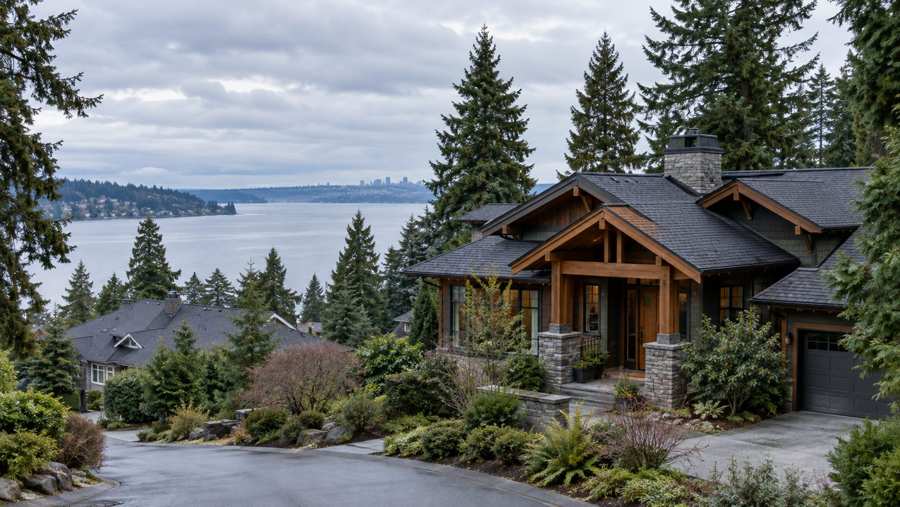
A Wedgwood seller should connect tree-work history with the actual arborist findings, City decision and work records before describing a tree as approved for removal. A contractor quote, a public notice and an approval letter have different roles. Keep the property context and unresolved conditions visible rather than treating a large tree, lean or recent trimming as a legal removal decision.
Seattle's current Tree Removal page lists online public-notice lead times of three full business days for reportable work and six full business days for tree removal. These are separate from any required City approval and the provider's registration. This guide organizes the records behind those steps, with the current City guidance checked in October two thousand twenty-six; it does not assess a private tree or authorize work.
Match Each Tree to the Actual Property Context
Start with the actual tree location, property identity, zoning, development status and any environmentally critical area or shoreline context. Seattle's rules depend on more than tree size, and a Wedgwood mailing address does not answer those questions. Keep private-property work separate from street-tree or park work. The record packet should document the basis for review rather than assume that every tree on a residential lot follows one removal rule.
Seattle SDCI's Tree Removal page says requirements vary with tree tier, species, construction occurring or proposed on the lot and zoning. Its Trees and Codes page also identifies additional requirements in environmentally critical areas and the Shoreline District. An owner's description of the tree as old, inconvenient or too close to the house is not the same as a finding under the applicable rules.
Tree identity sheet: Property identity, tree identifier, species if reliably established, measured size, location, available photos and the source behind any zone or area designation. If an arborist's report numbers trees, use those numbers consistently in the approval and work records. A photograph of a stump should not be matched to a different tree merely because both were near the same fence.
The City's Tree Removal page asks owners to research whether SDCI approval is needed, the tier category and any environmentally critical area. It points to registered providers and City resources for help. This guide has not searched a private parcel or classified any Wedgwood tree. Keep unknowns in the file instead of turning a neighborhood description into property-specific permission.
For example, an assessment of a backyard tree and a receipt for work beside the street may concern different jurisdictions. Keep them separate until the actual location and record match are established. If a branch, trunk or root area crosses a property line, obtain the appropriate professional advice; neither this guide nor a contractor advertisement establishes the owner's rights on another property.
Preserve the Arborist Report and Its Limits
Keep the dated arborist report, tree identity, photos and any risk-assessment form together. An assessment describes findings within its scope and can support a request, but it is not the City's approval. Preserve qualifications and limitations, including whether the report addresses health, risk, targets or development protection. Do not convert a recommendation to monitor or prune into an unstated finding that removal is required.
Seattle's Tip on Tree Removal on Private Property describes an International Society of Arboriculture Basic Tree Risk Assessment for the relevant hazard review. It says the assessment must be conducted by a certified arborist with a current Tree Risk Assessment Qualification and submitted through a registered provider as described in the Tip. The Tree Removal page likewise specifies a qualified TRAQ professional when that form is applicable.
Assessment record: Author, date, qualifications, tree identifier, observed conditions, targets, recommended action and stated limits. Seattle's guidance describes targets such as structures or areas used by people. A defect matters in context; an owner's fear alone should not be represented as the professional's rating. Keep the original language and date rather than rewriting a cautious conclusion into dangerous tree, immediate removal needed.
The City's Tree Removal page lists an arborist report, risk form and photos as applicable submittals. That wording matters because required evidence varies by request type. The Tip describes different documentation for clearly dead trees and emergency situations. Do not claim that every tree-related record must contain the same form or that the absence of one form automatically proves an unlawful removal.
A report recommending pruning and continued monitoring belongs in the packet even if a later contractor proposed removal. Keep the sequence visible and identify any subsequent professional finding. No inspection, risk rating or monitoring plan has been obtained for a private tree through this guide, and the illustration above provides no evidence about tree health or property conditions.
Separate a Hazard Review From the Emergency Procedure
Do not treat a hazard assessment and an emergency action as interchangeable. Seattle's private-property Tip describes hazard removal through City review and a narrow emergency path for an extreme risk of imminent failure. The emergency path carries notification and follow-up requirements, not a general right to remove a concerning tree without documentation. Preserve the actual reason, timing and records rather than relabeling ordinary work after it happened.
Seattle's Tree Removal on Private Property Tip says SDCI considers a high-risk hazard rating and other removal criteria, including alternative risk mitigation such as pruning. The arborist's findings support that review; SDCI determines whether the stated criteria are met. A seller should not describe a submitted risk form as approved hazard removal when the actual City result is still pending.
The Tip uses the phrase 'extreme risk of imminent failure' for its emergency-action scope involving the stated protected tree tiers. It says emergency action may occur without advance approval, but the owner must notify SDCI before beginning and submit the Tree Removal and Vegetation Restoration application within ten calendar days afterward. Those requirements should remain together, without presenting the exception as a shortcut for routine removal.
Hazard or emergency timeline: Condition observed, assessment, notification where applicable, action taken, follow-up application and City result. Record the actual sequence. A dated storm photograph can support context but does not independently establish the legal emergency classification, and a later invoice cannot prove that advance notification occurred. Ask the responsible professional to address any missing evidence.
Seattle's older Hazard Trees Tip describes a risk-review process for protected trees and environmentally critical areas. Current Tree Removal and Trees and Codes guidance should lead the routing and current requirements. This guide neither diagnoses an emergency nor delays emergency response; an actual immediate danger requires appropriate emergency and professional help rather than reliance on a seller record checklist.
Connect the Application to the Actual City Result
Keep an application, submitted documents, fee status and the City's result letter in separate stages. A submitted tree-removal request is not approval, and approval may contain conditions. Seattle distinguishes tree removal associated with construction from a request outside development. Preserve the record actually authorizing the work, its tree match and any requirements rather than relying on a contractor quote or an application receipt.
Seattle's Tree Removal page says removal associated with a construction project is typically reviewed through the SDCI record authorizing construction. Outside development, when review and approval are required, the Tree Removal and Vegetation Restoration application is the stated route. The Seattle Services Portal's May two thousand twenty-six application instructions also distinguish environmentally critical area and other tree-removal pathways.
Decision file: Record identifier, application type, approved tree or trees, submitted plans and report, dated result, conditions and any later change. The Tree Removal page says the results letter becomes available in the Portal after payment of required fees. It explicitly states, 'You don't need an inspection unless it is specifically noted on your approval.' Do not add a universal final-inspection requirement that the City does not state.
The same page says the initial review is generally targeted within two weeks, while final timing depends on complexity and corrections. That is not a guaranteed approval deadline or a reason to schedule removal before the actual result. Retain correction requests and the response history when they explain why the approved scope differs from the original request.
The City's fee table varies by request type and warns that additional review can add hourly charges, with possible additional fees in environmentally critical areas. A published minimum fee is not a total arborist or removal budget. This guide has not submitted an application, paid a fee, received a result letter or arranged an inspection.
Keep Provider Registration Separate From Public Notice
For paid commercial tree work, verify the provider role and preserve the public notice where required. Registration does not approve a specific removal, and a posted notice does not replace City permission. Seattle distinguishes reportable pruning and removal from other maintenance and has separate private-property and right-of-way registries. Keep the work description, provider identity, notice dates and any actual approval connected without collapsing them into one document.
Seattle's Trees and Codes page defines reportable work to include removal of live branches four inches in diameter or greater, pruning or removal of live roots two inches or greater, and removal of live branches constituting twenty-five percent or more of foliage-bearing area. It excludes pruning for cultivated fruit production and hedge maintenance from that definition. Do not rename substantial work routine maintenance solely to avoid its stated category.
The City explains that paid removal and relevant assessment services fall within its commercial tree-work registration scope. Tip on the Tree Service Provider Registry says private-property SDCI registration differs from SDOT's right-of-way registry. Keep the provider's actual registration and work location in the file. A business name or professional qualification alone does not establish registration on the required City list.
Notice record: Work description, tree identifier, provider, any relevant permit or approval reference, online notice date and on-site posting evidence. The current Tree Removal page lists three full business days for reportable work and six full business days for removal. It also tells owners to print and post the notice during commercial work and for five days afterward. Use the current work-specific instructions rather than an older generic timing example.
Tip on Tree Public Notice identifies exclusions, including emergency work and assessments, while other registration requirements can still apply. Preserve that distinction instead of saying every registered assessment needs the same advance notice as removal. If an exception or older vested permit applies, have the provider verify the actual requirements. No provider has been hired and no online or on-site notice has been created through this guide.
Read Development Records Against the Current Tree Rules
If tree work is tied to development, connect the arborist analysis with the actual construction record and current rules. Seattle changed its tree-protection-area provisions in two thousand twenty-six, so an older Tip's terminology should not be presented as the current test. A seller packet should preserve approved plans and analysis rather than promising that a lot can be cleared or built out from a tree sketch alone.
Seattle SDCI's July two thousand twenty-six Building Connections notice says Ordinance number one hundred twenty-seven thousand three hundred took effect January twenty-first, two thousand twenty-six and changed tree-protection-area provisions. It states that the 'basic tree protection area' was deleted from the code. The current Trees and Codes page explains the revised use of the tree protection area and arborist analysis verified by SDCI.
Development record match: Construction or land-use record, tree inventory, arborist-defined protection areas, City verification, retained-tree protections and any approved removal or replacement condition. Keep the version and date. The older private-property removal Tip still contains basic-tree-protection-area wording, so do not use that passage as proof of the current development calculation or guaranteed removal eligibility.
The current City guidance says the same verified protection area is used for relevant removal analysis and protecting retained trees during construction. It also describes how multiple trees and site conditions affect the analysis in the stated zones. A seller should not take one trunk measurement, draw a circle and state that a buyer is entitled to remove a protected tree for a larger building.
For example, approved plans may retain a tree while a later concept drawing shows it removed. Keep those documents distinct and identify which one has City approval. Maison Off-Market's public valuation process can consider zoning and development potential, but it is not the City's tree-protection analysis, a permit or a promise about the lot's future buildable area.
Preserve Completed Work and Any Replacement Conditions
After documented work, connect the invoice and photos with the approval scope and any replacement or restoration conditions. Completion of cutting does not necessarily complete every condition, and payment does not establish compliance. Replacement requirements depend on the actual removal pathway, current rules and decision. Preserve the result letter rather than using inconsistent older summary wording to claim that every removal has the same replacement duty.
Seattle's Tree Removal page directs users to the supporting tree-replacement rule, while the Trees and Codes page explains that development may require replacement. The private-property Tip contains tables and summary passages whose replacement wording is not uniform. This guide therefore does not use that older Tip alone to decide a particular replacement obligation. The applicable current code, professional review and actual approval should determine the response.
Completion file: Tree identifier, work date, provider, invoice description, before-and-after evidence, actual scope and any replacement or restoration record required by the decision. If a letter calls for inspection, retain its result. If it does not, do not invent an inspection certificate. A planted replacement tree and a receipt can document planting without proving that every size, species, location or later maintenance condition has been met.
Keep retained-tree protections and later damage questions visible when work occurred during construction. The City's current guidance uses the protection area to support retained-tree health and stability. An approval to remove one tree does not authorize damage to another tree or establish a continuing guarantee that all retained trees will remain healthy.
For a seller preparing records, the useful claim is specific: the stated tree was removed under the identified result and the documented conditions were addressed as shown. If planting remains pending, say so in the record index. No cutting, pruning, root work, replacement planting, payment-in-lieu decision or property-specific compliance finding occurred through this guide.
Build a Dated Tree Packet Before Comparing Offers
Index the tree identity, assessment, applicable City decision, provider and notice evidence, completed work and open conditions. Keep each document's role clear for the intended transaction audience. A listing and a direct purchase can be compared through actual written terms, but neither independently authorizes tree removal or certifies a property. The packet should make known facts and unresolved questions visible without adding unsupported guarantees.
Handoff order: Property and tree match, reliable location and area context, dated arborist findings, submitted review documents, actual City result, provider record, applicable notice, completed work and outstanding conditions. Use the tree identifiers from the professional records throughout. A folder labeled trees cleared for sale is misleading if the only evidence is an unapproved estimate.
Washington's current RCW sixty-four point zero-six point zero-two-zero text, effective until January two thousand twenty-seven, frames the statutory seller disclosure around actual knowledge and says it is not a warranty. Tree findings, known property damage, access or other material questions should be reviewed with the transaction professional against the applicable form and contract. This guide does not complete disclosure or determine an exemption.
No private parcel search, tree risk assessment, application, approval request, notice, contractor engagement, work, planting or payment occurred. The table compares evidence roles instead of determining any Wedgwood tree's status. Preserve original reports and City conditions while sharing only records needed for the intended transaction, not unrelated household or neighbor information.
| Record | What it supports | What it does not prove alone |
|---|---|---|
| Tree inventory | Documented tree identity | Removal permission |
| Arborist assessment | Dated professional findings | City approval |
| Application receipt | Submission for review | Approval or work completed |
| City result letter | Decision and stated conditions | Every future change permitted |
| Provider registration | Listed commercial provider role | Specific removal approved |
| Public notice | Notice of described work | Permission or compliance finding |
| Work and planting records | Documented actions within scope | All conditions automatically fulfilled |
Frequently Asked Questions
These questions follow Seattle's current tree-removal, provider and public-notice guidance, with older Tips used only within their stated limits. They separate property context, professional findings, City approval, notice and completed work. They do not assess a private tree, choose an emergency response or establish a seller's legal disclosure answers.
Does a Wedgwood address determine the tree-removal rule?
No, Seattle says requirements depend on size, species, development and zoning, with additional area rules. Verify the actual tree and property context.
Does an arborist recommendation approve removal?
No, it supports the review within its stated scope. Keep the City's actual decision separate.
Is a high-risk assessment the same as an emergency?
No, Seattle describes a separate narrow emergency path involving extreme risk of imminent failure. Preserve its notification and follow-up requirements rather than using the label for routine work.
Does an application receipt authorize cutting?
No, it records a submission. Keep the actual result letter and conditions before describing work as approved.
Does every approval require an inspection?
Seattle's Tree Removal page says an inspection is not needed unless specifically noted on the approval. Retain the actual condition instead of inventing a universal inspection step.
Does provider registration replace tree permission?
No, registration concerns the provider's commercial-work role. Any required approval and public notice remain separate questions.
Do removal and reportable pruning have the same notice lead time?
The current City page lists six full business days for removal and three for reportable work. Have the provider verify the actual scope and any applicable exception.
Can an older development Tip prove current buildable area?
No, Seattle's two thousand twenty-six notice changed the tree-protection-area provisions. Use current rules and the actual verified analysis rather than an older summary.
Does a direct buyer eliminate tree-record questions?
No, the buyer's process does not issue City approval or complete the seller's disclosure. Compare written terms while preserving known findings and conditions.
How Maison Off-Market Fits a Tree Record Handoff
Maison Off-Market offers a direct-purchase route to compare after tree records are organized. Its public process assesses the home and land and may lead to an offer if the property fits. That assessment does not rate tree risk, issue removal approval, replace an arborist's work or complete the seller's disclosure. Keep actual written terms and unresolved conditions separate from published service claims.
Maison Off-Market's public site describes privacy without showings, no commissions or closing costs, and skipping buyer inspections and related repair requests. These are published service claims, not a private Wedgwood offer or a City tree decision. Its discussion of zoning and development potential does not promise that a protected tree can be removed or that every concept plan will be approved.
Compare written terms: Keep reports, City conditions, completed work and unresolved planting or disclosure questions visible while weighing a direct proposal against other sale routes. Skipping buyer repair requests does not remove government requirements or make a tree safe. This guide promises neither a purchase nor removal permission, a risk-free property or a fixed work budget.
Compare your options before committing. Request a written private offer for your property, with no obligation, then weigh it against your listing plan.
Sources
- Seattle SDCI, Checked October 2026. Tree Removal. https://www.seattle.gov/construction-and-inspections/permits/permits-we-issue-(a-z)/tree-removal.
- Seattle SDCI, Checked October 2026. Trees and Codes. https://www.seattle.gov/construction-and-inspections/codes/codes-we-enforce-(a-z)/trees-and-codes.
- Seattle SDCI, Checked October 2026. Tree Removal on Private Property, Tip 242B. https://www.seattle.gov/DPD/Publications/CAM/Tip242B.pdf.
- Seattle Services Portal, Checked October 2026. How to Apply for SDCI Approval for Tree Removal and Vegetation Restoration. https://seattlegov.zendesk.com/hc/en-us/articles/360039043813-How-to-Apply-for-SDCI-Approval-for-Tree-Removal-and-Vegetation-Restoration.
- Seattle SDCI Building Connections, Checked October 2026. Tree Protection Development Updates, July 2026. https://buildingconnections.seattle.gov/2026/07/01/seattles-tree-protection-regulations-include-limits-on-tree-removal-and-may-require-tree-replacement-as-part-of-a-development-permit/.
- Seattle SDCI, Checked October 2026. Tree Service Provider Registry, Tip 242C. https://www.seattle.gov/DPD/Publications/CAM/Tip242C.pdf.
- Seattle SDCI, Checked October 2026. Tree Public Notice, Tip 242D. https://www.seattle.gov/DPD/Publications/CAM/Tip242D.pdf.
- Seattle SDCI, Checked October 2026. Hazard Trees, Tip 331B. https://www.seattle.gov/DPD/Publications/CAM/cam331b.pdf.
- Washington Legislature, Checked October 2026. RCW 64.06.020, current-until-January-2027 text. https://app.leg.wa.gov/RCW/default.aspx?cite=64.06.020&pdf=true.
- Maison Off-Market, Checked October 2026. Public Process. https://bulkscaler.com/.
Related research
Seller Guide · 2026-10-09
How to Assemble South Naples Flood Map and Repair Sale Records
Match effective maps, elevation evidence and approved repair records before presenting a sale file.
Seller Guide · 2026-10-09
How to Prepare Newton Tree Permit and Protection Sale Records
Separate removal permits, exemptions, arborist assessments and replacement obligations before selling.
Seller Guide · 2026-10-09
How to Organize Sevierville Well and Spring Water Sale Records
Separate the water source, construction report, test results and service history before selling.