Seller Guide · by Aidan Sowa · 2026-10-09
How to Prepare Newton Tree Permit and Protection Sale Records
Separate removal permits, exemptions, arborist assessments and replacement obligations before selling.
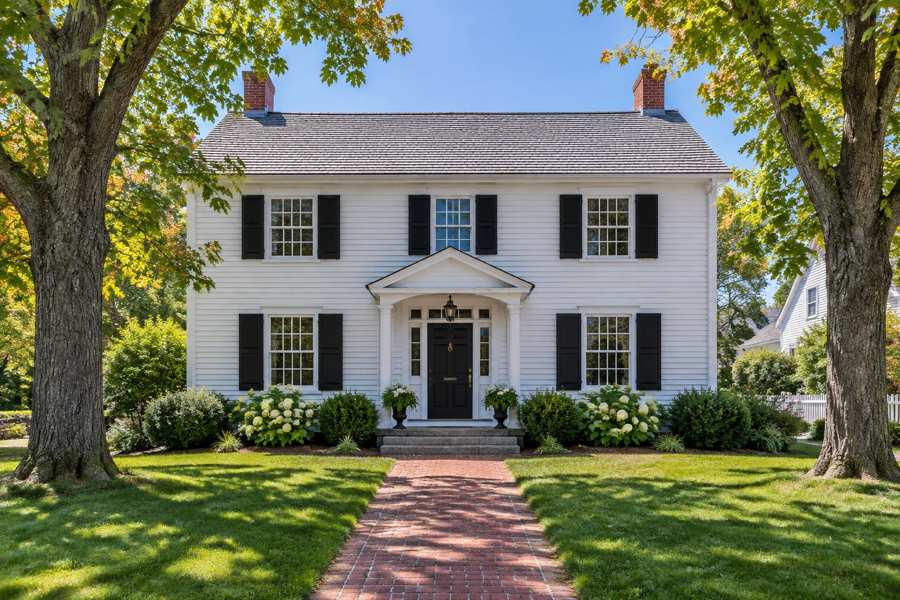
A removed tree can leave more than a stump in a Newton seller's file. The permit, exemption application, arborist assessment and replacement question may describe different parts of the work. Newton Beacon's January 2024 report quoted Councilor Emily Norton saying that fifty-six percent of Newton's tree canopy is on residential properties. That is an attributed historical figure, not a current canopy measurement or a finding about this home. It explains why a private yard can still have a public permitting history.
Newton's current Tree Preservation Ordinance page says permits apply to removal of trees with a trunk diameter of six inches or more, and to exterior construction. This guide shows how to assemble the documents already held, identify the approved scope and separate completed work from unresolved conditions. It does not determine whether a particular tree is exempt, safe or lawfully removed. Those answers require the city's records and the appropriate professional review.
What Newton Tree Records Actually Establish
A tree sale file should describe which trees were reviewed, what the city approved and which conditions remain. Keep an approved permit separate from an application, a contractor's invoice and an arborist's opinion. Each answers a different question. Match them by property address, tree identifier, date and plan revision before describing the work to a buyer.
The City of Newton's Tree Preservation Ordinance page says the process requires a permit "prior to removal of any tree with a trunk diameter of six inches or larger". A paid invoice therefore should not be presented as the removal authorization. It may document who performed work and when, but the city's approval is a separate item.
Create the record chain: Start with the owner-held application, approved permit, attached tree plan, arborist form, removal form and any city correspondence. Add invoices, dated photographs and documents concerning replacement planting or payments. Mark anything you have requested but not received. This is a preparation list, not a statement that every item applies to every property.
For example, an invoice might say that two maples were removed while the approved plan identifies only one. Do not resolve that difference by changing the invoice description or assuming both were covered. Keep both originals and ask which approval, updated application or other record addresses the second tree. This example is hypothetical, not a finding about a Newton house.
How to Match the Work With the Permit Route
Use the actual project and tree history to identify the permit route, then verify it against the approval. Newton publishes construction, exemption and non-construction applications with different conditions and filing charges. A sale by itself should not be confused with a tree-removal project. Review work performed or proposed, rather than assuming every seller needs a new application.
The City of Newton's current guidance lists a construction application filing fee of $150 for exterior work, including projects that do not remove trees. It also lists a non-construction filing fee of $150 for specified other removals. These are application charges, not the entire cost of an arborist, removal, protection or replacement work. Confirm the current fee before applying.
The same city page describes the exemption form as "ONLY for trees being removed" on an occupied single- or two-family residential lot where exterior construction is not underway or planned during the twenty-four months from the application date, and where the tree is between six and thirty-nine inches in trunk diameter. It lists no charge for that application. No charge does not mean no permit process.
Record the reason: Keep the route shown on the actual application and approval, the property use described there and the dated project description. If the file says exemption but also contains a later addition proposal, flag the timing for city review. Do not choose the route from the tree's size alone or promise that a former owner's exemption answers a buyer's future construction plans.
Why the Construction Timeline Matters
Make one timeline for tree removal and exterior construction, with the application, approval and work dates preserved separately. The city's exemption guidance refers to a twenty-four-month construction window. That makes an old removal relevant to a proposed project even when the seller sees it as finished landscaping. Ask the city about the specific sequence instead of interpreting an exemption as permanent.
Newton Beacon's January 2024 report describes homeowner concern about the relationship between tree removal and later construction. Its summary is useful background, but the city's current page and the property's approval should control the working file. The article discusses replacement ratios and exemption details in general terms; this guide does not use it to calculate a property's current obligation.
Timeline fields: Record the application date, approved permit date, removal date if documented, construction application date, actual exterior-work dates and later plan revisions. Preserve the source of each date. An invoice date can be a billing date rather than the day a tree came down, so label it accordingly instead of silently treating it as proof of the work date.
A seller may know that a tree was removed before an addition, but not know which permit route covered either event. Describe that uncertainty in the file. Ask urban forestry and the project professional which records connect the work. Do not tell the buyer that a planned addition is approved because the existing house already has a building permit in the archive.
Recover the Approved Plan and Removal Form
Locate the approved tree plan and connect each tree identifier to the removal form and work history. Newton's removal form asks for tree identifiers, diameter and species, and says that additional removals require an updated application and form before removal. Preserve the approved version so a buyer can distinguish the allowed scope from a contractor's broader proposal.
The city's Tree Removal Form, dated March 2024, says "only the trees listed above are to be removed" after an approved tree permit has been issued. It also states that adjacent trees remaining in place must be protected, regardless of their location. Recover the signed form where available; a blank downloaded form explains the process but does not document this property's work.
Version control: Name each document by its real date, address and version. Keep an approved plan beside the submitted plan if both exist, and mark the approval clearly. Ask for the missing attachment if a permit references a tree plan you do not have. Do not redraw a plan from memory and label it as the city's approved document.
Newton Inspectional Services' Forms & Resources page identifies online permit applications and lists plan-search, site-plan and plot-plan resources. Those are leads for recovering the building side of a project's file, not evidence that forestry conditions were satisfied. Search the city's existing-permit route and ask the relevant department what records remain available for the address and project.
Keep Arborist Findings Separate From Seller Opinions
Keep the signed arborist form, assessment date and referenced tree plan together. Newton requires the arborist form for construction and non-construction applications, and risk assessment has additional qualification and form requirements. A seller's description of a tree as dead or dangerous is not the same as the professional findings used for a permit decision.
Newton's Arborist Form, dated March 2024, asks the professional to confirm personal review of the tree plan, the project and the site. It says the assessment is "not based on a predetermined outcome the client has requested". The document also distinguishes risk assessment from the broader plan review. Its TRAQ qualification requirement applies when risk assessment is performed.
The form describes a Level Two Basic Risk Assessment with a twelve-month time frame following inspection. Preserve that date and scope rather than presenting an old assessment as a permanent safety warranty. If a report concerns only certain trees, do not extend its conclusion to the whole yard. Ask the arborist or city what updated review is appropriate for the current question.
Professional identity: Retain the name, credential details, signature and attachments that belong to the actual review. Newton's city guidance points owners toward the Massachusetts Arborists Association and International Society of Arboriculture for finding and verifying credentials. ISA's Tree Owner Information page also separates risk, construction damage and general care topics. A pruning invoice alone does not establish a formal risk assessment.
Map Tree Protection Beyond the Property Line
Look for the approved tree protection plan, not only a list of trees being cut. Newton's Tree Save Area can extend beyond the canopy, and its guidance includes protected trees on adjoining lots. A project that keeps every tree may still need protection documentation. Match work limits, protection measures and neighboring-tree concerns to the approved permit.
The City of Newton defines the Tree Save Area as the area inside the drip line or a radius of one and a half feet for each inch of trunk diameter at breast height, whichever is greater. Its page identifies excavation, trenching, grading, material storage, heavy equipment and damaging spills as relevant activities. The definition is not a substitute for a site-specific tree plan.
The same city guidance says construction activities may take place with an "approved Tree Protection Plan as part of an approved Tree Permit". Recover that plan and the version the city accepted. Ask how any later driveway, fence or exterior-work changes were reviewed rather than treating protection fencing in a photograph as proof that all conditions were fulfilled.
Abutter records: Retain any notices, professional correspondence and approved-plan details that concern trees on neighboring land. Fig City News' September 2025 report describes continuing resident questions and concerns about notification clarity. That reporting supports taking the issue seriously, but it is not a ruling about any property boundary, neighbor's rights or a completed project's compliance.
Compare Replacement Records Without Inventing a Total
Separate the application charge from tree replacement, payment in lieu and private service costs. Newton allows replacement planting, a payment to the city or a combination under applicable circumstances. Recover the actual permit conditions and evidence of the selected route. Do not quote a final obligation from an older news summary or assume one new tree replaces every removed tree.
Newton's current Tree Preservation Ordinance page states that an applicant can "plant replacement trees on site, make a payment to the City in lieu of planting, or a combination". It also points to a replacement and payment table labeled 2024. Check the current city calculation and the property's conditions before presenting an amount, species requirement or planting schedule to a buyer.
Keep the categories distinct: The listed $150 construction or non-construction application charge is not a removal quote. A no-charge exemption application is not a statement that a contractor will work free. A receipt may show a payment, but the permit and city confirmation establish what it addressed. Private arborist and planting prices depend on the work and need an actual quote.
Collect any approved replacement plan, planting invoice, dated planting records, city payment receipt and subsequent correspondence. Match each to the permit number and the trees concerned. If a condition remains open, identify it for the closing professional rather than promising that the buyer can ignore it after ownership changes. This guide has not determined any transfer-related deadline for a particular permit.
| Record or route | Published cost or pricing basis | What remains separate |
|---|---|---|
| Construction application | City lists $150 filing fee | Private services, replacement obligations and approval conditions |
| Qualifying exemption application | City lists no application charge | Eligibility, approved scope and later construction questions |
| Non-construction application | City lists $150 filing fee | Removal contractor, arborist and replacement costs |
| Replacement planting or payment | Verify current city calculation and actual condition | Evidence of fulfillment, not merely a submitted plan |
| Arborist or removal service | Obtain a project-specific private quote | Permit approval and current assessment scope |
Choose the Next Step From the Missing Record
Choose follow-up according to the unanswered question rather than commissioning every possible service before a sale. Missing approval calls for city records; uncertain tree condition calls for a qualified arborist; disagreement about the transaction calls for the closing professional. Keep the completed documents and open questions together so neither a listing nor a private offer rests on an unsupported promise.
If the permit is missing: Use Newton's existing-permit search and ask urban forestry what was approved for the address and work. Retain the response and any referenced attachment. If the application appears but approval cannot be recovered, describe the record as an application with approval unverified. Do not relabel it approved simply because the work happened years ago.
If condition or scope is unclear: Ask the qualified professional which trees and dates a report covers, and ask the city how the permit condition should be checked. Fig City News quotes the city forester advising that "consulting the City's website is always the best way to go" when expectations are misunderstood. Current city guidance is the starting point, not a replacement for the property's actual documents.
If the sale path is the question: Compare the records needed for the buyer's plan with those already available, then discuss remaining work and timing with the transaction professional. A useful file is a dated index, not a claim that nothing can go wrong. Keep original approvals available even when no new landscaping or construction is proposed by the seller.
Frequently Asked Questions
Newton sellers often need to distinguish a no-charge exemption application from permission to skip the process, and a completed tree removal from fulfilled permit conditions. The answers below summarize the city's current published guidance and record limits. Use the actual approval and professional assessment for the property rather than treating these answers as a legal or safety determination.
Does an exemption mean I can remove a tree without paperwork?
Newton's current page describes an exemption application with no charge under specified conditions. It does not describe that route as permission to skip an approved tree permit.
Does exterior construction matter if no tree is removed?
The city's guidance says a tree permit is required for exterior construction, including work with no tree removal. Ask the city how the actual project should be documented.
Is the filing fee the total tree-work cost?
No, Newton lists a $150 application charge for construction and non-construction routes. Arborist work, removal, replacement and any payment in lieu are separate cost questions.
Can I call a tree dangerous based on an old invoice?
An invoice is not the professional assessment used for the city's risk review. Recover the signed arborist form and assessment with their dates, scope and attachments.
Should I keep documents about a neighbor's trees?
Yes, keep the approved protection plan and any relevant notices or correspondence. Newton's guidance includes protected trees on adjoining lots when describing Tree Save Area restrictions.
Can I rely on a blank city form as evidence?
A blank form explains the process but does not establish what happened at your property. Recover the signed submitted documents and the actual approval.
Does one replacement tree settle every removal?
Newton's guidance allows planting, payment in lieu or a combination under applicable conditions. The current city calculation and actual permit determine the relevant requirements, not a one-tree-for-one-tree assumption.
Does selling itself mean I need a new tree application?
This guide does not identify a standalone tree application triggered only by selling. Review the work history, existing conditions and proposed project with the city rather than equating a sale with tree removal.
Will a private buyer treat the file as a city clearance?
A buyer can review the records, but a private offer does not establish city approval or tree safety. Keep permit verification and professional findings separate from the sale decision.
How Maison Off-Market Handles the Tree Records Discussion
Maison Off-Market's published process starts with a private conversation and an assessment of the home and land before a direct offer if it fits. A seller can present the tree approvals, completed work and unresolved conditions together. The mechanism is a private review before comparing written terms, not a substitute for city verification or an arborist's assessment.
Maison Off-Market's current website describes an assessment that includes lot size, zoning and what a buyer could build. That makes the approved exterior-work and tree-protection file relevant to the conversation. Present the actual conditions and questions instead of promising unrestricted construction because the trees have already been removed.
A bounded outcome: The documented result is a clearer record package for comparing a private offer with a listing plan. The website describes a direct purchase offer if the property fits and a closing date the seller chooses. This guide claims no completed Newton transaction, achieved price or guaranteed acceptance of an unresolved tree condition.
Compare your options before committing. Request a written private offer for your property, with no obligation, then weigh it against your listing plan.
Sources
- City of Newton, Checked October 2026. Tree Preservation Ordinance and Application Guidance. https://www.newtonma.gov/government/parks-recreation-culture/urban-forestry/tree-preservation-ordinance.
- City of Newton, March 2024. Tree Removal Form. https://www.newtonma.gov/home/showpublisheddocument/117202/638445489492900000.
- City of Newton, March 2024. Arborist Form. https://www.newtonma.gov/home/showpublisheddocument/117198/638472168822230000.
- City of Newton, Checked October 2026. Inspectional Services Forms & Resources. https://www.newtonma.gov/government/inspectional-services/applications-forms-instructions.
- Bryan McGonigle, Newton Beacon, January 2024. What Newton's Newly Enhanced Tree Ordinance Means for Homeowners. https://www.newtonbeacon.org/what-newtons-newly-enhanced-tree-ordinance-means-for-homeowners/.
- Chloe Yu, Fig City News, September 2025. Impact of Revisions to Newton's Tree Preservation Ordinance. https://www.figcitynews.com/2025/09/impact-of-revisions-to-newtons-tree-preservation-ordinance/.
- International Society of Arboriculture, Checked October 2026. Tree Owner Information. https://www.treesaregood.org/treeowner.
- Maison Off-Market, Checked October 2026. Current Hosted Purchase Process. https://files.instinct.com/zp8jmzhzb6oc-luxury-off-market-buyer-website.
Related research
Seller Guide · 2026-10-09
How to Assemble South Naples Flood Map and Repair Sale Records
Match effective maps, elevation evidence and approved repair records before presenting a sale file.
Seller Guide · 2026-10-09
How to Organize Sevierville Well and Spring Water Sale Records
Separate the water source, construction report, test results and service history before selling.
Seller Guide · 2026-10-09
How to Prepare Sevierville Septic and Rental Occupancy Sale Records
Match septic capacity, bedroom counts and rental occupancy records before selling a Smoky Mountain cabin.