Seller Guide · by Aidan Sowa · 2026-10-07
How to Prepare Lake Oswego Tree Removal and Protection Records
Connect tree identity, current permit tracks, arborist evidence, protection plans and mitigation results.
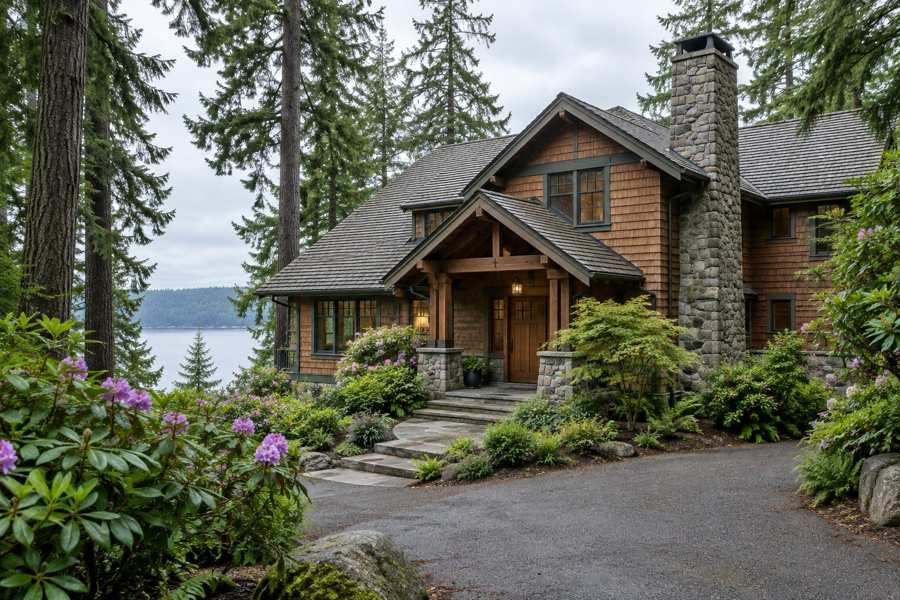
A Lake Oswego seller should connect every tree record to the actual tree, property jurisdiction and issued decision before promising removal or future construction. A contractor recommendation, old tree permit and neighborhood mailing address answer different questions. Keep retained trees and replacement obligations in the packet alongside proposed removals so the buyer sees the complete record.
Lake Oswego's October two thousand twenty-six Tree Removal Guide places the general permit boundary at six inches of diameter at breast height. Its newly enacted Ordinance two thousand nine hundred seventy-eight also changes permit tracks and notice rules, effective October first. This guide organizes current public requirements and actual records, not a private tree classification, removal authorization, development approval or arborist finding.
Identify Jurisdiction and Build a Tree Inventory
Start with the actual property boundary, responsible jurisdiction and tree identities. A Lake Oswego postal address does not by itself establish City jurisdiction or private ownership of a roadside tree. Preserve measured trunks, species, locations and photographs with consistent labels before choosing a permit route. County certification, City permission and consent for a boundary tree are different records and should not be merged into a single removal claim.
The City's Permit Types and Requirements page states that a permit is required for a tree '6 inches in diameter at breast height (DBH) or greater'. The October Tree Removal Guide explains measurement at four and one-half feet above ground, with special treatment when a trunk splits below that height. Preserve the actual qualified measurement rather than estimating from a photograph or canopy width.
The City's Tree Removal Certification for Unincorporated Properties says its process 'does not constitute a permit granting approval of the tree removal'. It asks whether the proposal would qualify under City rules and leaves the owner responsible for permits required by the county with jurisdiction. Keep that certification separate from an actual county authorization or City permit.
Inventory packet: Property identifiers and boundary evidence, tree number, species, measured DBH, location, photographs, proposed action and relevant protection status. The current Type II application says both property owners must agree if trees straddle the property line. A signature field is not evidence that consent exists, and a public right-of-way is not limited to the pavement edge.
For example, a seller may have a lakeside mailing address and trees near a road or shared boundary. Resolve the actual jurisdiction and ownership record before describing those trees as freely removable. This guide mapped no private boundary, measured no tree, checked no owner consent and determined no jurisdiction for a particular parcel.
Use the Current Permit Track Rather Than an Older Summary
Keep the applicable permit type and review track with the project record. Lake Oswego's newly enacted tree amendments distinguish ordinary discretionary review from a clear-and-objective track for qualifying new housing or residential lots. An older online summary can miss that distinction. Preserve the current application, elected route and issued decision rather than assuming that every small tree, remodel or proposed dwelling follows the same process.
The signed Ordinance two thousand nine hundred seventy-eight has an effective date of October first, two thousand twenty-six. Its Type I provision covers qualifying private yards occupied by a dwelling unit, up to two trees of fifteen-inch DBH or less with permits issued within a calendar year, plus fruit trees, subject to stated exclusions. It is a permit route, not permission to cut before issuance.
Exclusions include development-protected and Heritage Trees, historic-designated parcels, specified sensitive lands, the Willamette River Greenway, Lake Corporation property or the lake setback, and City or public property. Keep the actual status and prior conditions rather than deciding eligibility from trunk size alone. The current General Tree Removal Application separates Type I, dead, hazard and emergency submittals.
The current Type II Tree Removal Application labels the housing route 'Clear & Objective Type II'. The enacted ordinance applies it to construction of new dwelling units or creation of residential lots, with the applicant able to elect discretionary criteria instead; other applications use discretionary criteria. Related improvements have concurrency requirements. An ordinary existing-home remodel does not become qualifying new housing merely because it needs a building permit.
Track file: Current form version, actual proposal, applicant's selected route, relevant exclusions, prior development conditions, staff clarification and issued permit. Some public FAQs and codified pages still display older language; this guide anchors changed rules to the signed enactment and fresh packets. No private project was assigned to a track or submitted here.
Connect Housing Retention Calculations to the Protection Plan
For a qualifying housing-track proposal, preserve the full tree inventory and retention calculations with the concurrent protection plan. A percentage quoted without its measurement basis, included trees and exclusions is incomplete. Lake Oswego's enacted criteria distinguish tree-count retention from diameter retention and address fees, credits and protected categories. Keep the actual professional calculations and City decision rather than promising that a fee buys unrestricted removal.
The enacted housing criteria include forty-five-percent retention alternatives: counts of trees greater than fifteen-inch DBH or DBH of trees at least six inches, across the development site and fronting abutting street right-of-way. They also address a Tree Fund fee when minimum retention cannot be met. This guide calculates neither a private retention result nor a fee and does not treat either percentage as the whole approval test.
The current Type II application requires a certified-arborist tabular tree inventory in Excel, including tree identification, size, condition, removal and retention information, calculations and mitigation. The enacted ordinance says a protection plan must be submitted 'concurrently' to verify that identified retained trees can actually be protected. A spreadsheet that omits construction impacts cannot establish that feasibility.
Other enacted conditions include defined bonus credits, excluded tree categories, a limited small-site building-envelope provision and protection of Heritage Trees. Only trees with proposed excavation, fill or structures within their protection zone are eligible under this route; removal solely to provide or enhance views is prohibited. Preserve the actual qualified treatment of these conditions rather than applying one universal calculation to every lot.
Housing packet: Project and permit linkage, dated inventory, retained and removed tree IDs, relevant street trees, calculation method, claimed credit or exception support, protection plan, mitigation and actual decision. A future buyer's building concept may differ from the approved design. No housing approval, retention credit, fee estimate or ability to move retained trees was established here.
Keep Discretionary Notice and the Issued Permit Separate
Preserve the complete discretionary application, public notice dates, tentative decision and final issued permit. The current Lake Oswego packet uses a seven-day comment period and a separate hearing-request period; those are not one guaranteed completion date. Additional evidence or associated building review can affect the sequence. A posted yellow sign, staff visit or tentative approval does not itself authorize cutting before the applicant receives the permit.
The City's current Steps for Type II Tree Removal is expressly 'Discretionary Track Only'. It describes a seven-day comment period after posting, staff review and a tentative decision followed by a seven-day request-for-hearing period. The signed enactment deletes the older fourteen-day comment wording. Do not apply the discretionary notice steps to the housing track or turn them into a guaranteed fourteen-day permit promise.
The Discretionary Type II Packet asks for reasons, erosion and adjacent-tree effects, neighborhood character, alternatives, other-code compliance and mitigation. It states that a landscape plan must include more than the proposed removal plus required replacement trees. For a development proposal, preserve alternative site plans and relevant arborist evidence rather than asserting that the preferred building footprint is the only possible design.
The Steps document warns 'TREE(S) CANNOT BE REMOVED UNTIL AFTER THE APPLICANT RECEIVES THE PERMIT'. It also describes permit validity, extension requests and mitigation timing. Preserve the actual issued dates and conditions; a tentative decision or expired approval should not be renamed a current permit because the trees remain marked on site.
Decision sequence: Complete submission, fee record, public notice and posting, tree markings, comments, additional evidence, tentative decision, hearing request or final outcome, issued permit and expiry. A seller can preserve an unresolved request without predicting approval. No sign was posted, fee paid, comment filed, hearing requested or tree-removal permit obtained through this guide.
Separate Hazard Evidence From Emergency Removal
Keep an arborist's risk assessment, alternatives analysis and actual permit decision separate. A large tree, fear of storms or a contractor's removal recommendation does not establish the City's hazard or emergency criteria. Lake Oswego distinguishes hazard review from immediate-collapse conditions and imposes narrow after-hours and retrospective requirements. Preserve evidence of the condition before removal rather than treating an emergency label as permission to clear additional trees.
The enacted hazard provision allows the City to require a Tree Risk Assessment Qualified arborist's report with a high or extreme risk rating for the next five-year timeframe and analysis of alternatives. Its Hazard Evaluation Form asks for site and target information, defects, likelihood, consequences, inspection limits and overall risk. The separate staff-use finding underscores that the completed form is evidence, not an issued permit.
The form includes 'Inspection Limitations' and treatment alternatives. Preserve those limitations with photographs and the report. The enacted discretionary landscaping exception separately addresses certain moderate-risk evidence, nearby similar-tree failures and alternatives to reduce risk; moderate risk alone should not be described as satisfying the hazard-permit test.
The emergency provision addresses 'immediate danger of collapse' and excludes hazards that can be alleviated by pruning or treatment. If the City Manager is unavailable and the stated imminent-failure conditions are met, the owner must photograph the emergency first, remove only what is necessary to avoid the immediate hazard, and apply with evidence for a retroactive permit within seven days. That narrow clause is not a general storm-cleanup exemption.
Risk file: Qualified assessor identity, tree ID, assessment date and horizon, targets, methods, limitations, photographs, alternatives and actual permit outcome. If the City requires retrospective arborist review, the person or entity performing removal cannot provide it. No tree was assessed as safe or hazardous, no emergency declared and no pruning or removal authorized here.
Preserve Retained Tree Protection Before Construction
Connect retained trees to the approved protection plan, arborist recommendations and actual inspection results. Removal permission for one tree does not permit damaging nearby roots or moving another tree's fence. Lake Oswego's protection packet addresses trees potentially affected by clearing, excavation, demolition and construction, including nearby off-site trees. Preserve the installed measures and approved changes rather than assuming a building drawing alone proves that trees survived the work.
The City's Tree Protection Plan Application requires a scaled site plan with trees, protection boundaries, fence distances, utilities, grading limits and construction parking. Its signed commitments include 'Wait to start work' until Planning approval of the site inspection and protection plan. The packet describes limited supervised preconstruction activities, not unrestricted staging, grading or excavation before approval.
The Tree Protection Arborist Report guidance defines the standard zone as the greater of the canopy dripline and a one-foot radius per inch of DBH. If fencing encroaches, the report addresses anticipated root loss, excavation depth, compaction, hydrologic and light changes, tree tolerance and long-term viability. Keep that actual assessment instead of drawing a smaller convenient fence on a plan without supporting review.
Protection record: Tree IDs, standard and proposed zones, qualified report, approved plan, installed fencing, City inspection, construction-stage monitoring, permitted adjustments and later outcomes. The packet says fencing and other measures must be installed, inspected and approved before development. Preserve its specified fence requirements and any actual City condition rather than relying on an older brochure's simplified diagram.
For example, a utility trench or driveway could affect a neighbor's tree even when no tree removal is proposed on the seller's land. Keep the adjacent-tree assessment and approved measures with the project. No site consultation, excavation, fence installation, protection inspection or approval was performed through this guide.
Connect Mitigation and Verification to Their Actual Conditions
Keep removal permission, replacement obligations and completed mitigation results together. Lake Oswego's current rules require mitigation for specified removals and preserve exceptions and special conditions. A planted nursery tree, invoice or general native-species list does not prove the permit's requirements were met. Verification also ties specific trees to earlier development approval; it should not be described as permission for unrelated additional clearing.
The City's current Tree Mitigation Handout describes the general one-to-one replacement ratio for Type I, Type II and verification permits, with two-to-one for significant trees removed for development. The enacted rules exempt fruit trees removed under Type I and contain additional categories and conditions. Preserve the actual permit's size, species, location and timing requirements instead of claiming every removal requires the same replacement.
The Native Mitigation Tree List, revised October first, groups species by mature height and calls itself an 'informal document for choosing a native species for mitigation'. The enacted requirements address matching native species and height categories, with stated exceptions including Oregon ash and approved insufficient-space treatment. A species appearing on the list is not automatic permission to plant it anywhere as complete mitigation.
The Verification Tree Removal Application says it applies to projects with prior land-use approval that included preliminary tree-removal approval. It asks for a matching removal site plan, final mitigation plan, marked trees and inspection. The enacted ordinance also specifies qualifying resource-enhancement cases. Keep the actual earlier approval and verification outcome rather than treating the application's project examples as universal eligibility.
Mitigation closeout: Approved plan and amendments, replacement species and initial size, location, planting evidence, required inspection request and result, approved off-site alternative or Tree Fund payment. The City determines insufficient space; an applicant's preference for more lawn does not establish that condition. No tree was selected, purchased, planted or inspected, and no payment or verification request occurred here.
Build a Sale Packet That Preserves the Limits of Each Record
Create one index connecting tree identity, current permit track, qualified evidence, issued decisions, protection and replacement outcomes. Each record supports its own claim. Keep pending applications, expired permits and missing inspections visible before comparing sale proposals. A direct buyer's willingness to accept the file does not authorize cutting, revive an expired permit or establish that a different future building plan qualifies under the same tree decision.
The City's Tree Code page provides the current application-submission route, while its printable forms page links the separate permit and protection packets. The housing inventory, discretionary notice packet, hazard form and verification application ask different questions. Match them to the actual project and decision; the existence of an available public form is not evidence that a private application was ever completed.
Final index: Document, issuer, tree and property match, date, track, proposed versus approved action, conditions, expiry and unresolved question. Preserve the ordinance and form version used for a recent decision. If an older FAQ conflicts with the newly enacted rule, retain that discrepancy for appropriate staff or professional clarification rather than silently applying whichever route appears easier.
For example, a seller may have an arborist report and tentative tree decision but no final issued permit. Keep those useful records and the missing final result separate. An online search that finds nothing establishes only what that search returned, not that no older record exists. Do not promise that a buyer can begin removal at closing.
No private tree classification, boundary determination, risk finding, retention calculation, species approval, removal, protection work, application, consent, inspection, fee payment or sale commitment occurred through this guide. Share only the relevant property records through the appropriate transaction process. Actual qualified findings and authority decisions remain distinct from marketing descriptions.
| Record | What it supports | What it does not prove alone |
|---|---|---|
| Boundary and tree inventory | Tree identity and stated location | Jurisdiction or permission inferred from ZIP |
| Arborist report and hazard form | Qualified findings and limitations | Issued hazard or emergency permit |
| Housing inventory and protection plan | Proposed retention and protection evidence | Approval of any future building layout |
| Discretionary notice and tentative decision | Actual review stage and dates | Permission to remove before issuance |
| Issued tree permit | Authorized trees and stated conditions | Unrestricted clearing or indefinite validity |
| Protection inspection record | Actual approved measures and result | Permission to move fencing later |
| Mitigation and verification results | Their stated approved replacement or match | Every later project compliant |
Frequently Asked Questions
These questions reflect Lake Oswego's public tree-removal and protection resources, current application packets and October-effective enacted amendments. They distinguish jurisdiction, permit tracks, qualified findings and actual results. They do not identify a private permit type, resolve shared ownership, calculate a fee or retention credit, declare an emergency, grant removal permission or guarantee approval for a buyer's future project.
Does a Lake Oswego mailing address prove City tree jurisdiction?
No, confirm the actual property jurisdiction. The unincorporated certification form expressly says it is not removal approval.
Can a small qualifying tree be cut before a Type I permit arrives?
No, qualifying for a route is not receiving permission. Preserve the issued permit before treating removal as authorized.
Does the housing track cover every existing-home remodel?
No, its enacted scope is new dwelling units or residential lots. Preserve the actual project and applicable route.
Does forty-five-percent retention settle the entire housing application?
No, other criteria and protection feasibility still matter. Keep the complete inventory and actual decision.
Do all Type II applications use the discretionary public notice steps?
No, the current steps sheet is discretionary-track only. Keep the applicable track and decision sequence separate.
Does a hazard form itself authorize cutting?
No, it records the assessor evidence and separate staff finding. Retain the actual issued decision.
Does an emergency label waive all documentation?
No, the narrow unavailable-official clause requires photographs and timely retrospective application. Preserve evidence and the actual authority outcome.
Does a replacement-tree invoice prove mitigation completion?
No, it records a purchase rather than the permit result. Keep approved planting details and required inspection outcomes.
Does a direct sale remove tree conditions?
No, a purchase process issues no public approval. Compare written sale terms with unresolved tree records visible.
How Maison Off-Market Fits a Tree Record Handoff
Maison Off-Market offers a direct-purchase route to compare once tree, protection and mitigation records are organized. Its public process assesses the home and land and may lead to an offer if the property fits. That assessment does not classify trees, approve removal or guarantee a future development plan. Keep actual written terms and unresolved authority questions separate from the service's published claims.
Maison Off-Market's public site describes privacy without showings, no commissions or closing costs, and skipping buyer inspections and related repair requests. Those are published service claims, not a private Lake Oswego offer or tree-permit result. Its process says 'If it fits' before describing an offer; no purchase or development outcome is guaranteed here.
Compare written terms: Preserve the actual tree inventory, qualified findings, issued decisions, retained-tree plan and mitigation results when comparing a direct proposal with other sale routes. Skipping buyer repair requests does not remove public tree conditions. This article promises no private value, removal approval, Tree Fund fee, construction feasibility or fixed cost to close record gaps.
Compare your options before committing. Request a written private offer for your property, with no obligation, then weigh it against your listing plan.
Sources
- City of Lake Oswego, Checked October 2026. Signed Ordinance 2978, effective October 1, 2026. https://apps.lakeoswego.city/WebLink/DocView.aspx?id=3333718&dbid=0&repo=CityOfLakeOswego.
- City of Lake Oswego, Checked October 2026. Tree Removal Guide, October 2026. https://www.ci.oswego.or.us/sites/default/files/TreeRemovalGuide.pdf.
- City of Lake Oswego, Checked October 2026. Permit Types and Requirements. https://www.ci.oswego.or.us/trees/permit-types-and-requirements.
- City of Lake Oswego, Checked October 2026. Tree Removal Certification for Unincorporated Properties. https://www.ci.oswego.or.us/sites/default/files/fileattachments/County%20Tree%20Certification%20Form-FILLABLE_0.pdf.
- City of Lake Oswego, Checked October 2026. Type II Tree Removal Application. https://www.ci.oswego.or.us/sites/default/files/TypeIITRApplication.pdf.
- City of Lake Oswego, Checked October 2026. General Tree Removal Application. https://www.ci.oswego.or.us/sites/default/files/GeneralTRApplicationComplete.pdf.
- City of Lake Oswego, Checked October 2026. Discretionary Type II Packet. https://www.ci.oswego.or.us/sites/default/files/DiscretionaryTypeIIPacket.pdf.
- City of Lake Oswego, Checked October 2026. Steps for Type II Tree Removal, Discretionary Track. https://www.ci.oswego.or.us/sites/default/files/StepsforTypeIITreeRemoval.pdf.
- City of Lake Oswego, Checked October 2026. Hazard Evaluation Form. https://www.ci.oswego.or.us/sites/default/files/fileattachments/LO_Tree_Hazard_Eval_Form_Revised_04-22-2021-FILLABLE.pdf.
- City of Lake Oswego, Checked October 2026. Tree Protection Plan Application and Procedures. https://www.ci.oswego.or.us/sites/default/files/fileattachments/Tree%20Protection%20General%20Application%20Packet%202025-01-06%20.pdf.
- City of Lake Oswego, Checked October 2026. Tree Protection Arborist Report Guidance. https://www.ci.oswego.or.us/sites/default/files/fileattachments/CONTENTS_ArboristRPT-Final.pdf.
- City of Lake Oswego, Checked October 2026. Tree Mitigation Handout. https://www.ci.oswego.or.us/sites/default/files/TreeMitigationHandout.pdf.
- City of Lake Oswego, Checked October 2026. Native Mitigation Tree List, October 2026. https://www.ci.oswego.or.us/sites/default/files/NativeTreeList.pdf.
- City of Lake Oswego, Checked October 2026. Verification Tree Removal Application. https://www.ci.oswego.or.us/sites/default/files/VerificationApplication.pdf.
- City of Lake Oswego, Checked October 2026. Tree Code and Submission Route. https://www.ci.oswego.or.us/trees.
- City of Lake Oswego, Checked October 2026. Printable Forms. https://www.ci.oswego.or.us/trees/printable-forms.
- Maison Off-Market, Checked October 2026. Public Process. https://bulkscaler.com/.
Related research
Seller Guide · 2026-10-09
How to Assemble South Naples Flood Map and Repair Sale Records
Match effective maps, elevation evidence and approved repair records before presenting a sale file.
Seller Guide · 2026-10-09
How to Prepare Newton Tree Permit and Protection Sale Records
Separate removal permits, exemptions, arborist assessments and replacement obligations before selling.
Seller Guide · 2026-10-09
How to Organize Sevierville Well and Spring Water Sale Records
Separate the water source, construction report, test results and service history before selling.