Seller Guide · by Aidan Sowa · 2026-10-07
How to Prepare Holmes Beach Storm Repair and Flood Records
Connect damage findings, building value, repair scope, permits and actual flood-compliance results.
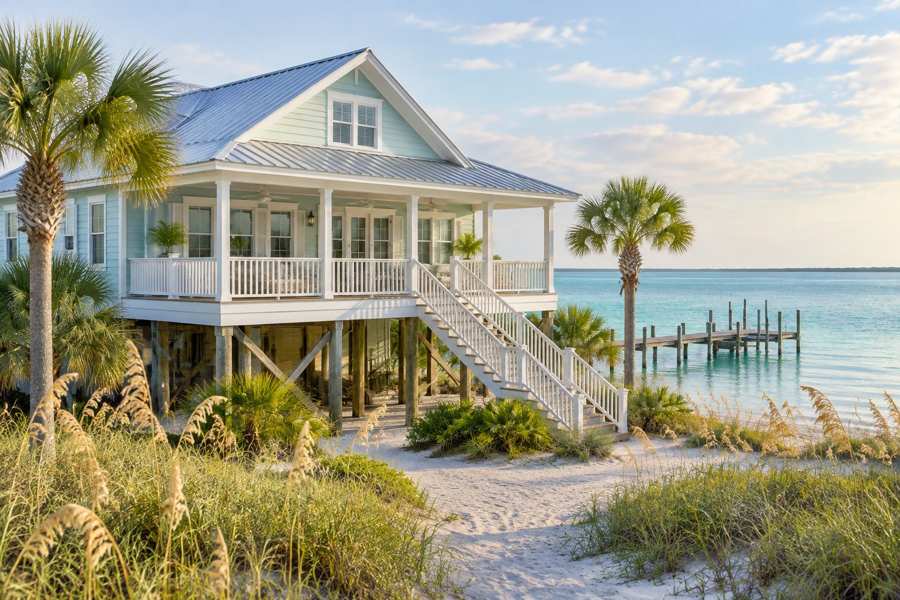
A Holmes Beach seller preparing storm-repair records should connect the actual damage finding, repair scope and issued permit outcomes before describing a home as fully recovered. A contractor invoice, limited cleanup and a flood-zone label answer different questions. Preserve the authority's determination and qualified documents instead of calculating a private result from the property's sale price.
Holmes Beach's currently codified floodplain definitions use a fifty-percent threshold: substantial damage compares restoration cost with the building's market value before damage. Its substantial-improvement definition separately addresses qualifying work and includes repairs after substantial damage. This guide uses official sources checked in October two thousand twenty-six to organize the record handoff, not to determine a private threshold, authorize repairs, set elevation requirements or promise a permit.
Identify the Property and Preserve Its Flood Record
Start with the actual property, responsible authority and available flood records. A neighborhood label or raised-house illustration does not establish a home's flood zone, floor elevation or compliance. Holmes Beach provides flood-information and elevation-certificate resources, but their records have dates and limits. Preserve the applicable map information and actual certificate before describing a storm-repair project as outside flood review or already compliant.
The City's Flood and Hurricane Protection Information page directs property owners to its Building Department, Manatee County maps and FEMA's Flood Map Service Center for flood-zone information. Those are discovery routes, not this guide's classification of a private lot. Keep map source, panel and effective information with the actual property identifiers rather than substituting a general island description.
Flood file: Actual property identifiers, applicable map information, survey or elevation certificate, original construction and later improvement records, written authority clarification and any stated limitations. An elevation certificate records specified surveyed information; it should not be renamed an issued permit or a promise about future flood losses or insurance pricing.
The City's Elevation Certificates page identifies its address index as 'Elevation Certificate List as of January 2026'. It says many certificates are scanned copies and the City may not have originals. That update boundary matters: an index can help locate a certificate without proving the file includes every later survey or change.
For example, a seller may have an older elevation certificate and a newer addition permit. Keep both and identify whether the certificate describes the later work. An absent entry in an index is not proof no certificate exists, and no private address, elevation, flood zone or insurance premium was determined here.
Separate Initial Damage Assessment From the Actual Determination
Preserve early damage-assessment evidence while keeping the final substantial-damage or substantial-improvement determination separate. A preliminary visit, insurance estimate and contractor repair plan do not necessarily represent the City's decision. Holmes Beach's floodplain code assigns evaluation and documentation to its floodplain administrator. Retain the actual notice, supporting documents and later correction or review outcome before describing storm recovery as a settled compliance result.
The City's General Information Handouts page preserves an October seventeen, two thousand twenty-four damage-assessment notice. It explains disaster assessment and permit-stage determinations. Treat it as a historical recovery notice, not proof that its old curfews, service hours or permit-accumulation references remain current. Public pages can retain useful history alongside instructions that later changed.
The currently codified floodplain Article IX says the administrator shall 'determine and document' whether proposed work constitutes substantial improvement or repair of substantial damage. Section nine dash seventeen addresses estimating or requiring a qualified independent appraisal of building value, comparing appropriate costs and notifying the applicant when compliance is required. Preserve the actual outcome rather than a seller's interpretation of a visit.
Determination file: Damage photographs, assessment records, actual notice, building-value support, complete cost scope, authority questions, revised submissions and issued decision. Keep the original terms visible even if unfavorable. A later letter may revise or clarify a finding; retain that sequence instead of sharing only an early estimate.
For example, a homeowner may have removed damaged drywall before a final repair package was reviewed. That cleanup does not establish that the complete restoration falls below the threshold or that remaining work needs no permit. No assessment, determination, appeal, consultant assignment or authority contact occurred through this guide.
Keep Substantial Damage and Improvement Calculations Distinct
Separate the cost of restoring damage from the cost of proposed improvement, and match each to the appropriate building-value baseline. Holmes Beach's current definitions include equality at the threshold, not only costs above it. Older forms or summaries should not replace the current rule. Preserve the authority's actual calculation and scope before describing a smaller repair contract as proof that the entire damaged building avoids compliance review.
The currently codified Article IX defines substantial damage by restoration cost that would 'equal or exceed 50 percent' of building or structure market value before damage. Its substantial-improvement definition compares covered work with market value before improvement or repair starts. It says repairs after substantial damage count as substantial improvement regardless of actual repair work performed.
FEMA's Answers to Questions About Substantially Improved/Substantially Damaged Buildings, FEMA two hundred thirteen, explains that the determination considers the cost to fully repair and restore the structure to pre-damage condition, even if less work is proposed. That federal guidance supports the distinction between a limited current contract and full restoration, while local authority controls the actual property decision.
Calculation file: Actual determination, relevant baseline date, building-only value evidence, complete scope, cost categories, qualified estimates and authority treatment of any claimed exception. The City definition includes specific health-and-safety and historic-structure exclusions with conditions. Do not treat an ordinary repair or a historic-looking home as automatically excluded without the required factual and authority basis.
The City's Business Impact Statements page describes amendments removing cost-accumulation provisions. Its current codified definition cites the February two thousand twenty-five amendment and contains no one-year accumulation phrase. A later meeting packet's summary repeats that phrase inconsistently; this guide relies on the actual current definition, not that summary, and performs no private calculation or exemption determination.
Match Building Value With the Complete Repair Scope
Keep building value separate from land value and use a complete, supported repair scope rather than only the amount paid so far. Holmes Beach defines market value for this purpose without land and other parcel improvements. FEMA guidance addresses donated materials and owner labor as well as paid work. Preserve qualified valuation and cost records so a discount, partial invoice or attractive sale price does not become the threshold calculation.
Holmes Beach's current floodplain definition says market value excludes 'the land and other improvements on the parcel'. It describes depreciated actual cash value from a qualified independent appraiser or adjusted tax-assessment value using a property-appraiser factor. This guide does not supply that factor, value a private building or treat a total parcel assessment as the correct denominator.
FEMA two hundred thirteen explains that full repair costs include labor and materials needed to restore the structure, with estimated value for owner or volunteer labor and donated materials. Its discussion of discounted work prevents actual cash spending from being mistaken for the complete cost used in a substantial-damage determination. Keep qualified scope and valuation evidence together for actual review.
Value-and-cost packet: Applicable qualified appraisal or authority valuation, date and purpose, building versus land distinction, damage scope, itemized repair estimates, proposed additional improvements, later revisions and actual accepted calculation. The City's Forms and Checklists page lists an Appraisal Checklist for SI/SD Determinations and a below-base-flood-elevation application among its resources. A listed form is not a completed private appraisal.
For example, a discounted contractor quote may cover interior finishes while separate electrical and mechanical repairs remain. Retain those related scopes and the actual authority treatment rather than assuming the first contract represents everything. No appraisal was ordered, cost worksheet signed, discounted work excluded or private repair ratio calculated here.
Preserve Permit Scope and Separate Cleanup From Reconstruction
Connect actual repairs to the issued permit and approved drawings, keeping temporary or limited cleanup distinct from permanent reconstruction. Holmes Beach's recovery page permits limited demolition before a permit but does not turn that allowance into unrestricted rebuilding permission. An application, payment or portal status is not the issued authorization. Preserve approved changes and correction outcomes rather than assuming a repair receipt closes the entire project.
The City's Storm Recovery Permitting page describes 'Limited demolition' such as removing damaged drywall before a building permit. Its Flood and Hurricane Protection Information page distinguishes emergency removal of nonstructural wet materials from replacement and permanent repairs. Read those passages within their actual scope; structural removal and rebuilding should not be authorized by this article's general summary.
The current Building Department page describes Citizenserve submission and tracking from submittal through final approval, and says only complete applications will be reviewed. Its Forms and Checklists page lists repair, roofing, window, elevation and occupancy resources with its displayed October two thousand twenty-five update date. Confirm the current applicable package before treating one older checklist as exhaustive.
Permit file: Application and supporting documents, approved work description and drawings, actual permit, contractor and required specialty information, authority corrections, approved revisions and inspection requirements. The storm page's goal of fast repair-permit issuance is not a private appointment or guaranteed closing schedule. Preserve actual issue dates and conditions rather than promising a fixed processing time.
For example, the issued permit might authorize restoration of a defined area while a later renovation adds new work. Keep the added scope and actual approval outcome separate. No owner-builder permit, signature, portal account, demolition, reconstruction, application upload or payment was authorized or performed through this guide.
Keep Contractor Verification and Inspection Results With the Work
Retain the actual contractor identity, license evidence and inspection results with each permitted repair scope. A business card, paid invoice or completion claim does not prove licensing or final City approval. Holmes Beach describes contractor documentation and inspection tracking, while Florida's licensing authority provides a search route. Preserve corrections and final outcomes before describing storm-repair work as complete or signing away an unresolved contractual issue.
The Florida Department of Business and Professional Regulation's Licensing Portal allows searches by name, license number, city or county and license type. That source supports a verification route, not a finding about a contractor whose record was never searched. Preserve the actual license identity, scope and status at the relevant time rather than matching only a similar business name.
Holmes Beach's Building Department page asks contractors for State registration and applicable liability and workers' compensation information or exemption evidence. It also provides inspection scheduling and status routes. Its Storm Recovery page advises not signing off on completion until the contracted work is finished and the contractor has cleared permits with final inspection approval.
Work-result file: Contractor and relevant specialty identity, license and insurance evidence, contract scope, permit, inspection requests, actual visits and results, correction notices, completed remedies and later final approval. Keep a requested inspection separate from a passing result. A certificate-of-occupancy request form listed on the City's forms page is likewise not an issued certificate.
DBPR's Owner/Builder Permit warning describes financial and injury risks when an owner pulls a permit for unlicensed work, including direct supervision responsibilities. That is a warning resource, not a shortcut to undertake repairs for sale. No contractor was hired or privately verified, insurance assessed, inspection scheduled, completion accepted or certificate obtained here.
Preserve Actual Fee Waiver and Ownership Decisions
Keep storm-repair fee relief separate from flood compliance and project approval. Holmes Beach's current recovery notice restricts its described waiver to original storm-time owners who provide the stated proof. A later buyer should not assume that a seller's waiver transfers, or that a waiver removes permits and inspections. Preserve the actual decision and applicable scope before including a fee assumption in sale negotiations.
The City's Storm Recovery Permitting page says hurricane-related like-for-like repair fees are no longer automatically waived effective March one, two thousand twenty-six. It states 'Fee waivers will be granted only to the original homeowner who owned the property at the time of the storm.' Preserve that policy's hurricane-repair and ownership scope rather than presenting it as universal free permitting.
The same notice requires documentation of storm-time ownership and proof that repairs relate directly to storm damage. Other applicants, including post-storm purchasers, are responsible for applicable fees under the City's schedule and regulations. This guide quotes no private fee amount and does not decide whether a specific owner, entity, work item or application qualifies.
Fee file: Relevant storm and ownership evidence, proposed like-for-like repair scope, actual waiver request and decision, fee assessment, payment receipt and issued permit record. A receipt proves its transaction, not flood compliance. Keep any denied or partial relief visible rather than deleting it from the packet to suggest all later repair work remains free.
For example, a buyer may plan additional remodeling after taking title to a damaged property. The seller's original storm-repair waiver does not establish that the new owner or added work qualifies. No waiver was requested, ownership verified, fee assessed, payment made or private reimbursement promised through this guide.
Build a Sale Handoff Without Calling Every Record Compliance
Build one index connecting property identity, flood evidence, damage determination, valuation, complete repair scope, permits and actual inspection results. Each record supports its own claim. A useful packet keeps gaps visible before sale discussions without turning insurance proceeds or a finished-looking room into flood compliance. Keep public requirements and qualified technical findings separate from purchase terms; a direct sale does not issue City approval.
The City's current code, storm-recovery page, forms and inspection routes answer different questions. FEMA two hundred thirteen explains the full-restoration cost distinction, while the City's elevation index helps locate dated certificates. Use these records together rather than reducing the handoff to 'the house was repaired' when the file contains only partial invoices or early assessment photographs.
Final index: Document, issuer or provider, property and permit match, date, actual work scope, result, conditions and missing question. Retain the original damage finding and subsequent revisions in sequence. If an online search does not return a final inspection, state what was not found rather than asserting that no approval ever existed.
For example, a seller may have a permit and paid repair contract but lack the actual final inspection copy. Preserve both useful records and the unresolved result for appropriate authority or professional review. A buyer's willingness to accept the packet does not transform the missing inspection into an approval or establish future rebuilding rights.
No private flood-zone classification, elevation finding, damage calculation, appraisal, authority request, waiver, application, contractor hire, work authorization, inspection, insurance claim or sale commitment occurred through this guide. Preserve privacy when sharing records. Nothing here promises a specific insurance premium, rebuilding permission, elevation cost or closing outcome.
| Record | What it supports | What it does not prove alone |
|---|---|---|
| Flood map and elevation certificate | Their stated mapped or surveyed evidence | Complete private compliance |
| Damage assessment photographs | Recorded damage evidence | Final substantial-damage determination |
| Issued determination | Actual authority finding and conditions | Every proposed repair approved |
| Building valuation and cost scope | Supported calculation inputs | Private threshold decision by seller |
| Permit and approved drawings | Authorized project scope | Passed final inspections |
| Inspection and correction results | Actual recorded outcomes | Every later alteration lawful |
| Fee waiver and receipt | Its stated fee decision or payment | Transferable relief or flood approval |
Frequently Asked Questions
These questions follow Holmes Beach's current codified floodplain definitions, official recovery and permit guidance, elevation-certificate resources and FEMA's substantial-damage questions. They distinguish building value, restoration costs, decisions and actual outcomes. No answer calculates a private threshold, selects an elevation requirement, grants fee relief, approves an owner-builder route or promises a permit, insurance result or sale.
Does the fifty-percent threshold exclude exact equality?
No, the current City definition says equals or exceeds. Preserve the actual authority calculation rather than rounding a private estimate.
Does total property price supply the building value?
No, the City definition excludes land and other parcel improvements. Retain the applicable qualified valuation and authority treatment.
Can a smaller repair contract avoid a substantial-damage finding?
Do not assume that from the contract amount. FEMA guidance considers full restoration cost even when less work is proposed.
Can donated labor simply disappear from repair cost?
No, FEMA guidance includes its estimated value. Preserve complete supported costs for actual review.
Does an elevation certificate prove every repair was approved?
No, it records its stated surveyed information. Keep permits and actual inspection results separately.
Does limited drywall removal authorize rebuilding?
No, the recovery page describes a limited demolition allowance. Confirm the actual permit requirements before permanent repairs.
Does a contractor invoice prove final City approval?
No, it records the contractor transaction. Retain actual inspection and correction outcomes.
Does the original owner's storm fee waiver transfer to a buyer?
Do not assume that under the current policy. The notice restricts its described waiver to storm-time original owners with proof.
Does selling directly remove flood compliance requirements?
No, a purchase process grants no public approval. Compare written terms while keeping unresolved records visible.
How Maison Off-Market Fits a Storm Repair Handoff
Maison Off-Market offers a direct-purchase route to compare after storm-repair and flood records are organized. Its public process assesses the home and land and may lead to an offer if the property fits. That assessment does not decide substantial damage, approve rebuilding or issue inspection results. Keep actual written terms and unresolved authority questions separate from published service claims.
Maison Off-Market's public site describes privacy without showings, no commissions or closing costs, and skipping buyer inspections and related repair requests. Those are published service claims, not a private Holmes Beach offer or proof of flood compliance. Its process says 'If it fits' before describing an offer; no purchase is guaranteed here.
Compare written terms: Preserve the actual damage finding, valuation and cost support, permits, corrections, inspection results and fee decisions when weighing a direct proposal against other sale routes. Skipping buyer repair requests does not remove public requirements. This article promises no private valuation, fee exemption, insurance price, permit outcome or fixed cost to correct record gaps.
Compare your options before committing. Request a written private offer for your property, with no obligation, then weigh it against your listing plan.
Sources
- City of Holmes Beach / Municode, Checked October 2026. Current Floodplain Management Article IX. https://library.municode.com/fl/holmes_beach/codes/code_of_ordinances?nodeId=PTIIILADECO_ARTIXFLMA.
- City of Holmes Beach, Checked October 2026. Storm Recovery Permitting. https://holmesbeachfl.org/departments/storm_recovery_permitting.php.
- City of Holmes Beach, Checked October 2026. Elevation Certificates. https://holmesbeachfl.org/departments/building_department/elevation_certificates.php.
- City of Holmes Beach, Checked October 2026. Flood and Hurricane Protection Information. https://www.holmesbeachfl.org/i_want_to/flood___hurricane_protection_information.php.
- City of Holmes Beach, Checked October 2026. Building Department. https://www.holmesbeachfl.org/departments/building_department/index.php.
- City of Holmes Beach, Checked October 2026. Forms and Checklists. https://www.holmesbeachfl.org/departments/building_department/forms_and_checklists.php.
- City of Holmes Beach, Checked October 2026. General Information Handouts - historical October 2024 notice. https://holmesbeachfl.org/i_want_to/general_information_handouts.php.
- City of Holmes Beach, Checked October 2026. Business Impact Statements. https://www.holmesbeachfl.org/departments/business_impact_statements.php.
- FEMA, Checked October 2026. Answers to Questions About SI/SD Buildings - August 2018. https://www.fema.gov/sites/default/files/2020-07/fema_p213_08232018.pdf.
- Florida DBPR, Checked October 2026. Licensing Portal. https://www.myfloridalicense.com/wl11.asp.
- Florida DBPR, Checked October 2026. Owner/Builder Permit Warning. https://www2.myfloridalicense.com/reg/documents/Pullingownerbuilderpermit_001.pdf.
- Maison Off-Market, Checked October 2026. Public Process. https://bulkscaler.com/.
Related research
Seller Guide · 2026-10-09
How to Assemble South Naples Flood Map and Repair Sale Records
Match effective maps, elevation evidence and approved repair records before presenting a sale file.
Seller Guide · 2026-10-09
How to Prepare Newton Tree Permit and Protection Sale Records
Separate removal permits, exemptions, arborist assessments and replacement obligations before selling.
Seller Guide · 2026-10-09
How to Organize Sevierville Well and Spring Water Sale Records
Separate the water source, construction report, test results and service history before selling.