Seller Guide · by Aidan Sowa · 2026-10-07
How to Prepare Highland Village Pool Permit and Enclosure Records
Connect residential pool plans, inspection results, enclosure records and equipment history before selling.

A Highland Village seller should connect private residential pool records with the actual City results, enclosure evidence and equipment history before describing a pool as approved or safe. Plan approval, a maintenance visit and a functioning gate answer different questions. Preserve the actual work scope, dates and known conditions rather than treating a clean pool photograph or service receipt as a complete inspection.
Houston's residential pool plan requirements contain sixteen listed submission items, including the plot survey, complete enclosure, gates, drains, equipment and pool measurements. Those are plan requirements, not sixteen findings about a Highland Village pool. This guide organizes plans, construction results and present-condition records using official sources checked in October two thousand twenty-six; it does not inspect a pool, authorize work or certify safety.
Match the Record Packet to the Actual Pool Type
Start with the property, actual pool or spa and the scope of the records. This guide concerns Highland Village in Houston and a private residential feature, not every aquatic facility with a Houston address. The City's construction and commercial operating pathways are different. Keep pool type, use and project identity visible rather than applying an apartment-pool inspection procedure to a private-home sale.
Houston's residential pool plan-review page says its plan approval applies to construction at a single-family home or duplex and excludes the stated above-ground pools or spas from that particular service. That service limitation should not be expanded into a claim that excluded features have no safety rules or need no other review. Identify the actual feature before deciding what records apply.
Pool identity sheet: Property, private or shared use, pool and spa configuration, original project identifier, known construction and alteration dates and supporting documents. Keep a spa service record separate if it describes different equipment. A seller's reference to the pool area does not prove that the shell, heater, enclosure and drainage were all covered by one permit.
Houston Health's Pool Permits page describes commercial inspections and residential inspections requested by owners. Its separate commercial page discusses preopening and operating procedures. The general page's change-of-ownership language should not be assumed to require the same commercial operating process for every private residential transfer. Verify the actual category and responsible authority if the property's use is unusual.
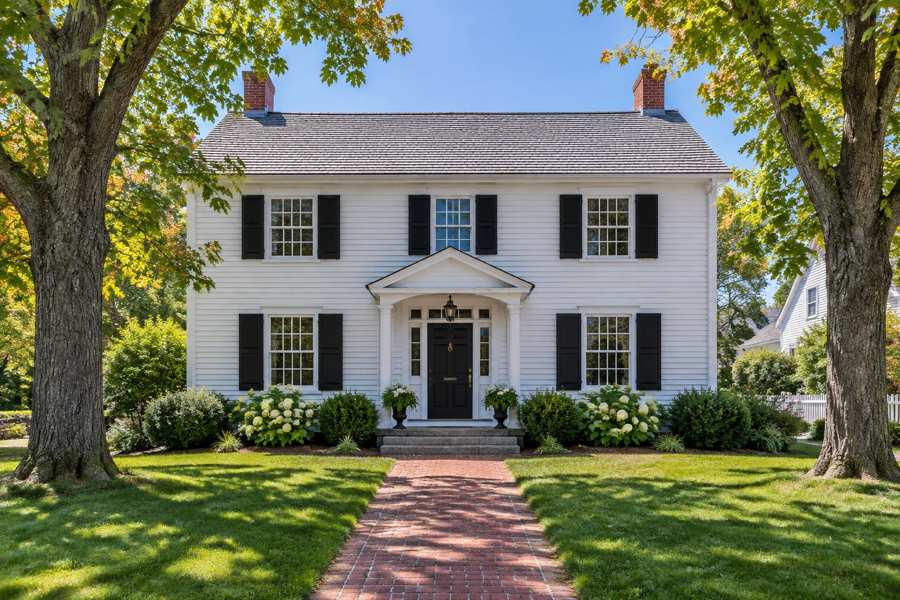
This guide has not searched a private address, classified a pool, reviewed an association's common facility or requested an inspection. A property name or neighborhood does not establish a pool's legal category. The illustration depicts a home exterior without proving that any pool exists or that a private enclosure meets current requirements.
Keep Approved Plans and Construction Permission Distinct
Preserve the actual plans, approval status and permit with their property and scope match. A completed application, review fee or contractor design is not the same as approval to build. Houston's plan-review and construction pages describe related stages, and more than one review may apply. Keep revisions and conditions visible instead of presenting the first plan in the folder as the final built configuration.
Houston's Swimming Pool Plan Review Fee page calls for a building permit application, deed restrictions declaration and plan review payment, followed by submission of complete plans. Its Swimming Pool Permit page separately describes permission for constructing a new pool and lists reviews that may apply based on the actual scope. The record packet should distinguish these steps rather than using paid review as proof of completed construction.
Plan and permission index: Project identifier, survey, contractor, plan version, approval stamps, actual permit, stated conditions and later revisions. The construction permit page says 'Permit must be kept on site until final approval is granted.' That phrase separates issuance from final approval. A seller should retain the actual final result, not describe an open project as complete because the permit was issued.
The City's plan requirements ask for owner and contractor identity on relevant pages and a survey showing structures, boundaries, gates and other site context. Match the pool to those records. A copied plan for a different home or a proposed enclosure may help explain a design, but it does not prove approval or physical completion at this property.
Current City pages publish review and administrative fees, while the requirements note fees can change. They are not a total construction, equipment or repair budget. This guide has not paid a review fee, submitted plans, signed a deed-restrictions declaration, applied for a pool permit or selected a contractor.
Connect Structural Results With the Actual Health Closeout
Keep dated Structural inspection results and any Health project release together without collapsing them into a single assumed approval. Houston's current residential page directs owners to obtain Structural approval before requesting Health closeout. That process matters more than a short summary saying no further action after plan approval. Preserve the actual result, condition and department sequence rather than treating an inspection appointment as completion.
Houston Health's Residential Pools page, reviewed in February two thousand twenty-six, says requests to close residential pool or spa projects must include the project number and full address. It states, 'Please ensure project has been approved by structural' before submitting the Health request. The specific sequence should remain visible in the record file.
The City's residential plan-review page says plans are reviewed in the field by Structural Inspections and describes Health approval according to the Structural result. The separate Swimming Pool Permit page lists inspections, on-site plans and permit requirements and trade-inspection scheduling through the appropriate registered licensed contractor. Preserve what actually occurred, not a blanket claim that one online request finished every department's work.
Result file: Inspection date, department, scope, actual outcome, correction, later result and project release. A payment confirmation or booked inspection supports that stage only. If an open hold or correction appears in the record, keep its resolution or mark it unresolved. Do not replace a missing result with a contractor's statement that the City probably approved the pool.
No inspection booking, release request, department email or project closure occurred through this guide. The public inspection-report page does not establish that every private residential history is fully available there. A missing online result should remain not found in that source, not be rewritten as no inspection ever occurred.
Preserve the Enclosure and Gate Evidence
Keep the actual enclosure plan, relevant inspection results and dated condition evidence together. Houston's residential plan requirements specifically address complete enclosure and gate behavior, while federal safety guidance adds recommendations that do not replace local law. An approved historical plan is not proof that a gate still closes properly today. Describe known findings precisely instead of promising that a barrier makes the pool childproof.
Houston Health's Residential Pool and Spa Plan Requirements ask for the complete enclosure and labeling of fence and gate types and heights. They use the terms 'self-closing' and 'self-latching', explaining automatic closing and latching without human or electrical power. The document also addresses driveway gates, carports and climbing features in the plan requirements. Preserve the actual enclosure details and review scope.
Enclosure record: Plan version, fence and gate configuration, inspection or professional findings, repair dates and known defects. A service receipt for a latch can show the documented repair without proving that the whole enclosure now meets every requirement. A photograph with the gate shut does not show that it closes and latches correctly after opening.
The U.S. Consumer Product Safety Commission's Safety Barrier Guidelines for Residential Pools states that its guidelines are not mandatory requirements and directs readers to local rules. It also says barriers cannot replace adult supervision. Do not use a federal recommendation as a Houston code certificate or present a historic approval as a continuing guarantee against access or drowning.
For example, a fence alteration after construction may not be reflected on the original plan. Keep the alteration and any later assessment visible, and have the appropriate professional address current condition. This guide has not tested a gate, measured an enclosure, inspected a latch or decided whether a particular private barrier is compliant or safe.
Match Equipment and Drain Records to the Installed Configuration
Preserve the actual equipment identity, service history and drain-related records with the approved plan and later changes. Houston's residential submission requirements ask for filters, sanitation, drains, pumps and measurements. A recent pump invoice does not establish that all equipment matches the plan or that every drain issue has been addressed. Keep the actual model, scope and dated findings rather than adding an unsupported safety certification.
Houston's Residential Pool and Spa Plan Requirements list the filter type, skimmer locations, sanitation system, main drains, pump horsepower or flow rates if known, fill-line backflow protection and pool measurements including gallons. They also specify a VGB-compliant standard for main drains on submitted plans. These are plan-submission elements, not a property inspection performed through this guide.
Equipment history file: Model or serial reference where available, installation date, contractor scope, actual permit or review result where applicable, service and repair records, manuals and warranty terms. Match a replacement pump or heater to the feature it serves. A manufacturer's brochure for a product family does not prove that the installed device is that model or that its installation was approved.
The current TREC Seller's Disclosure Notice includes pool, spa and related equipment and asks about a single blockable main drain among known conditions. Have the transaction professional and qualified pool professional address the applicable question with the actual evidence. Do not answer it from a plan label alone or claim that a service company ruled out entrapment risk when its receipt did not assess that issue.
A contractor warranty may have limits or transfer conditions. Preserve its actual terms rather than promising automatic transfer or a fixed remaining service life. No pump was operated, drain configuration inspected, backflow device tested, warranty transfer verified or safety conclusion obtained through this guide.
Keep Maintenance Findings Separate From Government Approval
Keep ordinary maintenance, repair findings and City construction results in separate parts of the file. Cleaning and water treatment can be useful service evidence without approving a pool project or certifying an enclosure. Current condition may change after construction, and the private residential pathway should not be replaced with commercial operating requirements. Retain the actual professional scope and any unresolved finding instead of labeling every service visit an inspection.
Houston Health's Pool Permits page says residential pools can be inspected when owners ask, while the residential page explains complaint response and new residential construction review. That does not make a weekly cleaning receipt the City's result. A private service technician may observe a concern, but the record should state what was observed and what the technician was engaged to assess.
Maintenance chronology: Service date, pool or spa match, work performed, equipment replaced, finding reported, follow-up and unresolved issue. Label chemistry or cleaning separately from structural, electrical, gate or suction-outlet evaluation. Keep the original findings, including limitations, rather than rewriting all records as pool passed inspection.
Houston Health's commercial page describes preopening documents and commercial closeout, and the general pool page contains operating notices with turnover and certified-operator language. This guide does not copy those general or commercial requirements into a private-home handoff as if every residential sale needs a commercial operating permit. Verify any different use or shared facility against the responsible authority's actual rules.
For example, a cleaner may document normal service while a later specialist identifies a heater or enclosure problem. Preserve both dates and scopes. A clean appearance does not establish absence of hidden defects, and completing one repair does not prove that unrelated concerns disappeared. No maintenance appointment, chemical purchase, repair or operating approval occurred through this guide.
Preserve Known Conditions and the Current Disclosure Questions
Keep known pool, equipment, enclosure and permit concerns visible for the applicable transaction review. Texas' current seller notice is based on seller knowledge and is not a warranty or replacement for inspections. A new service record should not erase earlier known problems. Use the actual current form and professional advice rather than declaring that a direct sale or recent repair removes disclosure questions.
Texas Real Estate Commission's current Seller's Disclosure Notice page lists form fifty-five dash one, effective May twenty-eighth, two thousand twenty-six. The actual current PDF identifies pool and spa items, equipment, the stated single-blockable-drain issue and known alterations or repairs made without necessary permits. It also asks about material health or safety conditions and violations within its scope.
The notice says it reflects seller knowledge as of signing and is 'NOT A WARRANTY'. That wording supports preserving dated findings, not issuing a guarantee from a document folder. The applicable form and statutory or contract requirements should be addressed with the transaction professional; this guide does not decide exemptions or complete answers for a private seller.
Known-condition file: Actual observation or report, source, date, repair or follow-up, open question and relevant permit or result. If a seller knows a latch problem persists, a past invoice does not establish that it is fixed. If a repair record is incomplete, retain the gap without inventing a result or making a legal conclusion about work performed years ago.
No private disclosure, legal opinion, equipment classification or compliance finding occurred. A direct buyer's assessment can coexist with unresolved records and known conditions; it does not turn the seller's knowledge into an inspection report or remove government requirements. Keep unrelated household and payment details out of a transaction handoff.
Build a Dated Residential Pool Packet Before Comparing Offers
Index actual pool identity, approved plans, construction permission, dated Structural and Health results, enclosure evidence, equipment and maintenance history and known-condition questions. Keep each record's role visible for the intended audience. A listing and a direct purchase can be compared through written terms, but neither certifies safety or issues City approval. The packet should show what is supported and what remains unresolved.
Handoff order: Property and feature match, original and revised plans, actual permission, dated inspection outcomes and release, enclosure and gate records, equipment changes, maintenance history, warranties and known conditions. Preserve department and scope labels. A folder called pool completely approved is too broad if it contains only a plan-review receipt and a recent cleaning invoice.
Use a chronology for modifications, repairs and later findings. The City residential page's Structural-before-Health instruction can help identify a missing stage without determining the private project's legal status. If an approval or current condition remains uncertain, have the appropriate authority or professional address the actual gap rather than promising a clean handoff without evidence.
No private property search, plan submission, permit, inspection request, Health closure, gate test, equipment operation, contractor work, maintenance, disclosure or payment occurred. The table compares evidence roles, not a Highland Village pool's condition. Share only documents needed for the intended transaction and preserve the limits of every original report.
| Record | What it supports | What it does not prove alone |
|---|---|---|
| Pool identity file | Feature and project match | Legal category without review |
| Approved plan | Reviewed stated design | Current built condition |
| Construction permit | Permission within scope | Final approval |
| Structural/Health results | Dated department outcomes | Permanent safety guarantee |
| Enclosure records | Documented gate and barrier findings | Childproof pool |
| Equipment/service file | Installed work within scope | Every drain risk resolved |
| Known-condition history | Dated findings and follow-up | Substitute for disclosure review |
Frequently Asked Questions
These questions follow Houston's private residential pool plan and closeout guidance, construction permit page, federal barrier recommendations and the current TREC notice. They separate plans, permission, government results and present-condition evidence. They do not inspect a pool, certify an enclosure, decide a private property's category or complete the seller's disclosure answers.
Does this guide cover Highland Village outside Houston?
No, it concerns the Houston neighborhood and its City sources. Verify the actual jurisdiction before applying a different area's requirements.
Does paying a plan-review fee prove final approval?
No, it documents the review stage. Keep the actual permit and dated final results separately.
Does the residential Health closeout request precede Structural approval?
Houston's current residential page says Structural approval should come first. Preserve the actual sequence and results.
Does a closed-gate photo prove self-closing performance?
No, it shows one moment rather than the gate's operation. Keep qualified current findings and repair evidence.
Are CPSC barrier recommendations Houston code?
No, CPSC labels its guidelines as recommendations rather than mandatory requirements. Use applicable local rules and actual professional review.
Does a pump invoice resolve every drain concern?
No, it establishes the stated equipment work only. Keep drain and suction-outlet questions separate where relevant.
Does weekly cleaning equal a City inspection?
No, maintenance and government construction results have different scopes. Retain the actual service description and department outcome.
Must every private sale use the commercial preopening process?
This guide does not assume that commercial operating procedures apply to every private-home pool. Verify the actual category and use if unclear.
Does a direct buyer certify pool safety?
No, a buyer's process does not issue a safety certificate or City approval. Compare written terms while preserving known conditions and record gaps.
How Maison Off-Market Fits a Pool Record Handoff
Maison Off-Market offers a direct-purchase route to compare after pool records are organized. Its public process assesses the home and land and may lead to an offer if the property fits. That assessment does not inspect a gate, certify pool safety or close a City project. Keep actual written terms and unresolved findings separate from published service claims.
Maison Off-Market's public site describes privacy without showings, no commissions or closing costs, and skipping buyer inspections and related repair requests. These are published service claims, not a private Highland Village offer or a pool finding. They do not establish a property's permit status, enclosure condition, equipment life or absence of known defects.
Compare written terms: Preserve actual plans, results, equipment history and known conditions while weighing a direct proposal against other sale routes. Skipping buyer repair requests does not remove government or disclosure requirements. This guide promises neither a purchase, a pool safety certificate, automatic warranty transfer nor a fixed repair budget.
Compare your options before committing. Request a written private offer for your property, with no obligation, then weigh it against your listing plan.
Sources
- Houston Health Department, Checked October 2026. Residential Pools. https://www.houstonhealth.org/services/permits/pool-permits/residential-pools.
- Houston Health Department, Checked October 2026. Residential Pool and Spa Plan Requirements. https://www.houstonhealth.org/media/191/download.
- Houston Permitting Center, Checked October 2026. Residential Pool Plan Review. https://www.houstonpermittingcenter.org/hhd1011.
- Houston Permitting Center, Checked October 2026. Swimming Pool Permit. https://www.houstonpermittingcenter.org/hpwcode1141.
- Houston Health Department, Checked October 2026. Pool Permits. https://www.houstonhealth.org/services/permits/pool-permits.
- Houston Health Department, Checked October 2026. Commercial Pools. https://www.houstonhealth.org/services/permits/pool-permits/commercial-pools.
- Houston Health Department, Checked October 2026. Pool Inspection Reports. https://www.houstonhealth.org/services/permits/pool-permits/pool-inspection-reports.
- U.S. Consumer Product Safety Commission, Checked October 2026. Safety Barrier Guidelines for Residential Pools. https://www.cpsc.gov/s3fs-public/362%20Safety%20Barrier%20Guidelines%20for%20Pools.pdf.
- Texas Real Estate Commission, Checked October 2026. Current Seller Disclosure Notice. https://www.trec.texas.gov/forms/sellers-disclosure-notice.
- Texas Real Estate Commission, Checked October 2026. Seller Disclosure Notice 55-1 PDF. https://www.trec.texas.gov/sites/default/files/pdf-forms/55-1.pdf.
- Maison Off-Market, Checked October 2026. Public Process. https://bulkscaler.com/.
Related research

Seller Guide · 2026-10-09
How to Assemble South Naples Flood Map and Repair Sale Records
Match effective maps, elevation evidence and approved repair records before presenting a sale file.
Seller Guide · 2026-10-09
How to Prepare Newton Tree Permit and Protection Sale Records
Separate removal permits, exemptions, arborist assessments and replacement obligations before selling.

Seller Guide · 2026-10-09
How to Organize Sevierville Well and Spring Water Sale Records
Separate the water source, construction report, test results and service history before selling.