Seller Guide · by Aidan Sowa · 2026-10-07
How to Prepare Hayes Barton Tree Records Before Selling
Separate tree ownership, arborist findings, permits and completed work before the sale handoff.
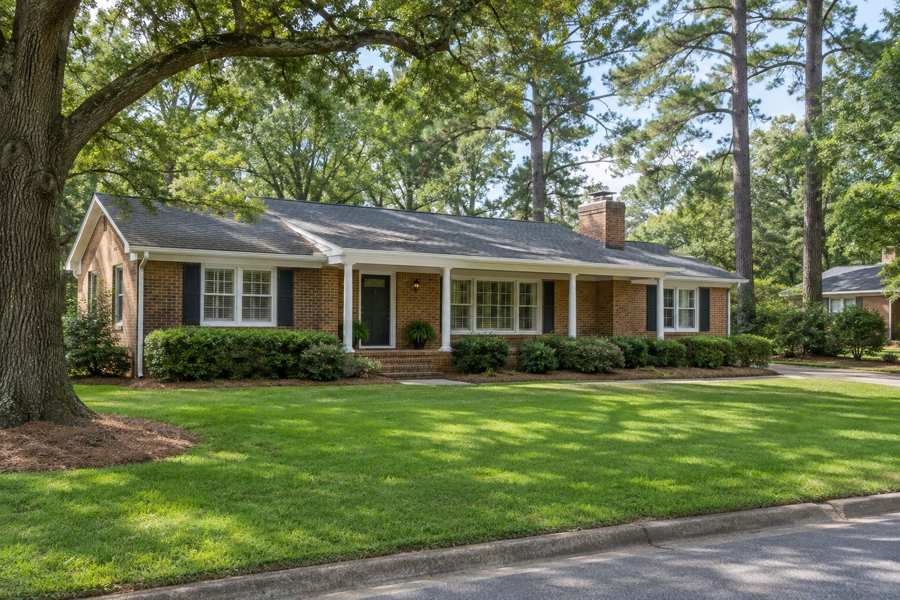
A Hayes Barton seller should organize tree ownership evidence, professional findings and actual work approvals before answering a buyer's questions about the landscape. A large canopy, a contractor invoice and a city permit describe different things. Keep them separate so a pleasant street view does not become a claim that every tree is private, healthy or available for removal.
Raleigh's Tree Impact Permit page defines a city tree's critical root zone using a radius of one and a quarter feet per inch of trunk diameter, measured at the stated height. That official measurement shows why work near a tree can matter even without cutting its trunk. This guide follows the city's questions about city trees, permits and conservation records, and the International Society of Arboriculture's questions about assessment and professional care; no private tree finding or work authorization is supplied.
Use Hayes Barton Landscape Context Without Making a Parcel Finding
Ground the guide in Hayes Barton, then keep the actual property and tree records separate from neighborhood history. The city describes a deliberately landscaped suburb with roads following the terrain and landscaped medians. That context explains why the landscape deserves careful documentation. It does not establish private tree ownership, health, conservation status or permission for a specific project.
Raleigh's Hayes Barton Historic District page credits landscape architect Earle Sumner Draper with laying out the neighborhood generally west of Glenwood Avenue and north of Wade Avenue. Its physical description discusses roads following the terrain and ravines becoming median oases. This is local historical context, not a current inspection of the trees outside a seller's house.
The same city page identifies its map as a National Register district illustration rather than the official zoning map. Raleigh's National Register of Historic Places page separately distinguishes federal recognition from local designation. Do not present a neighborhood illustration as proof that a particular tree is regulated by a local historic overlay, or conclude that federal recognition settles every tree-work rule.
Property identity: Keep the verified address, relevant survey and actual tree descriptions together. A dated photograph can help connect a report to the tree discussed, but it is not a boundary survey or a diagnosis. Preserve the professional's original identifying labels rather than replacing them with informal names that could confuse the next reviewer.
For example, a report describing the large tree near a driveway should remain connected to its location sketch, date and stated scope. A separate photograph of a neighborhood median cannot stand in for that evidence. This guide has not searched a private parcel or assigned a designation, tree owner or condition to any Hayes Barton property.
Separate City Trees From Trees on Private Land
Identify the relevant ownership and boundary evidence before describing who controls tree work. Raleigh manages trees on public property and in street rights of way. The curb is not a reliable fixed-distance boundary marker. Keep a survey or an actual city determination where one exists, and label unresolved ownership instead of treating a lawn photograph as proof that the tree is private.
Raleigh's Urban Forestry Program page says the city manages trees on street rights of way, in parks, greenways and other city-owned or controlled property. Its Tree Impact Permit page directly asks whether a tree is a city tree. The answer depends on the relevant public property context, not simply whether the homeowner has maintained the grass around it.
The Tree Impact Permit page states, "The public right-of-way is not a specific distance from the curb." It also says inspectors can help with a requested determination when the property line is difficult to establish without a survey. Preserve an actual determination as a record; do not turn this general service description into evidence that the city has already reviewed this house.
Boundary evidence: Index the survey, any applicable recorded property material, a location sketch and actual correspondence about the tree. Keep the authority and date attached. If the seller only knows that a crew pruned the tree years ago, record that as a recollection until the relevant work and ownership evidence is recovered.
A tree on a maintained front lawn may still require a careful boundary check. Conversely, calling a tree large or old does not establish city ownership. This guide does not settle a boundary dispute, authorize entry onto adjoining land or decide who bears a private maintenance obligation; those questions need the actual property evidence and appropriate advice.
Distinguish Tree Impact Permits From Routine Work Invoices
Keep city-tree impact authorization separate from the contractor record. Raleigh says work near or to city-owned or maintained trees can require a Tree Impact Permit, including activity around the critical root zone. A pruning invoice describes a service, not the full permission history. Preserve the issued scope and any applicable reviewed plan before calling the work approved.
Raleigh's Tree Impact Permit page lists pruning, removal and planting among work requiring review for city trees. Its examples also include trenching, grading, equipment or truck use, stored materials and certain construction within the critical root zone. A driveway or utility project can therefore create tree-record questions even when the job title does not mention tree removal.
The city defines that protected circle using trunk diameter measured four and a half feet above grade. Keep the city's measurement basis with any actual project assessment; do not estimate a private protected area from an aerial photograph and present the result as a city determination. The record handoff should preserve existing measurements, not manufacture an approval diagram.
Authorization record: Issued permit, relevant reviewed plan, work description, location, conditions and actual completion evidence where available. Raleigh says reviewed-plan projects receive tree impact permits through the review process, while other work uses the Permit and Development Portal. Those are process routes, not evidence that an unexamined project has completed either one.
For example, a sidewalk invoice may document the installed surface without showing what protection was specified for an adjacent city tree. Keep both documents if both exist, and identify the missing approval evidence if it cannot be found. Do not assume an invoice proves a permit was required, unnecessary, issued or fulfilled; the actual scope and authority record answer that question.
Preserve Recorded Conservation Areas and Their Boundaries
Check the actual conservation record separately from the city-tree question. Raleigh explains that conservation areas can be part of development review and are documented on recorded materials. An established area is not interchangeable with an ordinary landscaping preference. Keep its boundary evidence, governing documents and applicable approvals before describing what a buyer may change, even if the site looks like a familiar residential garden.
Raleigh's Tree Conservation Areas page says development plans two acres and larger since May 2005 had to meet the described requirement. It also identifies conservation review within some land, residential and non-residential projects. That general account does not prove an individual home's recorded status, nor does it establish that every smaller property is free of relevant restrictions.
Raleigh UDO section 9.1.5, Documentation of Tree Conservation Areas, describes maps with metes and bounds, permits, protective fencing and recorded materials in the applicable process. Preserve the actual recorded plan and identifiers where available. A seller's hand-drawn landscaping plan can help organize the packet but cannot replace a recorded conservation boundary.
Conservation index: Recorded plat and relevant book references, applicable declaration or easement, approved plans, issued permits and later approved changes. Keep the original scope and document sequence. Do not cut a restriction out of a page merely because a buyer's planned pool, driveway or addition would be more convenient without it.
Raleigh UDO section 9.1.3 distinguishes gross site area for eligibility from net site area for the amount required. Its district percentages are not instructions to calculate a private requirement without confirming the actual site and rules. A complete packet makes those distinctions visible to the appropriate reviewers; it does not certify a seller's guessed conservation percentage.
Avoid Treating an Unrecorded Area as Automatic Permission
An absent conservation record is a question to investigate, not blanket removal permission. Raleigh has a separate code section for qualifying sites without established or recorded conservation areas. Its applicability, exceptions and protection requirements matter together. Preserve actual site evidence and official review rather than using the word unrecorded to dismiss tree, boundary, buffer or other applicable obligations.
Raleigh UDO section 9.1.10 applies to tree disturbing activity, except minor tree removal activity, on sites two acres and larger without an established or recorded conservation area. The same section preserves other applicable laws and protection requirements. The threshold in this provision does not erase a city-tree impact requirement or a restriction found in another actual property record.
Its provisions address protection plans, fencing and perimeter buffers under stated conditions. This guide does not select a private buffer width, classify a seller's activity as minor or apply a removal allowance to an unknown site. Keep the actual authority's determination and reviewed plan instead of copying a favorable isolated number into the sale packet.
Gap statement: If no conservation plat was found in the supplied records, say that precisely. Do not upgrade it to a finding that no plat exists, especially when no complete record search has occurred. Preserve what was checked, by whom and when, and keep open questions in the index for qualified review.
A buyer may ask whether a future addition could require tree protection beyond what an old pruning job needed. Keep that proposed future project separate from the seller's completed work. Neither a direct sale nor an empty folder establishes that the buyer's anticipated clearing, grading or construction is permitted; the actual future scope needs its own review.
Keep Arborist Findings Separate From City Authorization
Use a professional report for the findings it actually contains, with its inspection date, tree identity and limits attached. An arborist credential is not a government permit. A recommendation about health or risk should not be relabeled as city approval. Where a conservation provision requires both professional certification and a permit, retain those distinct records and any replacement obligations.
The International Society of Arboriculture's Why Hire an Arborist page describes trained professional tree care and explains that ISA certification is a nongovernmental, voluntary process documenting knowledge. It says, "Tree work should be done only by those trained and equipped to work safely in trees." This is a reason to preserve professional evidence, not a recommendation that the seller undertake cutting work.
Raleigh UDO section 9.1.6 addresses permitted disturbance in designated conservation areas. For the stated primary and secondary area circumstances, it describes obtaining a conservation permit and professional written certification for an unsafe or unhealthy tree. Its natural-death certification exception and replacement rules have context that should remain attached; they are not a general exemption for all dead trees everywhere.
Two evidence tracks: Report and certification on one side, issued authority record and conditions on the other. Match the tree identity and approved scope without changing the original professional conclusion. If a report recommends monitoring rather than removal, do not convert that recommendation into a permit application status or an assurance of permanent safety.
ISA's Sample Reports page says its examples are general references rather than definitive guidance for every circumstance. Use a real report for the seller's actual tree and preserve its method and limitations. A template, credential directory or photograph does not prove the private assessment occurred, and this article has not supplied one.
Document Completed Work and Ongoing Assessment Limits
Preserve what happened after the report or permit: actual work scope, invoices, relevant inspection evidence and replacement or monitoring records. Keep later storm or construction changes visible. A past finding is not a perpetual safety warranty. The handoff should show the date and limits of the evidence without concealing unresolved recommendations or promising that support hardware prevents failure.
ISA's Managing Hazards and Risk page discusses both tree benefits and risks, including effects from severe weather and construction. Its account distinguishes an assessment from the management choices a qualified professional may suggest. A seller should preserve the actual report's findings rather than choosing a treatment from a general educational list and claiming the recommendation belongs to the professional.
The same ISA page says of cabling and bracing, "Such supports are not guarantees against failure." It also discusses construction-related damage such as soil compaction, severed roots and grade changes. Keep relevant subsequent work and dates with the report so the buyer can see whether the observed situation may have changed.
Completion record: Tree identity, approved scope where applicable, service date, contractor's stated work, actual follow-up and any replacement evidence. Raleigh UDO section 9.1.6 includes replacement requirements for the relevant permitted circumstances. Preserve the specific condition rather than assuming every removed tree has the same replacement formula or that a nursery receipt proves compliance.
For example, an invoice can say a support cable was installed without establishing a fresh assessment after a later storm. Label the older report as older evidence and attach actual follow-up if available. No private tree has been inspected here, and no remaining risk, compliance outcome or required action is being determined from these public sources.
Build a Dated Handoff Before Comparing Sale Terms
Create one index connecting property identity, boundary evidence, conservation materials, reports, issued permissions and completed work. Mark gaps and unresolved recommendations clearly. Keep public marketing separate from private transaction review. A useful packet helps the parties ask precise questions, but it does not replace qualified assessment, legal advice, applicable disclosure duties or the written sale agreement.
Start with the actual property identity and tree location references, then connect each report to its issued work authorization where one applies. Keep evidence about city trees separate from conservation-area records. Raleigh's Urban Forestry and conservation materials describe different responsibilities, and the packet should not compress those distinctions into a single label such as tree clearance.
Dated chronology: Assessment, recommendation, application if any, issued approval, conditions, completed work and actual follow-up. Preserve older records and later corrections together. A seller recollection belongs in its own category rather than being silently rewritten as an official inspection. State which documents are missing instead of inventing a clean ending to the project.
Share relevant records through authorized transaction review without exposing unrelated household details in public marketing. Compare the actual proposal's treatment of access, unresolved work and future buyer plans. A fast closing schedule does not establish ownership, remove a recorded restriction or fulfill an outstanding approval condition.
The distinctions below are evidence categories, not a verdict about any Hayes Barton property. This guide has not booked an arborist, submitted a request, obtained a permit, performed tree work or decided what a seller must disclose. Use the actual records and appropriate private review to answer those questions.
| Record | What it supports | What it does not prove alone |
|---|---|---|
| Survey or boundary determination | Stated location evidence | Tree health or work permission |
| Recorded conservation materials | Defined protected-area context | Approval of new disturbance |
| Arborist report | Dated findings within its scope | Government permit or permanent safety |
| Submitted application | Requested work | Issued authorization |
| Issued tree impact permit | Stated city-tree work scope | Every separate conservation requirement |
| Conservation permit and conditions | Approved conservation scope | All conditions fulfilled |
| Invoice and follow-up evidence | Stated completed work and observations | Future removal permission or zero risk |
Frequently Asked Questions
These questions follow Raleigh's city-tree and conservation guidance and ISA's professional-care material. Keep the actual boundary, location, report date and approval scope attached before applying the general answers. A neighborhood photograph, old invoice or professional credential cannot substitute for the private property evidence, an issued permit or a current assessment.
Is every tree on my front lawn private?
Not necessarily, the relevant boundary evidence matters. Raleigh says the right of way is not a fixed distance from the curb.
Can work near a city tree need a permit?
Yes, Raleigh lists several activities around the critical root zone. Keep the actual reviewed scope and issued record.
Is pruning the only work covered by tree impact review?
No, the city also lists planting, removal and certain nearby activity. A driveway or utility project can create separate tree-record questions.
Does a small site automatically have no tree restrictions?
Do not make that general claim from an isolated threshold. City-tree rules and actual recorded materials remain separate questions.
Does an arborist recommendation equal city approval?
No, a professional finding and an issued permit are different evidence. Keep both when applicable.
Does a dead conservation-area tree always need no records?
The code gives a specific certification exception with replacement context. Do not turn it into a universal permit exemption.
Does a past report guarantee safety after a storm?
No, retain the report date and its limits. Keep actual later assessments or changes visible.
Does cabling guarantee that a tree will not fail?
ISA expressly says supports are not guarantees against failure. Preserve the actual monitoring and assessment record.
Does a direct sale permit a buyer to clear trees?
No, the sale route is not tree-work authorization. Future scope needs its own applicable review.
How Maison Off-Market Fits a Tree Record Handoff
Maison Off-Market offers a direct-purchase route to compare after the tree records are organized. Its public process includes assessing the home and land and an offer if the property fits. That process does not establish tree ownership, diagnose health, issue city permits, cancel conservation restrictions or authorize a buyer's later landscape changes.
Maison Off-Market's public site describes luxury-home and estate purchases without showings, commissions, closing costs or seller repair work. Those are public service claims, not a private Hayes Barton offer or a promise that all tree-related questions have been settled. Its property assessment process should not be described as a certified arborist assessment unless actual evidence establishes that separate service.
Compare written terms: Preserve the tree packet, relevant conditions and open questions while reviewing a direct proposal alongside other available sale routes. No seller repair work does not mean every recorded restriction disappears. This article does not guarantee a purchase, a waived inspection, an accepted tree condition or an approved buyer project.
Compare your options before committing. Request a written private offer for your property, with no obligation, then weigh it against your listing plan.
Sources
- City of Raleigh, Checked October 2026. Hayes Barton Historic District. https://raleighnc.gov/planning/services/hayes-barton-historic-district.
- City of Raleigh, Checked October 2026. National Register of Historic Places. https://raleighnc.gov/planning/services/national-register-historic-places.
- City of Raleigh, Checked October 2026. Urban Forestry Program. https://raleighnc.gov/parks-and-recreation/services/urban-forestry-program.
- City of Raleigh, Checked October 2026. Tree Impact Permit. https://raleighnc.gov/parks-and-recreation/services/urban-forestry-program/tree-impact-permit.
- City of Raleigh, Checked October 2026. Tree Conservation Areas. https://raleighnc.gov/permits/services/tree-conservation-areas.
- City of Raleigh, Checked October 2026. UDO Tree Conservation Required. https://udo.raleighnc.gov/sec-913-tree-conservation-required.
- City of Raleigh, Checked October 2026. UDO Documentation of Tree Conservation Areas. https://udo.raleighnc.gov/sec-915-documentation-tree-conservation-areas.
- City of Raleigh, Checked October 2026. UDO Lots Without Recorded Tree Conservation Areas. https://udo.raleighnc.gov/sec-9110-lots-without-recorded-tree-conservation-areas.
- City of Raleigh, Checked October 2026. UDO Permitted Tree Disturbing Activities. https://udo.raleighnc.gov/sec-916-permitted-tree-disturbing-activities.
- International Society of Arboriculture, Checked October 2026. Why Hire an Arborist. https://www.treesaregood.org/Tree-Owner-Resources/Why-Hire-an-Arborist.
- International Society of Arboriculture, Checked October 2026. Managing Hazards and Risk. https://www.treesaregood.org/Tree-Owner-Resources/Managing-Hazards-and-Risk.
- International Society of Arboriculture, Checked October 2026. Sample Reports. https://www.isa-arbor.com/Online-Learning/More-Resources/Sample-Reports.
- Maison Off-Market, Checked October 2026. Direct Purchase Process. https://bulkscaler.com/.
Related research
Seller Guide · 2026-10-09
How to Assemble South Naples Flood Map and Repair Sale Records
Match effective maps, elevation evidence and approved repair records before presenting a sale file.
Seller Guide · 2026-10-09
How to Prepare Newton Tree Permit and Protection Sale Records
Separate removal permits, exemptions, arborist assessments and replacement obligations before selling.
Seller Guide · 2026-10-09
How to Organize Sevierville Well and Spring Water Sale Records
Separate the water source, construction report, test results and service history before selling.