Seller Guide · by Aidan Sowa · 2026-10-07
How to Prepare Coral Ridge Tidal Barrier Sale Disclosures
Separate tidal barrier disclosures, waiver limits and flood history before comparing sale terms.
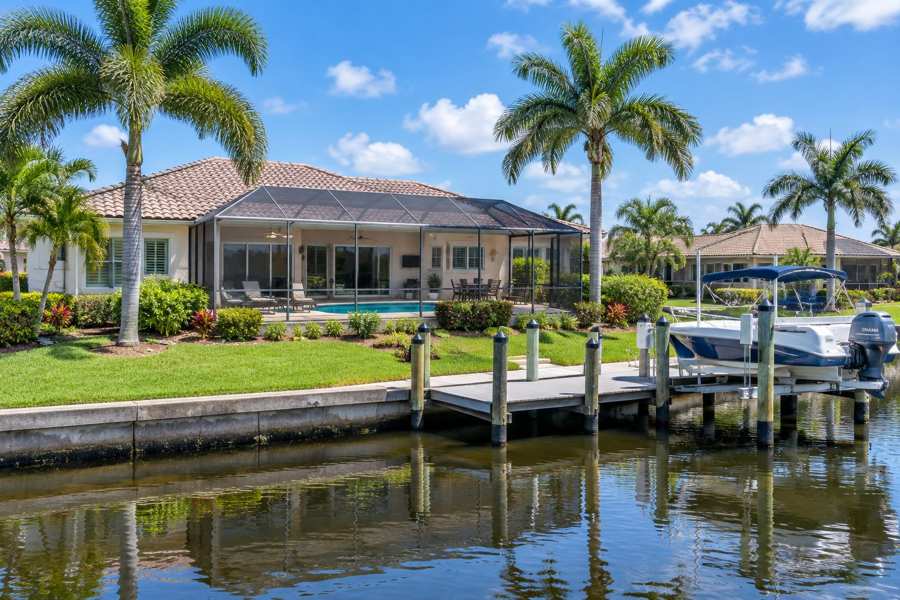
A Coral Ridge waterfront seller should organize tidal barrier sale disclosures before calling a seawall file complete. A permit packet, elevation survey, temporary waiver and account of actual flooding answer different questions. The buyer needs to understand what was built, what was approved, what remains unresolved and which statements belong in the transaction documents. A canal view or newly painted cap cannot supply those answers.
Fort Lauderdale's adopted March two thousand twenty-three ordinance calls for the applicable sale disclosure in not less than fourteen-point, capitalized, bold-faced type. Its lower-elevation waiver language also addresses ownership transfer. This guide connects those transaction details to county guidance, state flood disclosure and issued records. It does not classify a private parcel, draft a legally sufficient contract rider or certify a shoreline structure.
Identify the Parcel and the Tidal Influence Question
Identify the actual parcel, governing city and tidal water relationship before choosing a disclosure or design rule. A Coral Ridge label is not a legal finding about every home with that mailing description. Preserve the identification and source of any determination. Interior property, canal-front property and oceanfront shoreline should not be treated as interchangeable merely because all are in coastal South Florida.
Fort Lauderdale's adopted Ordinance C-twenty-three-zero-five defines a tidally influenced area as real property "adjacent to, or affected by, a waterway" with water-level changes responding to the daily tide. Its scope includes new barriers, substantial shoreline work, fixed structures attached to barriers and existing shorelines allowing tidal intrusion. It separately excludes oceanfront beaches and shorelines seaward of the coastal construction control line.
Broward County's Regional Resilience Standard for Seawalls and Shorelines page explains that municipalities were to adopt regionally consistent standards under the county land-use policy. Regional guidance is useful background, but the city's adopted text and the responsible authority's parcel-level decision matter for application. Do not substitute an educational summary for a municipal approval.
Identification file: Parcel identifier, legal description, jurisdiction, waterway relationship and any issued determination. A seller can identify canal frontage on a survey while leaving legal applicability for the authority and closing professionals. This guide locates no private parcel and does not find that every Coral Ridge home needs the same rider. Preserve the reason a rule applies, not just the neighborhood label.
Separate the Tidal Barrier Rider From State Flood Disclosure
Treat the tidal barrier contract rider and the state flood history disclosure as separate transaction records. One warns about possible shoreline construction and nuisance obligations; the other asks about seller knowledge, claims and assistance. Completing one does not erase the other. Bring the applicable language and actual property facts to the closing professional before execution rather than replacing them with a general waterfront disclaimer.
Fort Lauderdale's adopted ordinance requires its disclosure in contracts, or a rider, for sales in tidally influenced areas executed after March twenty-third, two thousand twenty-three. The prescribed language begins "THIS REAL ESTATE IS LOCATED IN A TIDALLY INFLUENCED AREA." It explains that county or municipal standards may require minimum barrier elevations during construction, substantial repair or rehabilitation, or nuisance-flooding abatement.
The Florida Senate's published two thousand twenty-six version of section six hundred eighty-nine point three hundred two says sellers must provide residential flood disclosure "at or before the time the sales contract is executed". Its form asks about known flooding damage during ownership, flood-insurance claims and flood-damage assistance. Answers require the seller's facts, not a guess from a map.
Disclosure file: Applicable form or rider, completed answers, supporting history and delivery timing. The typography requirement belongs to the transaction document; this article and its short quotations are not the complete legally sufficient rider. Ask the closing professional to confirm current wording, scope and form for the sale, including later applicable changes. No contract is prepared or executed through this guide.
Keep Adopted Standards Separate From Older Forms
Check the date and purpose of each seawall source before describing an elevation as current. The city lists older documents that explain past requirements and useful record categories. A later adopted ordinance can change the rule without removing every checklist. Preserve historical approvals, but do not present an old minimum as universal permission for new work or a promise about the buyer's future construction.
Fort Lauderdale's Climate Resiliency page says the city updated its seawall ordinance in March two thousand twenty-three. The adopted text sets five feet NAVD eighty-eight as the minimum top elevation for new or substantially repaired or rehabilitated tidal barriers, except as provided. Applications submitted before January first, two thousand thirty-five may use a conditional four-foot route when designed to accommodate five feet by January first, two thousand fifty.
The city's DSD Documents and Forms page also links a Seawall Ordinance PDF with a two thousand seventeen revision date. That historical document describes three point nine feet. Those different dates and provisions matter. An older form should not be used to override the later adopted tidal barrier standard.
Rule file: Source title, date, adopted text, current office confirmation and project decision. The online code route did not fully expose the tidal barrier section during this check, so detailed provisions here are attributed to the adopted ordinance, not a promise that no later amendment exists. Confirm the applicable rule before design or reliance on an exception. An older permit is evidence of its own scope, not automatic permission for replacement.
Preserve Waiver Expiry and Ownership Transfer Limits
Keep any lower-elevation waiver with its issued terms, date, covered property and transfer conditions. A waiver is not permanent permission for every future owner. The adopted city text ties this exception to specific floor elevation and engineering considerations and addresses ownership transfer. Do not tell a buyer the waiver travels with the home without checking the decision and the responsible office's current rule.
Fort Lauderdale's adopted ordinance allows the City Engineer to consider a lower-elevation waiver for waterfront property whose principal structure has a habitable finished floor below four feet NAVD eighty-eight. It requires consideration of possible flooding of habitable space and prevailing tidal elevations. This is discretionary, not an exemption obtained merely by measuring a low floor.
The ordinance permits a term "not to exceed three years" and says waivers become void on expiry or "upon the transfer of the ownership", whichever occurs first. It also allows rescission or refusal of an extension when conditions no longer support the waiver, the barrier fails to perform or tidal water overtops it. Preserve the complete decision, not only the permission sentence.
Waiver file: Signed decision, accepted elevations, conditions, term, later correspondence and a specific sale question. A seller should disclose limits and ask whether any new-owner decision is needed. This guide grants no extension, decides no private waiver status and promises no buyer entitlement to reproduce an old exception. Put the closing date and waiver expiration date on the same review list.
Connect Survey Datum to the Actual Completed Barrier
Connect every elevation figure to its datum, measured feature and actual construction. A height above the lawn, a photograph of a cap and a finished-floor figure are different observations. Keep proposed surveys, approved plans and final surveys together. Show what was measured and completed without converting a form submission or a visually tall seawall into an engineering compliance statement.
The city's Seawall and Dock Permitting Checklist lists surveys showing existing and proposed elevations, signed and sealed plans, pile-related special inspection and a final seawall survey. Its caveat says the checklist "is not intended to be all-inclusive" and notes that requirements can change. The dated checklist is a record-category reference, not an exhaustive modern submission list.
Fort Lauderdale's Seawall Survey Review cover sheet records permit number, address, correction status and routing to zoning and engineering. Its separate Final Survey Review form asks which completion or occupancy document the survey supports. A routed cover sheet is not proof that every correction was resolved or every inspection passed.
FEMA's Elevation Certificate glossary describes building elevation records relevant to community floodplain management. That document is not a shoreline permit or a finding about a seawall cap. Measurement file: Survey date, datum, feature, approved design, inspection results, final survey and unresolved corrections. Ask the surveyor or engineer to explain conflicting values rather than combining different features or reference systems.
Keep Repair Triggers and Citation Status Out of Guesswork
Preserve repair scope and citation records before calling shoreline work minor or complete. The adopted city text uses shoreline length and replacement-cost tests, with a specific definition of included structures. A contractor's marketing label does not decide the category. Keep official notices, accepted scope, permits and final approvals visible, including any open progress or completion deadline.
Fort Lauderdale's adopted ordinance describes substantial repair or rehabilitation using work along more than fifty percent of shoreline length, or alterations exceeding fifty percent of the existing shoreline structure's fair-market replacement cost. For those definitions it excludes certain docks, finger piers, piles and ancillary footers, while including concrete docks poured monolithically with the seawall cap. This is not a universal dock exemption.
The adopted text calls for progress within sixty days and completion within three hundred sixty-five days after specified citations. Its nuisance provision contains an exception for compliant barriers overtopped by tidal water. A puddle is not itself an official citation or proof that the exception applies. Preserve notices and the authority's determination instead of privately classifying an event.
Repair file: Dated condition evidence, professional findings, scope, accepted threshold decision, notices and closeout. The city's King Tides and High Tides page explains that rainfall, wind and groundwater affect flooding. Its displayed tide calendar is labeled two thousand twenty-five, not the current year. This guide diagnoses no failure or private threshold. A cosmetic repair should not conceal an unresolved public notice.
Cross Check County Licenses Without Replacing City Decisions
Keep county environmental licenses with city shoreline approvals while preserving the different purpose of each. A county minor-work category does not settle the city tidal barrier trigger or waive sale disclosures. Compare approved site, structure and work description across records. Missing documents, changed configurations and later work should remain visible rather than being assumed covered by an older general license.
Broward County's April two thousand twenty-five Technical Bulletin on Docks and Seawalls describes Environmental Resource General License categories for qualifying minor projects. Examples include certain small docks and functional seawall repairs within a stated distance of the originally authorized location. It says "a General Environmental Resource License is issued" after successful completion. Eligibility is not an issued license.
The county's Development and Environmental Review Guide says projects needing a specific environmental license generally must obtain it before review approval. It identifies docks, pilings, floating vessel platforms, dredging and mangrove changes among activities potentially requiring review. Keep actual approvals and conditions rather than only a receipt.
Florida DEP's Dock Permitting in Florida guidance distinguishes environmental-resource authorization from state-owned submerged-land authorization. Cross-check file: City permit, county license, approved drawings, location, later revisions and final results. One document is not permission from every authority. This sale guide selects no private permitting route or exemption and files no license request. Preserve each decision's limits when describing what a buyer receives.
| Record | Purpose | Cross-check | Does not establish |
|---|---|---|---|
| Tidal barrier rider | Transaction warning | Applicable rule and form | Structural compliance |
| State flood disclosure | Seller knowledge and history | Damage, claims and assistance | Future flood safety |
| Lower elevation waiver | Limited issued exception | Expiry and ownership transfer | Permanent buyer entitlement |
| Final seawall survey | Measured completed features | Datum, plans and inspections | Every environmental approval |
| County license | Environmental scope | Location, drawings and conditions | City design or disclosure compliance |
Finish With Flood History and Clearly Labeled Open Questions
Finish the sale packet with actual flood history, issued records and a separate list of unresolved questions. A new tidal barrier can address one mechanism without proving groundwater, rainfall or storm surge cannot affect the property. Preserve seller knowledge and supporting documents. Compare written purchase terms without claiming a direct buyer, mapped flood zone or recent construction removes every public duty or water concern.
The Florida Senate's two thousand twenty-six flood-disclosure form includes inland or tidal overflow, unusual runoff or surface-water accumulation, and "Sustained periods of standing water resulting from rainfall." This is broader than a casual reference to hurricanes. Preserve accounts, repairs, claims and assistance relevant to the actual questions instead of substituting a generalized no-flood-zone statement.
FEMA's Flood Map Service Center calls itself "the official public source for flood hazard information" for the National Flood Insurance Program and warns effective information may change. Save panel and date separately from private history, survey and insurance coverage. Broward's Resilient Shorelines brochure tells readers to check municipal requirements; it certifies no individual structure.
Final packet: Identification, applicable disclosures, measured shoreline evidence, waiver limits, permits, licenses, notices, known water history and unresolved conditions. Distinguish a missing survey from a denied permit and a pending inquiry from completed compliance. The guide offers record organization, not legal advice, insurance pricing, flood protection certification or a guaranteed purchase. Obtain the relevant professional decisions before relying on a proposed sale or construction plan.
Frequently Asked Questions
These questions reflect the adopted Fort Lauderdale tidal barrier ordinance, city forms, Broward environmental guidance, Florida flood disclosure and FEMA records. They focus on transaction evidence rather than permit selection. Confirm current rules and issued decisions with the responsible office and closing professionals before relying on a waiver, completing a rider or describing a private shoreline as compliant.
Does every Coral Ridge home need the same rider?
Do not infer applicability from a neighborhood name. Verify parcel, jurisdiction and tidal influence with the relevant authority or professional.
Does the tidal barrier rider replace state flood disclosure?
No, the records address different subjects. Keep applicable rider language and actual flood-history answers separate.
Can this article serve as the required contract rider?
No, these are educational excerpts. Ask the closing professional to confirm complete wording, typography and applicability.
Does an old waiver automatically transfer to the buyer?
The adopted ordinance says its waiver ends on ownership transfer or expiry, whichever comes first. Check the issued decision and current rule before promising continued permission.
Does an older three point nine foot form override later standards?
No, the city reports a later ordinance update with different provisions. Confirm current project requirements instead of relying on the older forms packet.
Does four feet always satisfy the adopted ordinance?
No, its text describes a conditional route with design for higher future elevation. Obtain the actual current determination and issued approval.
Does a building elevation certificate certify the seawall?
No, building and shoreline measurements serve different roles. Preserve the seawall survey, approved plans and final inspection records.
Does a county general license eliminate city review?
No, county licenses have their own environmental scope. Cross-check city decisions and transaction duties separately.
Does a new seawall justify no answers to all flood-history questions?
No, the form asks about knowledge, claims and assistance. Answer from actual history rather than barrier age or appearance.
How Maison Off-Market Fits a Tidal Barrier Sale Handoff
Maison Off-Market offers a direct-purchase route to compare after tidal barrier records and sale disclosures are organized. Its process assesses the home and land and may lead to an offer if the property fits. That process does not certify a seawall, extend a waiver or replace a rider. Keep written terms separate from public duties and unresolved shoreline questions.
Maison Off-Market's current hosted site says "We assess the home and the land" and "If it fits" before describing an offer. These are process statements, not a promised Coral Ridge price, engineering inspection or determination that a waiver survives transfer. Its assessment is not the authority's shoreline decision.
Compare written terms: The site describes no showings, commissions, closing costs or seller repair work, while noting that buyer inspections and disclosures remain subject to applicable law and written terms. Preserve the relevant rider, flood history and permit status when comparing a proposal. A direct purchase does not erase disclosures or cure an open public notice.
Compare your options before committing. Request a written private offer for your property, with no obligation, then weigh it against your listing plan.
Sources
- City of Fort Lauderdale, Checked October 2026. Adopted Ordinance C-23-05. https://mcclibraryfunctions.azurewebsites.us/api/ordinanceDownload/13463/1212196/pdf.
- City of Fort Lauderdale, Checked October 2026. Climate Resiliency. https://www.fortlauderdale.gov/government/departments-i-z/parks-recreation/sustainability/sustainability-climate-resilience/climate-resiliency.
- City of Fort Lauderdale, Checked October 2026. DSD Documents and Forms. https://www.fortlauderdale.gov/Government/Departments/Development-Services/DSD-Documents-Forms.
- City of Fort Lauderdale, Checked October 2026. Historical Seawall Ordinance PDF. https://www.fortlauderdale.gov/files/assets/public/v/1/development-services/documents/dsd-documents-amp-forms/seawall-ordinance.pdf.
- City of Fort Lauderdale, Checked October 2026. Seawall and Dock Permitting Checklist. https://www.fortlauderdale.gov/files/assets/public/v/1/development-services/documents/dsd-documents-amp-forms/checklists/seawall-and-dock-permitting-checklist.pdf.
- City of Fort Lauderdale, Checked October 2026. Seawall Survey Review. https://www.fortlauderdale.gov/files/assets/public/v/1/development-services/documents/dsd-documents-amp-forms/seawall-survey-review-cover-sheet.pdf.
- City of Fort Lauderdale, Checked October 2026. Final Survey Review. https://www.fortlauderdale.gov/files/assets/public/v/1/development-services/documents/dsd-documents-amp-forms/final-survey-review-cover-sheet.pdf.
- City of Fort Lauderdale, Checked October 2026. King Tides and High Tides. https://www.fortlauderdale.gov/Government/Departments/Strategic-Communications/King-Tides-and-High-Tides.
- Broward County, Checked October 2026. Regional Resilience Standard for Seawalls and Shorelines. https://www.broward.org/Climate/Pages/USACE.aspx.
- Broward County, Checked October 2026. Technical Bulletin: Docks and Seawalls. https://www.broward.org/Planning/Development/EnvironmentalReview/Documents/2025_TechnicalBulletins/TechnBulletinDocksSeawalls.pdf.
- Broward County, Checked October 2026. Development and Environmental Review Guide. https://www.broward.org/Planning/Development/Documents/EnvironmentalReviewGuide.pdf.
- Broward County, Checked October 2026. Resilient Shorelines Brochure. https://www.broward.org/Climate/Documents/ResilientShorelinesBrochure__compressed_06.23.2020.pdf.
- Florida Senate, Checked October 2026. 2026 Florida Statutes, Section 689.302. https://www.flsenate.gov/Laws/Statutes/2026/689.302.
- Florida DEP, Checked October 2026. Dock Permitting in Florida. https://floridadep.gov/sites/default/files/SWD_Dock%20Permitting%20in%20Florida-D5_FINAL_0.pdf.
- FEMA, Checked October 2026. Flood Map Service Center. https://msc.fema.gov/portal/home.
- FEMA, Checked October 2026. Elevation Certificate. https://www.fema.gov/glossary/elevation-certificate.
- Maison Off-Market, Checked October 2026. Current Hosted Process. https://files.instinct.com/zp8jmzhzb6oc-luxury-off-market-buyer-website.
Related research
Seller Guide · 2026-10-09
How to Assemble South Naples Flood Map and Repair Sale Records
Match effective maps, elevation evidence and approved repair records before presenting a sale file.
Seller Guide · 2026-10-09
How to Prepare Newton Tree Permit and Protection Sale Records
Separate removal permits, exemptions, arborist assessments and replacement obligations before selling.

Seller Guide · 2026-10-09
How to Organize Sevierville Well and Spring Water Sale Records
Separate the water source, construction report, test results and service history before selling.