Seller Guide · by Aidan Sowa · 2026-10-07
How to Prepare Cape Coral Seawall Dock Sale Records
Separate marine permits, design evidence and inspection outcomes before promising an approved waterfront handoff.
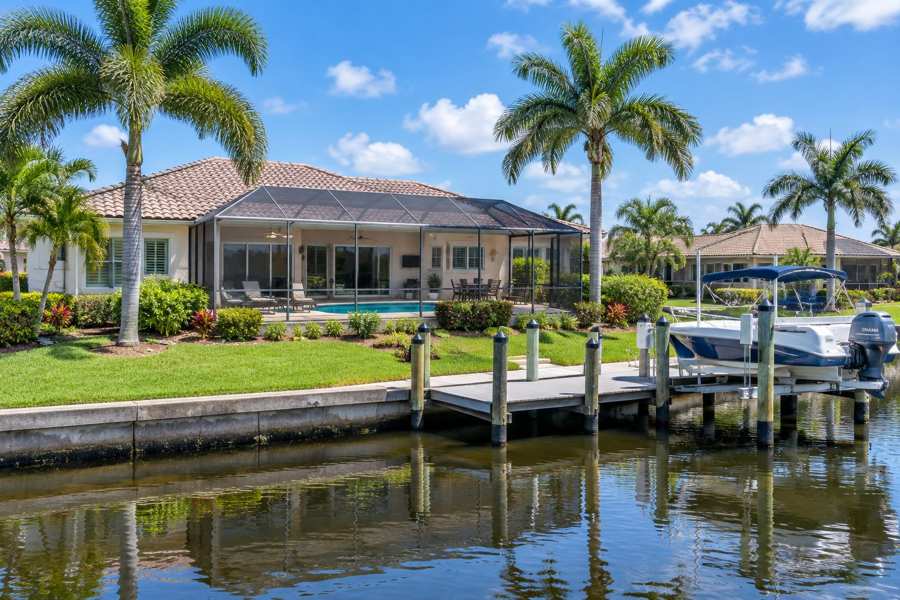
A Cape Coral waterfront sale file should show which seawall, dock and lift work was approved, what was actually inspected and which environmental or ownership questions remain. A tidy lawn, operational boatlift and contractor invoice do not establish the same facts. Preserve the complete record and its project scope rather than promising that visible marine improvements are fully approved or structurally sound.
Florida DEP's Dock Permitting in Florida guide describes certain private noncommercial docks in canals and outside Outstanding Florida Waters with up to one thousand square feet in its exemption discussion. That is one published category, not a universal exemption for Cape Coral work. This guide separates city marine permits, seawall repair versus replacement, dock plans, lift wiring, agency records, inspection outcomes and the sale handoff.
Identify the Parcel and Each Marine Improvement
Begin with the parcel, waterbody, existing improvements and dated work history. A seawall, dock, lift, canopy and land-side walkway can have separate records and conditions. Keep the actual city jurisdiction and project identity visible. A seller should not use a broad waterfront description, neighboring approval or old listing to establish what was permitted at the home.
The Cape Coral Permit Document Center lists seawall, boatlift, dock and other marine-improvement guidance separately. The city's January two thousand twenty-six Boatlift Only guideline directs applicants to the "Marine Improvement" application and the boat or ski lift work option. That organization shows why one general permit reference should not automatically be treated as approval of every waterfront feature.
The city's Wood Dock Repair, Replace and Addition guideline asks for a site plan, dock layout and dock detail. Those records should identify the actual location and scope. Keep later expansions, new equipment or rebuilding separate from the original dock record rather than presenting a decades-old approval as evidence for work done after it was issued.
Identity file: Parcel and address, waterbody, known project dates, marine features, permit identifiers, approved plan title and contractor or professional. No private parcel was searched here. Confirm which improvements belong to each permit. If the owner holds only an old drawing or listing photograph, describe that evidence accurately and ask the city for the actual record. Do not apply an unincorporated Lee County procedure to a city parcel without confirmation of responsibility.
Separate Seawall Repair From Removal and Replacement
Preserve the exact seawall work scope rather than treating every waterfront repair as the same project. Work that removes and replaces a portion can have a different design basis from repair without removal. Keep approved engineering and issued permit conditions together. A seller should not describe a cosmetic invoice as proof that the city accepted the structural work.
Cape Coral's Notice to Industry on Seawalls, effective November fifteenth, two thousand twenty-three, says all new seawalls and any replaced portion "MUST meet" the engineering standards identified in the notice. It separately says repairs are not required to meet that particular revised standard if no portion is removed and replaced. That is a scope distinction, not a finding about the actual seawall or an exemption from all permitting.
The city's Seawall Repair Guideline describes existing residential seawalls and asks for site-specific engineering signed and sealed by a Florida professional engineer. The older residential seawall guideline separately lists design details, review and inspection steps. Both are published guidance, not a current individualized fee quote or determination that a particular contractor's proposed method is accepted.
Seawall file: Work description, original and repaired lengths, approved design, issued permit, revisions, relevant inspection results and engineering evidence. Ask the city and qualified professional to distinguish repair from replacement for the actual work. No seawall movement, corrosion, cracking, tieback condition or load was evaluated here. Keep a condition report separate from permit history: an approved past project does not promise an unchanged structure today, and a recent private inspection does not issue a missing public approval.
Preserve the Accepted Engineering Basis and Later Changes
Keep the approved plans and applicable design decision with their dates and revisions. A general standard, engineer proposal and accepted site-specific plan serve different roles. Preserve any alternative design and city response rather than selecting whichever published diagram looks easiest. A seller should not convert a design notice into proof that the existing waterfront structure meets it.
Cape Coral's Marine Improvement Design Criteria and Allowable Slope notice, effective March ninth, two thousand twenty-four, says specified alternatives must have plans "sealed by a professional engineer". It identifies a particular modification for one bulkhead alternative. The notice explains a design review context; it is not an assessment of the seller's foundation, slope or installed seawall.
The city's residential seawall guideline describes city engineering standards or signed and sealed plans as parts of its application record. Preserve the actual accepted approach and conditions rather than treating the existence of a city-standard sheet as proof that construction followed it. A later expansion or change in retained grade should remain visible to the professional and reviewing office.
Design file: Accepted plan version, professional seal where required, applicable interpretation, city comments, approved revisions and as-built evidence. No design calculation was performed here. Ask the engineer and city about inconsistencies between plans and physical work. Do not present a proposal waiting for review as the released plan or hide a rejected drawing behind the approved cover sheet. Give the buyer the full record with stated limits so later professionals can understand what was decided and what still needs clarification.
Keep Dock Work and Land-Side Walkways in Their Own Records
Keep dock construction, repair and additions separate from land-side walkway work. A narrow maintenance exception should not become a broad permit exemption for rebuilding or expansion. Preserve layouts, structural details, accepted scope and final outcomes. A seller should not assume that a receipt for new decking proves the frame, pilings and every related feature were approved.
The January two thousand twenty-six Cape Coral Wood Dock guideline says "Re-decking not involving the replacement of frame or stringers does not require a permit". That precise condition matters. It does not establish the scope of a private contractor's work or exempt replacement of structural members simply because an invoice describes the project as resurfacing.
The city's Captain's Walk guideline says a captain's walk is on the "land side of the seawall" and lists its own site, structural and impervious-surface evidence, with review and inspections. Preserve that distinction from an over-water dock. A seller's use of the word walkway should not determine the official project type or erase a relevant stormpipe or environmental condition.
Dock file: Approved layout, dimensions, original structure, repair scope, structural replacements, associated lift details and accepted inspections. Walkway file: Actual location, separate permit where applicable, plans, conditions and final result. No measurements, setbacks or physical inspection were performed here. Ask the city about uncertain classifications and later changes. A permit covering dock work should not be described as blanket permission for a canopy, additional mooring structure or land-side alteration that the accepted scope does not identify.
Separate Boatlift Approval From Its Electrical Work
Preserve the lift specification, placement and accepted marine record beside the separate wiring record. Equipment that operates is not evidence that every installation inspection is complete. Keep new and used equipment history accurate. A seller should not promise electrical compliance or lift capacity from a photograph, a control test or the existence of one marine permit.
Cape Coral's January two thousand twenty-six Boatlift Only guideline asks for a site plan, dock layout and boatlift specifications. It says "A separate electrical permit is required for wiring the boat lift" and notes that pilings can be included within the lift permit. The work scope therefore needs a record check, not a broad assumption that one approval includes every connected system.
The same guideline lists a used-boatlift hold-harmless agreement among conditional documents and distinguishes required from project-dependent submissions. That does not establish a private lift's condition or eliminate the need to confirm its actual specifications and public record. Keep manufacturer details and professional inspection evidence accurately labeled beside the permitting history.
Lift file: Model, specification, approved placement, actual installation scope, issued marine permit, relevant result and later replacement history. Electrical file: Applicable permit, approved work scope, actual inspection and accepted outcome. No wiring, grounding, controls, load capacity or equipment safety was tested here. Ask the qualified professional and city about missing or conflicting documents. An invoice, warranty or maintenance log may support history, but it should not be relabeled as the public final inspection or a present structural and electrical safety guarantee.
Keep Environmental Permission Separate From City Construction Review
Preserve the actual environmental and submerged-land records that apply to the parcel and work. City construction approval and state or federal permission answer different questions. A published exemption category is not a property-specific determination. A seller should not turn freshwater guidance, a small dock or a neighbor's approval into universal permission for existing or proposed marine work.
Cape Coral's current Wood Dock and Boatlift Only guidelines list DEP approval where the project is not on fresh water. The older seawall guideline identifies state or federal approval evidence in its own document list. Preserve the actual agency response and conditions. A city document requesting that evidence is not itself the external agency's permit or a finding that it is unnecessary.
Florida DEP's Dock Permitting in Florida guide separates exempt docks, general permits and individual environmental resource permits. Its state-lands discussion says "Written authorization to use state-owned submerged land is required" within that context. It also notes resource and aquatic-preserve design considerations. Keep environmental permission and land authorization distinct; an exemption from one permit category does not automatically settle every other requirement.
Agency file: Applicable permit or exemption evidence, agency, project and location, drawings, conditions, state-lands authorization where required and later changes. No exemption or aquatic-preserve classification was determined here. Ask the responsible agencies about the actual waterbody and structure. Do not promise future dock expansion merely because an existing installation has permission. Preserve riparian and property evidence with professional guidance rather than inventing setback lines or treating a tax map as a final boundary determination.
Track Actual Inspection Outcomes and Record Availability
Keep issued permits and completed inspections distinct from requested appointments, invoices and online search results. Preserve failures, correction evidence and accepted outcomes. Portal status can help locate the file, but an empty result does not prove that the work never had a record. A seller should not hide an unresolved inspection behind an attractive photograph or a scheduled visit.
Cape Coral's EnerGov Citizen Self-Service page says permit status can be found through "Search Permits" and that authorized contacts may see additional details when signed in. It also explains that availability of older plans and elevation documents depends on records being processed and scanned. Keep those search limits clear rather than equating public visibility with the complete history of the parcel.
The city's CSS User Manual distinguishes inspection requests and inspection-status review. It notes that some transferred records from the previous TrakIt system have imported scheduling fields. That history supports confirming the actual result, not interpreting an odd future date as evidence that a project has passed. Current Wood Dock guidance separately identifies Marine Final and applicable stormpipe inspections.
Outcome file: Issued permit, full inspection history, actual date and result, failed items, accepted corrections, revisions and final closure evidence. The Cape Coral Records Management page provides a public-record request route and warns extensive requests can carry charges. No request was submitted and no fee was calculated here. Ask the office about missing documents before promising completion. Keep supporting engineer reports and contractor receipts beside the public result without presenting them as substitutes for the city's acceptance.
Finish With an Ownership and Marine Record Matrix
Finish by assigning each record a purpose, issuer, date, project and unresolved follow-up. Keep environmental ownership questions separate from city construction history and equipment warranties. A sale contract does not itself issue public approvals or complete an agency transfer. Buyers should receive actual records with their limits rather than a broad promise that waterfront features are automatically cleared.
Florida DEP publishes a separate "Request to Transfer Permit" and a "Request for Transfer of Environmental Resource Permit to the Perpetual Operation Entity". Those titles identify different processes. A blank form or property sale is not evidence that either request has been accepted, and the existence of a form does not establish that it applies to the subject dock.
The DEP transfer pages show different form numbers and revision dates for ownership transfer and operation-entity records. Preserve the actual permit terms and ask the issuing agency what steps the transaction requires. This guide does not invent a transfer deadline, assert that every residential marine feature needs an operation entity or promise that a title change transfers every authorization automatically.
Handoff matrix: Record, issuing authority, parcel, project scope, stage, conditions, owner or responsible entity, missing evidence and next question. Preserve complete permissions and later amendments. No private title, transfer, permit or warranty was reviewed here. Have the transaction professional and agencies confirm unresolved requirements before a closing promise. Useful organization helps compare sale routes, but it does not approve construction, determine condition, enlarge riparian rights or eliminate a condition attached to an existing authorization.
| Record | Main role | Cross-check | Does not prove |
|---|---|---|---|
| Marine permit | City work scope | Feature and plans | All agency permission |
| Engineering plans | Accepted design basis | Revision and seal | Actual current condition |
| Inspection history | Recorded work outcomes | Failures and final | Unlimited safety warranty |
| Electrical result | Lift wiring work | Permit and scope | Marine design approval |
| Agency permission | Environmental conditions | Location and authorization | Every future expansion |
| Transfer record | Changed responsibility | Agency accepted outcome | New construction approval |
Frequently Asked Questions
These questions follow Cape Coral marine guidelines, design notices, portal and records guidance, and Florida DEP dock and transfer information. They distinguish work scope, design, agency permission, inspection outcomes and ownership. Confirm the actual parcel and current receiving-office requirements before promising a complete waterfront handoff. No private seawall, dock, lift, wiring, title or permit was evaluated.
Does a tidy seawall prove the marine permits are complete?
No, appearance and public approval are different questions. Preserve actual permits and accepted inspection outcomes.
Are repair and seawall replacement the same city scope?
No, the city notice distinguishes repair without removal from replacement. Confirm the actual project with the city and engineer.
Does a decking invoice prove the dock frame was approved?
No, identify what work was actually performed. The published re-decking exception is narrowly stated.
Is a captain's walk an over-water dock?
The city guideline places it on the land side of the seawall. Keep its own work record and approved scope.
Does a boatlift marine permit include all wiring approval?
No, the city guideline requires separate electrical permitting for the wiring. Preserve that work's actual outcome.
Does a small private dock automatically need no agency permission?
No, the state guide describes scoped categories and conditions. Ask the responsible agency about the actual property and work.
Does a missing public search result prove no permit existed?
No, older-document availability can depend on processing and scanning. Ask the city for the actual record.
Does a completed application mean the final inspection passed?
No, those are different stages. Keep the issued permit and recorded inspection result.
Can a direct purchase complete a missing agency transfer?
No, a purchase proposal does not issue an agency outcome. Compare written terms while preserving unresolved obligations.
How Maison Off-Market Fits a Marine Record Sale Handoff
Maison Off-Market offers a direct purchase route to compare after waterfront records are organized. Its process assesses the home and land and may lead to an offer if the property fits. That assessment does not inspect a seawall or issue marine approval. Keep written purchase terms separate from engineering evidence, agency conditions and unfinished public-record work.
Maison Off-Market's live hosted process says "We assess the home and the land" and "If it fits" before describing an offer. These are purchase-process statements, not a Cape Coral marine final, lift-wiring inspection or state authorization. Preserve actual documents and conditions when comparing the proposal with a listing plan.
Compare written terms: The hosted site describes no showings, commissions, closing costs or seller repair work, while stating buyer inspections and disclosures remain subject to applicable law and written terms. A direct purchase does not determine structural safety or approve work outside a permit. Keep missing records and obligations visible.
Compare your options before committing. Request a written private offer for your property, with no obligation, then weigh it against your listing plan.
Sources
- City of Cape Coral, Checked October 2026. Permit Document Center. https://www.capecoral.gov/departments/development_services/permitting_services_division/permit_document_center.php.
- City of Cape Coral, Checked October 2026. Residential Seawall Guideline. https://www.capecoral.gov/Documents/Document%20Hub/Permit%20Document%20Center/Documents%20Required%20for%20Permits/Seawall%20New%20and%20Repair%20Includes%20Alternative/Seawall%20Guidelines%20-%20Residential.pdf?t=202512031147420.
- City of Cape Coral, Checked October 2026. Boatlift Only Guideline revised January 2026. https://www.capecoral.gov/Documents/Document%20Hub/Permit%20Document%20Center/Guidelines/Marine%20Improvement/Boatlift%20Only%20Guideline%20-%20Residential.pdf?t=202601231428010.
- City of Cape Coral, Checked October 2026. CSS User Manual. https://www.capecoral.gov/Documents/Departments/Development%20Services/EnerGov%20Citizen%20Self%20Service%20CSS/EnerGov%20CSS%20User%20Manual%20(2).pdf?t=202511171448430.
- City of Cape Coral, Checked October 2026. Wood Dock Repair Replace and Addition Guideline. https://www.capecoral.gov/Documents/Document%20Hub/Permit%20Document%20Center/Guidelines/Marine%20Improvement/Wood%20Dock%20Addition-Repair-Replace%20Guidelines%20-%20Residential.pdf?t=202601231500090.
- City of Cape Coral, Checked October 2026. Seawall Repair Guideline. https://www.capecoral.gov/Documents/Document%20Hub/Permit%20Document%20Center/Documents%20Required%20for%20Permits/Seawall%20New%20and%20Repair%20Includes%20Alternative/Seawall%20Repair%20Guidelines%20-%20Residential.pdf?t=202512031148490.
- City of Cape Coral, Checked October 2026. Marine Improvement Design Notice. https://www.capecoral.gov/Documents/Departments/Development%20Services/Notice%20to%20Industry/NOTICE%20TO%20INDUSTRY%20-%20MARINE%20IMPROVEMENT.pdf?t=202512051144280.
- City of Cape Coral, Checked October 2026. Seawalls Notice to Industry. https://www.capecoral.gov/Documents/Departments/Development%20Services/Notice%20to%20Industry/NOTICE%20TO%20INDUSTRY%20-%20Seawalls.pdf?t=202512051141000.
- City of Cape Coral, Checked October 2026. Captains Walk Guideline. https://www.capecoral.gov/Documents/Document%20Hub/Permit%20Document%20Center/Guidelines/Marine%20Improvement/Captains%20Walk%20Guideline%20-%20Residential.pdf?t=202601231428550.
- City of Cape Coral, Checked October 2026. EnerGov Citizen Self-Service. https://www.capecoral.gov/departments/development_services/permitting_services_division/energov_citizen_self_service_css.php.
- City of Cape Coral, Checked October 2026. Records Management. https://www.capecoral.gov/departments/city_clerk/records_management.php.
- Florida Department of Environmental Protection, Checked October 2026. Dock Permitting in Florida. https://floridadep.gov/sites/default/files/SWD_Dock%20Permitting%20in%20Florida-D5_FINAL_0.pdf.
- Florida Department of Environmental Protection, Checked October 2026. Request to Transfer Permit. https://floridadep.gov/water/submerged-lands-environmental-resources-coordination/forms/request-transfer-permit.
- Florida Department of Environmental Protection, Checked October 2026. Request for Transfer to the Perpetual Operation Entity. https://floridadep.gov/water/submerged-lands-environmental-resources-coordination/forms/request-transfer-environmental-0.
- Maison Off-Market, Browser checked October 2026. Current Hosted Process. https://files.instinct.com/zp8jmzhzb6oc-luxury-off-market-buyer-website.
Related research
Seller Guide · 2026-10-09
How to Assemble South Naples Flood Map and Repair Sale Records
Match effective maps, elevation evidence and approved repair records before presenting a sale file.
Seller Guide · 2026-10-09
How to Prepare Newton Tree Permit and Protection Sale Records
Separate removal permits, exemptions, arborist assessments and replacement obligations before selling.

Seller Guide · 2026-10-09
How to Organize Sevierville Well and Spring Water Sale Records
Separate the water source, construction report, test results and service history before selling.