Seller Guide · by Aidan Sowa · 2026-10-07
How to Prepare Berwyn Permit and Occupancy Records
Separate township jurisdiction, project closeout and payment certifications before sale.
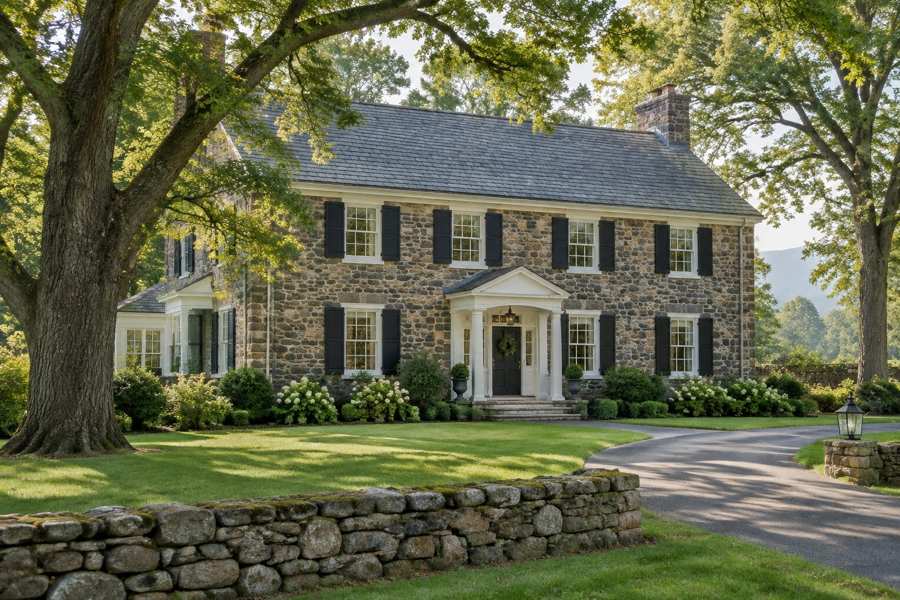
A Berwyn seller should identify the actual township and project history before treating a residential transfer, construction closeout or payment certification as the same requirement. Tredyffrin and Easttown publish different permit routes and document roles. Preserve the parcel, issued approvals and actual inspections so a buyer can understand which paperwork establishes an approved project and which only confirms an account balance.
Tredyffrin's Building and Construction Permits page states that removing more than five qualifying trees during a rolling twelve-month period requires a tree-removal application and compensatory planting, with specified exemptions. That is one example of why a landscaped sale photograph is not the whole project record. This guide covers jurisdiction, occupancy, stormwater, trees, sewer work and payment evidence without classifying a private home or creating a universal Berwyn resale-inspection rule.
Identify the Township Before Using a Berwyn Checklist
Identify the actual parcel and municipal jurisdiction before building the sale checklist. A mailing address, nearby township office or neighbor's closing experience is not a permit determination for a private property. Preserve the existing file and ask the responsible township about unresolved requirements. Do not import a neighboring municipality's resale inspection rule simply because the homes share a postal area or familiar neighborhood name.
Tredyffrin's Permits and Inspections page identifies its department and office in Berwyn. Easttown's Permit Guidance page describes a separate review system for zoning, drainage, building and road occupancy. Their public instructions answer different questions; neither office address substitutes for identifying the actual property jurisdiction.
Easttown's Zoning Permit Application asks for "UPI No." and actual property address, along with existing and proposed conditions. Tredyffrin's stormwater exemption form similarly asks for parcel identification and location. Those identifiers help connect documents to the correct site rather than a similar street or owner name.
Jurisdiction file: Parcel identifier, address, responsible township, prior permits and open questions. This guide maps no private parcel and decides no resale obligation for a property. Preserve the responsible office's actual answer before telling a buyer that a certificate is required, unnecessary or already complete. A clear jurisdiction record helps prevent wasted applications and the more serious error of handing over paperwork from the wrong municipality.
Separate Residential Ownership Change From Project Occupancy
Keep a residential ownership change separate from a construction project's occupancy approval. A township may not require a new occupancy permit merely for resale while still requiring final inspections and issued documents for recent construction. Preserve the actual project closeout. A seller should not treat a no-resale-permit rule as proof that an addition, new dwelling or unfinished permit already satisfies every applicable requirement.
Tredyffrin's Building and Construction Permits page says residential use-and-occupancy permits are required for new residential construction and "not required for changes in residential ownership or tenancy." The same page says final inspections must be completed before a use-and-occupancy permit may be issued. These statements apply to different events and should be read together.
Easttown's Building Permit FAQ says that if a certificate of occupancy is required for the project, final inspection and payment of outstanding permit and consultant fees must precede issuance. It says issuance occurs within five business days when those conditions are met. That conditional project language does not establish a universal Easttown resale-inspection requirement.
Occupancy file: Construction permit, required final inspections, issued certificate where required, and any pending conditions. Keep ownership-transfer paperwork and project closeout in separate folders. This guide determines no private certificate requirement and guarantees no issue date. A seller can truthfully say a residential transfer does not itself require Tredyffrin's occupancy permit while still acknowledging that a private construction project has an unresolved final inspection.
Connect Actual Renovations to Approved Plans and Final Records
Connect additions, basement finishing, decks and other renovations to the actual approved plans and inspection record. A contractor invoice or attractive finished room is not the same as township closeout. Preserve the work scope, permit number and changes made during construction. Missing records should remain labeled gaps rather than being replaced with an assumption that old work was automatically exempt or approved.
Easttown's Project-Specific Requirements FAQ calls for drawings and relevant zoning or drainage approval for residential additions and decks. Its finished-basement guidance identifies the floor-plan details expected for that project. Those instructions help distinguish the file for a particular type of work from a generic application downloaded for every renovation.
Easttown's Building Permit Application, revised in February two thousand twenty-six, identifies multiple work categories and asks for construction documents, contractor information and applicable supporting materials. Tredyffrin's current Building and Construction Permits page says an inspection must be scheduled after work completion. Submission, issuance and completed inspection are separate stages.
Project file: Work dates, scope, approved drawings, permit, applicable amendments, inspection results and closeout. No construction assessment or private permit search is performed here. If a seller has a permit but no final evidence, ask the responsible office what remains before describing the project as complete. Keep actual township conditions visible rather than promising that a paid invoice, previous sale or elapsed time proves compliance.
Use the Current Application Route Rather Than an Older Download
Preserve old plans and accepted applications as history, but use the current municipal route for any new filing. Public downloadable forms can remain online for information after submission mechanics change. Keep historical requirements and current instructions distinct. A seller should not tell a buyer to mail or email an application merely because an older checklist contains paper-plan language or a familiar office address.
Tredyffrin's current Building and Construction Permits page requires submissions through Clariti and says mailed and emailed materials are "no longer accepted." It includes building, stormwater, grading, tree-removal and contractor-registration applications. Its Residential Permit Application Requirements download is labeled "INFORMATIONAL PURPOSES ONLY" and bears a January two thousand twenty revision with paper and email references.
Easttown's Permit Guidance page separately allows in-person submission or its online permit portal. Its Building Permit FAQ discusses approval notifications and payment requests, including an instruction to contact the clerk if an expected request does not arrive. A Tredyffrin portal instruction should not be transplanted into Easttown's route.
Submission file: Current office route, complete documents, accepted submission, payment request, issuance and final status. This guide files no application and sends no email. Older paperwork can remain valid evidence of earlier accepted work without serving as the correct route for a new request. Check the responsible office's current instruction before resubmitting or promising that a buyer can complete the process using the seller's outdated downloaded form.
Preserve Stormwater Calculations and the Actual Exemption Decision
Preserve cumulative impervious-surface calculations, approved drainage plans and any actual exemption decision. A small individual patio or shed should not be treated as a private finding that no stormwater record matters. Township instructions can use different thresholds and routes. Keep the source, project date and accepted decision connected so a buyer can distinguish public guidance from the property's real approved drainage file.
Tredyffrin's Stormwater and Grading Permits page describes stormwater control for new construction exceeding four hundred ninety-nine square feet and separate grading thresholds. Its exemption form warns that requirements are "cumulative" and discusses later additional impervious area. Keep the earlier exempt project with later work rather than resetting the record each time a new improvement is built.
Easttown's Permit Guidance page describes a simplified drainage approach for additional impervious surface between five hundred and nine hundred ninety-nine square feet and a standard approach from one thousand square feet. It directs readers to the township stormwater code for specifics. Those descriptions do not classify a private plan or establish that the same threshold applies in the other township.
Drainage file: Existing and proposed surfaces, prior project calculations, approved plan, exemption or permit, inspection and maintenance records. No private area is measured or exemption decided here. A buyer should see why the actual project was approved rather than receive a blanket statement that each small addition was independently too minor to matter. Ask the responsible township to resolve cumulative or scope questions before promising an unrestricted future addition.
Keep Tree and Natural Resource Evidence With Exterior Work
Keep tree removal, compensatory planting and natural-resource review with the exterior project file. A mature landscaped yard does not show whether prior removal required approval or whether an accepted planting condition remains outstanding. Preserve the actual decision and work dates. A seller should not apply one township's tree threshold to every Berwyn home or turn a general exemption into a private hazard finding.
Tredyffrin's Building and Construction Permits page describes a tree-removal application and compensatory planting for more than five trees of at least six inches diameter at breast height during a rolling twelve-month period. It lists dead, nonviable and hazardous trees as exempt and describes additional woodland and slope limits. Those categories require actual property evidence.
Easttown's Zoning Permit Application directs readers to its Natural Resource Protection and Zoning chapters and includes "Viable Tree Removal" among work categories. Its dimensional and net-lot-area sections distinguish resource constraints from gross parcel area. This does not prove a private tree needs removal permission or that Tredyffrin's count-based threshold governs an Easttown parcel.
Landscape file: Tree dates and descriptions, actual exemption evidence, issued permit where required, planting plan and accepted completion. No tree risk assessment, count or private slope classification is made here. A buyer should be able to connect earlier removals and replacement planting to the recorded decision. Preserve unresolved conditions rather than assuming that a full garden, a large lot or a past contractor's opinion closes every natural-resource question.
Distinguish Sewer Work Approval From Payment Certification
Distinguish approval of sewer construction from a certification of sewer payments. One concerns actual work and connection requirements; the other concerns a financial account. Keep plumbing, sewer-lateral work and any abandoned onsite system records separate. A seller should not describe a payment certification as a camera inspection, condition report or proof that earlier lateral work received every necessary permit and final approval.
Easttown's Building Permit FAQ distinguishes interior plumbing permits from sanitary sewer permits for work between the principal building and sewer main, including repairs and connections. Its Building Sewer Permit Application requires separate interior plumbing permission when relevant and describes connection conditions. For new connections involving a decommissioned onsite system, it asks for a signed abandonment certification within two weeks after completion.
Easttown's current Fee Schedule lists "Sewer Payment Certification" separately from zoning letters and occupancy fees. Tredyffrin's two thousand twenty-six Fee Schedule lists tax or sewer payment certification as its own service. Those labels support keeping account evidence distinct; they do not create a universal sale-triggered sewer-inspection rule.
Sewer file: Actual work permit, connection and inspection records, abandonment evidence if applicable, and separate payment certification. This guide inspects no lateral, chooses no repair contractor and issues no balance statement. If the seller has only an account letter, describe that limited role clearly. Ask the responsible office or closing professional which additional private records are needed instead of borrowing a mandatory resale-camera rule from a neighboring municipality.
| Record | Role | Cross-check | Does not prove |
|---|---|---|---|
| Project occupancy certificate | Permission for the relevant project use | Final inspection and actual issuance | Every resale needs a new certificate |
| Temporary occupancy | Limited safe-use permission | Expiry and completion conditions | Permanent project closeout |
| Stormwater exemption | Accepted project scope | Cumulative area and actual decision | Future work always exempt |
| Tree removal approval | Actual removal and planting conditions | Dates, sizes and completion | Every tree removal unrestricted |
| Sewer payment certification | Account evidence | Issued statement and date | Lateral condition or work approval |
Finish With Final Certificates and Clearly Labeled Open Conditions
Finish the handoff with issued approvals, actual completed inspections and separate account evidence. A temporary occupancy certificate, pending final inspection and paid permit fee answer different questions. Keep remaining conditions visible rather than collapsing them into one statement that township paperwork is complete. A buyer should know which documents are final, which are limited and which still require the responsible official's decision.
Easttown's Building Permit FAQ says a temporary certificate may cover safely occupiable portions before all work is complete and gives the building official authority to set its validity period. It asks for a deposit and letter identifying the open permit and expected completion. Preserve the actual conditions rather than presenting a temporary certificate as permanent closeout.
The same FAQ and current Fee Schedule say a required final certificate cannot issue until outstanding permit and township-consultant fees are paid and the final inspection passes. Tredyffrin's Building and Construction Permits page likewise connects final inspections with occupancy issuance. A fee payment by itself does not prove either township has issued the required final document.
Final packet: Jurisdiction, permit and plans, inspections, occupancy where required, drainage and tree evidence, sewer work, separate payment certifications and open conditions. This guide promises no closing date, approval or private compliance finding. A direct sale changes the transaction route, not the underlying record. Confirm consequential gaps with the responsible township and closing professional before describing unfinished work or a temporary permission as an unconditional completed project.
Frequently Asked Questions
These questions reflect Tredyffrin and Easttown permit, occupancy, drainage, tree, sewer and fee guidance. They separate ownership change from project closeout and account evidence from physical condition. Identify the actual township and private records before requesting a certificate, promising a deadline or describing completed work. No private parcel, inspection result, exemption or closing requirement was determined here.
Does a Berwyn mailing address identify every township requirement?
No, connect the actual parcel to the responsible municipality. A neighboring seller's checklist is not a private permit determination.
Does Tredyffrin require residential occupancy permission simply for ownership change?
Its published page says that permit is not required for residential ownership or tenancy changes. New construction and project closeout remain separate questions.
Does that rule prove my addition has final approval?
No, actual permits and inspections still matter. Preserve the issued project closeout rather than only a resale rule.
Can I use an older Tredyffrin email checklist for a new application?
The current page requires Clariti and says mailed and emailed materials are no longer accepted. Keep old downloads as historical or informational evidence.
Is each small stormwater project always independently exempt?
Tredyffrin's exemption form says requirements are cumulative. Preserve earlier improvements and the actual accepted decision.
Does Tredyffrin's tree threshold decide an Easttown property?
No, each township publishes its own applicable guidance. Confirm jurisdiction and the actual landscape decision.
Does a sewer payment certificate prove the lateral was inspected?
No, payment and work approval are different records. Keep actual sewer construction and inspection evidence separate.
Is a temporary occupancy certificate permanent project closeout?
No, the official can limit its time and permitted portion. Preserve its actual conditions and later final document.
Can a direct buyer waive township project requirements?
A purchase route does not replace public approval. Compare written sale terms with the actual permit and inspection file.
How Maison Off-Market Fits a Permit Record Handoff
Maison Off-Market offers a direct purchase route to compare after permit and occupancy records are organized. Its process assesses the home and land and may lead to an offer if the property fits. That assessment does not issue township certificates or certify drainage and tree work. Keep written purchase terms separate from public approvals, account evidence and unresolved project conditions.
Maison Off-Market's live hosted process says "We assess the home and the land" and "If it fits" before describing an offer. Those are purchase-process statements, not a Berwyn inspection, sewer condition report or township permit determination. Preserve the actual project record when discussing any proposal.
Compare written terms: The hosted site describes no showings, commissions, closing costs or seller repair work, while stating buyer inspections and disclosures remain subject to applicable law and written terms. A direct purchase does not transform payment certification into construction approval or temporary occupancy into final closeout. Keep remaining record questions visible when comparing an actual offer.
Compare your options before committing. Request a written private offer for your property, with no obligation, then weigh it against your listing plan.
Sources
- Tredyffrin Township, Checked October 2026. Building and Construction Permits. https://www.tredyffrin.org/Departments/Permits-Inspections/Building-Construction-Permits.
- Tredyffrin Township, Checked October 2026. Permits and Inspections. https://www.tredyffrin.org/Departments/Permits-Inspections.
- Tredyffrin Township, Checked October 2026. Stormwater and Grading Permits. https://www.tredyffrin.org/Departments/Engineering/Stormwater-Management/Stormwater-Grading-Permits.
- Tredyffrin Township, Checked October 2026. Stormwater Exemption Application, Informational. https://www.tredyffrin.org/files/assets/township/v/3/document-central/permits-documents/stormwater-exemption-application.pdf.
- Tredyffrin Township, Checked October 2026. Residential Permit Application Requirements, Informational. https://www.tredyffrin.org/files/assets/township/v/3/document-central/permits-documents/permit-application-requirements-residential-2020.pdf.
- Tredyffrin Township, Checked October 2026. 2026 Fee Schedule. https://www.tredyffrin.org/files/assets/township/v/4/document-central/admin-documents/2026-fee-schedule-final.pdf.
- Easttown Township, Checked October 2026. Permit Guidance. https://easttown.org/279/Permits.
- Easttown Township, Checked October 2026. Project-Specific Requirements FAQ. https://easttown.org/FAQ.aspx?QID=84.
- Easttown Township, Checked October 2026. Building Permit FAQ. https://www.easttown.org/FAQ.aspx?QID=78.
- Easttown Township, Checked October 2026. Zoning Permit Application. https://www.easttown.org/DocumentCenter/View/118/Zoning-Permit-Application?bidId=.
- Easttown Township, Checked October 2026. Building Permit Application. https://www.easttown.org/DocumentCenter/View/108/Building-Permit-Application?bidId=.
- Easttown Township, Checked October 2026. Building Sewer Permit Application. https://www.easttown.org/DocumentCenter/View/102/Building-Sewer-Permit-Application---Lateral-Connection-PDF?bidId=.
- Easttown Township, Checked October 2026. 2026 Fee Schedule. https://www.easttown.org/DocumentCenter/View/4090/Current-Fee-Schedule.
- Maison Off-Market, Checked October 2026. Current Hosted Process. https://files.instinct.com/zp8jmzhzb6oc-luxury-off-market-buyer-website.
Related research

Seller Guide · 2026-10-09
How to Assemble South Naples Flood Map and Repair Sale Records
Match effective maps, elevation evidence and approved repair records before presenting a sale file.
Seller Guide · 2026-10-09
How to Prepare Newton Tree Permit and Protection Sale Records
Separate removal permits, exemptions, arborist assessments and replacement obligations before selling.
Seller Guide · 2026-10-09
How to Organize Sevierville Well and Spring Water Sale Records
Separate the water source, construction report, test results and service history before selling.