Seller Guide · by Aidan Sowa · October 6, 2026
How to Compare Roof Repair and Replacement Before Selling in Paradise Valley
Learn to review roof findings, work proposals and sale terms before choosing repair, replacement or repricing.
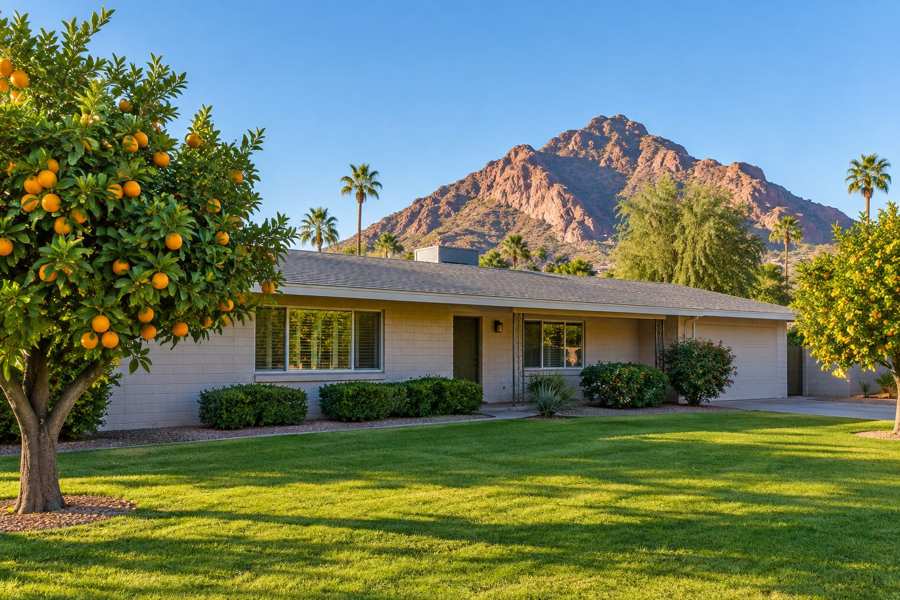
A buyer's inspection calls your Paradise Valley roof old, and the proposed solution is replacement. Before agreeing to a large project or an equally large price cut, separate the actual findings from an age-based assumption. Arizona's February 2026 Buyer Advisory highly recommends a licensed roofing-contractor inspection when a roof is ten years old or older. That is a review recommendation, not proof that every roof of that age needs replacement or that a particular lender has rejected your home.
This guide explains how to assemble roof records, distinguish covering from hidden components, obtain comparable work proposals and negotiate sale terms. It does not diagnose your roof, promise remaining life, calculate a replacement cost or determine a permit, disclosure duty or financing outcome for a particular property. Paradise Valley Core is the guide's area focus, not an engineering classification.
What a Roof Decision Actually Means
A roof decision compares the condition and recommended work on the actual roof with your sale plan. Age is one input, not a verdict. Separate a defect, a repair recommendation and a replacement proposal, then ask which observations support each. A buyer's request may be negotiable, but the seller should not dismiss a documented leak or describe a cosmetic patch as proof that the entire roof system is sound.
InterNACHI's tile-inspection article explains that an inspector must understand the limitations of the review and may recommend a qualified contractor for more definitive evaluation. It examines tiles, flashing, fasteners and the system's ability to protect against moisture. A ground view cannot establish every hidden component, and a general inspection is not a construction-code certification.
Decision inputs: Observed findings, inspection limits, documented repair history, actual work scope, official approvals where required and buyer financing conditions. Ask what needs prompt attention, what can be repaired and what evidence supports a broader project. The guide cannot choose by looking at a housing-age chart or counting how many neighboring roofs have been replaced.
NAR's preparing-to-sell guide recommends obtaining estimates for significant repairs even if the owner will not complete them before sale. That creates a better negotiation baseline than a buyer's rough allowance or a contractor's headline price. A site-specific assessment can change the scope, so keep early estimates marked preliminary when further review is needed.
Collect the Roof History Before Negotiating
Gather installation and repair invoices, available approvals, inspection reports, leak history and warranty documents. Identify which roof areas and components each record covers. A partial repair date should not become the advertised age of the whole roof, and a warranty should not be called transferable until its terms are checked. Share relevant facts through the proper disclosure and contract process rather than choose only records that make the roof sound newer.
The Arizona Buyer Advisory includes roof review among the buyer's investigation topics and points to licensed contractors. Its ten-year recommendation helps explain why a buyer may seek additional assessment. The document does not give this guide authority to certify an individual roof or turn the seller's recollection into a remaining-life estimate.
NRCA's maintenance advisory says warranties may limit liability and available remedies and do not necessarily assure satisfactory roof performance. Read who issued the promise, covered work, term, transfer requirements, exclusions and maintenance duties. A new buyer cannot safely rely on a warranty label alone.
Record labels: Original installation, partial reroof, underlayment work, coating, flashing repair, leak investigation and other work actually documented. Include known recurring concerns with the agent and attorney's guidance. A receipt for a repair is not evidence that no damage remains inside the house, and a roof-area change may require a different explanation from a whole-system replacement.
Why Tile Appearance and Underlayment Differ
On a tile roof, the visible covering and the material beneath it are different parts of the system. Sound-looking tiles do not establish the condition of underlayment, flashing, fasteners or decking. Ask a qualified contractor to explain the observations and any access limits before deciding whether selected repairs, underlayment work or replacement is supported. Do not lift tiles or walk on the roof yourself to settle the disagreement.
Lorraine Ryall's September 2025 UpClose article explains that apparently intact tiles can conceal underlayment deterioration and that contractors can disagree about recommended work. Its useful lesson is to ask what was actually examined, not to import its illustrative savings as a result for your house. The article supplies no verified inspection of a Paradise Valley property in this guide.
RENCO's Paradise Valley article describes reviewing materials, flashing, penetrations, drainage and water damage, sometimes lifting selected tiles to examine underlayment. This is an offered professional scope, not a promise that every report uses that method or that all destructive access is authorized. Confirm how access will be handled and restored with the professional and relevant parties.
InterNACHI says long-lived tiles can outlast fasteners and flashing and that installation details vary by material, manufacturer and location. Scope question: What component has failed, how was it observed, what is still hidden and which proposed work addresses it? Avoid treating all tile roofs, foam systems, shingles and metal roofs as interchangeable or prescribing a technical detail from a generic article.
| Evidence | Useful question | Limitation |
|---|---|---|
| Visible covering review | What surface damage was observed | Not full hidden-component verification |
| Underlayment or flashing findings | What moisture-protection concern was examined | Depends on access and report scope |
| Installation or repair record | Which work was documented and when | Not a whole-roof age or condition guarantee |
| Warranty document | What the issuer promises under stated terms | May have exclusions and transfer conditions |
| Permit or completion record | What authorized work was accepted in that file | Not a present or future performance warranty |
Get a Qualified Report and Reconcile Disagreement
Ask the roofing professional to state qualifications, methods, photos, findings, exclusions and recommended work. If reports conflict, compare what each examined and why its conclusion differs before accepting the largest or smallest proposal. Another qualified assessment may help, but it is not permission to ignore a documented problem. A useful report connects its proposed solution to evidence and states what further investigation might change the recommendation.
NAR's home-inspections guide describes a general condition assessment and situations that need further evaluation. Confirm the actual home inspector's roof scope rather than assume a drone image, attic look and roofing-contractor review are the same service. Ask whether moisture findings require another professional or a separate interior repair scope.
Arizona ROC's official site tells consumers to check the contractor's license, and its classification page distinguishes authorized work scopes. Verify the actual firm, status and applicable classification before contracting. Advertising licensed and insured is not independent verification; ROC's before-you-hire article explains that a license alone is not proof of every insurance claim.
Report comparison: Roof areas reviewed, access method, leak locations, material condition, hidden-component limits and repair design. Ryall's article discusses getting another opinion when replacement is requested. Use that as a way to understand disagreement, not as a rule that the second opinion must be cheaper. Ask the professionals to identify differing evidence and explain what remains unresolved.
Confirm Work Scope and Official Requirements
Obtain a written proposal that identifies work, exclusions, materials, permissions, access, payment stages and completion evidence. Ask the Town and qualified contractor which permits or other approvals apply to the exact scope. Do not assume a small-looking roof project is exempt or import another city's rules. The sale agreement and construction agreement are separate; committing to repair the roof for a buyer should reflect a workable, verified project plan.
Paradise Valley's current permit page directs applications through its Citizen Portal and provides official contacts for process questions. It discusses building and demolition applications and additional scope-dependent requirements. Confirm the actual reroof or structural-work treatment with the Town rather than decide from a generic label like maintenance or replacement.
The Town's public materials describe demolition thresholds using wording that differs between parts of the page and its general-information PDF. This guide does not choose a threshold or apply it to your roof. Give the Town the actual work description and drawings so the appropriate requirements can be confirmed. A source inconsistency is a reason to ask, not a reason to select the least restrictive version.
ROC's before-you-hire guidance recommends spelling out responsibilities, including permits and relevant association restrictions, in the contract. It also warns against payments getting ahead of work. Proposal file: Licensed firm, scope, required approvals, change-order process, completion standard and warranty. Ask how decking damage or other hidden conditions discovered during work will affect cost and timing before signing.
Compare Repair, Replacement and Financial Terms
Compare actual scoped repair and replacement proposals with documented-condition listing and negotiated price or contribution options. Repair may address an isolated defect, while broader work can fit different findings. A financial adjustment changes sale economics but does not repair the roof or guarantee financing. Use supported market evidence and updated seller proceeds, then confirm what each buyer and lender will accept before choosing a route.
RENCO's article distinguishes an isolated issue from multiple or widespread concerns when discussing repair versus replacement. That is a decision framework, not an assessment of your house. The qualified report should explain why its scope is enough and what it does not address. Avoid a blanket recommendation that a new roof always returns its full cost at sale.
NAR's pricing guide recommends comparisons grounded in condition and other relevant property differences. NAR's concessions guide says buyer contributions are negotiated and subject to lender and legal constraints. A price reduction, closing contribution and seller-completed repair therefore need different documentation. Confirm the allowed structure with the actual lender and settlement professionals rather than call every adjustment a repair credit.
Illustration: An invented $18,000 scoped project plus $2,000 carrying expense totals $20,000 before other adjustments. A proposed $22,000 reduction is $2,000 more, but timing, financing and remaining obligations may change the choice. These are not Paradise Valley roof prices. Get actual bids and seller estimates instead of treating the example as a quote or expected negotiation result.
| Route | Cost evidence | Best fit | Limitation |
|---|---|---|---|
| Complete defined repairs | Scoped proposal, permissions and proceeds estimate | Isolated concerns supported by qualified review | May not address unrelated or hidden issues |
| Complete replacement or broader work | Comparable scope and verified completion plan | Professional evidence supports larger project | No guaranteed price return or elimination of disclosure |
| Negotiate permitted contribution or repricing | Signed terms and lender/settlement confirmation | Buyer prefers another work arrangement | Not a repaired roof or automatic loan approval |
| Compare documented listing and direct purchase | Actual offers, conditions and seller costs | Owner wants alternatives to managing construction | Investigation and other obligations may remain |
Separate Buyer Inspection From Financing Review
Have the agent and attorney identify the buyer's inspection rights, response dates and agreed repair terms. Ask the buyer's lender what roof-related conditions apply to that loan, and keep insurance review separate as well. A contractor report does not automatically end every review. If timing or scope changes, document the agreed amendment rather than assume an informal conversation extends closing or removes a financing condition.
NAR's contract-contingencies guide explains how clear conditions and dates govern the transaction. The roof dispute should be addressed under the actual agreement, not a generic article's summary of Arizona practice. This guide has not reviewed your contract, buyer loan or insurance proposal and cannot determine whether a requested report is sufficient.
NAR's multiple-offer guide recommends comparing price with financial terms, conditions and closing timing. An offer with documented roof-review requirements can differ from a higher offer with broad unresolved questions. A cash proposal avoids borrowing conditions for that purchaser but is not proof there will be no inspection, insurance question or request for changed terms.
The CFPB says mortgage payoff depends on the payment date and can differ from the current balance. Update it if work delays closing. NAR's listing-agreement guide explains agreed services and negotiable compensation; an alternative purchaser does not automatically end an existing agreement. Status list: Inspection review, actual lender conditions, insurance questions, work completion and agreed dates.
Choose and Verify the Closing File
Choose after the condition findings, realistic project scope, buyer requirements and seller proceeds can be compared. Keep a dated list of unanswered questions and update it when further work or review changes the facts. Verify agreed repairs and completion documents before closing. If the sale stops, obtain advice about notices and deposit release rather than assume a roof disagreement automatically decides who owns the escrowed money.
NRCA's maintenance advisory recommends ongoing inspections and maintenance because a roof's performance is not established by installation alone. Provide the actual completed-work records and relevant warranty terms without promising permanent performance. If the buyer has agreed to handle later work, confirm how that arrangement is written and whether any seller obligation remains.
NAR's escrow-and-earnest-money guide explains that a third party holds deposits under the agreement and an interrupted transaction can require a release or dispute process. Do not treat a repair request as a deposit forfeiture or spend disputed funds. Counsel should explain the rights and required notices in the particular sale.
Final file: Reports and limits, comparable proposals, official requirements confirmed, work evidence, warranty scope, written sale terms and updated proceeds. Review the Arcadia pool-repair guide for another repair-scope comparison, but pool findings do not determine roof condition. The best route fits your actual evidence and capacity to manage the work, not a promise that all old roofs need replacement.
Frequently Asked Questions
These answers separate roof age, condition, authorization and sale terms. They do not determine whether your roof needs replacement, whether a permit is required or what a buyer lender will accept. Use the actual report and agreement with the contractor, Town, agent and attorney. If opinions differ, ask what each examined and what evidence supports its scope rather than assume price alone identifies the correct recommendation.
Does a ten-year-old roof need replacement before sale?
The Arizona Buyer Advisory recommends additional licensed-contractor review at that age. It does not make replacement the automatic result.
Do intact tiles prove the roof is sound?
No, tiles are only part of the system. Ask about underlayment, flashing and inspection limits.
Is a drone inspection enough to evaluate everything?
Do not assume a remote view examines hidden components. Confirm the actual professional scope and any additional review needed.
Should I get another opinion on replacement?
It can help when findings or scopes conflict. Compare evidence and qualifications rather than choose by price alone.
Can I call a patch a new roof?
Describe the work actually documented. A partial repair does not establish whole-roof replacement or age.
Does a contractor warranty transfer automatically?
Not necessarily. Check the issuer, scope, conditions and actual transfer terms.
Does the Town require a permit for my project?
This guide has not classified the scope. Ask the Town and qualified contractor about the specific proposed work.
Will a credit satisfy the buyer lender?
Not automatically. Confirm the actual financing and settlement requirements before agreeing.
Does an as-is sale remove roof disclosure questions?
Do not assume it does. Have counsel review actual duties and the signed agreement.
How Maison Off-Market Compares a Roof Repair Decision
Maison Off-Market describes a direct-purchase process that reviews the property before proposing price and timing. A Paradise Valley owner can compare that offer with listing, verified work plans and actual seller proceeds. It creates another transaction option, not a roof inspection or lender approval. Ask what investigation remains and how documented roof issues and any seller responsibilities appear in the written proposal.
The company's stated purchase arrangement describes flexible dates, no commissions and no seller closing costs, working with the owner's attorney or title company. Confirm the actual purchaser, price, deposit and conditions. Existing listing duties and applicable disclosures still need independent review; a direct offer does not make a contractor opinion, permit question or roof concern disappear.
Available decision evidence: The actual written offer and its verified costs and conditions. No Paradise Valley roof case study, avoided replacement bill, price premium or guaranteed financing result is supplied here. Compare the proposal with a current listing estimate and actual project bids, including unanswered questions, rather than claim a direct purchase proves the roof is safe or approved.
Compare your options before committing. Request a written private offer for your property, with no obligation, then weigh it against your listing plan.
Sources
- Town of Paradise Valley, Checked October 6, 2026. Building Department Applications and Permits. https://www.paradisevalleyaz.gov/24/Permits-and-Handouts.
- Town of Paradise Valley, Checked October 6, 2026. General Permitting Information. https://paradisevalleyaz.gov/DocumentCenter/View/10573/General-Permitting-Information.
- Arizona Association of REALTORS, Checked October 6, 2026. Buyer Advisory, February 2026. https://www.aaronline.com/wp-content/uploads/2026/03/06/Buyer-Advisory-Feb-V2.pdf.
- Arizona Registrar of Contractors, Checked October 6, 2026. Before You Hire a Contractor. https://roc.az.gov/before-hire.
- Arizona Registrar of Contractors, Checked October 6, 2026. License Classifications. https://roc.az.gov/license-classifications.
- Kenton Shepard and Nick Gromicko, InterNACHI, Checked October 6, 2026. Mastering Roof Inspections: Tile Roofs, Part Two. https://www.nachi.org/tile-roofs-part2-141.htm.
- NRCA, Checked October 6, 2026. Maintenance: The Key to Long-term Roof System Performance. https://nrcawebstorage.blob.core.windows.net/files/nrca_website/documents/technical/Consumer-Advisory-Bulletin-Issue-4-Maintenance.pdf.
- Lorraine Ryall, UpClose, Checked October 6, 2026. Roof Issues Buyers and Sellers Should Know About, September 2025. https://www.upcloseaz.com/roof-issues-buyers-and-sellers-should-know-about/.
- RENCO Roofing, Checked October 6, 2026. Paradise Valley Roof Services and Inspection Scope. https://www.rencoroofing.com/locations/paradise-valley/.
- NAR, Checked October 6, 2026. Home Inspections. https://www.nar.realtor/the-facts/consumer-guide-home-inspections.
- NAR, Checked October 6, 2026. Preparing to Sell Your Home. https://www.nar.realtor/the-facts/consumer-guide-preparing-to-sell-your-home.
- NAR, Checked October 6, 2026. Real Estate Contract Contingencies. https://www.nar.realtor/the-facts/consumer-guide-real-estate-contract-contingencies.
- NAR, Checked October 6, 2026. Consumer Guide: Seller Concessions. https://www.nar.realtor/the-facts/consumer-guide-seller-concessions.
- NAR, Checked October 6, 2026. Consumer Guide: Escrow and Earnest Money. https://www.nar.realtor/the-facts/consumer-guide-escrow-and-earnest-money.
- Consumer Financial Protection Bureau, Checked October 6, 2026. Payoff amount differs from current balance. https://www.consumerfinance.gov/ask-cfpb/what-is-a-payoff-amount-and-is-it-the-same-as-my-current-balance-en-205/.
- National Association of REALTORS, Checked October 6, 2026. Consumer Guide: What Goes Into Pricing Your Home. https://www.nar.realtor/the-facts/consumer-guide-what-goes-into-pricing-your-home.
- National Association of REALTORS, Checked October 6, 2026. Consumer Guide: Navigating Multiple Offers. https://www.nar.realtor/the-facts/consumer-guide-navigating-multiple-offers.
- National Association of REALTORS, Checked October 6, 2026. Consumer Guide: Listing Agreements. https://www.nar.realtor/the-facts/consumer-guide-listing-agreements.
Related research

Seller Guide · October 6, 2026
How to Prepare Point Pleasant Beach Rental Records Before Selling
Separate rental approval, income history and booked stays before comparing sale terms.
Seller Guide · October 6, 2026
How to Prepare Rumson Flood and Waterfront Records Before Selling
Separate flood disclosure, elevation, repairs and waterfront rights before comparing sale terms.

Seller Guide · October 6, 2026
How to Prepare Sarasota Condo Inspection and Reserve Records Before Selling
Separate building condition, reserve funding and resale documents before comparing sale terms.