Seller Guide · by Aidan Sowa · October 6, 2026
How to Plan Pool Repairs Before Selling Your Arcadia House
Learn to compare pool condition, safety requirements and repair costs before committing to work.
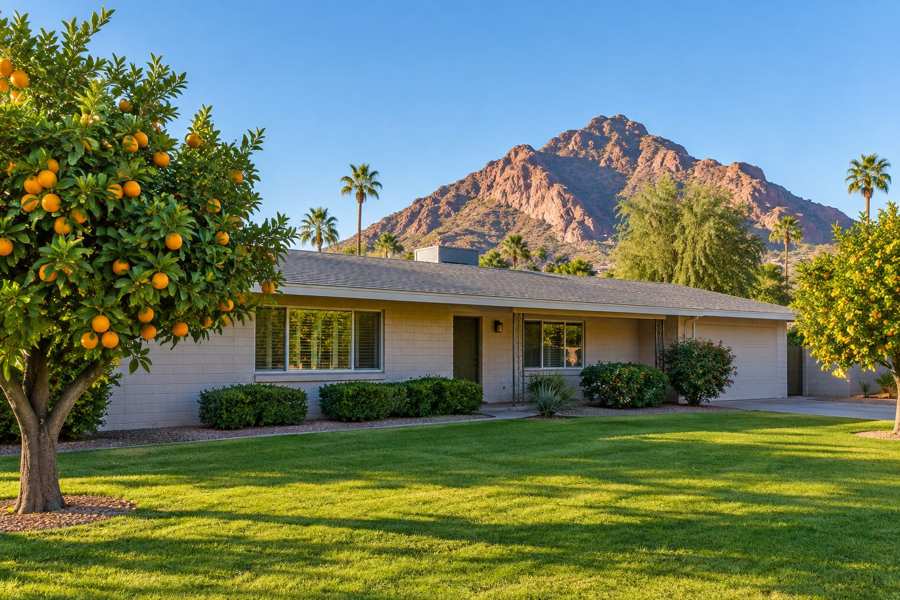
Your Arcadia house has a pool that needs attention, and you are deciding whether to repair it before seeking offers. Start by separating a reported defect, a safety requirement and a buyer's preferred upgrade. Phoenix's January 2026 barrier publication specifies a five-foot height for newly installed barrier fences. That requirement is not a complete compliance checklist or a rule for every Arcadia address, but it shows why the decision cannot be reduced to making the water look good.
This guide explains inspection scope, records, repair quotes, jurisdiction checks and written sale terms. It compares seller-completed work with a current-condition sale without diagnosing a leak, promising a pool premium or approving removal. Arcadia is a neighborhood label, so confirm the actual permitting authority before applying Phoenix guidance to your property.
What a Pool Repair Decision Means
A pool repair decision asks what is wrong, what work is required and whether completing it fits the sale plan. It is different from choosing cosmetic upgrades or assuming every buyer wants a pool. Define condition and safety questions first, then compare actual work costs with supported alternatives. The pool's appearance, age and installation expense do not by themselves establish its value or the seller's obligations.
Opendoor's pool-selling article recommends reviewing condition, maintenance records and relevant comparable properties before listing. It is a direct-buyer company's editorial guide, not an independent Arcadia valuation. Use its preparation ideas without adopting a promised price premium, a fixed inspection fee or its commercial certainty claims as facts about your sale.
NAR's pricing guide recommends accounting for location, condition and amenities in comparable-property analysis. A pool can be an amenity while its repair needs are a separate adjustment question. Ask the agent what actual comparable evidence supports the analysis rather than add the original installation bill to your preferred asking price.
Separate the choices: Maintaining normal operation, correcting a confirmed defect, addressing a safety requirement and redesigning the pool area are different scopes. Write each proposed project beside its purpose and evidence. A buyer who prefers a new finish has not necessarily identified the same problem as a specialist investigating water loss.
How to Find Out What the Inspection Covers
Ask what inspection service you are buying and which systems, tests and limitations it includes. A general home inspection may not cover the pool, and a visual pool inspection may not locate a concealed leak. Match the service to the question before relying on its findings. If the concern requires specialist testing, obtain that scope separately rather than treating a clean visual report as a guarantee.
The Arizona Department of Real Estate's January 2025 Buyer Advisory warns that a home inspector may exclude the pool or spa and that a separate inspection may be needed. It also urges readers to review inspection scope and excluded areas. A seller can use that same distinction when organizing evidence for a repair decision.
InterNACHI's pool standards describe a non-invasive visual examination and say it does not reveal every issue or predict future conditions. Its scope can be modified by agreement. The standard inspection is not a pool technical specialist's exhaustive investigation, so ask what additional service is appropriate for the actual concern.
Specific example: A visual report may identify an active leak in accessible above-ground equipment while not finding a leak in the pool shell or concealed piping. Ask the inspector and specialist what has been observed, what remains untested and what evidence supports the proposed repair. Do not advertise leak-free condition merely because a narrower inspection found no visible problem.
Why Safety and Condition Need Separate Review
Review physical condition, safety barriers and legal requirements as separate questions. A functioning pump does not establish barrier compliance, and a compliant barrier does not prove the shell or plumbing is sound. Confirm the applicable jurisdiction and obtain qualified review for each concern. Prioritize immediate safety needs through the appropriate professionals without pretending a sale inspection gives a complete legal or technical certification.
InterNACHI explicitly says its standard pool inspection does not determine market value, insurability or system life expectancy. It also excludes certain concealed and electrical investigations. That limitation matters when a seller is asked whether the inspection clears the pool for every buyer, lender and insurer; it does not.
Phoenix's barrier publication distinguishes approved barrier arrangements and says an installed, inspected and approved barrier must remain for the life of the pool. It also describes requirements for new or changed work. The actual address, existing approval and proposed change need city review; this guide does not classify your fence or approve an exception.
Comparison test: Keep a pump-repair quote, barrier-review result and cosmetic resurfacing proposal in different rows. That prevents an urgent correction from being delayed behind an optional upgrade and prevents a new finish from being sold as proof of safety. Ask the relevant professional which part of the decision each document answers.
| Question | Evidence | Limitation |
|---|---|---|
| Does the equipment function? | Appropriate inspection and service findings | Not proof of shell or concealed pipe condition |
| Why is water level changing? | Specialist diagnosis with defined testing | Appearance alone does not locate a leak |
| Does the barrier meet applicable requirements? | Actual jurisdiction and qualified compliance review | Not a complete operating-condition assessment |
| Would an upgrade improve the sale? | Scoped cost and relevant pricing evidence | No guaranteed cost recovery |
| What does the buyer require? | Actual agreement and lender confirmation where needed | Not automatically identical to legal safety duties |
Collect Records and Disclose Accurately
Gather the pool's available permits, service history, repair invoices and known condition information. Explain gaps rather than imply a complete approval or maintenance record you do not have. Ask the agent and attorney how known issues must be disclosed in the actual sale. Repairing one item does not authorize concealing its history, and a current-condition sale does not make accurate property information unnecessary.
Arizona's Buyer Advisory says a seller's disclosure obligation remains even when the parties agree that a Seller's Property Disclosure Statement will not be provided. It encourages buyers to verify concerns and review documents. Use that as a reason to handle known pool issues carefully with counsel, not as a substitute for deciding your particular disclosure duties.
NAR's preparation guide recommends obtaining significant-repair estimates even if the seller will not fix the item before selling. A written specialist estimate helps explain the scope of a known concern without presenting an unverified cost guess. Retain the actual findings and describe whether the proposed work has been completed.
Record set: Available construction and barrier approvals, service dates, equipment information, prior leak or repair findings and current reports. Mark missing records and any unresolved technical question. Do not write fully permitted, newly rebuilt or no leaks unless the appropriate evidence supports the statement for the actual pool and work.
Confirm the Barrier and Permit Path
Confirm which authority governs the address and what approval the proposed work requires before hiring for a barrier change, substantial alteration or removal. Phoenix guidance is useful only where it applies. Check state pool-safety notice responsibilities separately from local compliance. Do not infer that an older pool is exempt, a safety device substitutes for an approved barrier or a sale itself approves the work.
Phoenix's January 2026 publication says a new permit is required to enlarge, alter, repair, remove, convert or replace an existing approved pool barrier. Its pool-permit page lists application, barrier and survey resources. Ask Planning and Development to explain the proposed scope and actual permit path instead of borrowing a rule from another city's contractor advertisement.
Arizona's A.R.S. 36-1681 includes enclosure requirements, exceptions and a duty for a person selling or leasing a dwelling with a pool to provide the approved pool-safety notice to the buyer or lessee. Review that notice duty with your agent and attorney. Supplying a notice is not proof the physical property meets every applicable requirement.
Do not assume: A gate is approved because it closes, a temporary alarm replaces the barrier, or a prior installation date makes new work exempt. Phoenix's publication describes different arrangements and conditions, but this guide intentionally does not pick one for your house. Have the applicable authority and qualified professionals assess the existing setup and planned change.
Get Repair Quotes Before Choosing an Upgrade
Request a written diagnosis and scope before comparing bids. Separate necessary correction, routine service and optional appearance changes, and identify exclusions or possible concealed work. Ask how permits, access, timing and completion evidence will be handled. A lower price is not a useful comparison if it covers a different problem, while the most extensive replacement is not automatically the only defensible remedy.
NAR's preparation guide recommends determining the cost of major repairs even if they will remain a buyer's consideration. Apply that to the pool with a qualified specialist's estimate. Opendoor's article similarly suggests inspection and maintenance records before deciding whether to fix or price in condition. Neither source establishes a local contractor quote for your property.
Quote checklist: Finding, proposed remedy, labor and materials, exclusions, applicable permits, schedule, warranty and evidence of completion. Ask what could change the price and which test verifies success. If a quote says leak investigation only, do not present it as a fixed-price complete repair.
A hypothetical $3,000 equipment repair and a $15,000 redesign are not competing bids unless they solve the same problem. These invented amounts illustrate scope differences, not Arcadia costs. A seller may choose an upgrade for other reasons, but the guide supplies no evidence that such spending will return every dollar in a sale.
Compare Repairing With Selling in Current Condition
Compare the seller's documented cost, delay and remaining duties across the available routes. Completing defined work may reduce one uncertainty, while a current-condition sale can leave the buyer to manage agreed future work. Neither removes disclosure or applicable safety requirements. Keep the price and cost allocation in writing and ask whether the buyer's loan or insurance needs a correction before closing.
NAR's inspection guide explains that an inspection can inform repair discussions and that as-is practices depend on state and local law. Do not use the label to promise that every buyer or lender accepts a nonfunctioning pool. Have the actual contract and financing requirements reviewed before assuming a concession substitutes for required pre-closing work.
NAR's concessions guide says seller contributions are negotiated and limited by lender terms and state law. A proposed credit therefore needs the lender and settlement team's confirmation. It is not unrestricted repair cash, and its presence does not prove that the pool's condition is acceptable for the particular loan.
The CFPB explains that mortgage payoff includes interest through the payoff date and can differ from the current balance. Update the seller estimate if repairs change closing timing. NAR's listing guide separately says compensation is negotiable and governed by the actual agreement; a direct route does not automatically erase an existing obligation.
| Route | Cost evidence | Best fit | Limitation |
|---|---|---|---|
| Complete a defined correction | Scoped quote and documented delay costs | Verified problem with feasible work before sale | Hidden scope and cost recovery remain uncertain |
| List with accurate condition information | Actual pricing analysis and selling terms | Owner wants broader buyer comparison without optional upgrades | Buyer and lender requirements may still prompt negotiation |
| Negotiate a permitted concession | Agreed amount confirmed by lender and settlement team | Buyer can manage later work under accepted terms | May not resolve required pre-closing corrections |
| Compare a direct purchase proposal | Written price, allocation and condition terms | Owner wants another offer without a public preparation project | Buyer investigation and obligations require review |
Choose the Work That Changes the Decision
Choose after identifying which unresolved issue matters to the sale: safety, a technical defect, financing acceptance or optional appearance. Obtain that evidence and compare actual terms before committing to a large project. Document completed work and remaining questions. If a buyer requests more, review the new scope and agreement rather than assume every preference is necessary or that an earlier inspection settled everything.
NAR's multiple-offer guide recommends comparing price with contingencies and timing. Apply that to proposals involving a pool: an offer with a broad investigation right can differ from one with fewer unresolved steps. Read the completed agreement with counsel so a promised quick closing does not hide an open-ended repair condition.
NAR's appraisal guide says a valuation considers condition and amenities alongside comparable-property evidence. A specialist's repair invoice does not itself establish market value. Ask the agent what evidence supports the revised sale strategy and distinguish a completed repair from a guaranteed price increase.
Decision record: Actual jurisdiction, known findings, safety review, scoped quotes, chosen route, updated proceeds and agreed terms. Review the Platt Park occupancy framework if someone is renting the house; its Colorado law is not Arizona guidance. Pool work and occupant rights are separate questions requiring the relevant local review.
Frequently Asked Questions
These answers distinguish technical condition, safety review and purchase terms. The guide has not inspected your pool, determined the governing jurisdiction or approved a barrier exception. Use the actual reports, permits and signed agreement with qualified advisers. A useful decision addresses a supported issue without converting a service visit, a buyer preference or a general rule into a guarantee about the property.
Does my home inspection automatically include the pool?
Not necessarily; the Arizona Buyer Advisory says the pool or spa may be excluded. Confirm the actual scope and any separate service needed.
Does a visual inspection prove there is no leak?
No, a limited inspection may not find shell or concealed-piping leaks. Ask a qualified specialist what testing addresses the particular concern.
Must I resurface before selling?
This guide establishes no universal resurfacing duty. Separate condition findings, applicable requirements and optional appearance work before deciding.
Do Phoenix rules apply everywhere called Arcadia?
Do not assume that they do. Confirm the governing authority for the actual address and project.
Does giving a pool-safety notice prove compliance?
No, the notice duty and the physical compliance review are different. Have the applicable requirements assessed for the property.
Can I remove the barrier when marketing the pool?
Do not remove or alter an approved barrier without reviewing applicable requirements. Phoenix guidance says approved barriers must remain and describes permits for changes.
Can a credit replace every required repair?
Not automatically. Confirm the actual contract, lender and settlement requirements before agreeing to a contribution.
Will repairing the pool recover all my spending?
The guide supplies no guaranteed Arcadia return. Compare scoped cost with relevant pricing evidence and actual offers.
Can I fill the pool instead of fixing it?
That is a separate project needing review of approvals, technical scope and sale effects. Do not begin based only on a general cost guess or buyer preference.
How Maison Off-Market Reviews Pool Condition
Maison Off-Market describes a direct-purchase process that reviews the property before proposing price and timing. For a house with a pool, that creates another written offer to compare before undertaking optional sale preparation. Its review is not a pool inspection, permit approval or safety certification. Ask how condition, investigation and cost allocation are handled in the proposal, then review the actual obligations with your advisers.
The company's stated terms describe flexible dates, no commissions and no seller closing costs under its proposed purchase arrangement. It works with the owner's attorney or title company. Confirm the purchasing party, deposit and condition-review rights. Existing listing obligations, accurate disclosure and applicable safety requirements still need independent review.
Evidence available to compare: The written proposal and the work it actually leaves with the seller. No verified Arcadia pool-sale case study, saved repair amount or price premium is supplied here. The process creates a purchase option, not proof that the seller can ignore a defect or that every public-market buyer will require a renovation.
Compare your options before committing. Request a written private offer for your property, with no obligation, then weigh it against your listing plan.
Sources
- Arizona Department of Real Estate, Checked October 6, 2026. Buyer Advisory, January 2025. https://azre.gov/sites/default/files/2025-08/Buyer%20Advisory%20January%202025.pdf.
- Phoenix Planning and Development, Checked October 6, 2026. Pool Barrier Requirements, Revised January 2026. https://www.phoenix.gov/content/dam/phoenix/pddsite/documents/trt/external/dsd_trt_pdf_00144.pdf.
- City of Phoenix, Checked October 6, 2026. Residential Pool and Spa Permits. https://www.phoenix.gov/administration/departments/pdd/residential-building/resident-plan-reviews/pool-spa-permits.html.
- Arizona Legislature, Checked October 6, 2026. A.R.S. 36-1681 Pool Enclosures and Safety Notice. https://www.azleg.gov/ars/36/01681.htm.
- InterNACHI, Checked October 6, 2026. Pool and Spa Inspection Standards, Updated April 2025. https://www.nachi.org/internachi-pool-sop.htm.
- Opendoor Editorial Team, Checked October 6, 2026. How to Sell a Home With a Pool. https://www.opendoor.com/articles/how-to-sell-a-home-with-a-pool.
- NAR, Checked October 6, 2026. Home Inspections. https://www.nar.realtor/the-facts/consumer-guide-home-inspections.
- NAR, Checked October 6, 2026. The Appraisal Process. https://www.nar.realtor/the-facts/consumer-guide-the-appraisal-process.
- NAR, Checked October 6, 2026. Real Estate Contract Contingencies. https://www.nar.realtor/the-facts/consumer-guide-real-estate-contract-contingencies.
- NAR, Checked October 6, 2026. Consumer Guide: Seller Concessions. https://www.nar.realtor/the-facts/consumer-guide-seller-concessions.
- Consumer Financial Protection Bureau, Checked October 6, 2026. Payoff amount differs from current balance. https://www.consumerfinance.gov/ask-cfpb/what-is-a-payoff-amount-and-is-it-the-same-as-my-current-balance-en-205/.
- National Association of REALTORS, Checked October 6, 2026. Consumer Guide: What Goes Into Pricing Your Home. https://www.nar.realtor/the-facts/consumer-guide-what-goes-into-pricing-your-home.
- National Association of REALTORS, Checked October 6, 2026. Consumer Guide: Preparing to Sell Your Home. https://www.nar.realtor/the-facts/consumer-guide-preparing-to-sell-your-home.
- National Association of REALTORS, Checked October 6, 2026. Consumer Guide: Navigating Multiple Offers. https://www.nar.realtor/the-facts/consumer-guide-navigating-multiple-offers.
- National Association of REALTORS, Checked October 6, 2026. Consumer Guide: Listing Agreements. https://www.nar.realtor/the-facts/consumer-guide-listing-agreements.
Related research

Seller Guide · October 6, 2026
How to Prepare Point Pleasant Beach Rental Records Before Selling
Separate rental approval, income history and booked stays before comparing sale terms.

Seller Guide · October 6, 2026
How to Prepare Rumson Flood and Waterfront Records Before Selling
Separate flood disclosure, elevation, repairs and waterfront rights before comparing sale terms.

Seller Guide · October 6, 2026
How to Prepare Sarasota Condo Inspection and Reserve Records Before Selling
Separate building condition, reserve funding and resale documents before comparing sale terms.