Market Brief · by Aidan Sowa · October 5, 2026
What Does a Lake Ida South House Really Sell For Against Its Ask? Reading the Ask and the Sale
Reading the Ask and the Sale for Lake Ida South, FL, with each source dated and its limits noted, for owners weighing a listing against a direct sale.
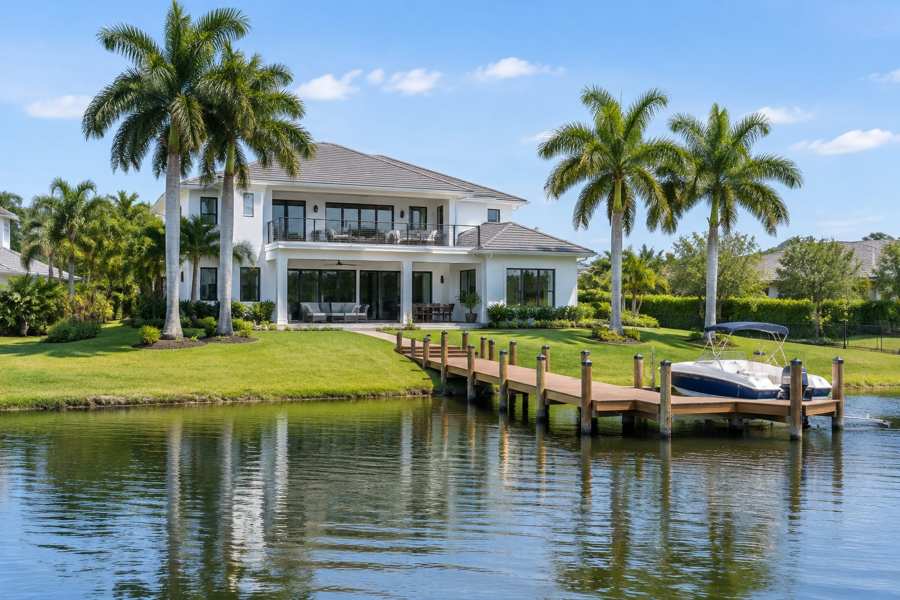
A listing portal puts the median asking price in the Lake Ida area of Delray Beach at $3,647,000, up 32.74% on the year. A local agent's guide, citing a Redfin page for March 2026, puts the median sale price at $2.65 million. The portal also reports 36 active listings, a median of 103 days on market (up 63.49%) and a price per square foot of $1,062.
The distance between the ask and the sale, about a million dollars, is the main fact in this market. The same guide says that sellers received 93% of their asking price on one report and 95.7% on another, and that homes took 103 to 106 days to sell. It also lists one sale that took 323 days and closed at 5% under list. A seller who prices at the median ask is pricing at a number the median buyer did not pay.
This brief reads the two sources side by side with the Census profile of the postal area that includes Lake Ida South and the South Florida metropolitan series. The local figures come from commercial pages, which call the area Lake Ida or Lake Ida Park, and are labeled so. The brief prices no house.
Key Findings
- A listing portal reported, as of its latest update, a Lake Ida Park median listing price of $3,647,000 (up 32.74% on the year and 21.97% over three years), $1,062 per square foot (up 9.94%), 36 active listings (down 10.53%), a median of 103 days on market (up 63.49%) and a median rent of $14,500 a month (Realtor.com, Lake Ida Park).
- A local agent's guide dated April 23, 2026 reported, citing a brokerage summary, 58 Lake Ida homes sold over the past year at an average asking price of $2,852,862 and an average selling price of $2,662,645, a 93% list-to-sell ratio, $692 per square foot, 106 days to sell and no association fees. It cited a Redfin March 2026 median sale price of $2.65 million, 103 days, 17 sales and a sale-to-list ratio of 95.7% (Cheran Marek, Lake Ida and Lake Eden).
- The same guide cited a Q4 2025 Delray Beach single-family median of $787,500, 63 days on market, a 10.7% listing discount and 442 listings, and a top-decile median of $2.9475 million in Q3 2025.
- In the Census postal area, 4,603 of 8,946 occupied homes (51.5%) are owner-occupied, median household income is $72,925 and the owner-estimated median value is $464,100 (U.S. Census Bureau, 2020-2024).
- The Miami-Fort Lauderdale-West Palm Beach median days on market rose from 74 in March 2026 to 85 in July (Realtor.com, days on market).
How wide is the gap between the ask and the sale?
The portal's median ask of $3,647,000 and the Redfin March median sale price of $2.65 million differ by $997,000, or 27.3% of the ask. The two do not cover the same set of homes. The ask describes the 36 homes on the market now, and the sale describes the 17 that sold in one month. The sale figure is one month's median of 17 prices, the ninth in the ranking, and it can move by hundreds of thousands of dollars with a different month.
The guide's annual figures are steadier. Across 58 sales in a year, the average asking price was $2,852,862 and the average selling price $2,662,645, a difference of $190,217, or 6.7% of the ask. That is the figure a seller can use to think about negotiation, and it is much smaller than the gap between the current median ask and the March median sale. It says that homes that sold had been priced near the market, and that the homes now listed are priced higher than the ones that sold.
The difference between the two gaps is the point. A median ask of $3.65 million is higher than the average asking price of the homes that sold in the last year by about $800,000. Either the current listings are a more expensive set, or sellers are asking more than they did, or both. The portal reports the median ask up 32.74% on the year, which suggests that a good part of it is higher asks.
For an owner, the practical reading is that asking prices have risen faster than selling prices, and that the homes that sold did so at around 93% to 96% of ask. A seller who sets a price from the current asks will start from a number that the recent sales do not support.
| Measure | Value | Source |
|---|---|---|
| Median listing price | $3,647,000 | Realtor.com |
| Average asking price, 58 sales in a year | $2,852,862 | Guide, brokerage summary |
| Average selling price, 58 sales in a year | $2,662,645 | Guide, brokerage summary |
| Median sale price, March 2026, 17 sales | $2.65 million | Guide, citing Redfin |
| List-to-sell ratio | 93% and 95.7% | Guide, two reports |
| Days on market | 103 to 106 | Realtor.com and guide |
Sources: Realtor.com page and Cheran Marek guide as cited. The gap figures are this brief's arithmetic. Commercial content; not independently verified.
What does 103 days and a 323-day sale tell a seller?
The portal reports a median of 103 days, up 63.49% on the year, which means that a year ago the median was about 63 days. The guide cites 106 days for the year and 103 for March. All three agree that the wait is about 100 days.
The guide gives examples of what the spread looks like. One home sold after 134 days at 8% under list, another after 175 days at 4% under list, a third at list price after 67 days, and one after 323 days at 5% under list. The addresses are given in the guide and are omitted here. Four sales are anecdotes, but they show a range of 67 to 323 days, almost five to one, among homes that all closed.
It also describes a home first listed at $3.795 million and repriced to $2.995 million, a cut of 21%, as it was marketed. The details are partly cut off in the page as retrieved, and this brief does not rely on them beyond the point that a large cut occurred.
For a seller, the lesson is that a median hides a wide range, and that a long wait is common even among homes that sell. A seller who needs to sell by a date should plan for the longer end, and a seller who can wait can price at the top of the range. The guide itself says that well-positioned homes are moving, while buyers pay close attention to value, condition and pricing discipline.
Sources: Realtor.com page and Cheran Marek guide as cited. Commercial content; not independently verified. Percentages of cuts are this brief's arithmetic.
Why does a small lake market need its own reading?
The guide describes Lake Ida and Lake Eden as two distinct micro-markets, and says that the difference matters when pricing a home. Lake Ida, in the guide's figures, sold 58 homes in the past year, while Lake Eden sold 11. Lake Eden's average selling price was $2,025,955 at $516 per square foot and 136 days, and Lake Ida's $2,662,645 at $692 and 106 days. Two lakes a short distance apart, with prices per foot that differ by a third, are different markets.
The guide also warns that the boundaries of the lakes overlap with the classifications of Delray Beach and Boynton Beach depending on the source. That is a reminder that a market defined by a name is only as good as the definition. A listing portal's Lake Ida Park, a brokerage's Lake Ida and the sheet's Lake Ida South may not enclose the same homes. A seller should confirm which streets are in a set of figures before using it.
The size of the market is the other limit. Fifty-eight sales in a year is about one a week, and seventeen in a month is a busy month. At that scale, a single sale of a very large estate can move an average by tens of thousands of dollars. The guide's average selling price of $2,662,645 is an average and not a median, and an average is more sensitive to the outliers than the median. The portal's price per foot of $1,062 against the guide's $692 shows the effect of different definitions: one is for current listings, the other for sales over a year.
The value of a lakefront home depends on features that no median captures: the width of the frontage, the depth of the water, whether the lake is open to boats, the age of the seawall and dock, the view and the lot. An owner who wants to understand the value of a particular property needs recorded sales of homes with comparable frontage, and a buyer who sees the property will weigh these features directly.
The no-association-fees point in the guide is also worth weighing. Buyers who choose a lake without fees accept responsibility for the upkeep of everything on the property, from the dock to the drainage. That is an advantage when the owner wants control, and a source of repair requests when a buyer's inspector finds the age of those items.
Source: Cheran Marek guide as cited. The discussion of micro-markets and lakefront features is this brief's reasoning and not a measured finding. Commercial content; not independently verified.
What does the Census say about the area around the lake?
The Census profile describes the postal area that includes Lake Ida and a much larger part of Delray Beach. It counts 22,737 people and 10,559 housing units, of which 8,946 are occupied. Owners live in 4,603 homes (51.5%) and renters in 4,343 (48.5%). Median household income is $72,925 and median gross rent is $1,696 a month.
The owner-estimated median home value is $464,100, with a margin of error of $34,419, or 7.4%. That figure is less than a fifth of the median ask for Lake Ida, which says plainly that the lake is a small, expensive pocket in a much more modest area. The medians for the area do not describe it, and a seller should not read them as a guide to value.
The homes in the area are of every age. The largest groups are the 1970s (2,092 homes) and the 1980s (1,946), and 1,663 homes (15.7%) were built in the 2000s. A total of 4,711 (44.6%) were built before 1980. The Census does not distinguish lakefront homes from the rest. The agent's guide notes that Lake Ida has no association fees, which is a feature of the area that buyers of newer communities do not get.
About 15.3% of the postal area's homes have no usual resident. In a lakefront market, many owners are seasonal, and a long wait means keeping a large property in order while away.
| Indicator | Value | Note |
|---|---|---|
| Population | 22,737 | Whole postal area |
| Housing units | 10,559 | All units |
| Owner-occupied homes | 4,603 | 51.5% of occupied |
| Renter-occupied homes | 4,343 | 48.5% of occupied |
| No usual resident | 1,613 | 15.3% of all units |
| Built before 1980 | 4,711 | 44.6% of units |
| Median household income | $72,925 | Estimate |
| Median gross rent | $1,696 | Monthly |
| Owner-estimated median value | $464,100 | Margin of error $34,419 |
Source: U.S. Census Bureau, American Community Survey 2020-2024 five-year estimates; Cheran Marek guide for the association-fee statement.
What should a lakefront owner prepare before choosing a route?
A lakefront home brings items that an inland home does not. The seawall, the dock, the boat lift, the lake-facing windows and the drainage to the water all age in a wet, sunny climate, and each is something an inspector or a marine surveyor will look at. A seller who knows their age and condition has the facts a buyer will ask for.
The guide cites sales in which the time on market stretched well beyond the median, and a repricing of 21% on one home. Those are the situations in which a seller's preparation matters. A home that is priced for its condition and presented clearly can sell close to the median wait, and a home that has been priced beyond the market waits, then cuts. With sale-to-list ratios of 93% to 95.7%, even the homes that sell give back several percent from the ask.
There are three paths. A seller can prepare and list publicly, accepting the wait and the negotiation. A seller can price to move quickly and give up some of the possible price. Or a seller can sell privately to a buyer who purchases as is, taking a single offer and avoiding the inspections, the repair requests and the public listing history of days on market.
The fifth benefit of a private sale, no inspections or repairs, carries particular weight here, because a marine structure is expensive to repair and hard to estimate. A buyer who is ready to take the structures as they are removes that uncertainty for the seller. None of the sources used here gives the costs, and the brief does not estimate them.
Whichever path is chosen, the owner should gather the same documents: permits for the dock and seawall, flood and insurance history, a survey, and the dates of the roof and the air conditioning. They are useful to any buyer, and having them ready shortens any process.
Source: Cheran Marek guide and Realtor.com page as cited. The description of lakefront inspection items is general knowledge and not a figure from any source here.
How should a seller use the 93 percent figure?
The guide reports a list-to-sell ratio of 93% from one report and a sale-to-list ratio of 95.7% from Redfin for March. The two are close but not the same, and the difference comes from definitions: one compares the final sale with the original asking price, the other can compare it with the last asking price after cuts. A home that cut its price and then sold at the new price has a high ratio on the second measure and a lower one on the first. The guide does not say which is which.
The first measure is the more useful for a seller deciding where to start. A ratio of 93% on the original ask means a typical seller gave up 7% from the first price. On a $3,647,000 ask, that is about $255,000, though it is arithmetic on a median ask and a rounded ratio, not a recorded loss. The second measure, 95.7%, gives up 4.3%, or about $157,000. Either way, the figure is in the range of what a seller might otherwise pay in fees, and a seller can compare it with the net of a private sale.
There is a further point about time. The ratio is measured on homes that sold, so it leaves out the homes that did not. A home that sat for a year and was withdrawn does not appear in it. The ratio therefore describes the success stories, and a seller's risk includes the chance of not being among them. That is true of every market, and it is more important in one with a median wait of 103 days and a tail of 300.
For a seller who values a quick close, a ratio of 93% to 96% and a wait of three months suggest a plan: price near the recent sales, prepare the home and documents, and accept that the first offer may come after the first month. For a seller who values privacy or a fixed date more than the last few percent of price, a private sale is the other plan.
Source: Cheran Marek guide as cited. The dollar figures are this brief's arithmetic (7% and 4.3% of $3,647,000), not recorded sales. Commercial content; not independently verified.
What does the South Florida clock say?
Realtor.com's series for the Miami-Fort Lauderdale-West Palm Beach area, published by the Federal Reserve Bank of St. Louis, show a slowing market. The median days on market was 74 in March 2026, 77 in April, 79 in May, 82 in June and 85 in July. Active listings were 43,929 in May and 41,277 in September (Realtor.com, active listings).
The median listing price slipped from $499,000 in May to $490,000 in September (Realtor.com, median listing price). The count of reduced listings fell from 10,942 in March to 8,810 in July (Realtor.com, price reduced listings), which moved with the number of listings.
The guide's Delray figures are from the broader market: a Q4 2025 single-family median of $787,500, a 10.7% listing discount and 63 days on market. The lakefront wait of 103 is well above that, which fits a market of a few expensive sales.
None of these series describe Lake Ida South itself. They give the setting. Readers comparing markets can also read the Downtown Delray brief and the Bella Collina brief.
Source: Realtor.com via FRED, Housing Inventory series for Miami-Fort Lauderdale-West Palm Beach, FL (CBSA); Cheran Marek guide as cited.
What would a private sale change for a Lake Ida owner?
A direct sale to a buyer who purchases homes off the market changes five things for a seller. There are no showings and no neighbors talking about you selling, which matters on a lake where every house is visible from every other. The closing date can be flexible, giving time to find a new home. There are no commission costs and no closing costs for the seller. And there are no inspections or repairs, which for lakefront property can include docks, seawalls and roofs.
The fee benefit requires no assumed rate. For every 1% of a sale price that would otherwise go to fees, a sale at $2,662,645 keeps $26,626, a sale at $2,650,000 keeps $26,500 and a sale at $3,647,000 keeps $36,470. An owner can apply whatever percentage is in a listing agreement and compare net proceeds.
The cost of the gap between ask and sale matters here as well. If a home sells at 93% of its ask, as the guide reports, a seller who listed at $3,647,000 would receive about $3,391,000. A private offer with no negotiation after an inspection avoids the step from the first price to the last.
The trade-off is the usual one. A public listing can reach the buyer who values this particular lake, and in a market of a few sales a year, that buyer matters. A private sale offers privacy, a settled date and no repairs. The owner decides.
An owner who has not decided can treat a private offer as a data point. It costs nothing to ask, carries no obligation, and gives a number tied to the actual property and not to a median of a few sales that may not resemble it.
Source: calculation from stated prices; no commission rate, closing cost or repair cost is assumed. The $3,391,000 figure is arithmetic (93% of $3,647,000), not a recorded sale.
Methodology and limitations
Prices, price per square foot, days on market, listing counts and sale-to-list ratios for Lake Ida come from two commercial sources, a listing portal and a local agent's guide that cites a brokerage summary and Redfin. They were not independently verified, and each uses its own definition of the area.
Age, tenure, vacancy, income, rent and owner-estimated value come from the American Community Survey 2020-2024 five-year estimates for the postal-code area that includes Lake Ida South. The area is much larger than the lake. Shares are calculated from published counts, and owner-estimated value carries a stated margin of error.
Days on market, active listings, median listing price and price reduced counts are Realtor.com series published by the Federal Reserve Bank of St. Louis for the Miami-Fort Lauderdale-West Palm Beach metropolitan area. The brief makes no forecast and does not estimate what any particular home would sell for.
Conclusion
The Lake Ida record shows a market in which asking prices have run ahead of selling prices, buyers pay 93% to 96% of the ask, and a typical sale takes over three months, with a long tail.
It does not fix a price for any one home. The choice between a public listing and a private sale comes down to whether an owner values the chance of competing bids more than privacy, a flexible closing date, no commission, no closing costs and no inspections or repairs.
Frequently Asked Questions
What is the median asking price at Lake Ida?
A listing portal reports $3,647,000, up 32.74% on the year.
What do Lake Ida homes sell for?
A local guide reports an average selling price of $2,662,645 over a year and a March 2026 median sale price of $2.65 million.
How long do Lake Ida homes take to sell?
Sources report 103 to 106 days, with one example at 323.
Does the South Florida data describe Lake Ida?
No. It covers three counties and shows direction only.
Does a private sale always beat a public listing?
No. A public listing can attract competing bids. A private sale offers privacy, a flexible closing date, no commission, no closing costs and no inspections or repairs.
Compare your options before committing. Request a written private offer for your property, with no obligation, then weigh it against your listing plan.
Sources
- Realtor.com, 2026. Lake Ida Park in Delray Beach, FL Housing and Rental Market. https://www.realtor.com/local/market/florida/delray-beach/lake-ida-park.
- Cheran Marek, 2026. Lake Ida and Lake Eden Market Trends for Luxury Homes. https://cheranmarek.com/blog/lake-ida-and-lake-eden-luxury-home-market-trends-explained.
- U.S. Census Bureau, 2026. American Community Survey 2020-2024 five-year estimates, the Lake Ida South area (via Census Reporter). https://censusreporter.org/profiles/86000US33444-33444/.
- Realtor.com, 2026. Housing Inventory: Median Days on Market in Miami-Fort Lauderdale-West Palm Beach, FL (CBSA). https://fred.stlouisfed.org/series/MEDDAYONMAR33100.
- Realtor.com, 2026. Housing Inventory: Active Listing Count in Miami-Fort Lauderdale-West Palm Beach, FL (CBSA). https://fred.stlouisfed.org/series/ACTLISCOU33100.
- Realtor.com, 2026. Housing Inventory: Median Listing Price in Miami-Fort Lauderdale-West Palm Beach, FL (CBSA). https://fred.stlouisfed.org/series/MEDLISPRI33100.
- Realtor.com, 2026. Housing Inventory: Price Reduced Count in Miami-Fort Lauderdale-West Palm Beach, FL (CBSA). https://fred.stlouisfed.org/series/PRIREDCOU33100.
Related research
Seller Guide · October 6, 2026
How to Prepare Point Pleasant Beach Rental Records Before Selling
Separate rental approval, income history and booked stays before comparing sale terms.
Seller Guide · October 6, 2026
How to Prepare Rumson Flood and Waterfront Records Before Selling
Separate flood disclosure, elevation, repairs and waterfront rights before comparing sale terms.

Seller Guide · October 6, 2026
How to Prepare Sarasota Condo Inspection and Reserve Records Before Selling
Separate building condition, reserve funding and resale documents before comparing sale terms.