Trend Analysis · by Aidan Sowa · October 5, 2026
Is the West Meade Discount Really Closing? Reading the Ranch Lots, the Teardown Math and the Fight Over Trees
Reading the Ranch Lots, the Teardown Math and the Fight Over Trees for West Meade, TN, with each source dated and its limits noted, for owners weighing a listing against a direct sale.
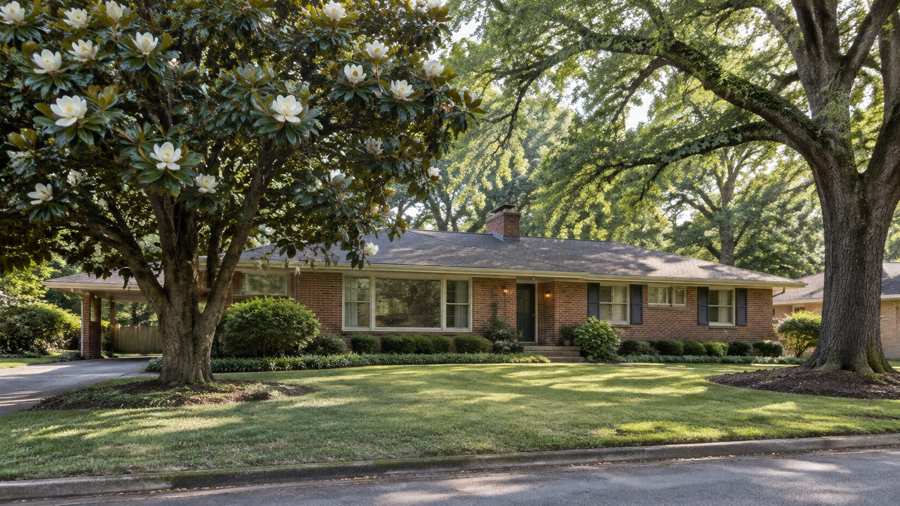
A relocating buyer who looks at West Meade on a spreadsheet tends to see the same thing: a neighborhood between Belle Meade and Bellevue, with lots of an acre or more, a housing stock full of mid-century ranches, and an obvious plan to buy one, tear it down or gut it, and build something that would cost twice as much two streets over. That arithmetic used to be simple. A local agent writing in September 2026 argues it still works, but that the discount is smaller than it looks, and that the newest variable is not a mortgage rate. It is a fight over trees (a Nashville agent, September 3, 2026).
This report lays out what the public record shows about West Meade's ranches and lots, what they cost at each rung, what a teardown involves, and how the Nashville market is moving. It uses the Census count of owners and renters in the postal area that includes West Meade, two local market summaries and the Nashville listing series. It closes with what a private direct sale changes for an owner of an older ranch.
The usual limits apply. The neighborhood figures are brokerage summaries and were not re-pulled from the multiple listing service. The Census describes a postal area that also holds Belle Meade. The tree dispute is one reported incident and not a count.
Key Findings
- West Meade's oversized lots trace to 1944, when part of the old Belle Meade Plantation was sold to investors who formed West Meade Farms, Inc. The farms became post-war ranch homes on parcels that often run close to an acre or more.
- Active listings averaged $2,625,510 at $498 per square foot in May 2026 and $2,251,824 at $453 in June, according to the agent's summary of two snapshots.
- A second source reports 78 closed sales in a rolling twelve months, a median price of $1,400,000, a median lot of 1.04 acres, original ranches from $544,800 and new estates up to $8,500,000 (a Nashville brokerage, 2026).
- Of the 11,753 occupied homes in the postal area, 7,969 are owner-occupied and 3,784 rented, and only 888 of 12,641 units (7.0%) have no usual resident (U.S. Census Bureau, 2020-2024).
- The Nashville metropolitan median listing spent 62 days on the market in September 2026, up from 52 in May (Realtor.com, days on market).
Where does the ranch stock come from?
West Meade's large lots are not a recent zoning outcome. According to the September 2026 article, they trace back to 1944, when the children of Justice Howell Edmunds Jackson sold the western portion of the old Belle Meade Plantation to a group of Nashville investors led by E.A. Wortham and Brownlee O. Currey. The investors incorporated the land as West Meade Farms, Inc. and planned to carve part of a 1,700-acre tract into small farms.
The farms disappeared decades ago, replaced by the wave of post-war ranch houses that make up most of the neighborhood's stock today. That history is why so many parcels run close to an acre or larger, and why the pitch to renovate a ranch or build a dream home on the lot has become a familiar template on West Meade listings. The bones of the neighborhood were laid out for that kind of second act.
The Census supports the age picture, though at a wider scale. In the postal area that includes West Meade and Belle Meade, 8,288 of 12,641 housing units (65.6%) were built before 1980, and the median year built is 1971. The 1950s and 1960s alone account for 4,205 units. The tables do not say how many are ranches, and they do not separate West Meade from its neighbor.
For a seller of an original ranch, the history means that the house is often the smaller part of the value. The lot, with its size and mature trees, is what a rebuilder is buying, and what a renovator wants to keep.
What does each rung of the West Meade ladder cost?
The September article gives a ladder of entry points for 2026. A vacant lot of 0.9 to 1.1 acres runs $400,000 to $700,000, land only, with buildability depending on slope, frontage and zoning status. A mid-century ranch in original condition, a 1950s to 1970s structure and a teardown or gut-renovation candidate, runs $500,000 to $1.2 million. A renovated or updated ranch runs roughly $1 million to $2.5 million or more. New construction or a luxury rebuild averages $2.25 million to $2.6 million, at $453 to $498 a square foot.
The second source, a Nashville brokerage's neighborhood page, fills in the middle. It reports 78 closed sales in a rolling twelve months, a median price of $1,400,000 and a median lot of 1.04 acres, with original ranches from $544,800 and new estates up to $8,500,000. Its figures are labeled verified closed sales, though they were not independently checked here.
The agent's summary of active listings shows how the top rung moved. In May 2026 the average listing price was $2,625,510 at $498 a square foot. By June it had settled to $2,251,824 at $453. The two snapshots use different sampling windows, and the article's point is that the range is high in both: West Meade in 2026 is not priced like a discount neighborhood. It is priced like Belle Meade's less expensive cousin.
For context, the article says Belle Meade's median sale price sits at $2.85 million, up 4.1% from a year earlier, so West Meade's average list price is not far behind that median. The gap that once made West Meade the obvious value play has narrowed, in the article's reading. Buyers need to look past the average to the entry points above.
| Entry point | Typical price range | What it is |
|---|---|---|
| Vacant lot, 0.9 to 1.1 acres | $400,000 to $700,000 | Land only; buildability depends on slope, frontage and zoning |
| Mid-century ranch, original | $500,000 to $1.2 million | Teardown or gut-renovation candidate |
| Renovated or updated ranch | $1 million to $2.5 million or more | Turnkey, character preserved |
| New construction or luxury rebuild | $2.25 million to $2.6 million average | $453 to $498 per square foot |
Source: a Nashville agent's September 3, 2026 article; a Nashville brokerage's West Meade neighborhood page.
How long does a teardown take, and why does it matter to a seller?
The September article says a full teardown-to-move-in project in West Meade typically runs 12 to 24 months once demolition, plan review and construction are counted. That is a long time for a buyer to carry a purchase, and it affects what such a buyer can pay. A buyer who expects to spend a year and a half on a project, with interest and taxes running, will count those costs against the price offered for the ranch.
The same arithmetic favors a buyer who has done the work before. A builder or investor who knows the plan-review process, has crews lined up and can hold the property through the project can bid with more confidence than an individual owner-occupier. The article does not say so directly, but it is a consequence of its numbers.
For the seller of an original ranch, there are two kinds of buyer, then: the owner-occupier who wants to renovate and live in the house, and the builder who wants the lot. Their offers rest on different parts of the property. A public listing will meet both, in an unknown order, and the seller will not know which offer is stronger until each has gone through inspection and financing.
A direct buyer who evaluates the property as it stands and states a price up front gives the seller a single clean comparison. It does not replace a listing, but it fixes a floor under the choices.
Source: a Nashville agent's September 3, 2026 article.
What does a fight over trees have to do with value?
The article opens with a reported incident. Last year, a West Meade homeowner watched a crew clear-cut a stand of trees on a neighboring lot before anyone had pulled the right permits. A local television station covered it, and a stop-work order landed on the property, but the trees were already down, some estimated at 80 to 90 years old and possibly nearly a century. A member of the West Meade Neighborhood Association pointed out that a single mature tree can hold back up to 100 gallons of stormwater a day.
On a spreadsheet the incident looks like a footnote. The article argues that it is the leading edge of something that changes what a good deal means: a zoning fight that is being organized street by street. Large lots with old trees are the neighborhood's main asset, and they are also what a builder has to clear to build a larger house.
The article does not describe a specific rule, and this report does not guess at one. The point for a seller is that the rules for removing trees and for building on large lots may change, that neighbors are paying attention, and that a buyer who plans to clear a lot takes on a risk of delay or objection. That risk reduces what a rebuilder will pay, and it makes a buyer who intends to keep the trees more attractive.
An owner with a lot of mature trees should therefore document them, since a buyer who values them will want to know what is there. An owner who plans to sell to a rebuilder should ask the city about permit rules before assuming that a clear lot is available.
Source: a Nashville agent's September 3, 2026 article, which cites a local television report; the report itself was not independently reviewed.
Who owns the homes, and what does it say about turnover?
The Census counts 12,641 housing units in the postal area that includes West Meade, with 11,753 occupied by a usual resident. Of those, 7,969 (67.8%) are occupied by their owners and 3,784 are rented. Only 888 units have no usual resident, 7.0% of the total, so this is an area that is lived in all year and not a market of second homes.
Median household income is $139,152 and median gross rent is $1,920 a month. The Census median owner-estimated home value is $953,300, with a margin of error of $61,117. That figure covers a wider area than West Meade, including many apartments and smaller houses, and it sits well below the $1.4 million sale median the brokerage reports for West Meade itself.
A district where two thirds of occupied homes are owner-occupied and many have been held for decades is one where a sale is usually a personal decision. Neighbors know each other, and a sign in the yard is news. For some owners that is a reason to prefer a quiet sale, and for others it is a reason to list widely. The data cannot say which is more common.
Source: U.S. Census Bureau, American Community Survey 2020-2024 five-year estimates, tables B25003, B25034, B25077, B19013 and B25064, the postal-code area that includes West Meade.
What does the Nashville market say about timing?
The Nashville metropolitan median for days on market was 52 in May 2026, 53 in June, 58 in July, 60 in August and 62 in September, a rise of 10 days or 19.2% over the period. Active listings rose from 11,374 in May to 12,191 in July and then held near 12,150 to 12,200. The median asking price stayed close to $539,900 until it fell to $533,995 in September, a decline of 1.1% from August (Realtor.com, active listings).
These figures cover the whole metropolitan area and every price level, so they say little about a West Meade ranch. They suggest that the typical Nashville home is taking ten days longer to sell than in spring and that the stock has stopped growing. The Tennessean reported on September 30, 2026 that Davidson County's new-construction listings were asking a median $644,900 against $499,000 for existing homes, and that new homes sold in August had spent an average of 85 days on the market against 62 for existing ones (The Tennessean, September 2026).
The relevance to West Meade is the premium. A buyer weighing a new house against an older ranch with a lot sees the same gap, and that gap is what a rebuilder is trying to capture. When new homes take longer to sell, as they did in August, the margin on a teardown project becomes less certain, and the price a rebuilder will pay for the ranch can fall with it.
Source: Realtor.com via FRED, Housing Inventory: Median Days on Market and Active Listing Count, Nashville-Davidson--Murfreesboro--Franklin, TN (CBSA); The Tennessean, September 30, 2026.
What should a ranch owner check before choosing a route?
An owner of an original ranch on a large lot has a few facts that decide which buyers will bid. The first is the exact lot size and shape, since a flat acre with a straight frontage supports a different house from a sloped one. The second is the number and condition of the mature trees, which will matter both to a buyer who wants to keep them and to one who has to work around them. The third is the condition of the house: roof, heating, wiring and plumbing for a house of the 1950s to 1970s.
The fourth is the zoning status that the agent's table mentions as a factor in whether a lot can be built on. An owner can ask the city planning office what rules apply to the lot and whether any change is pending. A buyer will ask the same question, and a seller who already has an answer saves time.
With those facts the owner can place the house on the ladder in the table above. A ranch in original condition is a teardown or gut-renovation candidate at $500,000 to $1.2 million in the agent's summary, and an owner who has renovated falls higher. The sale route should then follow what the owner wants: the best price, the quickest closing or the least disruption.
The data in this report cannot choose for the owner. They can show that the neighborhood's values are high, that the Nashville market has slowed, and that the process of rebuilding is long. An offer in writing, from more than one kind of buyer, is the only way to see what a particular lot is worth. Readers comparing markets can also read the Belle Meade brief and the Brentwood brief.
What does a private sale avoid for the owner of a ranch?
A public sale of an original ranch means showings, an inspection of a house that is probably sixty or seventy years old, and repair requests from buyers who are mostly pricing a rebuild. It also means a listing that is visible to every neighbor in a district where trees and building plans are already a matter of local argument. A direct private sale to a buyer such as Maison Off-Market changes each of those, and the differences are the five benefits that owners most often value.
The first is privacy: no showings, and no neighbors talking about you selling. The second is a flexible closing date, giving the owner time to find a new home. The third is no commission, the fourth is no closing costs, and the fifth is avoiding inspections and repairs, so the ranch is bought as it stands.
The first of those can be sized without assuming a rate. Each 1% of the $1.4 million median sale price reported for West Meade is $14,000. Each 1% of the $544,800 starting price for an original ranch is $5,448. A commission at any ordinary rate is a multiple of those amounts. These are round-number illustrations and are not a quote or an offer.
The tradeoff is real. A public listing of a ranch on a one-acre lot can draw competing offers from rebuilders and renovators, and the price might exceed a single private bid. An owner who is confident of that and has no deadline should consider listing. An owner who values privacy, certainty and no repairs has a reason to ask for a private offer first.
Methodology and limitations
Tenure, income, rent, housing age and owner-estimated value come from the American Community Survey 2020-2024 five-year estimates, tabulated for the postal-code area that includes West Meade and Belle Meade. The area is wider than West Meade, so the figures describe the area and not the neighborhood alone. Percentages are rounded to one decimal place. Margins of error are those published by the Census Bureau at the 90% confidence level.
Days on market, active listings and median listing price are Realtor.com series published through the Federal Reserve Bank of St. Louis for the Nashville-Davidson--Murfreesboro--Franklin metropolitan area. New-listing and price-reduction series were not available in the open data used. The new-versus-existing figures are from The Tennessean's September 30, 2026 report on Davidson County.
The West Meade history, price ladder, listing averages, tree incident and teardown timeline are quoted from a Nashville agent's September 2026 article and a Nashville brokerage's neighborhood page. They are marketing content by firms that earn fees from sales and were not independently verified. The report makes no forecast and does not estimate what any particular house would sell for.
Conclusion
For an owner in West Meade, the public record supports a short list of conclusions. The neighborhood's large lots and ranch houses come from a 1944 land sale, listing prices in 2026 are well above what a discount neighborhood would show, a teardown takes a year or two, trees have become a point of neighborhood conflict, and the Nashville market is slower than it was in spring.
It does not support a price for any one ranch, and it does not support a forecast. An owner of an original ranch should keep in mind that the lot is often the larger part of the value, that a rebuild takes a year or two, and that documenting the trees and the zoning status makes any conversation with a buyer shorter and firmer. The choice between a public listing and a private sale comes down to how much an owner values a possible higher price against privacy, a flexible closing date, no commission, no closing costs and no inspections or repairs. Any owner can test these points by asking for written terms from more than one buyer, such as a builder and a renovator, and comparing the net amount, the closing date and the conditions side by side, which is the clearest way to see what a ranch on a large lot is worth to real buyers. A written offer also fixes a floor, so that a later listing, if the owner chooses one, starts from a known number.
Frequently Asked Questions
Why is West Meade not a discount neighborhood any more?
According to one local agent, average listing prices in 2026 are close to Belle Meade's median sale price, so the gap has narrowed. This is the agent's reading and not a measured trend.
Do the Census figures describe only West Meade?
No. They cover a postal area that also holds Belle Meade and surrounding blocks.
Is there a city rule on removing mature trees?
The sources used here do not describe one. An owner should ask the city before assuming that a lot can be cleared.
Why are there no price-reduction figures for Nashville?
The Realtor.com price-reduction series was not available in the open data used. The report does not estimate it.
Does a private sale always beat a public listing?
No. A public listing can attract competing bids and sometimes a higher price. A private sale offers privacy, a flexible closing date, no commission, no closing costs and no inspections or repairs, in exchange for a single offer.
Compare your options before committing. Request a written private offer for your property, with no obligation, then weigh it against your listing plan.
Sources
- Nashville agent (Angela Peach), 2026. The West Meade Discount Is Shrinking, and a Fight Over Trees Explains Why. https://angelapeach.com/blog/the-west-meade-discount-is-shrinking-and-a-fight-over-trees-explains-why.
- Nashville brokerage (Nashville Home Guru), 2026. West Meade: Best Estate-Lot Neighborhood in Nashville TN. https://nashvillehome.guru/west-meade-real-estate/.
- U.S. Census Bureau, 2026. American Community Survey 2020-2024 five-year estimates, the West Meade area (via Census Reporter). https://censusreporter.org/profiles/86000US37205-37205/.
- Realtor.com, 2026. Housing Inventory: Median Days on Market in Nashville-Davidson--Murfreesboro--Franklin, TN (CBSA). https://fred.stlouisfed.org/series/MEDDAYONMAR34980.
- Realtor.com, 2026. Housing Inventory: Active Listing Count in Nashville-Davidson--Murfreesboro--Franklin, TN (CBSA). https://fred.stlouisfed.org/series/ACTLISCOU34980.
- The Tennessean, 2026. Nashville home prices: How new homes compare with existing properties. https://www.tennessean.com/story/money/real-estate/2026/09/30/nashville-home-prices-new-existing-properties/92024090007/.
Related research
Seller Guide · October 6, 2026
How to Prepare Point Pleasant Beach Rental Records Before Selling
Separate rental approval, income history and booked stays before comparing sale terms.
Seller Guide · October 6, 2026
How to Prepare Rumson Flood and Waterfront Records Before Selling
Separate flood disclosure, elevation, repairs and waterfront rights before comparing sale terms.
Seller Guide · October 6, 2026
How to Prepare Sarasota Condo Inspection and Reserve Records Before Selling
Separate building condition, reserve funding and resale documents before comparing sale terms.