Seller Decision · by Aidan Sowa · October 6, 2026
Should a Port Royal Seller Repair the Seawall Before Seeking Offers? Reading the Condition, the Permits and the Buyer Terms
An older waterfront wall raises separate questions about its condition, the work allowed and the terms a buyer will accept.
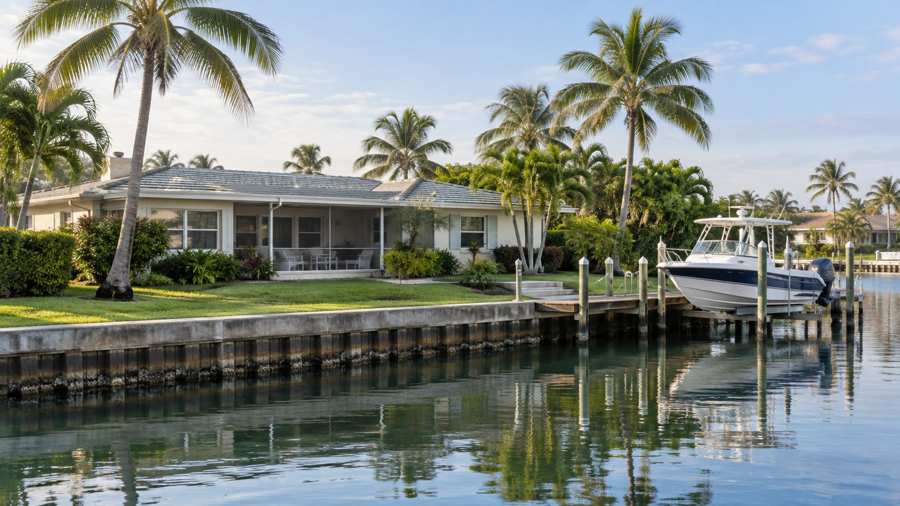
Should I repair the seawall at my Port Royal house before I ask buyers for offers? It is a seller question worth separating into smaller decisions. The wall may look old, but appearance alone does not establish the work needed. A repair may be practical, but its scope and approvals still need review. And a buyer may accept a house as it stands while placing conditions on the price or closing. Treat those as separate questions rather than jump straight to a repair budget.
Real homeowners ask related questions before they commit to waterfront property. In one discussion, a prospective lakeside buyer described a deteriorated wooden wall and wanted a quote before purchasing. In a Florida discussion, another buyer asked about repairing a canal seawall and finding a company to do the work. The accounts are unverified and neither describes Port Royal. They supply question context: buyers can focus on the shoreline structure as well as the house. Their comments do not supply engineering advice, Naples requirements or reliable repair prices.
This Port Royal brief uses the City of Naples' own marine-work and riprap guidance, its current Building page and Florida Sea Grant's shoreline education. It does not inspect a parcel, recommend a design or promise that repairs will increase the sale price. The aim is to help a seller establish the property's condition and records, obtain the right advice and compare written offers without hiding an unresolved seawall question.
Key Findings
- Naples' Dredging page states that marine permits are required for construction or repair of docks, boat lifts, pilings, seawalls and riprap. A seller should ask the city how that guidance applies to the actual work proposed rather than assume a small-looking repair is exempt.
- The city's Riprap page says seawalls and revetments must be kept in good repair and describes riprap at the base of new and repaired seawalls on natural waterways. It says staff determine whether proposed work is on a manmade canal or natural water body. The neighborhood name alone does not make that determination.
- Naples' Building page says applications submitted on or after December 31, 2023 must comply with the eighth edition Florida Building Code. A separately published forms page is expressly limited to the earlier edition. Confirm the current application route rather than use an older packet because it appears in a search.
- Florida Sea Grant explains that shoreline design starts with site analysis, including elevation, erosion, waves, vegetation and soil. That supports asking for a property-specific assessment, not choosing a wall or living shoreline from a general illustration.
- The postal-area survey counts 9,984 housing units, with 5,125 built before 1980. It does not record seawall ages, repair needs or the price effect of marine improvements. Compare the actual scope, timing and offer conditions before deciding whether to repair first or sell with the issue documented.
Is this a condition question, a records question or both?
Begin with what you actually know. Do you have an assessment that identifies a problem, or only a concern based on visible age? Are there records of construction and later repairs? Has a contractor proposed a defined scope? Those facts lead to different conversations. A seller should not announce that a wall needs replacement merely because it is old, and should not describe it as sound simply because it has stood through previous seasons.
Record observations without turning them into a diagnosis. Photographs and a dated note can help a qualified professional understand the concern, but they are not a structural opinion. Keep the original assessment if one exists and note its date and scope. Was it an evaluation of the seawall alone, or did it include a dock, boat lift and adjacent ground? A report about one improvement should not casually be represented as clearance of everything along the waterfront.
Gather available permits, drawings, inspection records, invoices and earlier reports. Each tells a different part of the history. A construction drawing may describe the intended design; an invoice may describe billed work; an inspection record may show a completed stage. None should be substituted for all the others. If the documents do not establish when the wall was built or what a later repair included, make that gap visible rather than invent a reassuring history.
Ask the relevant professional to distinguish immediate concerns from work that is elective or can be planned. This article makes no safety judgment about any wall. If an assessment identifies a hazard, the owner should address access and urgent responsibilities with qualified advice rather than use a sale plan as a reason to defer them. A comparison of offers comes after understanding the condition, not in place of that understanding.
A property file can be useful even if the family has not decided to sell. Organize the evidence so that a later buyer or adviser receives the same underlying information. Avoid a folder whose only summary is a seller's description of what the contractor supposedly said. The actual written finding, its limits and any unanswered questions are more useful than a simplified claim that the seawall is either completely fine or completely unusable.
What does the City of Naples say about marine work?
The city's Dredging page says a marine permit is required for construction or repair of docks, boat lifts, pilings, seawalls or riprap. It separately explains a petition process for dredging on a natural water body before the marine-permit application. Those are different activities. A seller considering a seawall repair should not assume the dredging petition requirement applies to every repair, or that a seawall approval automatically covers a dredging proposal. Ask the city to identify the applicable scope.
The Riprap page says construction or repair of riprap requires a marine permit from the Building Department. It also says seawalls and revetments must be kept in good repair. It describes riprap being placed at the base of new and repaired seawalls on natural waterways under the cited city ordinance. This is local guidance relevant to a shoreline conversation, not a finding that your existing wall needs a particular treatment.
Both pages explain that city staff determine whether proposed activities occur in a manmade canal or a natural water body after receiving an application or during a pre-application consultation. That classification should be tied to the actual site. A seller should not decide it from a neighborhood reputation, a view of the water or the way a previous owner described the parcel. The official answer can affect what is asked of the proposed project.
The city also publishes separate guidance for construction seaward of the Coastal Construction Control Line. It describes a coastal setback permit for specified activities, including repair of shoreline protection structures, in that area. This brief has not established whether any particular Port Royal parcel lies within that line. Do not treat the coastal rule as universal for the neighborhood or ignore it merely because a wall already exists. Have the location and proposed activity checked.
Keep a written list of which authorities and approvals the proposed work needs. The city's page is a starting point, not a complete determination about state, federal or other requirements at the property. Ask the professional preparing the project to explain those dependencies and identify the documents relied on. A sale contract should not promise finished work by a fixed date while the necessary scope and review route remain unresolved.
Why do current forms and the actual site matter?
Search results can produce a city page labeled Permit Application Forms, seventh edition. That page expressly says its forms are for permits applied for under that edition only. The current Building page says permit applications submitted on or after December 31, 2023 must comply with the eighth edition Florida Building Code. A seller should not hand an older packet to a contractor as though it establishes the current requirements for a new project.
The Building page also points owners toward electronic permitting, permit status and permit search. Use the current department route to identify the application and records needed for the proposed work. This article does not provide a completed application or quote a fee. A contractor's estimate should make clear which permitting and professional services are included and which remain the owner's responsibility. Otherwise the repair budget can appear more complete than it really is.
Florida Sea Grant's shoreline education describes site analysis before design, including elevation, erosion rate, wave energy, prevailing conditions, vegetation and soil. That framework explains why the appropriate work cannot be selected solely from a photograph. It also discusses legal compliance and monitoring after construction. The publication supports a careful assessment process; it does not tell a Port Royal owner to remove a seawall or install a particular alternative.
UF/IFAS's Redeeming a Seawall article describes adding habitat in front of an existing wall, illustrated by work at its Cedar Key station. It says this enhancement does not restore every lost shoreline function. That distinguishes habitat improvement from structural repair or complete restoration. The dated case is not a Port Royal design, price or approval. Ask qualified professionals whether any option fits the actual site; do not infer that an attractive example can be copied or that its historical permit discussion establishes today's route.
An older state-hosted living-shoreline guide describes a verification process for projects meeting specific exemption criteria. Its publication date is February 2019. This brief does not repeat its fees or processing estimates as current facts, and does not apply that exemption to a seawall repair. The useful lesson is narrower: an exemption claim needs to match the actual criteria and authorities. Confirm the current position instead of assume the word exemption removes every review.
What does Port Royal's broader housing context tell you?
The City of Naples identifies Port Royal among its neighborhoods. Census figures used here cover the postal area that also includes Old Naples and other locations. That larger geography provides housing context, not a Port Royal-only property inventory. The ACS 2020-2024 estimates 9,984 housing units and a median construction year of 1979. No table in this brief measures the age, maintenance history or remaining life of seawalls.
The survey counts 5,125 units built before 1980, about 51.3% of the postal-area stock. The largest construction-period group is the 1960s with 2,244 units, followed by the 1970s with 2,032. A house and its marine improvements may have different histories. A replacement wall can be much newer than the house, while additions to the house may have occurred after an older wall was built. The build-year chart cannot establish those relationships.
There are 5,501 occupied units in the survey, with 4,178 owner-occupied and 1,323 rented. Another 4,483 units are vacant, including 3,625 held for seasonal, recreational or occasional use. These figures describe how the broader housing stock is used. They do not establish that a particular seasonal owner has neglected maintenance or that vacant houses need shoreline repairs. Avoid converting a community statistic into a story about an individual property.
For an owner managing a waterfront house from a distance, the practical issue is keeping the property's records and care current. Decide who receives assessment reports, grants appropriate access and tracks the work under consideration. Consult the relevant insurance provider about any coverage question rather than assume a policy includes the wall or changes to it. No individual policy, inspection result or vacancy condition was reviewed for this article.
A sale valuation needs property-specific evidence, including relevant closed comparables and the actual shoreline condition. The earlier Port Royal market brief addresses different questions about market context and eligibility. It is not a seawall assessment. A broad price tier cannot tell you what a repair will cost or what a buyer will deduct. Keep the valuation, technical report and approval record separate enough to compare them honestly.
How do you compare repairing first with selling as it stands?
Build two realistic scenarios rather than a simple before-and-after price claim. In the repair-first scenario, identify the written scope, expected total, approvals still needed and realistic completion path. In the sell-as-it-stands scenario, identify the documented condition and actual offer terms. Both scenarios should show uncertainty. A speculative higher listing price is not directly comparable with a written offer that states its conditions, and a rough repair allowance is not a final construction quote.
Ask whether the proposed repair is necessary to address an identified condition or an elective improvement intended to help marketing. That distinction affects how to evaluate it. Required care and safety responsibilities are not erased by a wish to sell. Elective work, however, should be considered against its likely benefit, disruption and carrying time. This article supplies no percentage return on seawall repairs and no guarantee that buyers reimburse the cost.
Review estimates for comparable scope. One proposal may include design, approvals and related work while another covers only a limited task. Clarify assumptions, exclusions and how changes would be handled. Do not choose a price merely because its headline number is lowest. If the scope remains undefined, record the estimate as preliminary. A seller comparing offers should know which repair figure is supported and which is only an allowance awaiting assessment.
Consider how the repair timeline interacts with the sale. Work may affect access, photography or a buyer's inspection, and approvals may create dependencies. Ask the professionals handling the project which steps can run in parallel and which cannot. Avoid promising the buyer a finished wall on a date based solely on an estimate issued before review. A delay can affect the sale even when the eventual repair is satisfactory.
If selling without the work, obtain advice about how to describe the known condition and records accurately. An as-is label is not a reason to omit the relevant evidence or make an unsupported claim of soundness. Ask the transaction professional to explain the disclosure and contract position for the actual property. The goal is a buyer comparing the house it will receive, rather than discovering that the seller's summary left an important uncertainty unexplained.
What should the written offer say about the seawall?
A buyer's initial message may say it accepts the property in its current condition. Check the contract before relying on that message. Does the buyer retain inspection rights or another route to reopen the price? Is the offer dependent on obtaining a quote, confirming records or reviewing approvals? Who pays any agreed cost? The complete terms determine how much of the seawall question remains with the seller during the transaction.
For a public listing, discuss how the property's condition will be presented and which documents buyers can review. Exposure may create several offers, but those offers may handle the same wall differently. A higher price can carry repair requests or uncertain conditions. Compare the buyer's commitments and proposed closing path alongside the gross amount. A seller should not select an offer on price alone and assume every other difference can be settled later.
For a direct purchase, identify the buyer and ask for the full proposal in writing. A cash label does not prove that the buyer has waived every inspection or condition. A flexible closing date may help an owner avoid rushing a decision, but that flexibility should appear in the agreed terms. Confirm how the buyer will handle the actual wall and record position rather than rely on a general advertisement about buying waterfront homes.
Maison Off-Market's stated seller route offers privacy without showings, flexible closing dates, no commission costs, no closing costs and avoiding inspections or repairs. Those features may fit an owner who prefers not to manage a marine project before selling. They do not certify a seawall, guarantee the highest price or remove property-specific obligations. Compare the written direct proposal with a realistic listing and repair plan, with professional advice where the condition or requirements remain unclear.
The right decision starts with the evidence, not a blanket rule to repair everything or repair nothing. Establish what the assessment says, which work and approvals apply, and what each buyer actually commits to. Then choose the route that fits the owner's priorities and can be completed on the agreed terms. A clear file and a clear contract are more useful than a confident slogan about waterfront value.
Methodology and limitations
Sources were read on October 6, 2026. Naples city pages support the limited descriptions of marine work, riprap and current code guidance. Florida Sea Grant supplies general shoreline-assessment context. The earlier state-hosted guide is dated and used only to explain why exemption claims need verification, not to quote current fees or timelines. No property, seawall, application or insurance policy was inspected. The UF/IFAS seawall article is used for the distinction between habitat enhancement and restoration, not its historical permit timing or a design recommendation for Port Royal.
Community discussions are unverified question context, not engineering or legal advice. Census estimates describe the postal area, not Port Royal alone; shares are calculated from published counts. No repair quote, remaining-life estimate, approval determination, sale-price adjustment or guaranteed return is supplied. The reused generated hero image is illustrative and cannot establish the condition of any marine structure.
Conclusion
Before deciding whether to repair a Port Royal seawall for sale, establish the condition and the proposed scope. Use the city's current route to understand the records and approvals, and ask qualified professionals to explain the actual site's requirements. A neighborhood name and an older wall do not by themselves decide the work.
Then compare repair-first and sell-as-it-stands proposals with their costs, dependencies and buyer conditions visible. Either route can be worth considering, but neither should depend on a guessed repair price or an unsupported promise about the wall. The sale decision is stronger when the buyer and seller are evaluating the same evidence.
Frequently Asked Questions
Does an older house mean the seawall needs replacement?
No. The house's build year does not establish the wall's age or condition. Obtain a property-specific assessment and review available marine-work records.
Can I use an old city permit packet for a new project?
Confirm the current application route with the city. The legacy forms page explicitly limits itself to the seventh edition, while the current Building page identifies the eighth edition for later applications.
Will a seawall repair increase my sale price by its cost?
No guaranteed return is established here. Compare the actual scope and total with property-specific valuation advice and written offers.
Does a cash buyer automatically waive a seawall inspection?
No. Review the written contract's inspection and other conditions. The funding label alone does not establish what the buyer has agreed to accept.
Does this article decide whether my parcel is on a natural waterway?
No. Naples' guidance describes a staff determination tied to the proposed site and work. Ask the city about the actual property rather than infer the classification from the neighborhood.
Compare your options before committing. Request a written private offer for your property, with no obligation, then weigh it against your listing plan.
Sources
- City of Naples, Checked October 6, 2026. Dredging and related marine work: permits and site classification. https://www.naplesgov.com/naturalresources/page/dredging.
- City of Naples, Checked October 6, 2026. Riprap: marine-work guidance and natural-waterway distinction. https://www.naplesgov.com/naturalresources/page/riprap.
- City of Naples, Checked October 6, 2026. Building: current code and permit-search route. https://www.naplesgov.com/building.
- City of Naples, Checked October 6, 2026. Permit forms limited to the seventh edition: legacy-source caution. https://www.naplesgov.com/building/page/permit-application-forms-7th-edition.
- City of Naples, Checked October 6, 2026. Construction seaward of the Coastal Construction Control Line: conditional site guidance. https://www.naplesgov.com/naturalresources/page/construction-seaward-coastal-construction-control-line-cccl.
- City of Naples, Checked October 6, 2026. Neighborhoods: Port Royal place context. https://naplesgov.com/community/page/neighborhoods.
- Florida Sea Grant, Checked October 6, 2026. Restoring Florida coast with living shorelines: site analysis and design context. https://www.flseagrant.org/restoring-floridas-coast-with-living-shorelines/.
- University of Florida IFAS / Florida Sea Grant, hosted by Florida DEP, February 2019; checked October 6, 2026. Living shoreline exemption guide: dated background only, not current fees or timing. https://floridadep.gov/sites/default/files/A%20Homeowners%20Guide%20to%20the%20Living%20Shoreline%20Permit%20Exemption%20Part%201_0.pdf.
- U.S. Census Bureau via Census Reporter, ACS 2020-2024; checked October 6, 2026. Postal-area housing units, tenure, vacancy and construction periods. https://api.censusreporter.org/1.0/data/show/latest?table_ids=B25077,B25035,B19013,B25064,B01003,B25034,B25003,B25004&geo_ids=86000US34102.
- University of Florida IFAS, Savanna Barry, Published October 4, 2018; checked October 6, 2026. Redeeming a seawall: habitat enhancement differs from full restoration; Cedar Key case. https://blogs.ifas.ufl.edu/ncbs/2018/10/04/redeeming-a-seawall/.
Related research

Seller Guide · October 6, 2026
How to Prepare Point Pleasant Beach Rental Records Before Selling
Separate rental approval, income history and booked stays before comparing sale terms.

Seller Guide · October 6, 2026
How to Prepare Rumson Flood and Waterfront Records Before Selling
Separate flood disclosure, elevation, repairs and waterfront rights before comparing sale terms.

Seller Guide · October 6, 2026
How to Prepare Sarasota Condo Inspection and Reserve Records Before Selling
Separate building condition, reserve funding and resale documents before comparing sale terms.