Seller Guide · by Aidan Sowa · October 6, 2026
How to Prepare Marco Island Dock and Boat Lift Records Before Selling
Match the waterfront story to permits, equipment condition and the buyer's actual boat.
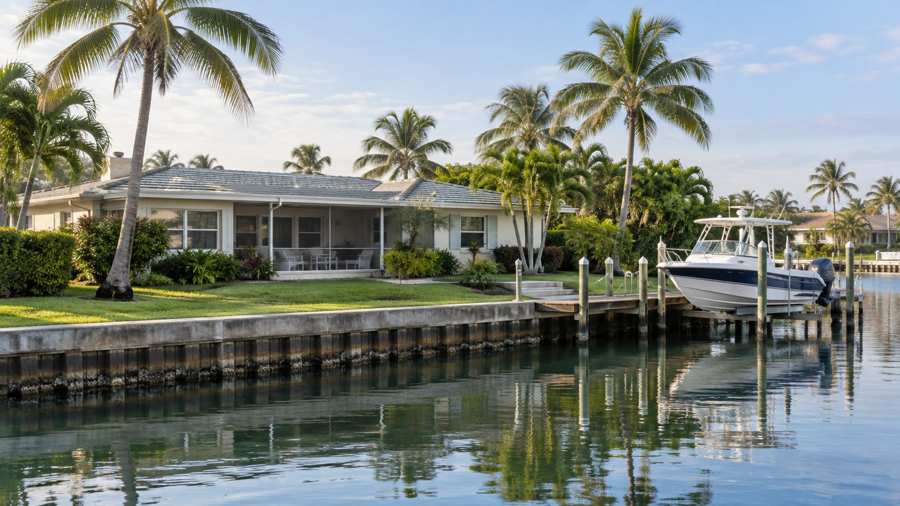
A boat on a lift makes a Marco Island waterfront listing look ready for boating. It does not prove the lift suits a buyer's vessel, the dock matches its approvals or the route to open water works for that boat. Before selling, organize those questions separately. The objective is a supportable description and a transaction plan, not a demonstration that asks an unfamiliar person to operate equipment or an unsupported promise about a canal.
Local waterfront guides from Dom Sells Naples and Selling Marco Island both recommend checking dock condition, permits, lift capacity and boat access early. This guide turns those topics into a seller file: records, equipment identity, professional condition review, buyer-specific fit and written terms. It does not certify a lift, measure a channel, authorize construction or decide riparian rights. Those answers need the actual property, vessel and appropriately qualified professionals.
Separate Dock Approval, Condition and Boat Fit
Build three separate files: what improvements were approved, what exists and its current condition, and whether the buyer's intended boat can use the setup. A permit is not a fresh inspection, and a lift that held the seller's boat is not proof it suits another vessel. Keep access-route claims separate from equipment capacity. Record unanswered questions plainly before the listing turns them into promises.
Selling Marco Island's waterfront guide explains why a beautiful dock may not work for every boat and why upgrades can require approvals. Use that distinction before paying for photography or accepting a proposed closing date. The buyer may need a different cradle, a different lift or a different property; none of those outcomes is resolved by a photo of the current boat.
Billings Home Inspections describes separate checks for pilings, decking, framing, attachment, electrical equipment and lift motors, cables and cradle. It is a South Florida inspection-service description, not a claim that this company serves Marco Island or that every inspector's standard agreement covers those components. Ask the actual inspector to identify the scope, qualifications, exclusions and what additional specialist review is needed.
Evidence rule: Each statement should name its support. Existing lift model comes from identification records; permit completion comes from the authority's file; condition comes from a dated professional report; vessel suitability comes from an actual matching review. If one item is unresolved, do not promote a different item as a substitute. A buyer's interest in boating should lead to better questions, not broader claims.
Collect the Dock and Lift Record History
Gather approved plans, permits, completion records, equipment invoices, model information, maintenance records and known changes or storm damage. Compare the paperwork with the structures actually present, including any dock extension, altered lift or added electrical equipment. Ask the relevant authorities and professionals about missing or inconsistent records. An old invoice, open application or neighbor's similar dock does not establish that this installation was approved and completed.
The Sprigg Group's Marco Island waterfront-selling article puts permit records early in the preparation timeline. Its practical lesson is to find discrepancies before a buyer makes them a closing condition. Do not copy its general processing times into a promise for your project. Marine work can involve different scope, agency questions, inspections and contractor schedules, and a submitted application is not an issued approval.
Dom Sells Naples recommends comparing the existing dock and lift with permits and as-built information. Have a professional identify differences rather than asking the family to certify dimensions or guess when a previous owner extended a platform. Keep dates, document status and who supplied each item so an incomplete record remains visibly incomplete instead of becoming an unqualified statement in marketing.
Record checklist: Dock layout, lift installation and rating, approved electrical work, relevant modifications, inspection or completion evidence and known damage or repairs. Have the title professional or attorney review any recorded rights or restrictions affecting use. Do not infer exclusive dock ownership from access across the yard, a boat already parked there or a casual description of the property as waterfront.
| File item | Question it answers | What it does not prove |
|---|---|---|
| Approval and completion records | What work was authorized and completed as recorded | Current structural or electrical safety |
| Model plate and installation information | Which lift and configuration are present | The buyer boat fits or the equipment is sound |
| Dated inspection report | Condition within the stated scope and access | All hidden components or future life |
| Repair and service records | What was done and when | Every required approval was obtained |
| Property and use-rights documents | Relevant recorded interests or restrictions | A safe navigable route for every boat |
Check Environmental Approvals Before Offering an Upgrade
Before promising a larger dock, new lift, replacement or dredging, have the contractor confirm the actual approvals and responsible agencies. Florida DEP provides exemption verification and permitting routes, but eligibility depends on the project. Some work can involve authorization to use state-owned submerged lands. A residential setting does not mean every improvement is exempt, and an environmental exemption does not settle all other approvals or ownership rights.
DEP's ERP e-Permitting guidance describes self-certification for qualifying single-family dock projects, including new docks, repair or replacement, and adding a lift. It also describes verification-of-exemption applications and permits. Apply the existence of those routes, not an assumed eligibility decision: this guide has not examined your location, design, resources or prior approvals and cannot tell you which route applies.
DEP's same guidance identifies authorization for activities requiring use of state-owned submerged lands. That is a reason to ask about the actual approval package rather than tell a buyer that one building permit covers every legal question. The qualified contractor and reviewing agencies should state which approvals are needed and what the approved limits mean for the proposed installation.
Steve Conley's Florida Keys inspection article cautions against assuming dredging or a future waterfront alteration will be allowed. That is useful general planning context, not a transfer of Monroe County or sanctuary rules to Marco Island. Upgrade boundary: Price the existing setup honestly and obtain project-specific advice before representing an expansion as easy, already permitted or included in the sale.
Match Lift Capacity to the Actual Vessel
Identify the lift model, rating, installed configuration and manufacturer instructions. Have the qualified lift professional review the buyer's intended vessel, its actual equipped weight and the support arrangement. The seller's boat length or a broad capacity claim cannot settle suitability. Do not exceed the rated capacity, test an unfamiliar lift for a showing or treat an old plate as proof that damaged equipment remains safe to operate.
Certified Inspectors describes lift assessment across mechanical and structural components, including cables, pulleys, cradle, bunks, controls and electrical systems. Use that scope to ask for a professional review of the actual installation. A number on the rating plate is part of the evidence, but corrosion, damaged supports or an altered configuration can raise separate safety and repair questions that the number does not answer.
R & J Machine's cantilever-lift manual warns against exceeding rated capacity or using damaged equipment and requires familiarity with the full instructions before operation. That manual applies to its specified equipment, not every Marco Island lift. Its general lesson is to find the correct manufacturer documentation, not to apply another model's procedure, service interval or adjustment instructions to the seller's machine.
Vessel information: Exact boat model, equipment, installed engines, fuel and gear assumptions, dimensions and support requirements for the professional's evaluation. Have the buyer provide reliable vessel information rather than estimate from a listing photo. If suitability remains unresolved, label it unresolved in discussions and terms. Do not promise that changing bunks or adding capacity will be simple, permitted or sufficient.
Arrange a Safe Marine and Electrical Review
Ask the actual inspector which dock, lift and electrical components are included and which need a marine contractor or licensed electrician. Keep people clear of moving equipment and do not use a buyer tour as an operational test. Do not enter the water near powered docks or boats. Visible damage, suspect wiring or unknown equipment condition should lead to qualified review, not an improvised repair or demonstration.
ESFI's electrical-safety guidance warns that docks and boats can leak electricity into water and advises against swimming near docks. It recommends regular qualified marine electrical review and warns against damaged cords. Treat protective devices as part of a professional safety assessment, not permission to swim or assurance that a neighboring installation cannot create a hazard.
Tampa Electrical Pro's dock-wiring article explains why circuits, equipment type, exposure and the applicable authority matter. Its useful point here is that a lift, receptacle, shore-power connection and feeder are not interchangeable electrical questions. Do not copy Tampa-specific permitting instructions or code numbering into a Marco Island compliance claim. Have the electrician confirm the requirements for this property and proposed work.
Scope confirmation: Ask for the date, accessible components, method, limitations, immediate concerns and further evaluation recommended. Billings and Certified Inspectors describe mechanical and structural areas beyond a generic house tour. A report that notes limited access should remain limited in the seller file; it is not converted into a complete safety certification by describing the equipment as inspected.
Describe Boating Access Without Guaranteeing Navigation
Describe access using verified property information and careful qualifiers. The buyer should evaluate the intended boat's draft, air draft, route, turning space and current conditions with appropriate boating expertise. Charts and past trips are useful evidence, not a guarantee of clearance today. Do not promise all-tide access, a fixed travel time or unlimited boat size because a canal connects toward the Gulf or the seller used a smaller vessel.
Dom Sells Naples separates bridge clearance from water depth and notes that tides and shoaling affect use. The transferable lesson is route-specific verification, not a neighborhood-wide assumption. A property with an attractive lift can still fail the buyer's intended use if the boat cannot safely travel the route or maneuver where needed. No canal survey or boat transit was performed for this article.
Selling Marco Island similarly distinguishes direct and indirect access and asks buyers to review depth, bridge clearance and boating time. Describe any access category only when its meaning and supporting facts are clear. Do not translate no bridge on a described route into permission for any draft, tower height or operating condition, and do not advertise the seller's typical trip time as a guaranteed buyer result.
Access note: Identify what was verified, by whom and when, and what the buyer still needs to review. Share accurate plans and professional records privately with serious buyers. Maps and waterfront photographs can help explain layout, but a static image is not evidence of current depth. If dredging seems necessary, get project-specific regulatory advice rather than offering it as the easy fix after closing.
Compare Repair, Credit and As-Is Sale Options
Obtain qualified scope and cost information before deciding whether to repair, negotiate a credit or sell in the existing condition. Keep immediate safety concerns separate from cosmetic presentation. A lower price or as-is agreement does not establish equipment safety or cancel disclosure duties. Compare the actual terms, approvals, insurance and timing, and use current market evidence rather than assuming every dollar spent on the dock will return at sale.
NAR's preparing-to-sell guide recommends obtaining estimates for items that need repair or replacement, even if the seller will not do the work. For a lift or dock, request a specific written scope: investigation, design if needed, approvals, equipment, installation, electrical work and inspections. A contractor's preliminary number should remain preliminary when hidden conditions, agency requirements or vessel compatibility are unresolved.
NAR's pricing guide recommends comparable evidence and condition adjustments. The Sprigg Group emphasizes early records and logistics, but its reported market figures are not a price or timing forecast for your house. Separate waterfront appeal from verified usable equipment. Have the agent explain how relevant sold properties compare, and obtain the buyer's actual insurance review rather than assuming a dock report establishes coverage.
NAR's seller-concessions guide explains negotiated contributions subject to transaction and lender limits. Cost illustration: An invented $20,000 repair allowance plus $4,000 for related professional work totals $24,000 before other costs. This is arithmetic, not a local quote, and should not be presented as a standard Marco Island repair budget or automatic dollar-for-dollar price deduction.
| Route | Evidence to obtain | Trade-off |
|---|---|---|
| Repair before listing | Written scope, approvals, schedule and completion records | Upfront expense without a guaranteed price return |
| Negotiate a credit | Actual report, estimate and reviewed contract terms | Buyer lender and transaction limits may matter |
| Sell in current condition | Clear known-condition record and written allocation | As-is wording does not certify safety or erase duties |
| Defer commitment | Professional assessment and records plan | Extra carrying time, no promised future market outcome |
Write the Equipment and Inspection Terms Clearly
State what dock and lift equipment transfers, what the buyer may inspect and how unresolved issues will be handled. Identify exclusions, controls, manuals and known defects in the reviewed transaction documents. Have advisers set dates consistent with required records and professional access. Neither a cash offer nor an as-is label automatically removes inspection rights, approval issues, title requirements or the need to establish exactly what the parties are buying.
NAR's contract-contingencies guide explains conditions and deadlines in the actual agreement. If marine or vessel-fit review matters, have the agent and attorney ensure the terms reflect it. Do not assume a general inspection window covers every specialist, record request or approval question. If the process needs more time, agree the change in writing instead of relying on a reassuring conversation.
Transfer checklist: Lift and dock components included, seller's boat excluded or separately addressed, manuals and remotes, known modifications, service records, agreed repairs and permitted inspection access. Confirm delivery of promised documentation before closing. If the buyer requests an unsafe demonstration, arrange qualified review instead; evidence about the equipment should not require putting visitors under a suspended boat or in energized water.
Review the Boca Raton Riviera seawall records guide for related shoreline-document questions, while keeping each jurisdiction and structure separate. The core sale discipline is the same: distinguish known records, current condition and future possibilities. Do not turn a request for information into an assurance that a particular improvement, vessel or closing date is approved.
Frequently Asked Questions
These answers separate existing equipment from legal approvals, current condition and the buyer's boating plans. They do not certify a lift or route, authorize a dock project or settle ownership rights. Ask qualified professionals about the actual installation and vessel, keep missing evidence labeled missing, and use reviewed written terms for any repair, inspection or credit decision. A photograph or old permit cannot answer every question.
Does an existing dock prove it was permitted?
No, existence is not approval evidence. Obtain the actual records and compare them with the current installation.
Does a closed permit prove the lift is safe today?
No, current condition needs separate review. Ask the qualified professional what was inspected and what remains outside the scope.
Can I advertise capacity from a plate alone?
Identify the rating and installed configuration without promising suitability. Have a qualified professional assess condition and the buyer's actual vessel.
Can buyers test the lift during a showing?
Do not make an unfamiliar operational test part of a casual tour. Arrange qualified assessment and follow the correct manufacturer instructions.
Are all residential docks exempt from DEP permits?
No universal exemption is established here. Eligibility depends on the project and applicable criteria.
Does direct access mean any boat will work?
No, vessel dimensions and actual route conditions still matter. Obtain boat-specific review instead of guaranteeing clearance.
Does as-is wording eliminate all dock questions?
It does not certify safety or erase applicable duties. Have advisers review the actual agreement and known issues.
Can a buyer dredge the canal after closing?
Do not assume the work is permitted. Obtain project-specific advice before describing it as an available solution.
Will repairs increase price by their full cost?
No return is guaranteed. Compare written cost evidence with relevant sales and the actual proposed terms.
How Maison Off-Market Reviews a Waterfront Proposal
Maison Off-Market describes a direct-purchase process that reviews the property before proposing price and timing. For a Marco Island waterfront owner, that is another written offer to compare with a listing plan. It does not certify the dock or lift, authorize marine construction or guarantee boating access. Ask how records, investigation, equipment condition and unresolved waterfront questions appear in the actual proposal.
The company's stated purchase arrangement describes flexible closing dates, no commissions and no seller closing costs, working with the owner's attorney or title company. Confirm the actual purchaser, price, deposit, conditions and equipment included. Those cost descriptions do not decide permit questions, boat removal, insurance, title restrictions or whether a damaged lift is safe to use.
Decision evidence: The actual written proposal and transaction conditions. No Marco Island lift repair case study, measured channel depth, verified capacity upgrade or demonstrated permit-resolution result is provided here. Compare honestly with the listing route and professional cost estimates rather than implying that a direct buyer turns unknown waterfront facts into guaranteed outcomes.
Compare your options before committing. Request a written private offer for your property, with no obligation, then weigh it against your listing plan.
Sources
- Dom Sells Naples, Checked October 6, 2026. Marco Island Gulf Access Canals, Bridges and Boat Drafts. https://domsellsnaples.com/blog/marco-island-gulf-access-canals-bridges-boat-drafts.
- The Sprigg Group, Checked October 6, 2026. Selling a Marco Island Waterfront Home: Step-by-Step Timeline. https://thesprigggroup.com/blog/selling-a-marco-island-waterfront-home-step-by-step-timeline.
- Selling Marco Island, Checked October 6, 2026. Marco Island Waterfront Homes Guide. https://www.sellingmarcoisland.com/marco-island-waterfront-homes/.
- Billings Home Inspections, Checked October 6, 2026. Dock and Boatlift Inspection. https://billingshomeinspections.com/services/dock-boatlift-inspection.
- Certified Inspectors, Checked October 6, 2026. Boat Lift Inspections South Florida. https://certifiedinspectors.com/service/boat-lift-inspections/.
- Steve Conley, Checked October 6, 2026. Waterfront Home Inspection. https://conleygroupflorida.com/ask-steve/waterfront-home-inspection/.
- Florida DEP, Checked October 6, 2026. ERP e-Permitting. https://floridadep.gov/water/submerged-lands-environmental-resources-coordination/content/erp-e-permitting.
- R & J Machine, Checked October 6, 2026. Cantilever Boat Lift Instructions. https://www.rjmachine.ca/wp-content/uploads/2016/11/Cantilever-Boat-Lift-Manual.pdf.
- ESFI, Checked October 6, 2026. Electrical Safety Tips for Boat Operators. https://www.esfi.org/electrical-safety-tips-for-boat-operators/.
- Tampa Electrical Pro, Checked October 6, 2026. Dock and Boat Lift Electrical Rules in Tampa Bay. https://www.tampaelectricalpro.com/blog/dock-boat-lift-electrical-tampa-bay/.
- NAR, Checked October 6, 2026. Preparing to Sell Your Home. https://www.nar.realtor/the-facts/consumer-guide-preparing-to-sell-your-home.
- NAR, Checked October 6, 2026. Real Estate Contract Contingencies. https://www.nar.realtor/the-facts/consumer-guide-real-estate-contract-contingencies.
- NAR, Checked October 6, 2026. Consumer Guide: Seller Concessions. https://www.nar.realtor/the-facts/consumer-guide-seller-concessions.
- National Association of REALTORS, Checked October 6, 2026. Consumer Guide: What Goes Into Pricing Your Home. https://www.nar.realtor/the-facts/consumer-guide-what-goes-into-pricing-your-home.
Related research

Seller Guide · October 6, 2026
How to Prepare Point Pleasant Beach Rental Records Before Selling
Separate rental approval, income history and booked stays before comparing sale terms.

Seller Guide · October 6, 2026
How to Prepare Rumson Flood and Waterfront Records Before Selling
Separate flood disclosure, elevation, repairs and waterfront rights before comparing sale terms.

Seller Guide · October 6, 2026
How to Prepare Sarasota Condo Inspection and Reserve Records Before Selling
Separate building condition, reserve funding and resale documents before comparing sale terms.