Market Brief · by Aidan Sowa · October 5, 2026
Does the Club Travel With the House at Desert Mountain? Reading the Median, the Months of Supply and the Wait
Reading the Median, the Months of Supply and the Wait for Desert Mountain, AZ, with each source dated and its limits noted, for owners weighing a listing against a direct sale.
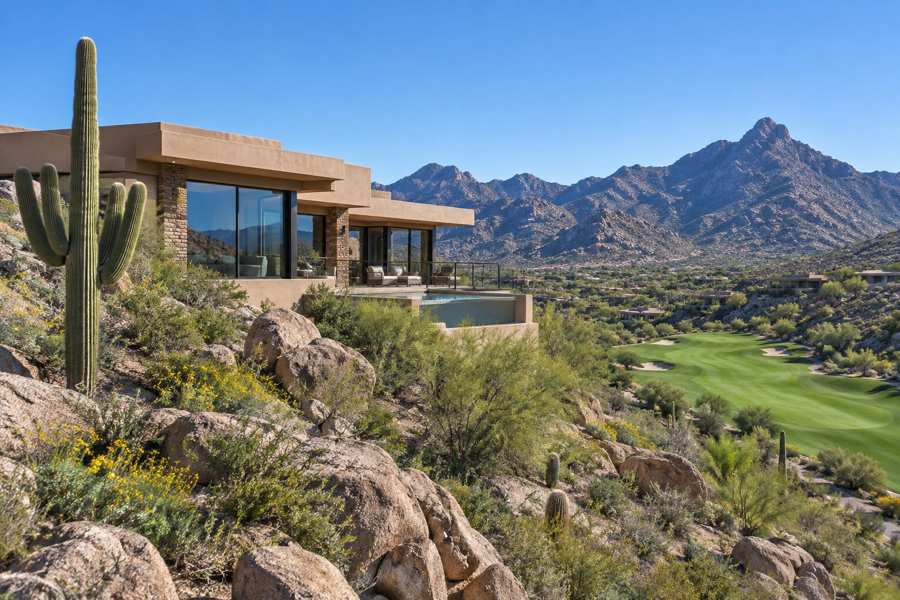
Most luxury markets sell a house. Desert Mountain sells a house and, separately, the chance to belong to a club. It is a gated community of about 8,000 acres with seven Jack Nicklaus Signature courses and about 2,700 home sites, and a September 2026 report is blunt about the arrangement: buying a home inside Desert Mountain does not grant automatic membership, and membership is a separate transaction with its own price, categories and waitlist.
That fact shapes every number the market produces. The same report gives a median sale price of $3,205,000 up 8.4% on a year earlier, 131 active listings, 8.6 months of supply, a median of 138 days on market and 36% of listings with a price cut. A house with a membership path is not the same product as a house without one, and a median that mixes them describes neither well.
This brief reads that report and the club's own March 2026 announcement beside the Census profile of the postal area that includes Desert Mountain and the Phoenix metropolitan listing series. The market figures are brokerage commentary and are labeled as such. The brief prices no house and says nothing about what any membership costs beyond what the sources state.
Key Findings
- A September 2026 report put the Desert Mountain median sale at $3,205,000 (up 8.4%), the trailing twelve-month median at $3.17 million, 181 homes sold, 131 active listings, 8.6 months of supply, 138 days on market and 94.6% of list price received (Arizona Homes and Condos Realty, September 2026).
- The same report counted 47 of 131 active listings (36%) with a price cut and a 62% cash share among sales of $2 million and above, and said club membership and home purchase are entirely separate transactions.
- Desert Mountain Club said in March 2026 that it maintains a growing membership waitlist and had added a way to search for homes that include Club membership (Desert Mountain Club, March 2026).
- In the Census postal area, 2,144 of 8,733 housing units (24.6%) have no usual resident and 169 (1.9%) were built before 1980 (U.S. Census Bureau, 2020-2024).
- The Phoenix metropolitan median days on market was 60 in May 2026 and 62 in September (Realtor.com, days on market).
What does it mean that membership is a separate transaction?
The report describes Desert Mountain Club as a private equity-membership club. It says full equity golf initiation runs in the high six figures depending on availability and category, with monthly dues of $1,800 to $2,400 by category, and that several categories exist, including sports, tennis, a younger-executive tier and limited social tiers. It also says buying a home inside the community does not grant automatic membership, and it tells buyers to get the membership conversation in writing before any offer and to verify current rates directly with the club.
Those are one broker's statements, and a seller should check any figure against the club's own materials. What they establish for a seller is a structure. A house in Desert Mountain may be sold with a membership attached, with a membership path or with neither, and the buyer's total cost is the price of the house plus whatever the membership costs. A buyer who is comparing houses is comparing totals, and a house that cannot offer the membership may have to sell at a lower figure to compete.
The club's own announcement points the same way. In March 2026 it described a new wave of listings that include access to club membership, and a website feature for searching for them. It added that virtually every premier private golf club in Scottsdale maintains a waitlist, and that strong demand and historically low attrition are growing its own. If the club says memberships are scarce, a house that carries one has an asset a house without one lacks.
For a seller, the practical question is what the house comes with. A seller who holds a membership and sells the house must understand whether the membership transfers, whether it is sold with the house or separately and what the club requires. This brief does not answer those questions, because they depend on club documents. It says only that a seller should settle them before listing, because they affect the buyer pool and the price.
Source: Arizona Homes and Condos Realty, September 2026; Desert Mountain Club, March 25, 2026. Membership figures are the broker's and were not verified with the club.
What do 8.6 months of supply and 138 days say?
The report gives 131 active listings and 181 homes sold over twelve months, which it rates at 8.6 months of supply and calls buyer-leaning. The standard reading is that three to six months is balanced, so 8.6 months says that, at the recent pace of sales, it would take most of nine months to sell what is listed. The report also notes that the sales count rose from 179 in the prior twelve months to 181.
The clock is a median of 138 days on market, with a range the report gives as 70 to 228 days. The range matters more than the median. A house that sells in 70 days and a house that sells in 228 are both in the same market, and the difference is price, condition, location within the community and membership status. A seller who expects the median should be ready for either end.
The report gives a sale-to-list ratio of 94.6% and 36% of active listings, 47 of 131, with a price cut. Its average sale price of $3,860,000 is $655,000 above the median, which the report attributes to a trophy tier above $6 million that lifts the average. Price per square foot is $684, up 3.2%.
Read together, the figures describe a market that is firm on price, with the median up 8.4%, and slow on time. That combination is common at the top of a market: sellers who can wait hold their prices, and buyers who can wait wait. The ones who give way are those who must sell by a date, and for them the clock is the main cost.
The club's announcement helps put the supply figure in context. It says that across Scottsdale, nearly every premier private golf club keeps a waitlist, and that strong demand with historically low attrition has grown its own waitlist. A waitlist is demand that cannot be met by the club, and some of that demand turns to the housing market, where a listing that includes membership can be a way around the line. That may be one reason the median price has risen 8.4% even as supply stands at 8.6 months. The report does not draw this link, and this brief offers it only as a possible reading, not as a finding. A seller who holds a membership should know what the club's own rules say, because the membership may be the most valuable part of what the buyer is looking for.
Source: Arizona Homes and Condos Realty, September 2026. Figures as stated by the report; not independently verified.
Who lives here, and how much sits empty?
The Census profile covers the postal area that includes Desert Mountain, Troon and the surrounding foothills, so it is wider than any one community. It counts 14,329 people and 8,733 homes, of which 6,589 are occupied and 2,144 (24.6%) are not. Owners live in 6,384 of the occupied homes (96.9%) and renters in 205 (3.1%).
The household figures are of a wealthy and settled owner base. Median household income is $177,790, median gross rent is $2,899 a month and the owner-estimated median home value is $1,287,300, with a margin of error of $188,951, or 14.7%. The owner-estimated median is far below the $3,205,000 reported for Desert Mountain sales, because the Census covers the wider area, including less expensive communities, and the figure is an owner estimate.
A quarter of homes without a year-round resident is the signature of a winter community. Many owners spend part of the year elsewhere, and the houses are often locked up from late spring through early autumn. That affects selling in two ways. The seasonal owner may be far away when a decision has to be made, and a house that has been empty for months can show wear that an occupied house does not.
The age of the stock also stands out. Of 8,733 homes, 4,115 were built in the 2000s (47.1%), 1,817 in the 1990s (20.8%) and 1,781 in the 2010s (20.4%). Only 169 predate 1980. The report adds that six custom builders are active on remaining lots, with build times of 18 to 30 months. New builds compete with resales.
It is worth remembering that the Census counts all of this as one postal area. The owner-estimated median of $1,287,300 blends Desert Mountain, Troon and the foothill communities between them. The $3,205,000 median in the market report belongs to Desert Mountain alone. The difference is a reminder to match a number to its geography before using it.
| Indicator | Value | Note |
|---|---|---|
| Population | 14,329 | Whole postal area |
| Housing units | 8,733 | All units |
| Owner-occupied homes | 6,384 | 96.9% of occupied |
| Renter-occupied homes | 205 | 3.1% of occupied |
| No usual resident | 2,144 | 24.6% of all units |
| Median household income | $177,790 | Estimate |
| Median gross rent | $2,899 | Monthly |
| Owner-estimated median value | $1,287,300 | Margin of error $188,951 |
Source: U.S. Census Bureau, American Community Survey 2020-2024 five-year estimates, tables B01003, B19013, B25002, B25003, B25034, B25064 and B25077; custom builder count from Arizona Homes and Condos Realty, September 2026.
What does it cost to hold a house here while it waits?
The report lists the charges that come with a Desert Mountain house, and they are worth adding up because the clock is long. It says the master association assesses $2,500 to $3,200 a year depending on the village, covering round-the-clock gate security, common-area maintenance, private trail upkeep and reserves. It says sub-association fees, which are specific to each village, range from $500 to $3,000 a year. It gives club dues, for those who hold a membership, at $1,800 to $2,400 a month by category.
Annualized, the association charges alone run from $3,000 at the low end of both ranges to $6,200 at the high end. Club dues, for an owner who holds a membership, add $21,600 to $28,800 a year. Those are the report's figures, and the sums are simple multiplication. They leave out property tax, insurance, utilities, landscaping, pool care and the cost of keeping a house presentable, none of which the sources quantify and this brief does not estimate.
For a seller, the point is that time has a cost, and a median of 138 days is more than four and a half months. At the report's ranges, four and a half months of association charges comes to about $1,100 to $2,300 and of club dues, for a member, about $8,100 to $10,800. An owner who sells privately on a chosen date has no listing period to carry, though the club's rules on membership transfer or resignation still apply and should be checked directly.
A second cost is the cost of showing. A house in a gated community needs access arrangements for every visitor, and a house that is locked up for the summer needs to be opened, cooled, cleaned and made to look lived in. These are real tasks for an owner who is out of state, and they recur with each showing. A buyer who purchases as is, without showings, removes them.
A third is the cost of an inspection that goes badly. Desert homes carry specific wear, such as stucco cracks, tile roofs, pool equipment and cooling systems running for months at a time. A buyer who inspects will find items on that list and may ask for a credit or a repair. A seller who is not present to supervise the work faces a choice between paying for repairs at a distance and offering a credit that lowers the price.
None of these costs shows up in a median sale price. The median is what a house sold for, and the owner's outcome is what the owner kept after the wait, the preparation, the credits and the fees. An owner comparing a public sale with a private offer should write down both sets of costs and compare them on net proceeds.
Source: Arizona Homes and Condos Realty, September 2026, for fee and dues ranges; sums are simple multiplication of those ranges. Brokerage content, not verified with the club or associations.
What does a 62 percent cash share mean at this price?
The report says 62% of sales of $2 million and above were in cash, and calls the share stable. Cash buyers in this price range often have the proceeds of another sale or a business, and they do not need a lender. They can close quickly, but they are also the buyers who can walk away without a financing loss, so they negotiate.
For a seller, a cash market has one clear implication. Appraisal risk is low, because many buyers do not need one, and the offers that arrive tend to turn on price and terms and not on a bank. The other implication is that a seller who needs a financed buyer, for example because the club's membership rules or the price band limit the pool, may wait longer.
The report separates a thin patio-home tier, with 8 to 12 active listings, from the estate tier. Patio homes start at $1.3 million and the report calls supply there thin. That is a reminder that the market has tiers and that the supply, the buyer and the cash share differ across them. A seller in the patio tier faces a different market from one in the Saguaro Forest estates, where the report says prices run above $18 million.
None of this establishes what a particular house would fetch. It shows that a seller should look at comparable sales in the same tier and village, and should ask a buyer how the offer is financed, because that, more than the median, decides how quickly and how surely a sale closes.
Source: Arizona Homes and Condos Realty, September 2026. Brokerage content, not independently verified.
What does the Phoenix clock say?
Realtor.com publishes listing series for the Phoenix-Mesa-Scottsdale metropolitan area through the Federal Reserve Bank of St. Louis. They show direction, not the level for Desert Mountain. The median days on market was 60 in May 2026, 64 in June, 67 in July and August and 62 in September. Active listings were 19,517 in May and 18,437 in September, with a low of 17,661 in July (Realtor.com, active listings).
New listings fell from 8,670 in March to 5,854 in July (Realtor.com, new listings), a decline of 32.5%. The median listing price slipped from $498,000 in May to $475,000 in September (Realtor.com, median listing price). Listings with a price reduction fell from 10,902 in March to 8,348 in July (Realtor.com, price reduced listings), a count that fell with the number of listings.
The scale gap is plain. The metropolitan median listing price of $475,000 is about one seventh of the Desert Mountain median sale, and the metropolitan clock of 62 days is less than half of the community's 138. Desert Mountain follows its own cycle, tied to the winter season and to club demand, and the metropolitan series carry only direction.
The direction is a summer slowdown and a September recovery in speed. The Desert Mountain report describes a market bottoming out of its summer trough and building inventory into fall, which fits that direction. Readers comparing markets can also read the Troon brief and the Lake Havasu City brief.
Source: Realtor.com via FRED, Housing Inventory: Median Days on Market, Active Listing Count, New Listing Count, Median Listing Price and Price Reduced Count, Phoenix-Mesa-Chandler, AZ (CBSA).
What would a private sale change for a Desert Mountain owner?
A direct sale to a buyer who purchases homes off the market changes five things for the seller. There are no showings and no neighbors talking about you selling, which counts in a community where owners know each other from the club. The closing date can be flexible, giving time to find a new home or to settle club matters. There are no commission costs and no closing costs for the seller. And there are no inspections or repairs, which for a house that has stood empty through several summers can be the item that matters most.
The fee benefit needs no assumed rate. For every 1% of a sale price that would otherwise go to fees, a sale at $3,170,000 keeps $31,700, a sale at $3,205,000 keeps $32,050 and a sale at $3,860,000 keeps $38,600. An owner can set whatever percentage applies against a private offer and compare the two on net proceeds.
The clock offers a second comparison. A median of 138 days and a range up to 228 is the public route's cost in time, and a seller who must carry a house through that wait pays dues, taxes and upkeep in the meantime. The report gives the ranges of the club and association charges it knows, and a seller should add up what each month of waiting costs.
The honest trade-off is that a public sale can bring a buyer who values the membership and pays for it. A seller who holds a membership and can sell the two together may reach that buyer more easily through a listing. A seller who values privacy, a settled date and no inspections or repairs may prefer a private offer. The choice belongs to the owner.
Source: calculation from stated prices; no commission rate, closing cost, dues amount or repair cost is assumed.
Methodology and limitations
Age, tenure, vacancy, income, rent, population and owner-estimated value come from the American Community Survey 2020-2024 five-year estimates for the postal-code area that includes Desert Mountain. The area also includes Troon and the surrounding foothills, so it is wider than the community. Shares are calculated from published counts, and owner-estimated value carries a stated margin of error.
Days on market, active listings, new listings, median listing price and price reduced counts are Realtor.com series published by the Federal Reserve Bank of St. Louis for the Phoenix-Mesa-Chandler metropolitan area. The series end between July and September 2026. Listing prices are asking prices and not sale prices.
The Desert Mountain market figures and club descriptions come from one brokerage report and one club announcement. Membership prices and dues were not verified with the club. The brief makes no forecast and does not estimate what any particular home would sell for.
Conclusion
The public record supports a short list for a Desert Mountain owner. Membership is a separate purchase from the house, the median sale is about $3.2 million on a long clock with 8.6 months of supply, more than a third of listings have cut their price, and a quarter of the homes in the postal area have no year-round resident.
It does not support a price for any one home. The choice between a public listing and a private sale comes down to how much an owner values the chance of a higher bid and a membership-minded buyer against privacy, a flexible closing date, no commission, no closing costs and no inspections or repairs.
Frequently Asked Questions
Does buying a Desert Mountain home include club membership?
The report cited here says no. Membership is a separate transaction with its own categories and price.
What is the median sale price?
The September 2026 report gives $3,205,000, up 8.4% on a year earlier.
How much supply is there?
The report gives 8.6 months of supply on 131 active listings.
Does the Phoenix metropolitan data describe Desert Mountain?
No. It covers a large region and shows direction only.
Does a private sale always beat a public listing?
No. A public listing can attract competing bids. A private sale offers privacy, a flexible closing date, no commission, no closing costs and no inspections or repairs, in exchange for a single offer.
Compare your options before committing. Request a written private offer for your property, with no obligation, then weigh it against your listing plan.
Sources
- Arizona Homes and Condos Realty, 2026. Desert Mountain Scottsdale Real Estate Market Report, September 2026. https://arizonahomesandcondos.com/scottsdale-arizona-real-estate/north-scottsdale-real-estate/desert-mountain-scottsdale-real-estate/.
- Desert Mountain Club, 2026. Strong Demand Meets Seasonal Inventory. https://www.desertmountain.com/strong-demand-meets-seasonal-inventory-desert-mountain-highlights-membership-included-listings-and-enhanced-home-search-experience/.
- U.S. Census Bureau, 2026. American Community Survey 2020-2024 five-year estimates, the Desert Mountain area (via Census Reporter). https://censusreporter.org/profiles/86000US85262-85262/.
- Realtor.com, 2026. Housing Inventory: Median Days on Market in Phoenix-Mesa-Scottsdale, AZ (CBSA). https://fred.stlouisfed.org/series/MEDDAYONMAR38060.
- Realtor.com, 2026. Housing Inventory: Active Listing Count in Phoenix-Mesa-Scottsdale, AZ (CBSA). https://fred.stlouisfed.org/series/ACTLISCOU38060.
- Realtor.com, 2026. Housing Inventory: New Listing Count in Phoenix-Mesa-Scottsdale, AZ (CBSA). https://fred.stlouisfed.org/series/NEWLISCOU38060.
- Realtor.com, 2026. Housing Inventory: Median Listing Price in Phoenix-Mesa-Scottsdale, AZ (CBSA). https://fred.stlouisfed.org/series/MEDLISPRI38060.
- Realtor.com, 2026. Housing Inventory: Price Reduced Count in Phoenix-Mesa-Scottsdale, AZ (CBSA). https://fred.stlouisfed.org/series/PRIREDCOU38060.
Related research
Seller Guide · October 6, 2026
How to Prepare Point Pleasant Beach Rental Records Before Selling
Separate rental approval, income history and booked stays before comparing sale terms.
Seller Guide · October 6, 2026
How to Prepare Rumson Flood and Waterfront Records Before Selling
Separate flood disclosure, elevation, repairs and waterfront rights before comparing sale terms.
Seller Guide · October 6, 2026
How to Prepare Sarasota Condo Inspection and Reserve Records Before Selling
Separate building condition, reserve funding and resale documents before comparing sale terms.